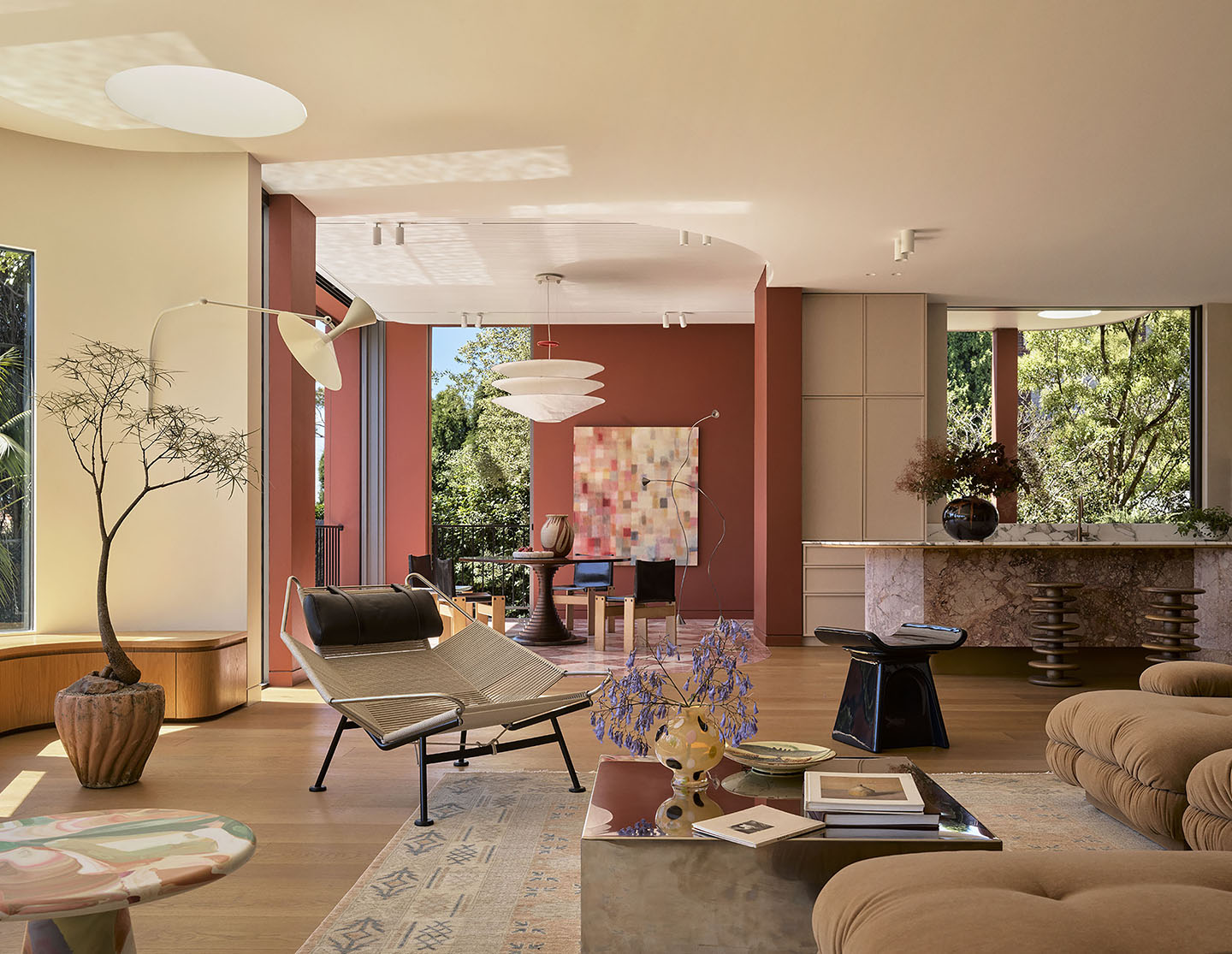

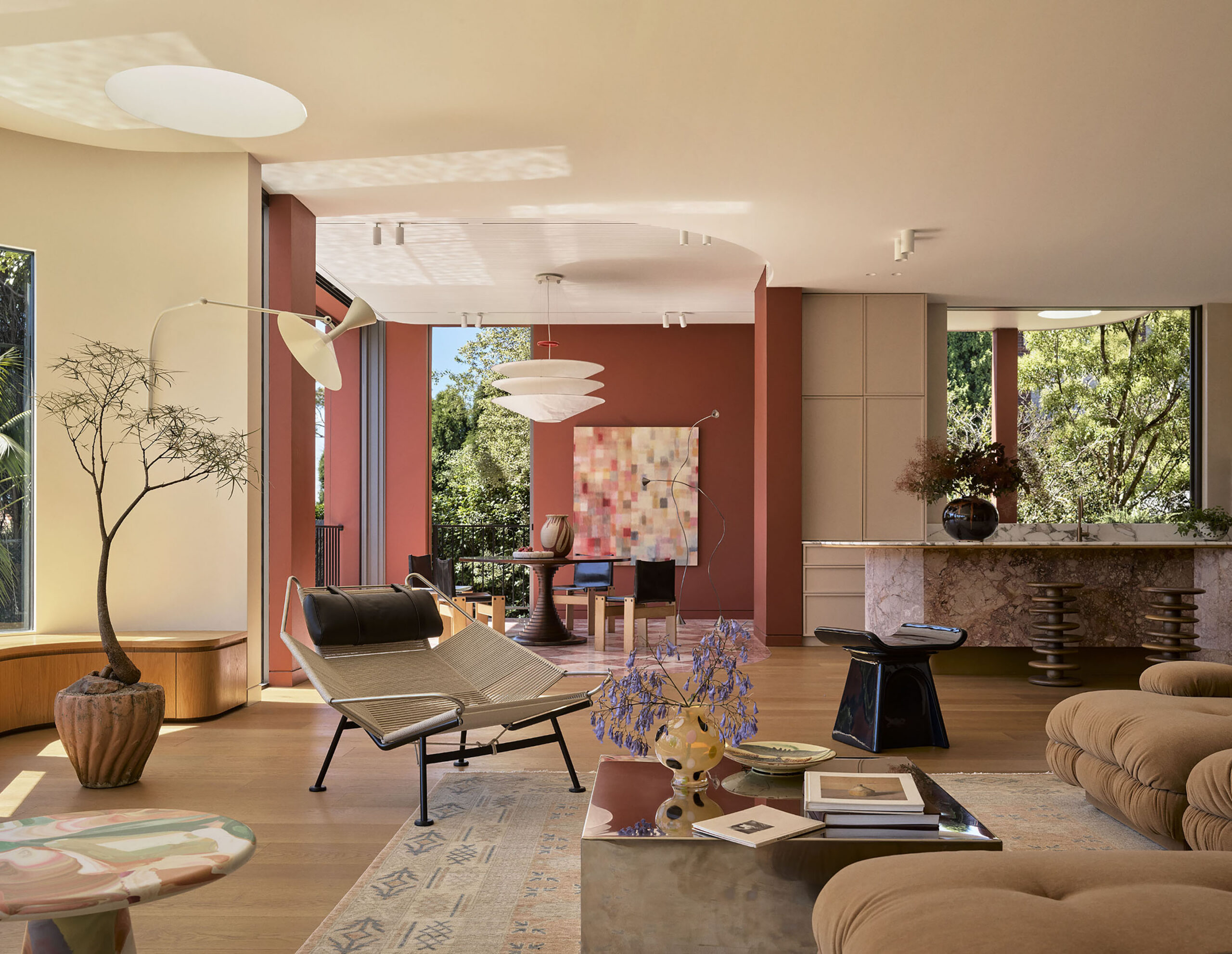
Bradleys Head House, a 1900s Federation-era Arts and Crafts dwelling in Sydney’s harbourside suburb of Mosman, recently underwent generational change when the longstanding owners’ son purchased the property. That shift is now reflected in the property itself, with a generously proportioned extension designed by TKD Architects and an internal transformation overseen by interior design firm Arent&Pyke.
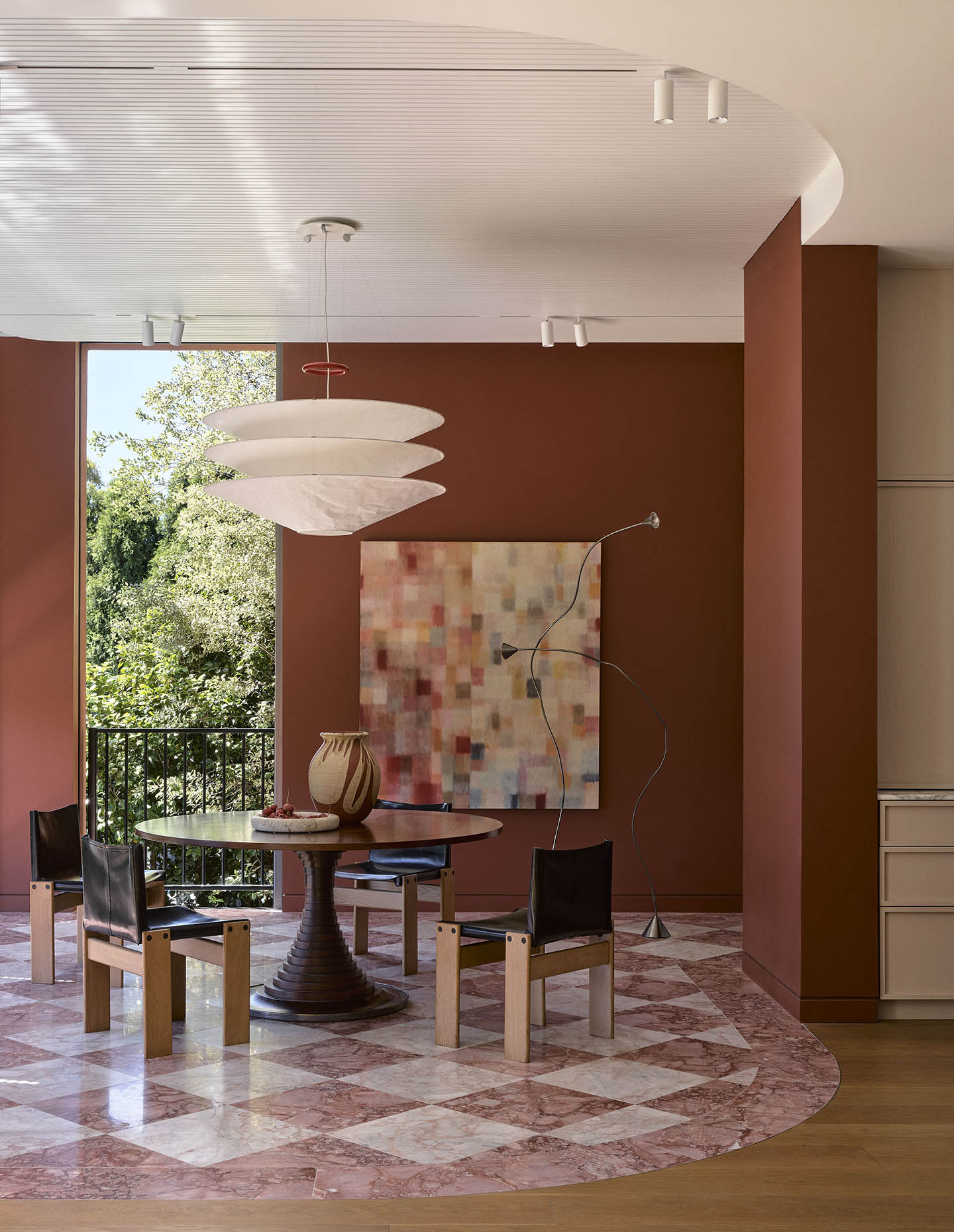
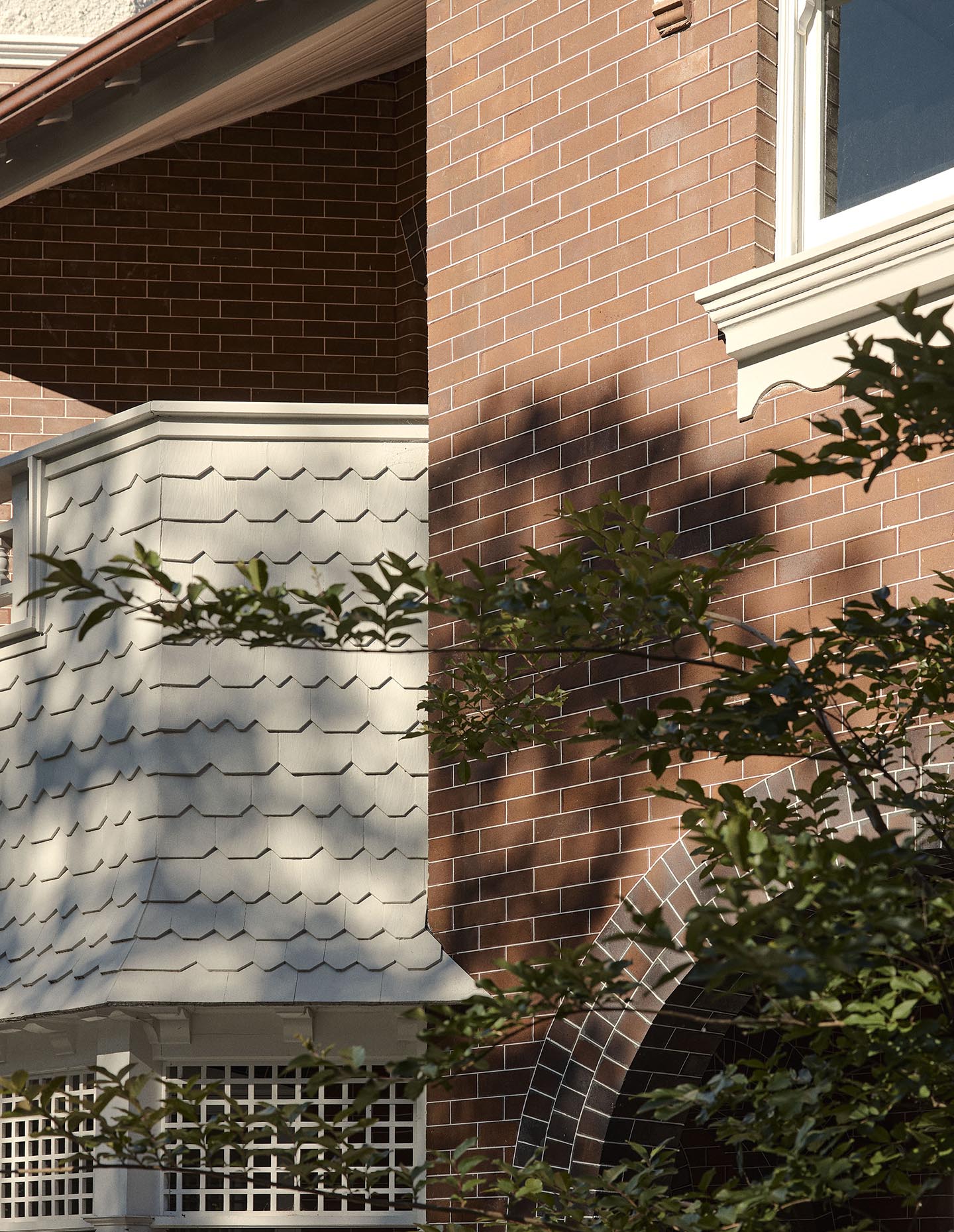
Rather than simply reproducing the language of a Federation building, the interior design responds to the house’s period character and Arts and Crafts origins. It honours them through the extraction and use of design elements that create a cohesive relationship between the original house and the new additions. Across three storeys — which include a large kitchen, informal lounge and parents’ retreat, as well as a poolside rumpus room — the result is a dwelling that is informed by its heritage while distinctly of the present.
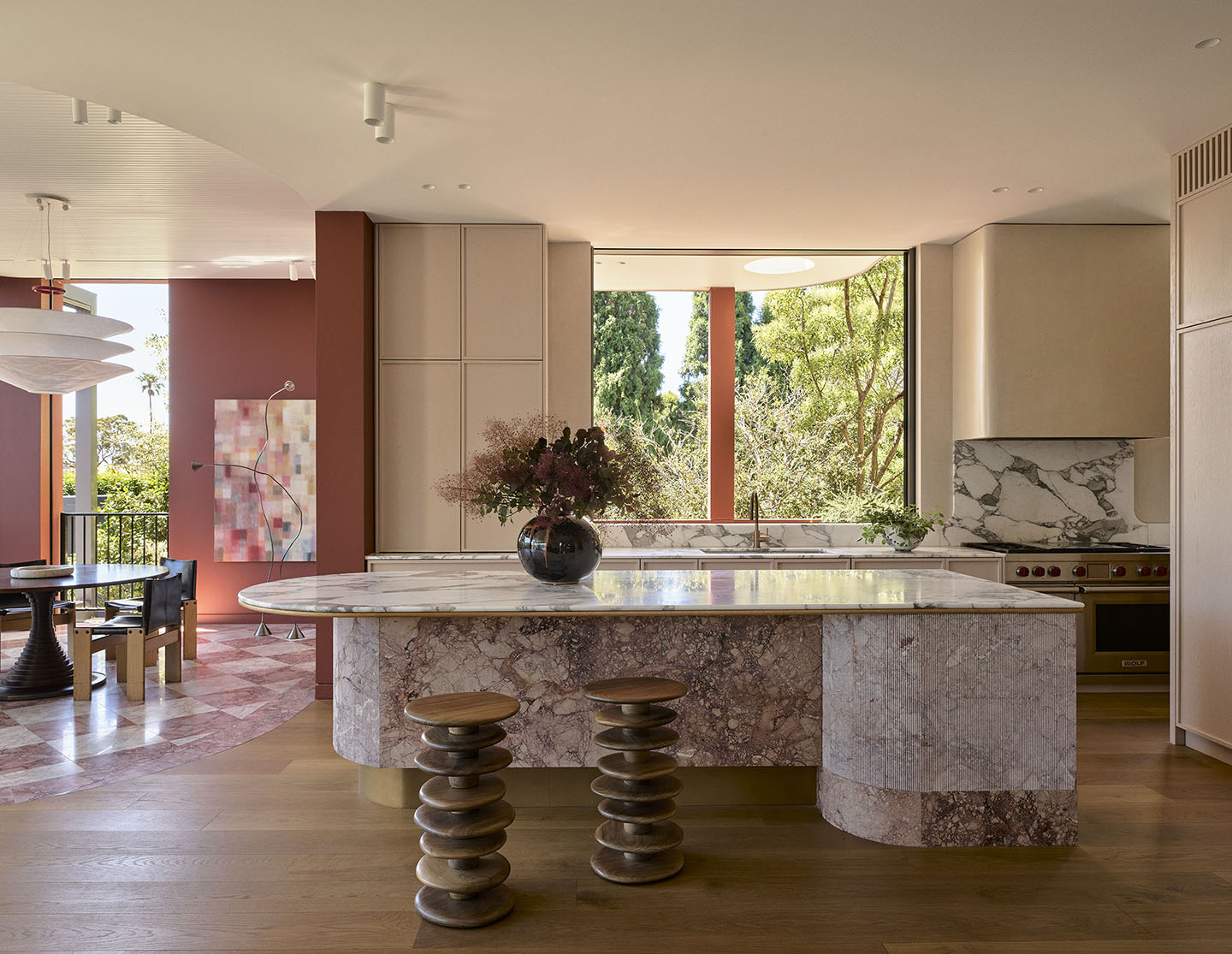
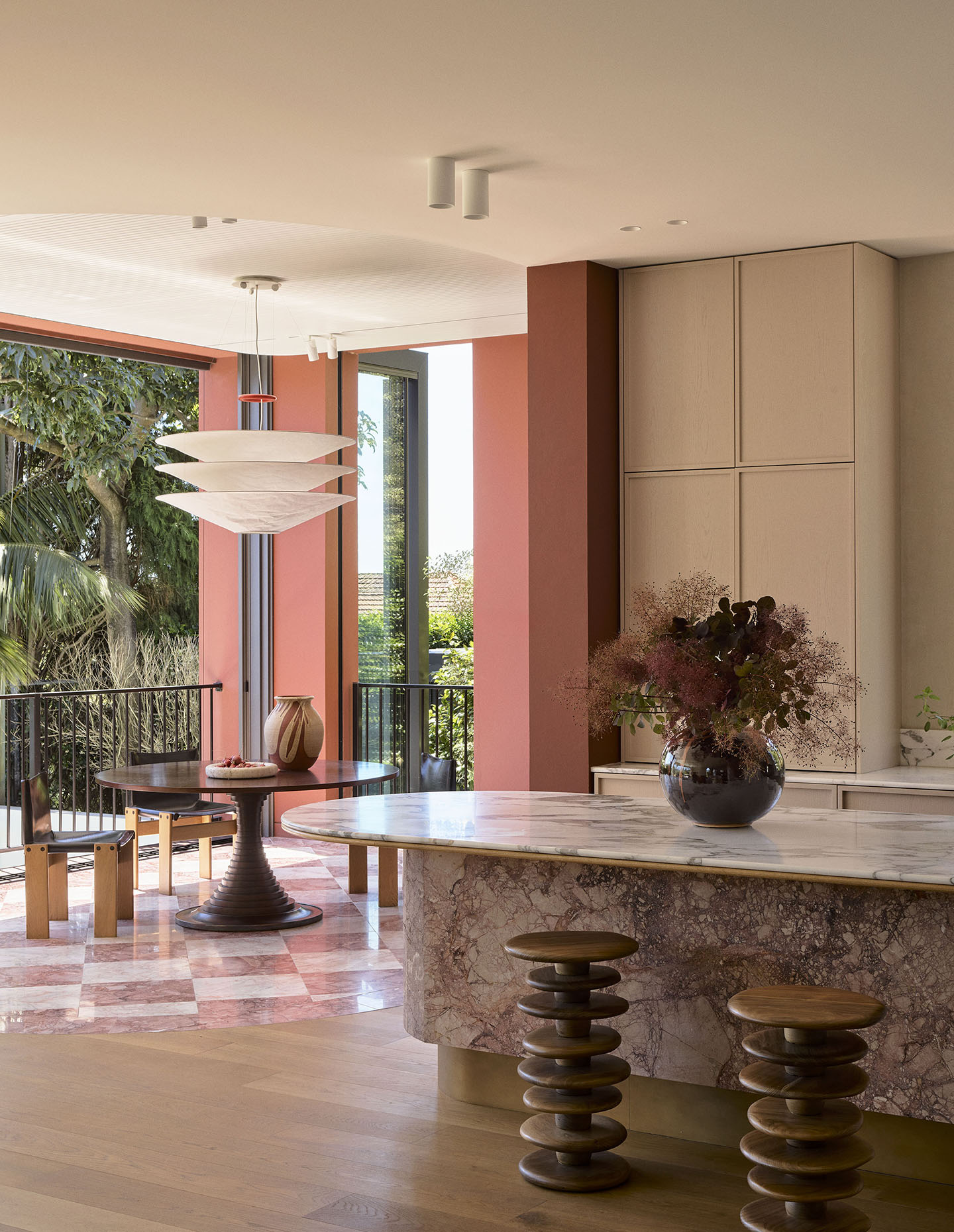
Central to Arent&Pyke’s approach was introducing softness to temper the property’s angular framework. Curves, providing one of the design’s strongest connecting devices, were created in response to the house’s existing interior arched entrances. This approach is at its most dramatic in the kitchen, where a substantial island forms a sculptural centrepiece: a convex base of pink and rose-white Tiberio marble, warmed by a bronze kickboard and topped with a layer of Calacatta Vagli. The stone establishes a sense of solidity, while the island’s softened geometry balances its weight and brings a sense of fluidity to the space.
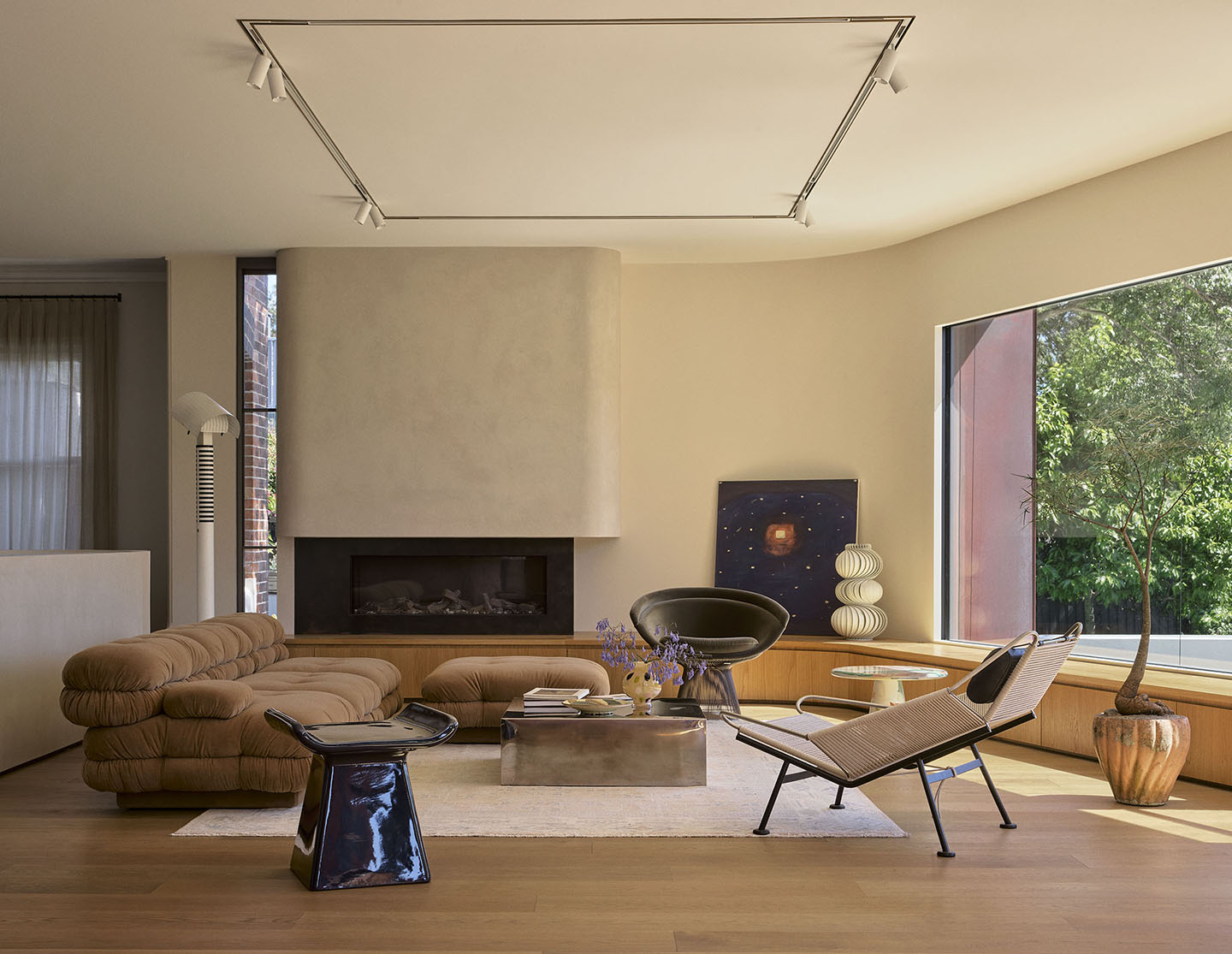
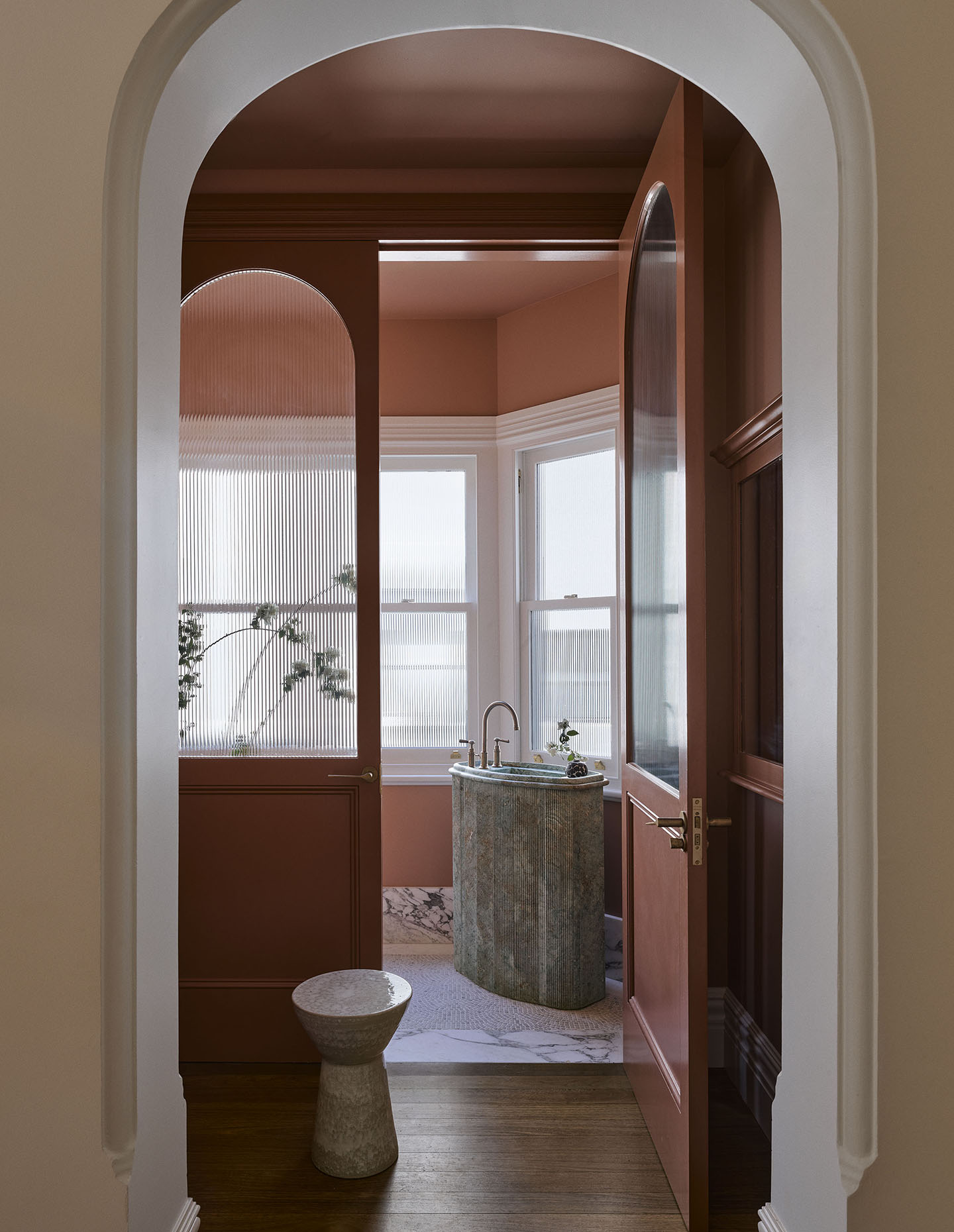
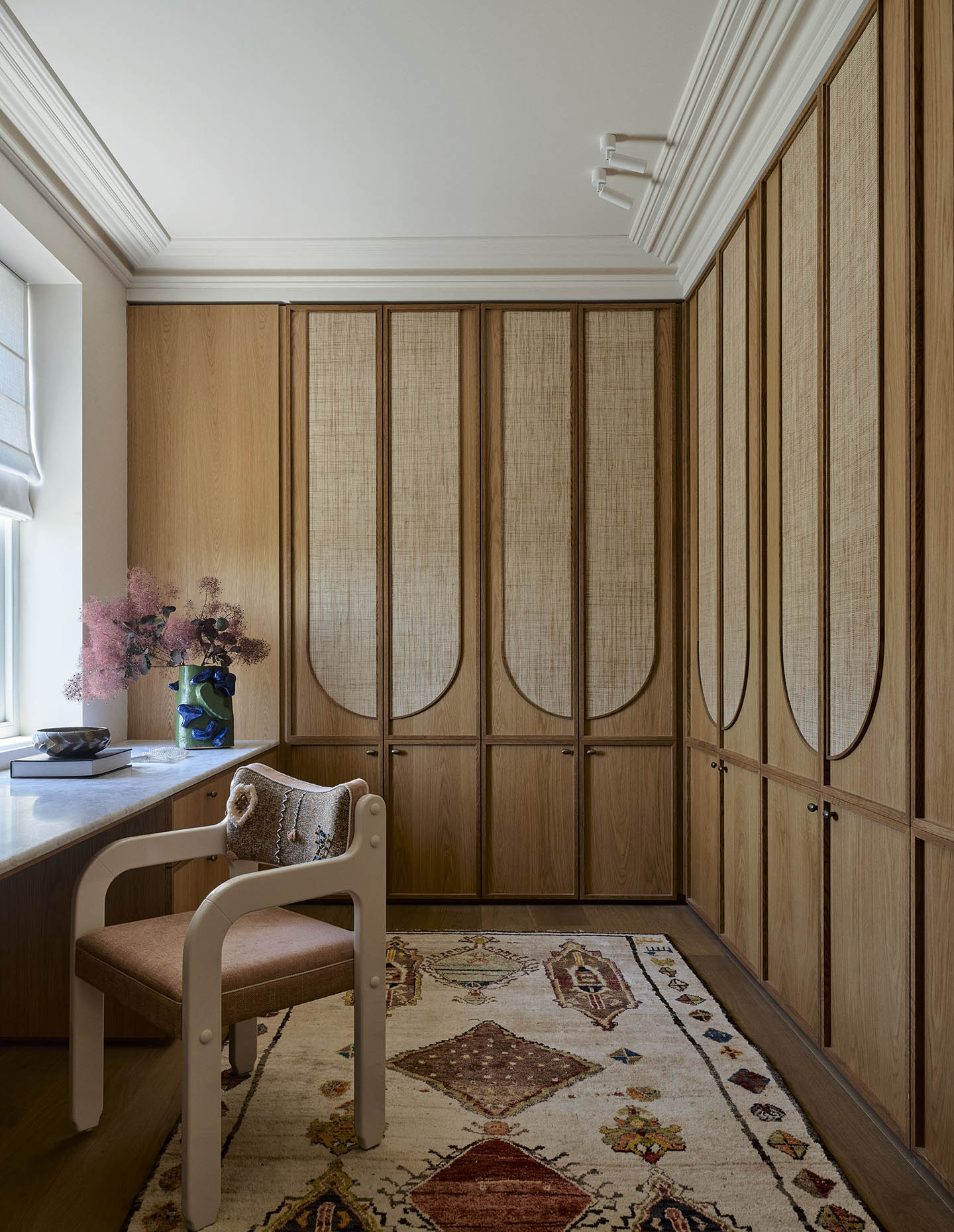
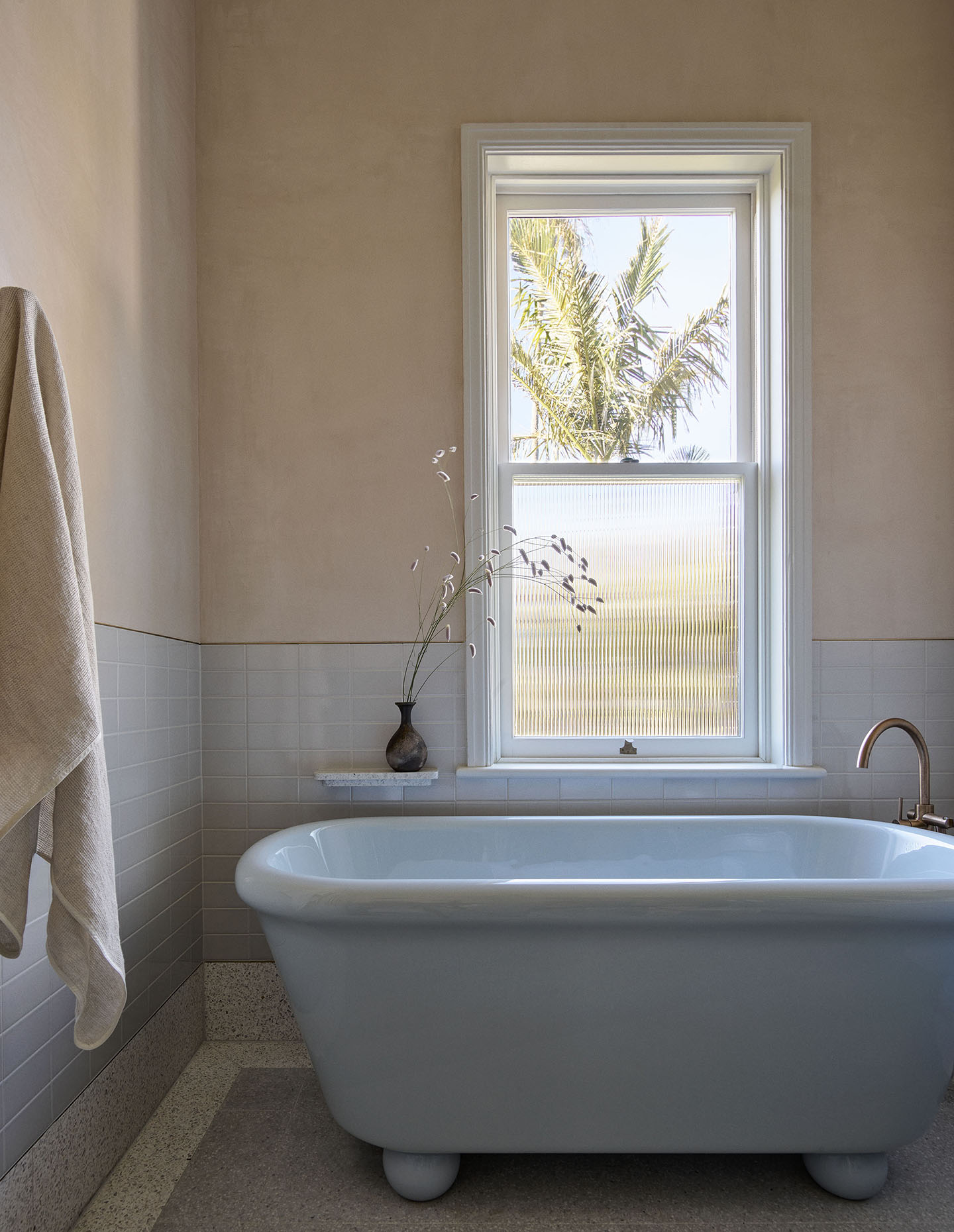
Arches and, of course, curves are recurring motifs throughout the interiors, seen in new architectural elements, meticulously crafted joinery and furniture. Inverted arches on the dressing-room wardrobe doors, softened edges adding a sense of intimacy to an otherwise oversized bedhead, rounded timber bathroom joinery and the dining terrace’s checked stone floor with its curved radius — these are just some of the references that so cleverly link the additions to the original house.
Related: Studio Bright’s breeze block tower of greenery
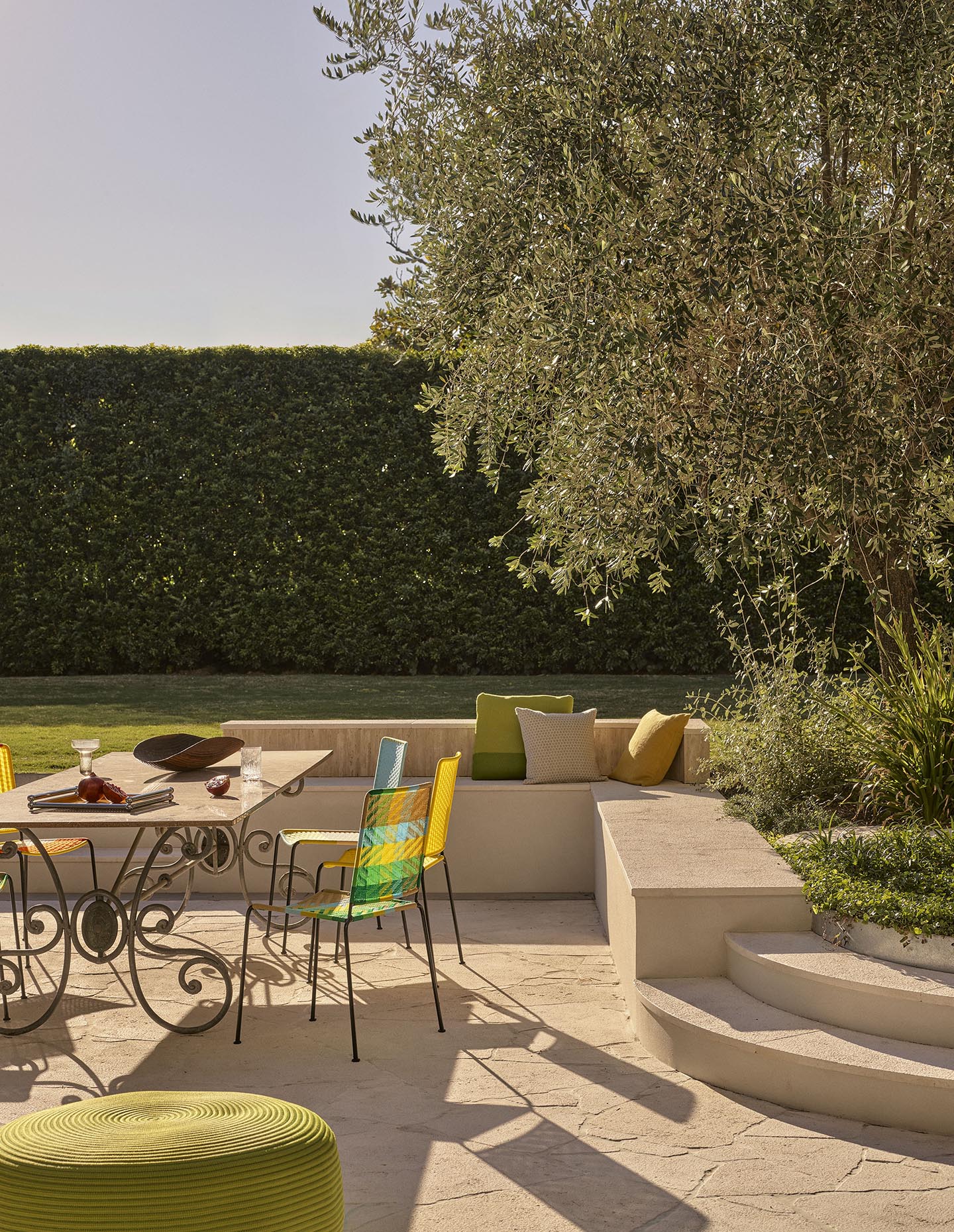
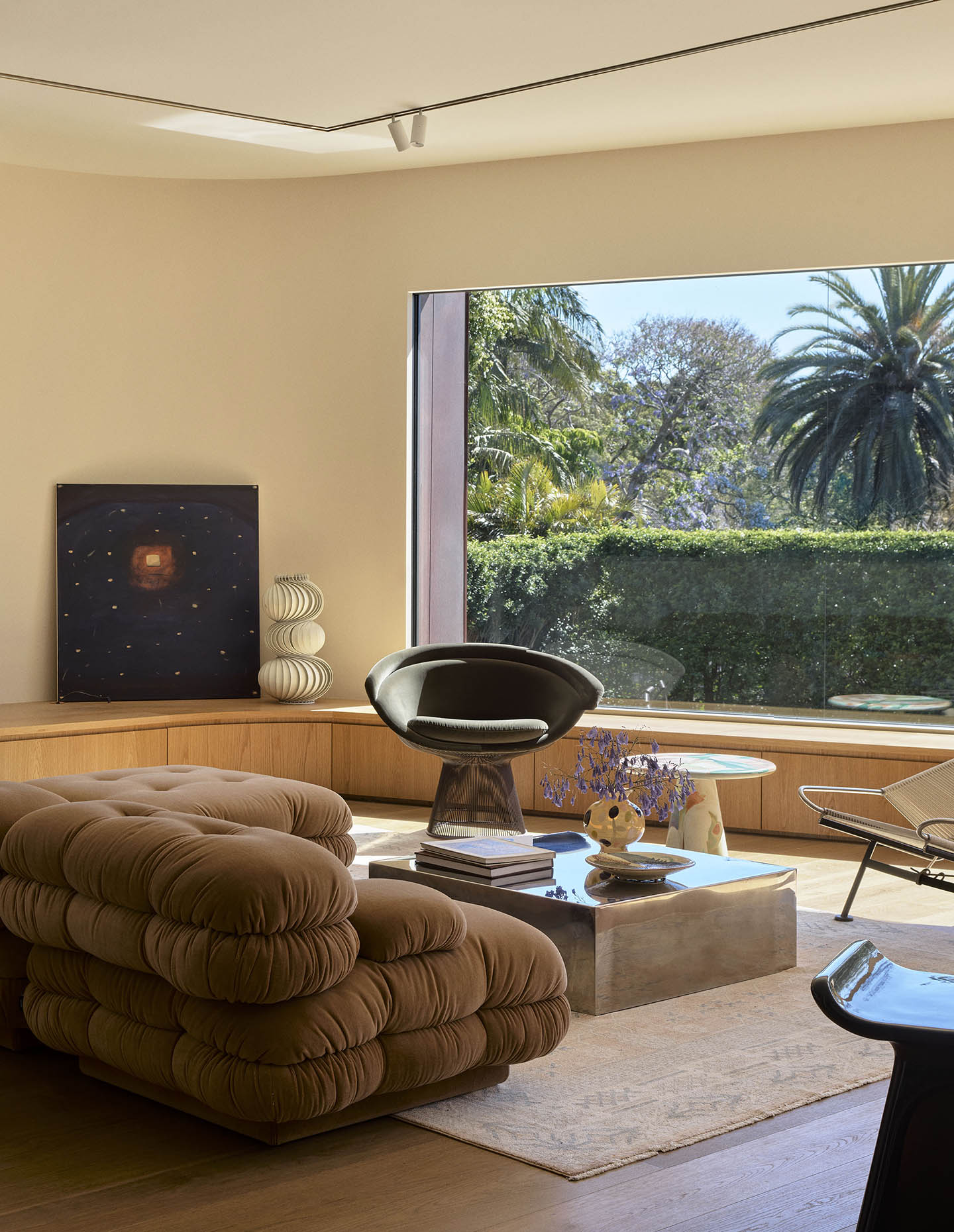
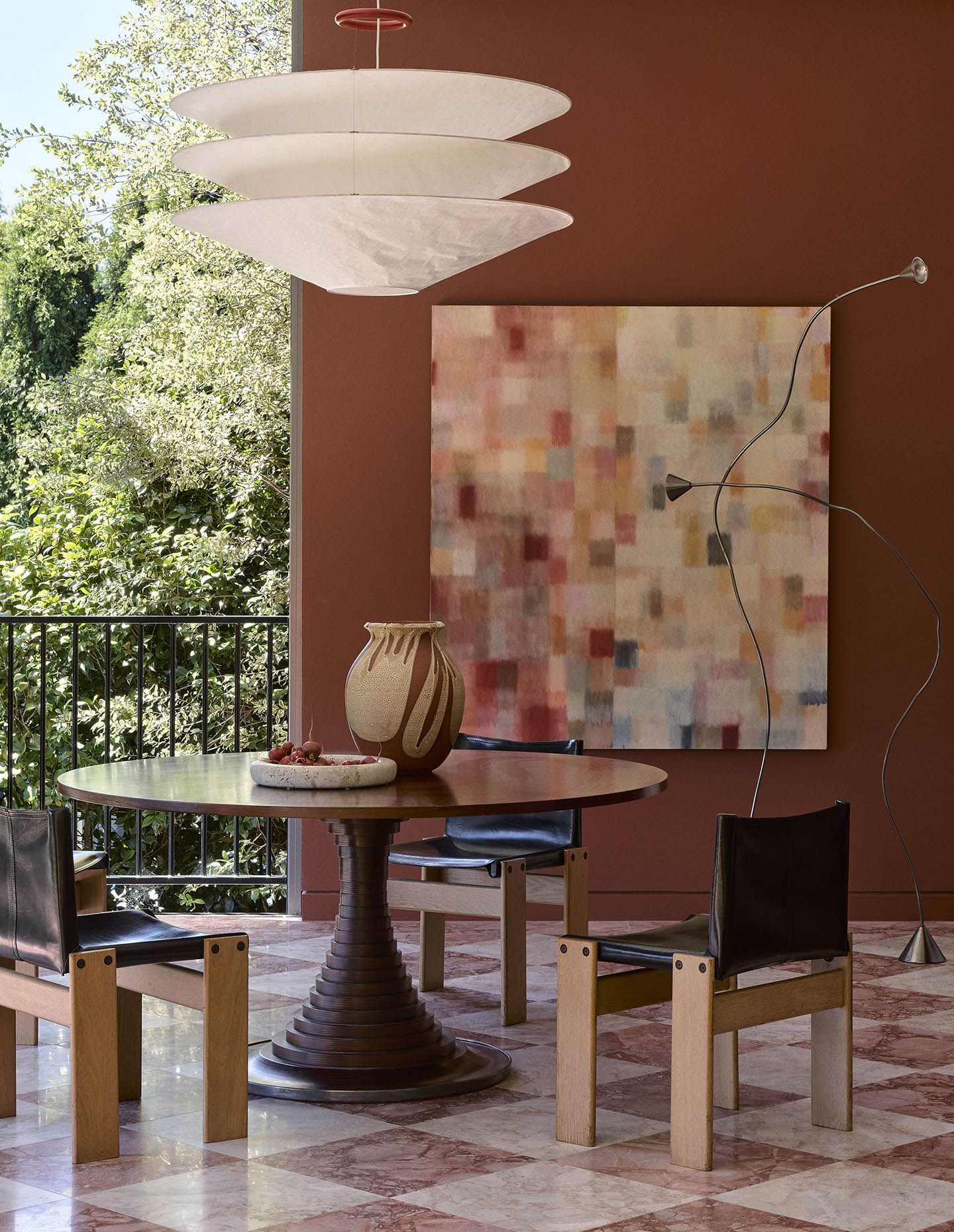
Principal designer Sarah-Jane Pyke sees the dining terrace as a standout embodiment of the design’s original intent: “Conceived from the architectural concept as a seamless connection between the kitchen, living and garden, it has become a space that feels almost like an outdoor terrace, while still having the refinement and embellishment of an interior. The generous glass doors, natural airflow, lush garden outlook and soft architectural curves reinforce that sense of openness, while the pink marble floor gives the setting a distinctive character. The result captures that balance between indoor and outdoor beautifully.”
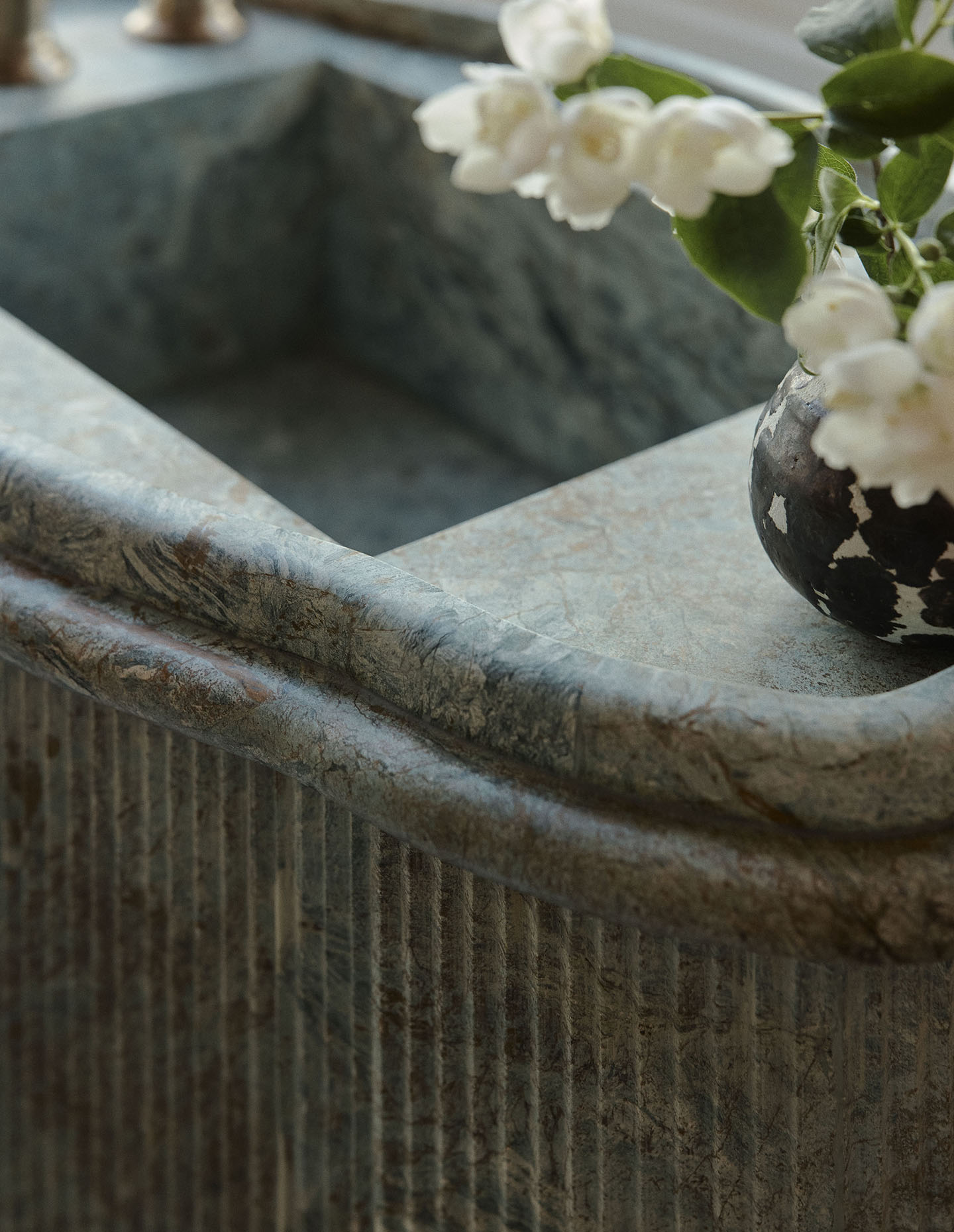
The use of colour and materiality is similarly deliberate. Marble, timber, brass, reeded glass and textured tiles are cleverly layered rather than treated as isolated finishes, while colour plays an important role in defining individual spaces. The palette incorporates terracotta (echoing the house’s red brick exterior), dusty rose, turquoise and blues, creating distinct identities for rooms while maintaining a visual relationship across the house.
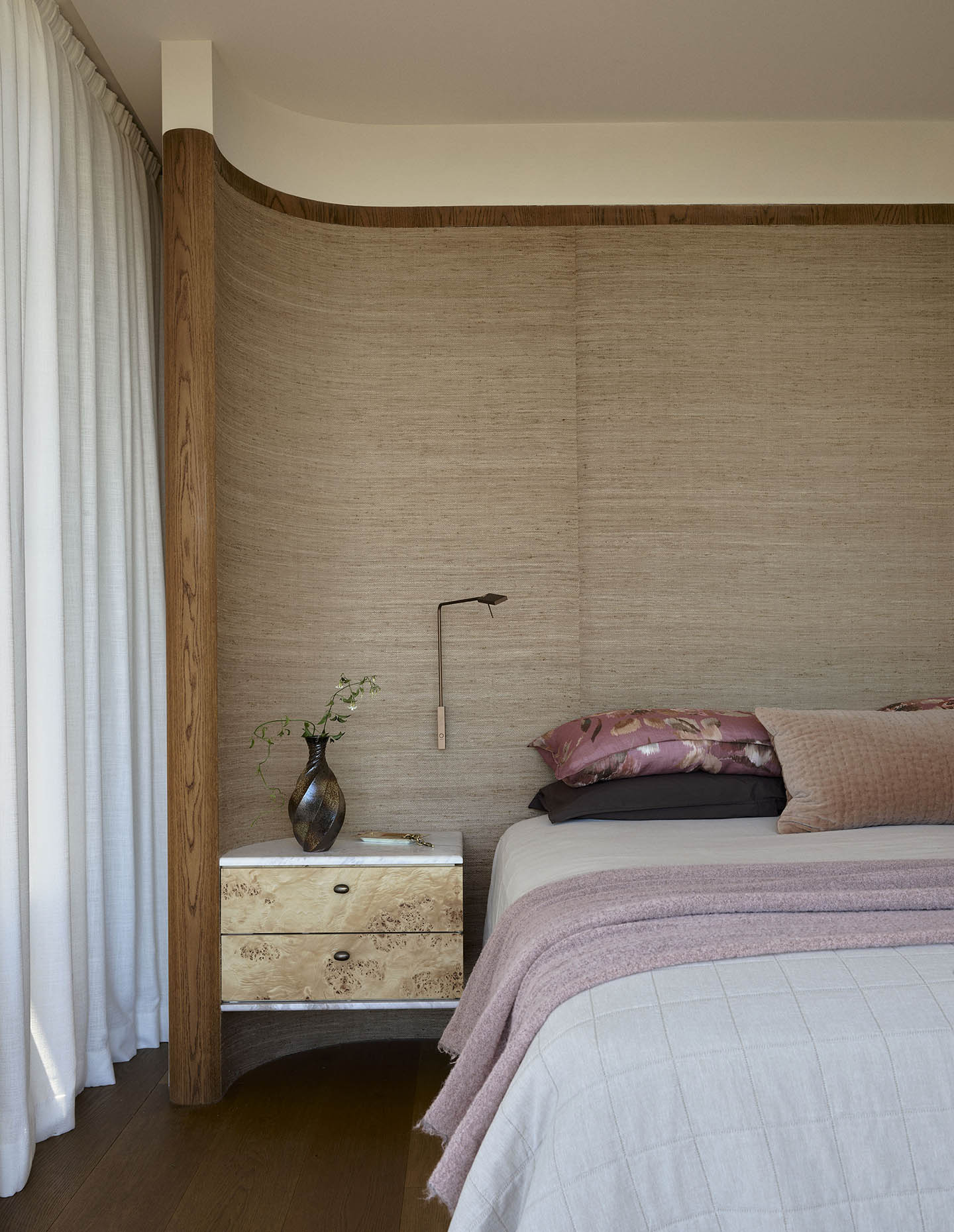
Carefully curated furniture choices add yet another layer to the interior scheme. Contemporary pieces inhabit the spaces beside vintage and mid-century furniture, the latter’s lines echoing much of the Arent&Pyke-designed joinery. Many pieces are strongly sculptural in form, such as the Carlo di Carli dining table on the dining terrace, its layered pedestal answered by the layered form of the Ingo Maurer Floatation pendant light hovering above.
At Bradleys Head House, the arches and curves that recur from room to room do more than soften the architecture — they’re the thread that ties the original 1900s dwelling to everything new around it. The result is a home that doesn’t separate its past from its present, but layers one over the other, much like the marble, timber and brass that define its interiors. For a family moving into its next generation in the same house, that sense of continuity feels like the point.