
With its ocean views, local craftsmanship and relaxed approach to luxury, Avani Mooloolaba Beach Hotel marks a significant addition to the Sunshine Coast’s hospitality landscape. Designed by Studio Raso, the project occupies a former car park site in the heart of Mooloolaba and reimagines what a contemporary coastal hotel can be — one that feels connected to its surroundings rather than detached from them. We spoke with Studio Raso director Taryn Raso about the thinking behind the project.
Tell us about the site context.
The hotel occupies a prominent corner site in the heart of Mooloolaba on Queensland’s Sunshine Coast, one of Australia’s most established coastal destinations. Positioned just back from the Esplanade, the site benefits from expansive ocean views while maintaining a degree of separation from the intensity of the beachfront promenade.
Historically operating as a surface car park, the site presented a rare opportunity to introduce a significant hospitality project within an already mature urban environment. Its location at the intersection of the ocean, the foreshore and the town centre provided a unique platform to create a building that engages with both visitors and the local community.
The design response is deeply informed by its coastal setting. Light, materiality, outlook and spatial planning were all shaped by the character of Mooloolaba, drawing on the region’s natural landscape, subtropical climate and relaxed social rhythm to create a hotel that feels grounded in place rather than imposed upon it.
What can you tell us about the client and their brief?
The client was committed to delivering a project of lasting significance for the Sunshine Coast — not simply a hotel, but a landmark destination that contributes meaningfully to the region’s evolution.
The brief centred on creating the first full-service internationally branded hotel to open on the Sunshine Coast in more than four decades, presenting an opportunity to establish a new benchmark for hospitality within the region.
A key objective was ensuring the hotel felt intrinsically connected to Mooloolaba. The design needed to appeal equally to visitors and locals, avoiding a generic international hotel experience in favour of something regionally responsive and reflective of the Sunshine Coast lifestyle, culture and environment.
What are the key material and structural choices?
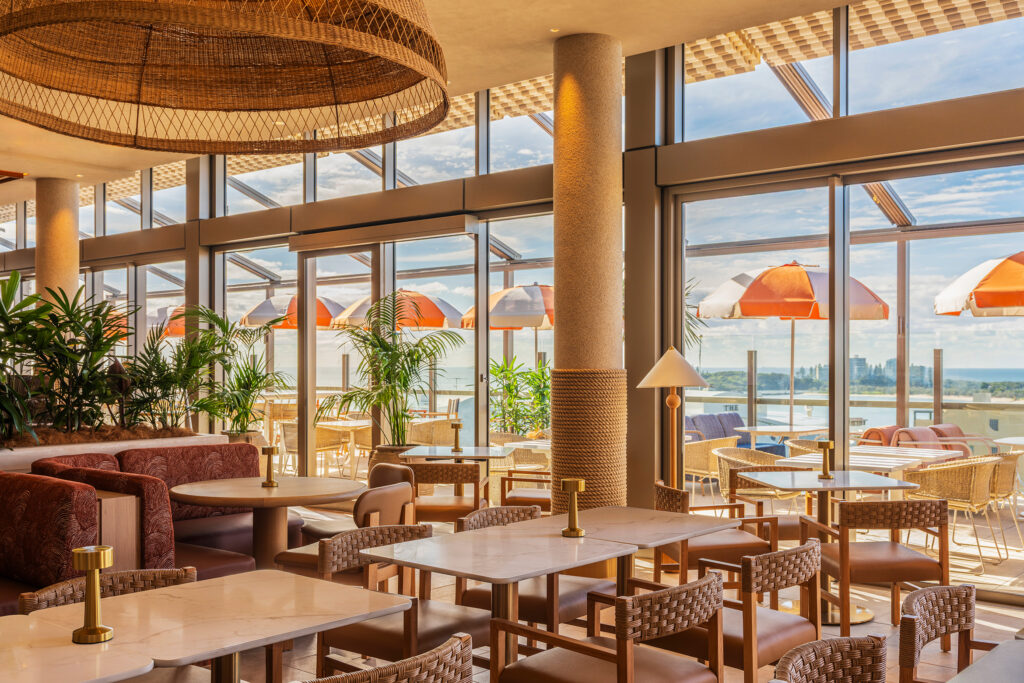
The material palette was developed to create a strong connection between the hotel and its coastal setting while maintaining a sense of permanence and sophistication.
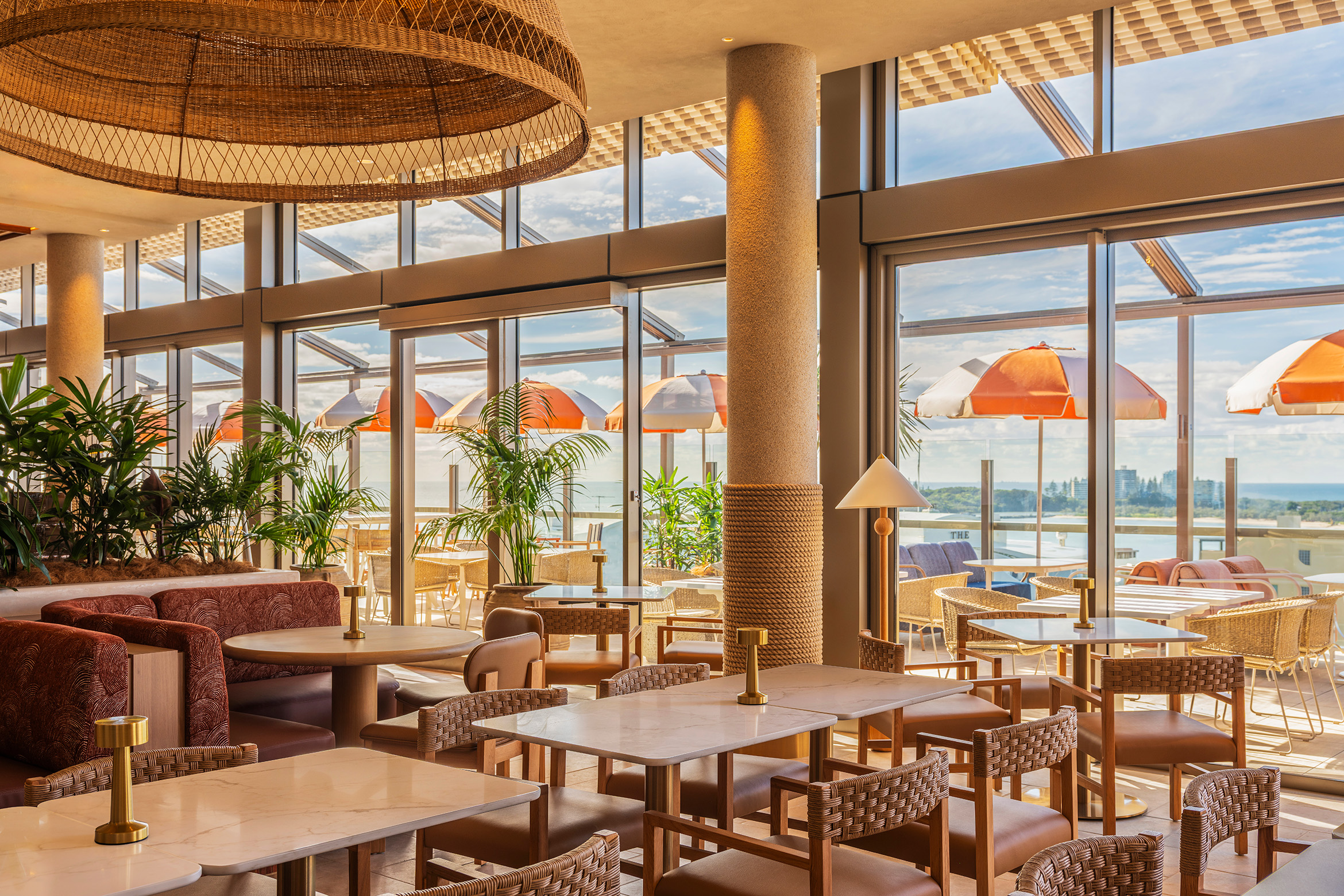
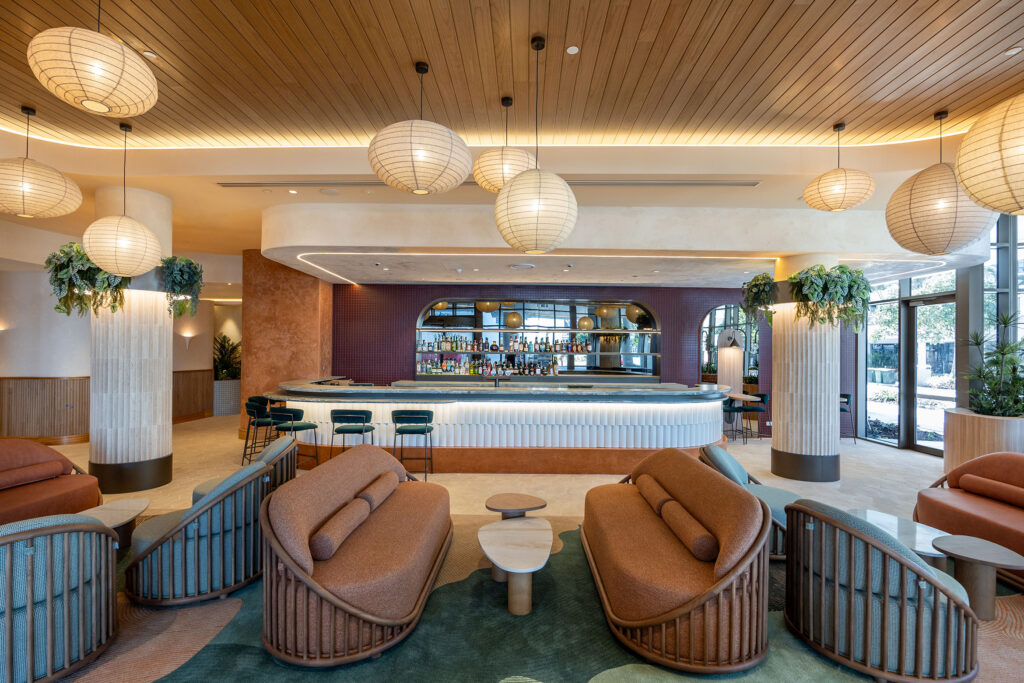
Warm oak timbers, neutral travertine tones and free-form natural stone cladding form the foundation of the palette, introducing warmth, texture and an immediate sense of familiarity. These materials are complemented by carefully selected marbles, granites and quartzites, whose natural variation and movement bring richness and visual depth to key spaces throughout the building.
Textiles play an equally important role, layering texture, pattern and tactility into the interiors. Together, the materials create an environment that feels refined yet relaxed — a contemporary interpretation of coastal luxury that is distinctly suited to the Sunshine Coast.
Related: A second home in Kyoto’s historic heart
What key functional requirements does the design address?
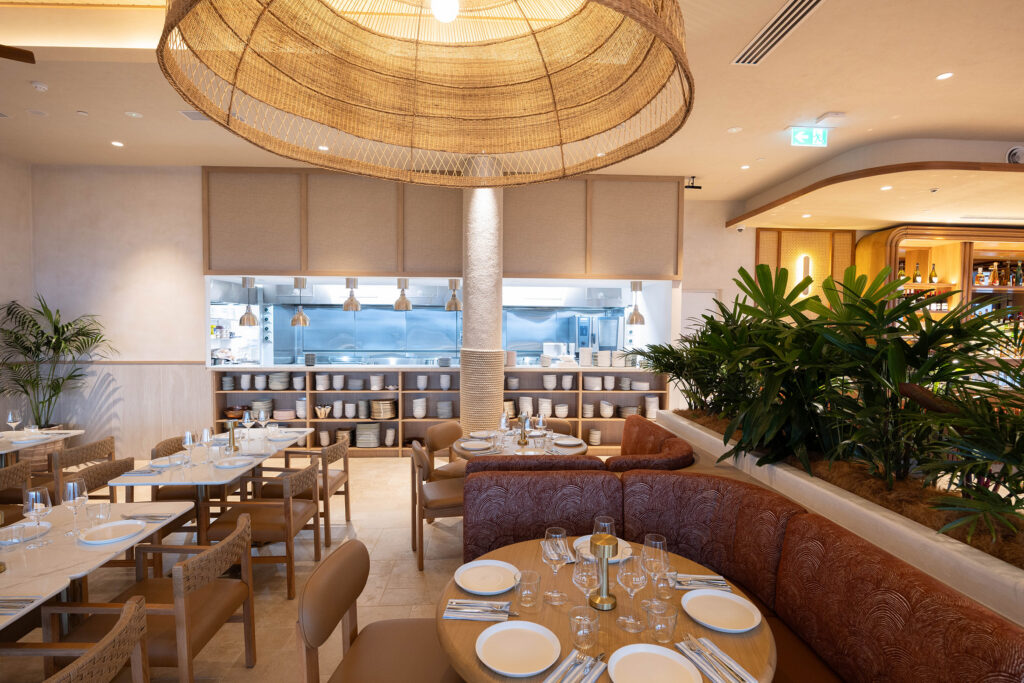
As a full-service hotel, the project was required to accommodate a diverse range of guest experiences, including accommodation, dining, events, wellness, leisure and arrival spaces.
A primary design objective was ensuring these varied functions felt intuitive and connected rather than operating as isolated destinations within the building. Consistency of materiality, detailing and spatial language helps create a seamless guest journey from arrival through to guestrooms, dining venues, wellness facilities and event spaces.
The result is a hotel experience that feels cohesive and legible, with each space maintaining a clear connection to the broader architectural narrative and coastal setting.
Can you tell us about the role of local makers and suppliers in the project?
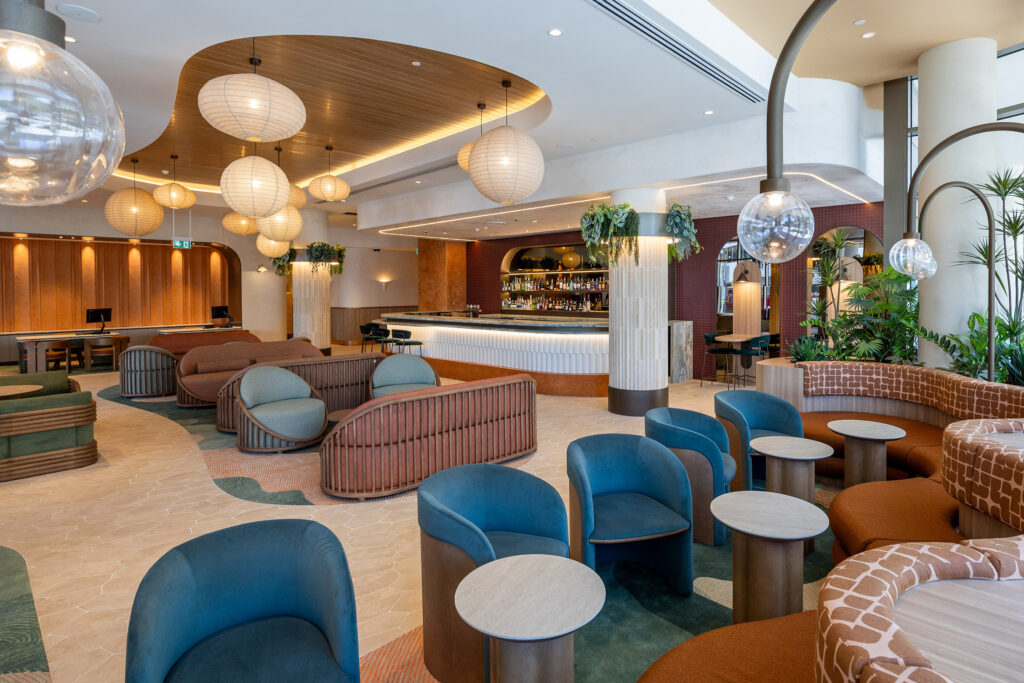
Rather than focusing on a single hero furniture or design brand, the project prioritised collaboration with local manufacturers, craftspeople and suppliers wherever possible.
A particularly important partnership was developed with a Sunshine Coast-based joinery company, which worked closely with the design team throughout both the design and delivery phases. This collaborative approach allowed for a high level of customisation while ensuring the project remained responsive throughout construction.
Local sourcing also proved advantageous from a delivery perspective, particularly at a time when many international suppliers were experiencing extended lead times. Working closely with regional partners enabled greater quality control, faster decision-making and a more agile design process.
Ultimately, this approach resulted in a highly customised outcome that carries a genuine sense of local craftsmanship and reinforces the project’s connection to place.
What are your favourite parts or moments in the design?
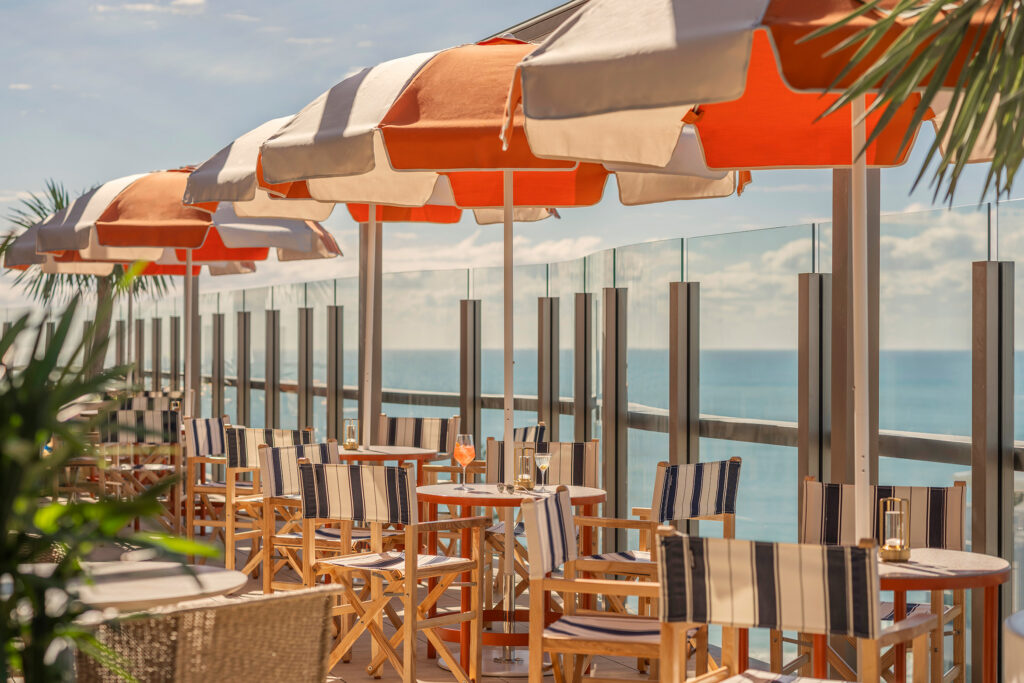
One of the most successful aspects of the project is its ability to balance a sense of luxury with the relaxed character that defines the Sunshine Coast. The spaces feel elevated without becoming overly formal, creating an experience that is sophisticated yet approachable.
The main lift lobby is a particularly memorable moment within the building. Rich materials, controlled lighting and a more intimate atmosphere create a sense of anticipation and arrival, offering a deliberate contrast to the openness and brightness found elsewhere throughout the hotel.
However, the defining experience begins much earlier. The arrival sequence through the main lobby was intentionally designed to move away from the traditional model of a formal hotel reception. Instead, it functions as a social, multi-purpose space that immediately evokes a sense of ease and escape.
From the moment guests step through the revolving doors, there is an unmistakable feeling of entering holiday mode. Natural light, generous volume, layered textures and a strong connection to the surrounding coastal environment create an atmosphere that feels welcoming, energetic and distinctly of Mooloolaba.