
Spatial generosity and formal restraint define this multigenerational residence in inner-city Melbourne. The homeowners have named the house ‘Ek Onkar,’ which comes from the first line of the Mool Mantar in Sikhism, meaning ‘There is only one God.’ For the family, it expresses the sentiment that everyone is equal.
Within the architectural framework, interior designer Brahman Perera was invited to craft a furniture and material response that could hold complexity and comfort in equal measure.
Perera’s role focused on specification and furniture curation, working closely with the client – a fashion designer with a sharp eye for detail – and the architect. “The bones of the house were already there. It was about pulling it into alignment with how the family actually lives, introducing spatial logic, material texture and emotional nuance through the interior elements,” Perera shares.
Accessed by three generations, with frequent overseas guests and extended family visiting for long periods, the program required adaptability. While the plan carved out large, interconnected volumes, particularly along the gallery-like central corridor, Perera’s intervention activates these spaces with warmth, intimacy and functional hierarchy.
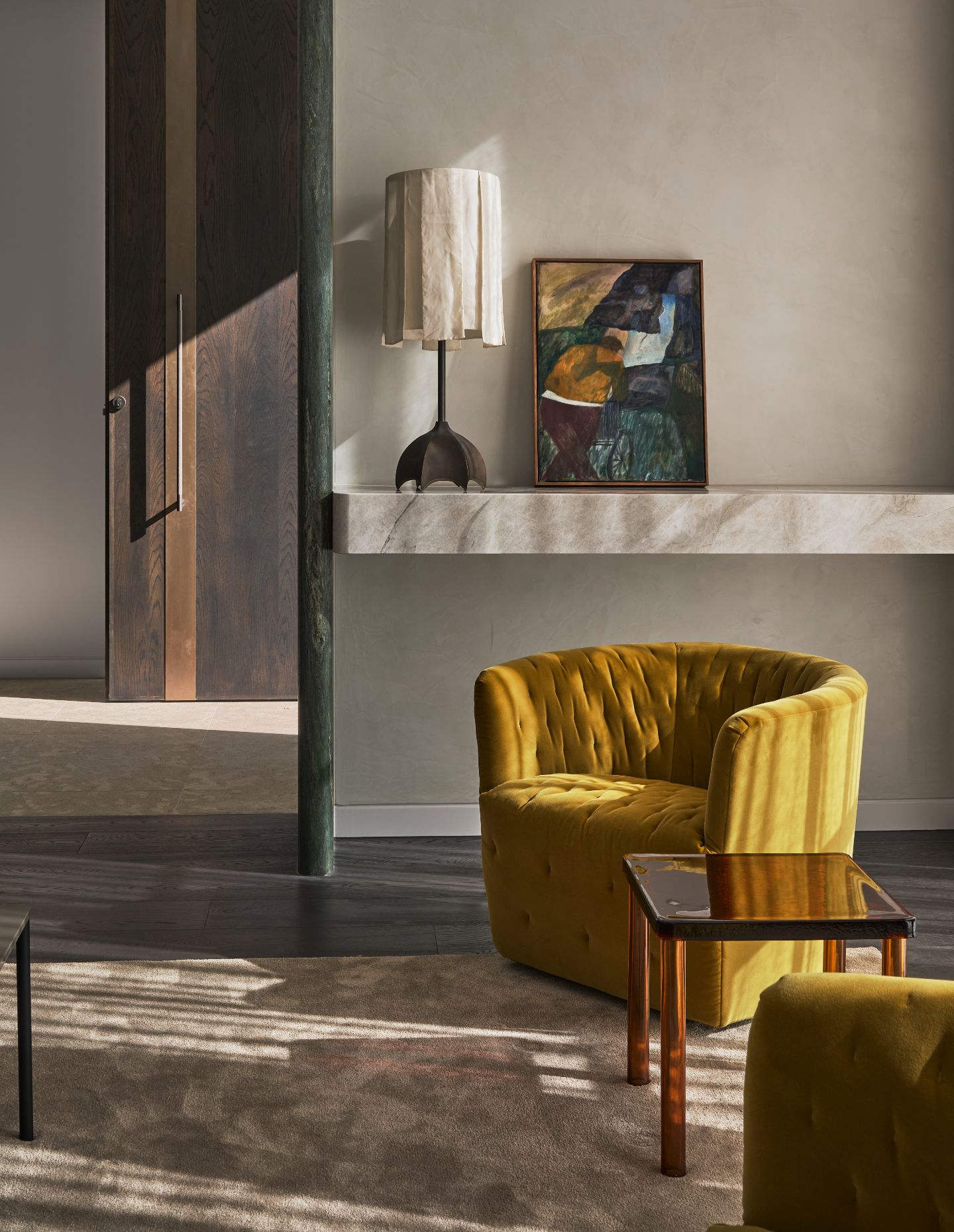
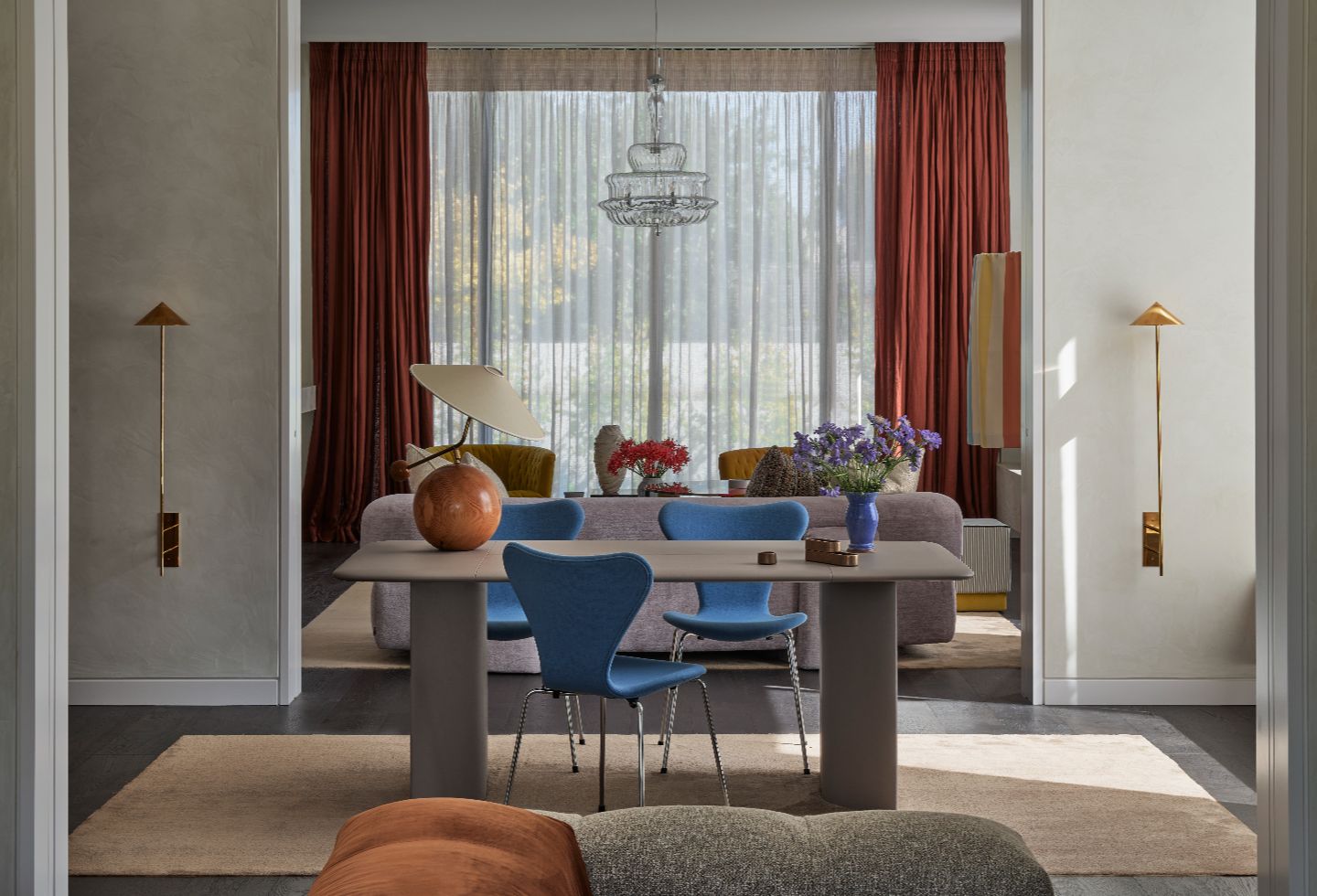
One of the clearest examples is the study: a transitional room set along the spine of the home that acts as both a pivot point and pause. “We talked about it as an anchoring room,” Perera notes, adding, “It could have easily been treated as a formal reception, closed off and underutilised. Instead, it’s now a hybrid space, part reading room, part study, part salon, that opens completely or closes down depending on use. It’s multi-functional, but not at the expense of form.”
This rigour is evident throughout Perera’s process. Early concepts were mapped, interrogated, then redefined, with particular focus on the user experience and spatial scale. The architecture is deliberately oversized, with heightened thresholds, exaggerated room proportions and a strong sense of procession. Furniture, therefore, needed to do more than fill space – it had to counterbalance it, to punctuate and modulate the plan without compromising legibility.
Related: Room to breathe
“Because the architecture is so expressive, we didn’t want to over-resolve with joinery. Instead, we introduced sculptural furniture elements that ground the scale,” he explains.
In the multipurpose study room, this takes shape with a Poltrona Frau bookshelf, an artistic, sculptural gesture in place of more built-in joinery. Here, it’s paired with a leather-clad table, also from Poltrona Frau, which is frequently used for drinks and informal hosting. “That room is central to the plan,” Perera says. “It needed flexibility and a sense of invitation. It’s now a key piece of the home’s choreography, not a room left idle.”
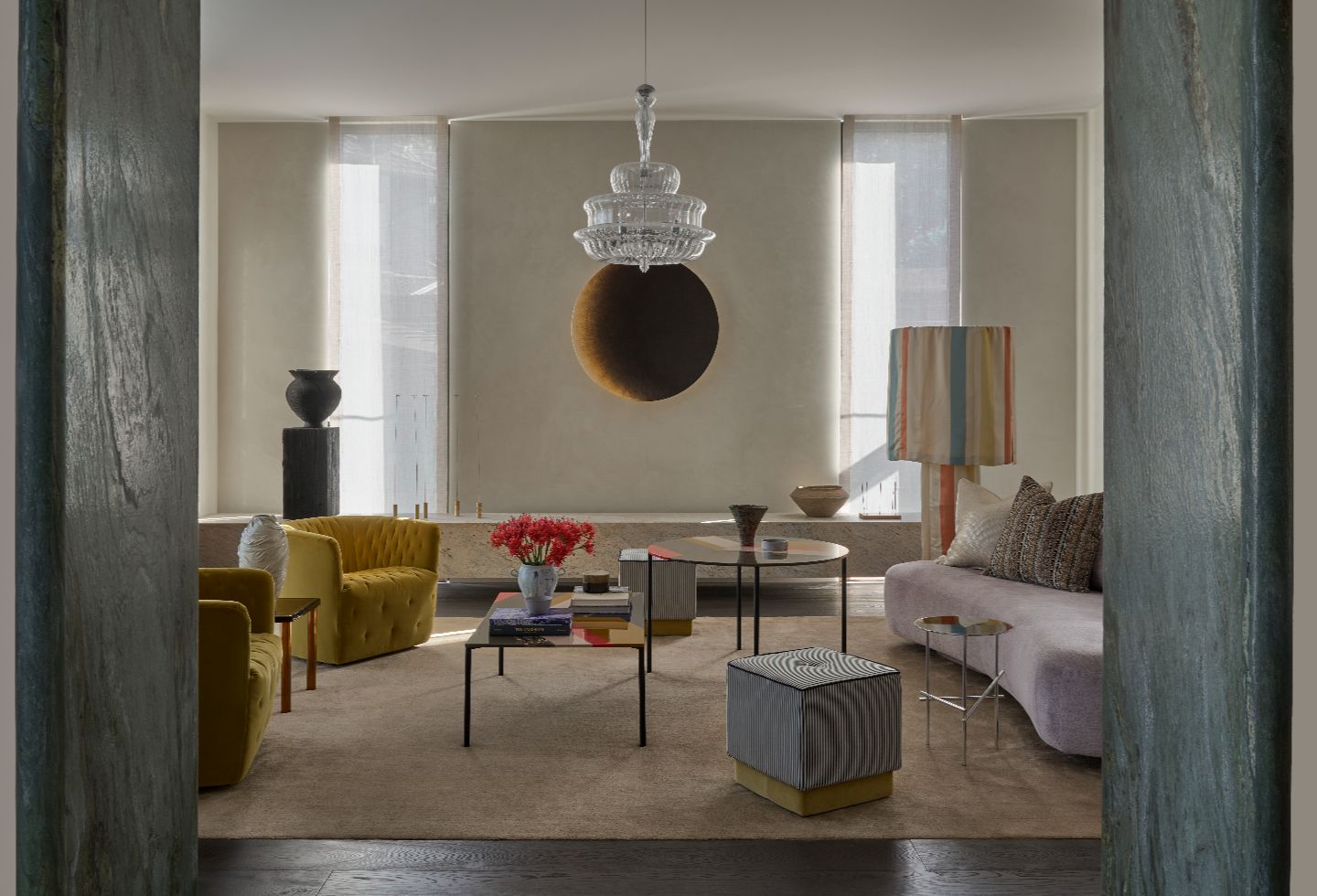
The architectural legibility of the home also demanded a level of finish from each object: pieces are visible from all angles and often across rooms. Everything needed to be beautiful in the round, with Perera noting that it wasn’t about just “being decorative.” Instead, the approach is grounded, sculptural and purposeful.
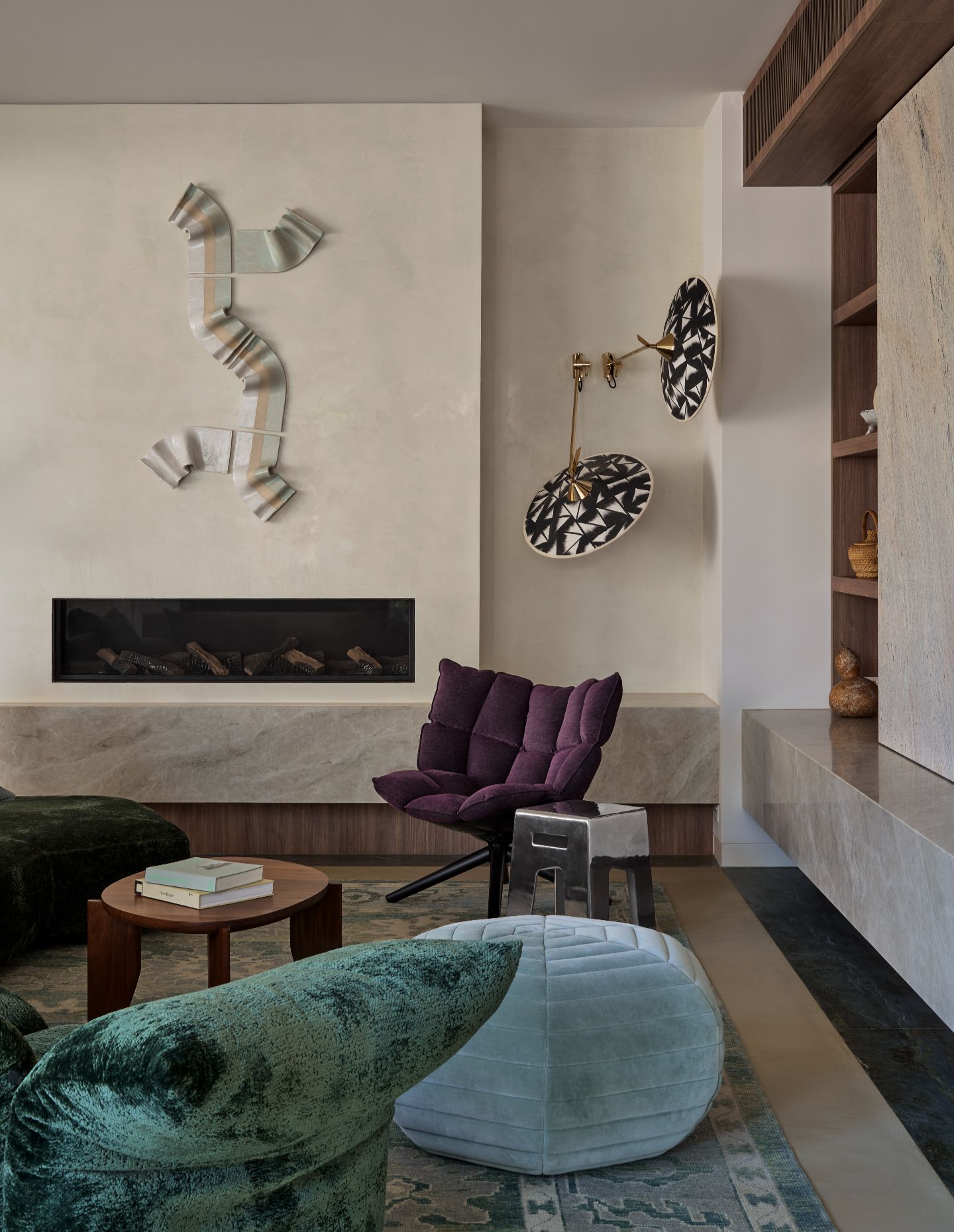
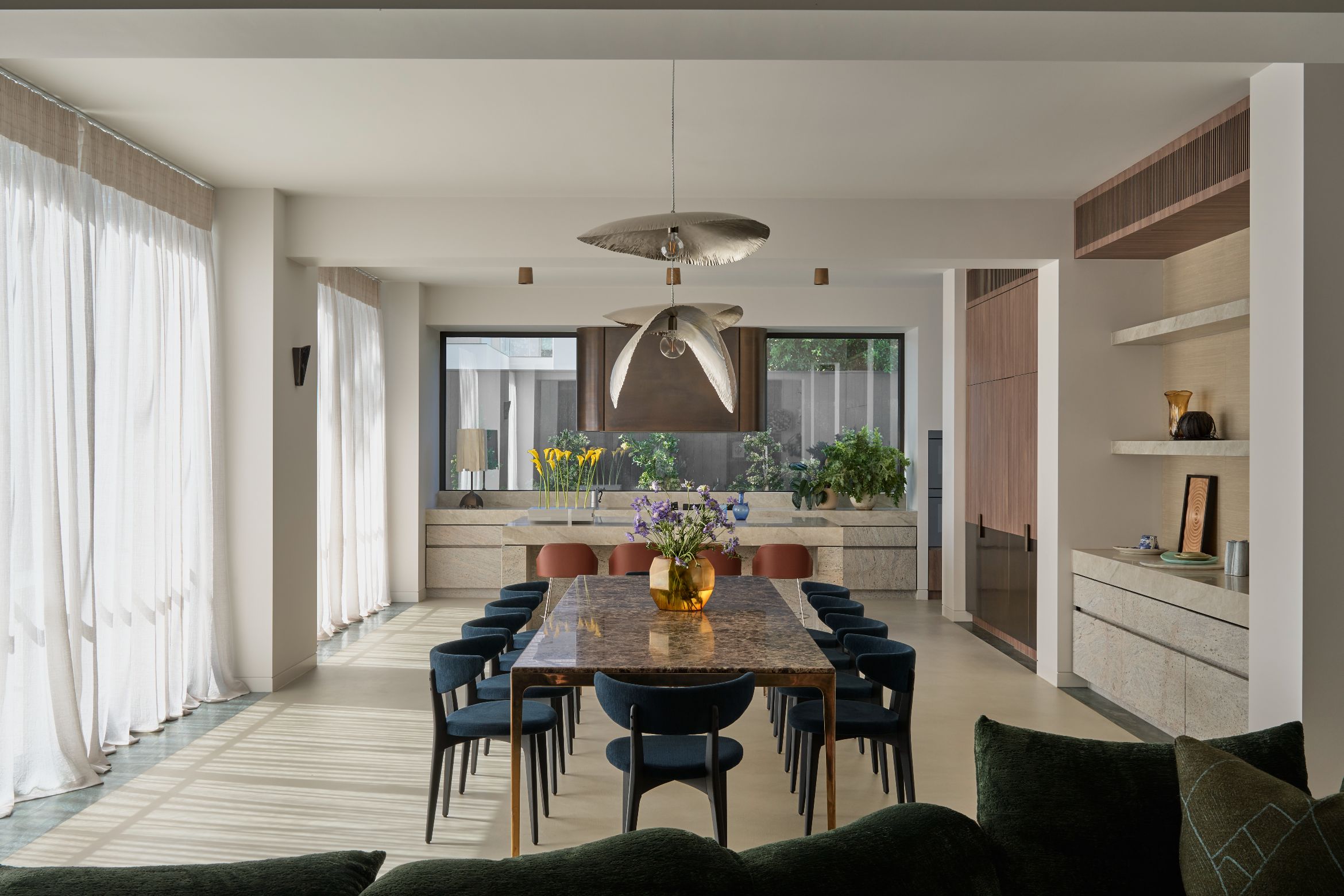
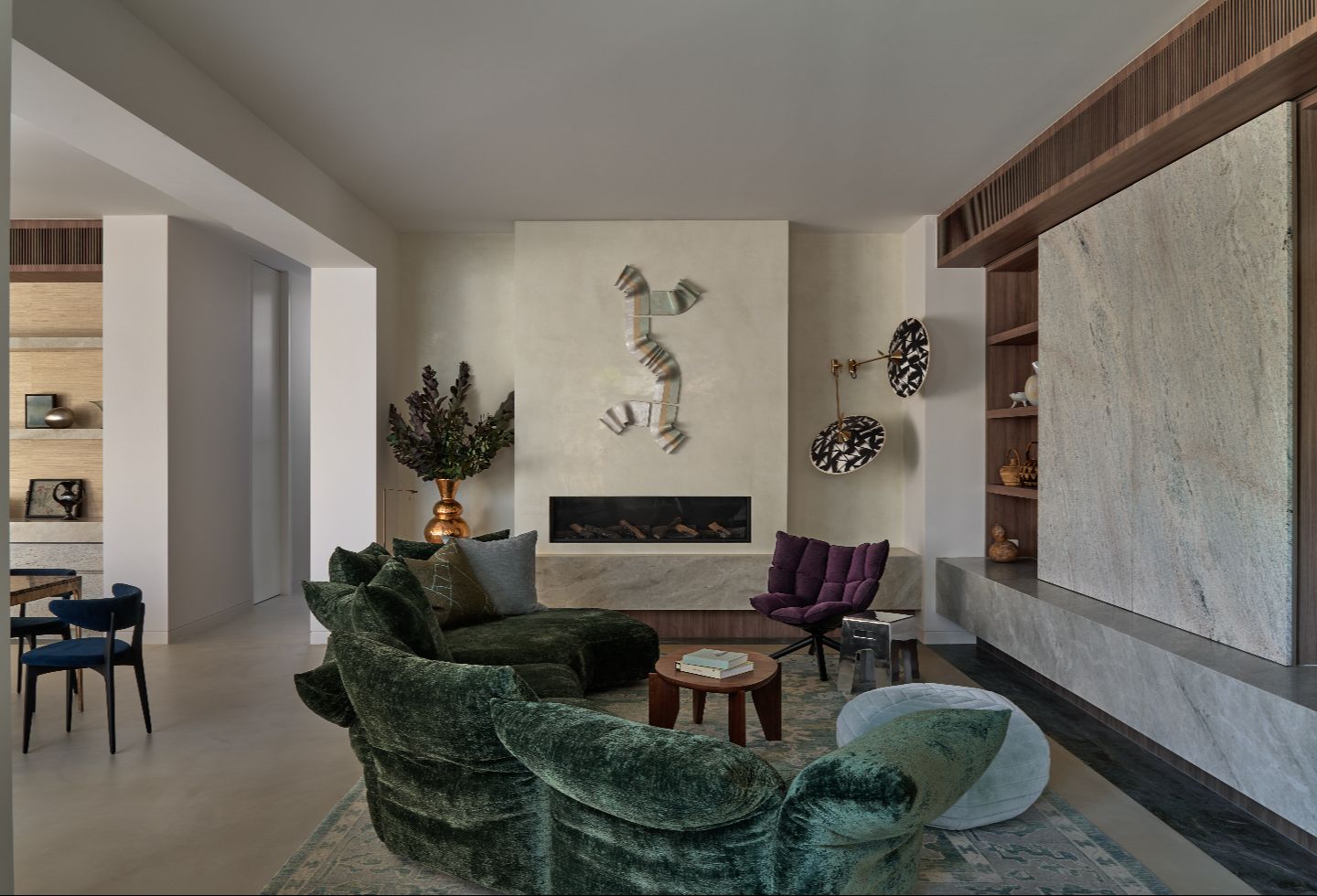
In the primary living space, an emerald-green Standard sofa by Edra anchors the arrangement; its cranked modularity offers both sculptural expression and functional clarity. “We needed a way to shape this oversized room and bring intimacy to it,” Perera notes. In this regard, the Edra sofa creates zones. There’s a lily pad corner for the children, adjustable petals for comfort and arms that serve a practical purpose for older family members. “These are the small but essential considerations that underpin how a space actually works,” Perera says.
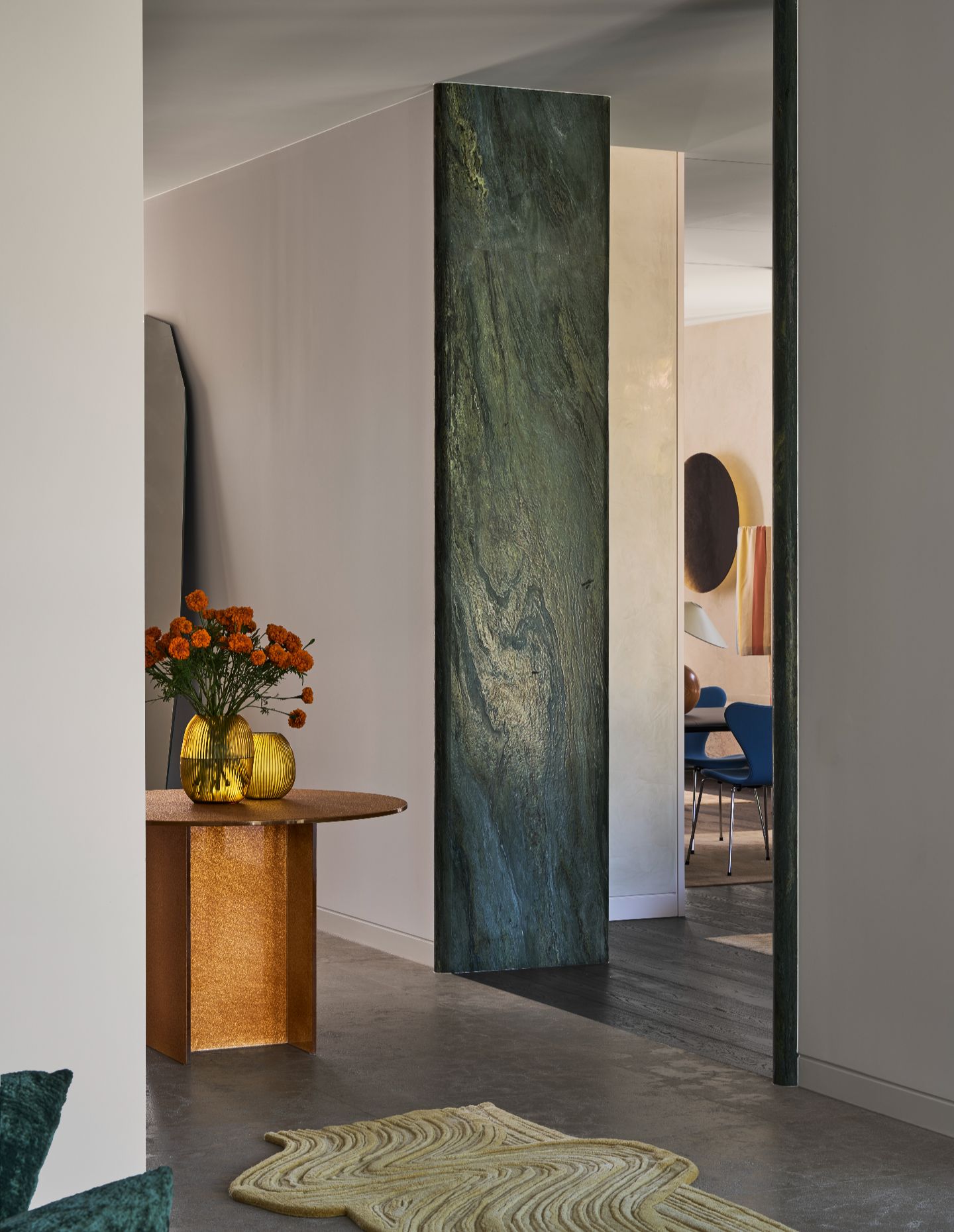
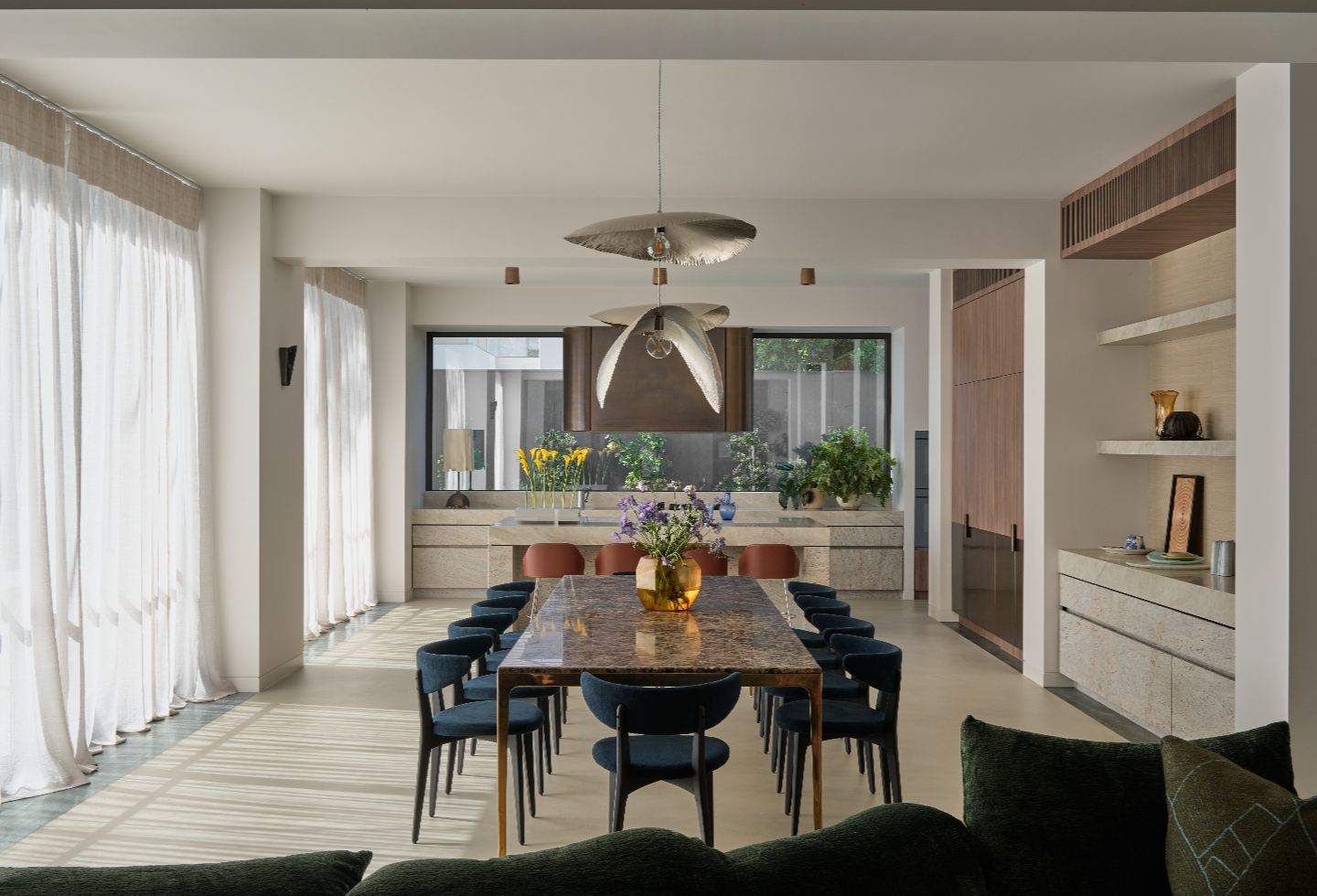
A custom dining table by Daniel Barbera further tempers the scale. With a fine bronze base topped in chocolate marble, it sits delicately poised despite its capacity to seat 12. In the corridor, an amber Glas Italia table acts as a sculptural interruption, catching light throughout the day and refracting it across multiple surfaces. Perera explains that this glass insertion is intended to slow the movement through the foyer space, forcing a moment of stillness in an otherwise highly connected floorplate. Again, reflecting intentionality through every piece selected.
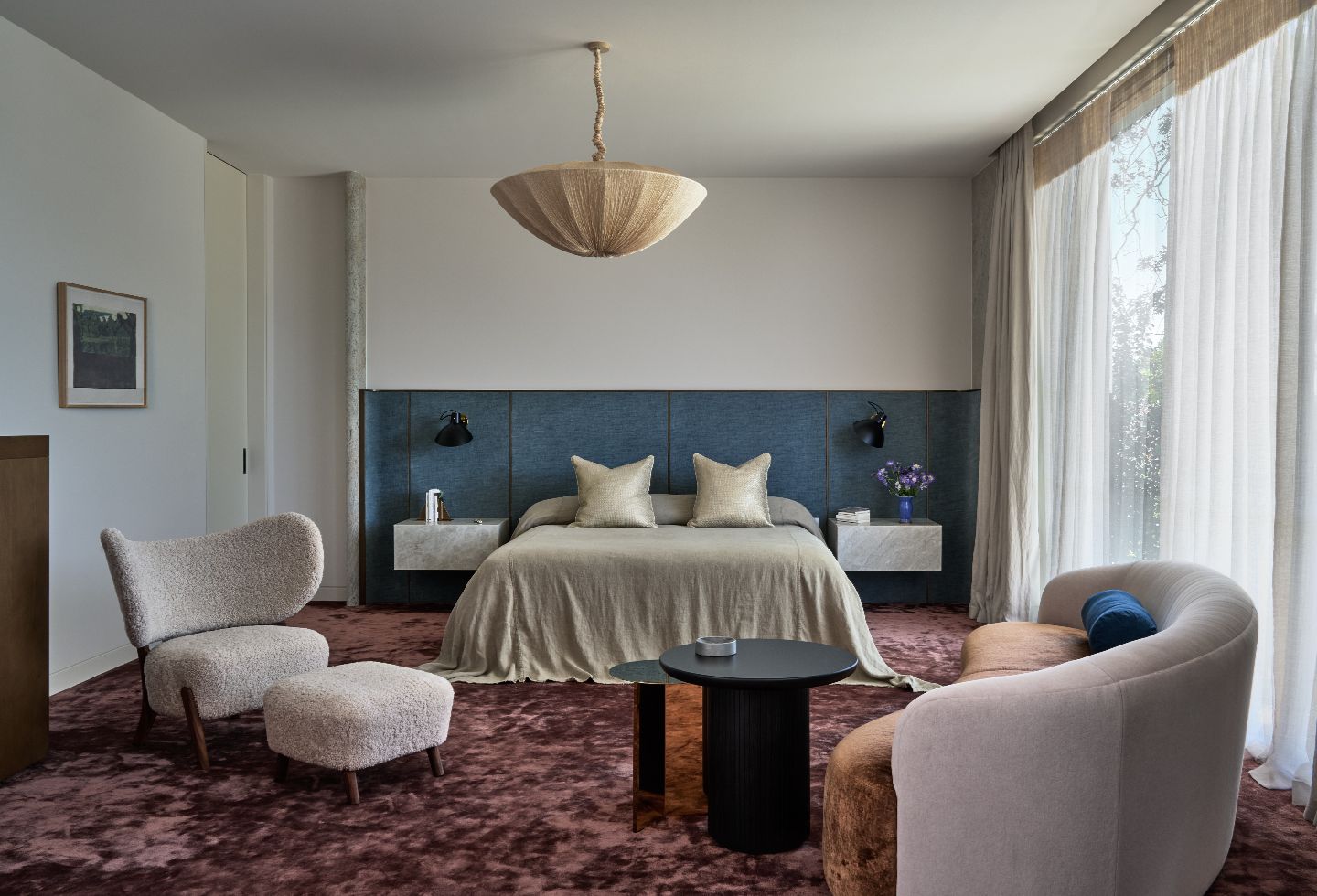
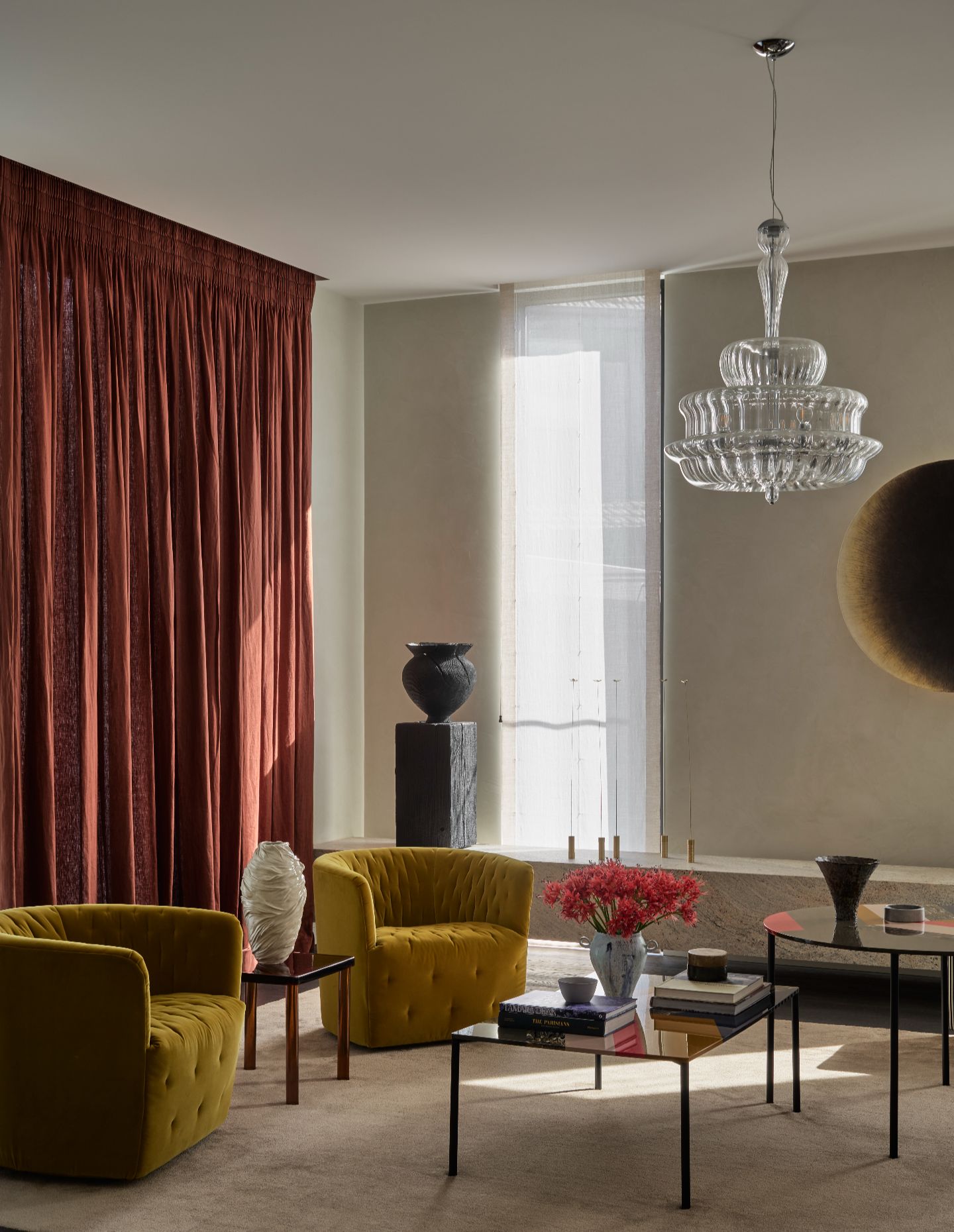
Throughout the home, materials act as narrative devices: an exaggerated tufted rug from Halcyon Lake introduces lime tones that echo both the Edra sofa and the garden beyond. Pastry-toned upholstery and rust-coloured drapery reference the client’s fashion sensibility, while sculptural lighting, such as the striped BDMO oversized floor lamp, bring vertical punctuation.

In the formal front room, Perera disrupts any sense of rigidity with deliberate contrast. Arrangements are scattered to counteract the architectural rigour. “There’s a running joke that it’s a Marie Antoinette salon,” he says. “So, the furniture palette had to resist the obvious. It’s playful, yes, but still measured. That balance of geometry and whimsy is critical.”
Perera’s contribution to this home lies in the orchestration of spatial feeling. Every element has been interrogated for how it will be used. There’s no surplus, no surface-level styling – just a calibrated response to how people live and how design can elevate it.