
Sam Crawford Architects (SCA) is a practice grounded in the idea that architecture shapes how we live, connecting people to place through homes, community buildings and public spaces. This interest in the relationship between people, buildings and landscape underpins the studio’s latest residential project, Waverley House.
Located in Sydney’s eastern suburbs, Waverley House sits within a landscape heritage street defined by mature Moreton Bay fig trees. A renovation of a modest 1950s single-storey bungalow, the project has been carefully reworked to strengthen the family’s connection to nature while respecting the scale and character of its surroundings.
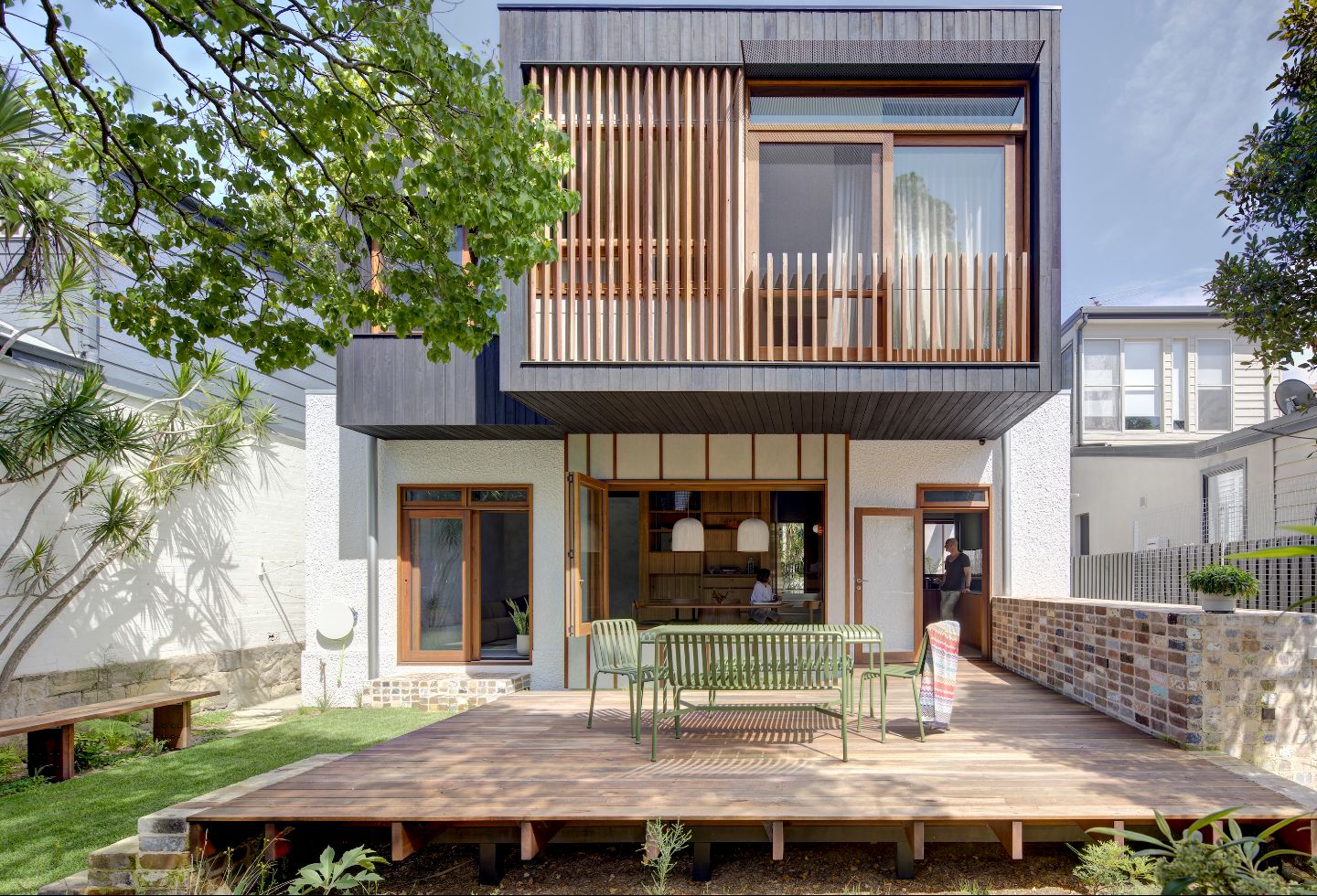
In response to the site’s gentle slope, Sam Crawford, principal of SCA, together with Jarad Grice, Charly Watson and Jacqui Singer, reimagined the home’s internal organisation. The rear ground floor was lowered to create living spaces that sit closer to the garden, while two split levels were introduced above. Importantly, the architects retained the original footprint and external walls, working within the constraints of the existing structure.
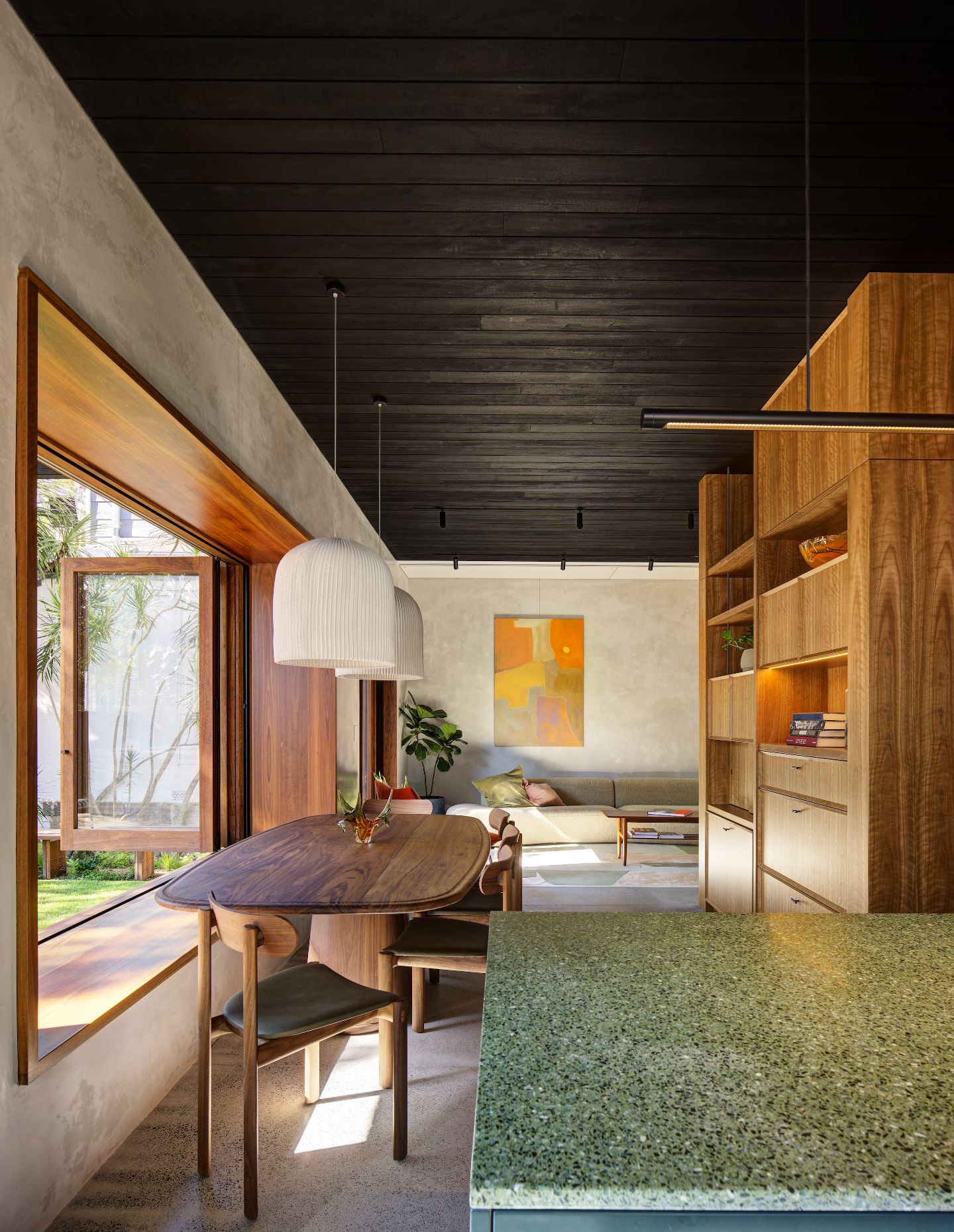
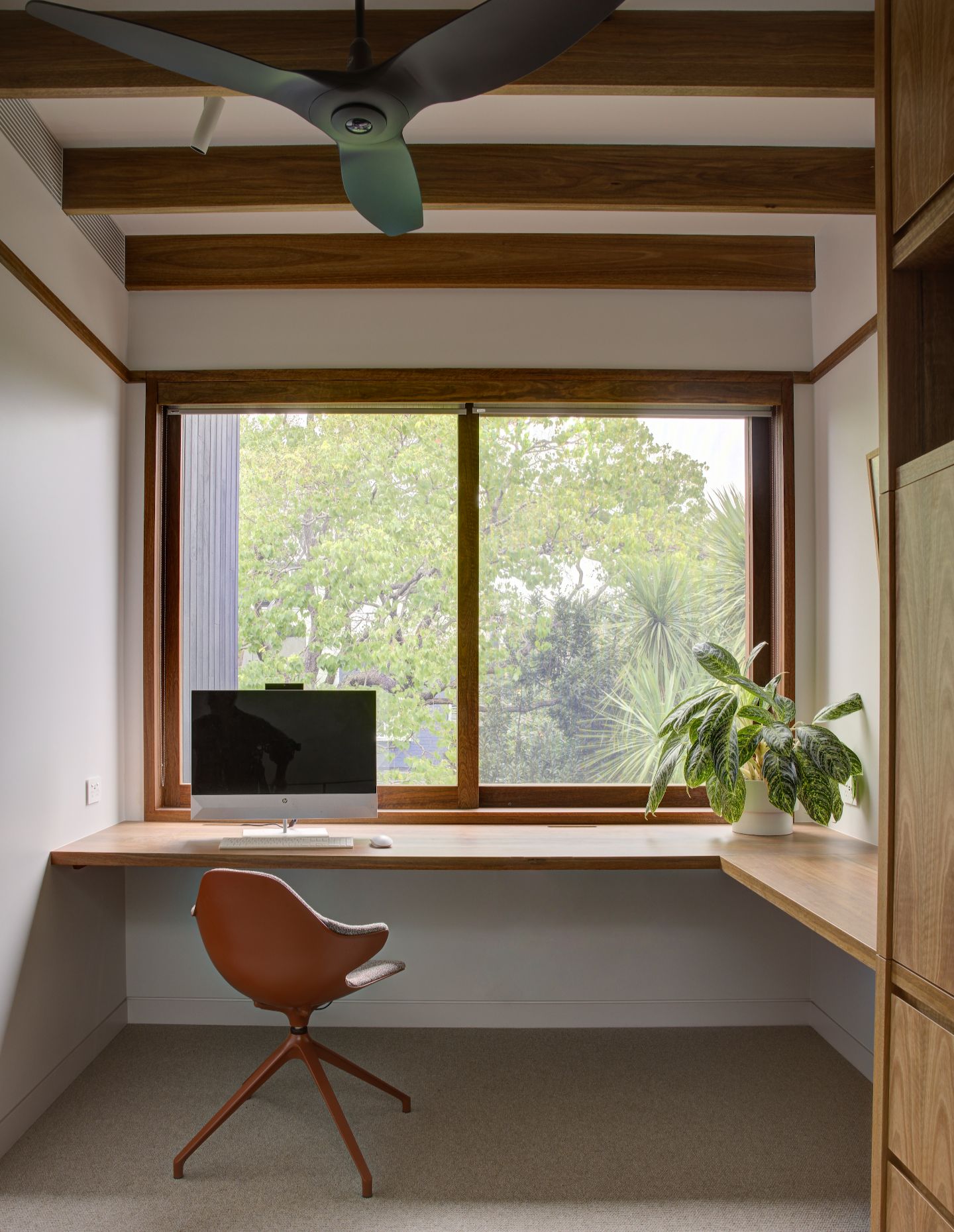
“The arrangement of the plan over these four split levels created opportunities for overlapping and intersecting spaces,” says Charly Watson, SCA associate and project architect. “This resulted in considered places to slow down, including window bench seats, cosy nooks and a mesh hammock. Each space maintains visual connections outward, through and across the gardens and tree canopy beyond.”
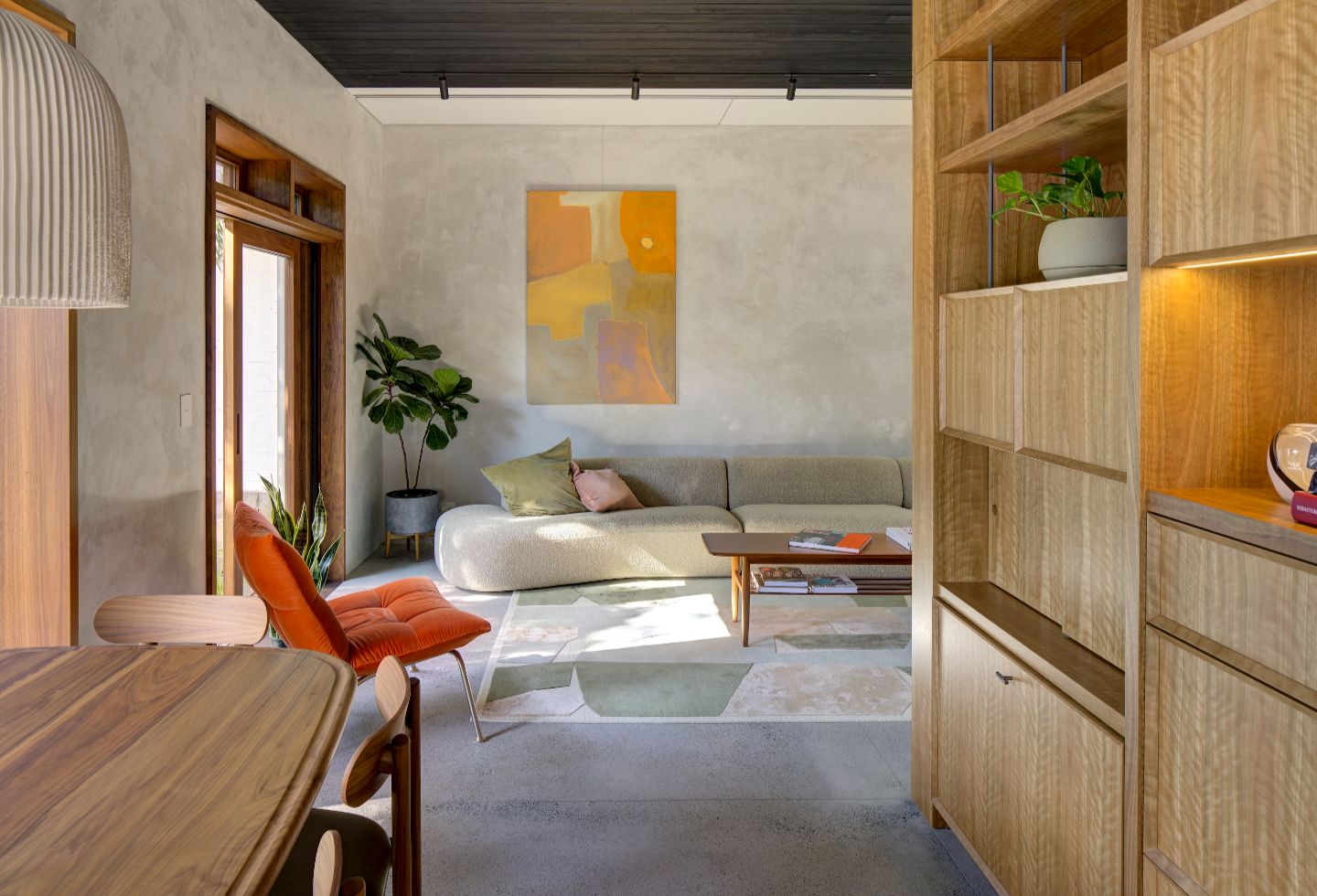
At the heart of the home is a central stair that subtly delineates public and private zones. The primary living areas are positioned at the rear of the ground floor, while quieter spaces occupy the front. Rather than defaulting to open-plan living, the layout favours a series of more intimate settings, with the upper levels creating a clear separation between parent and child domains.
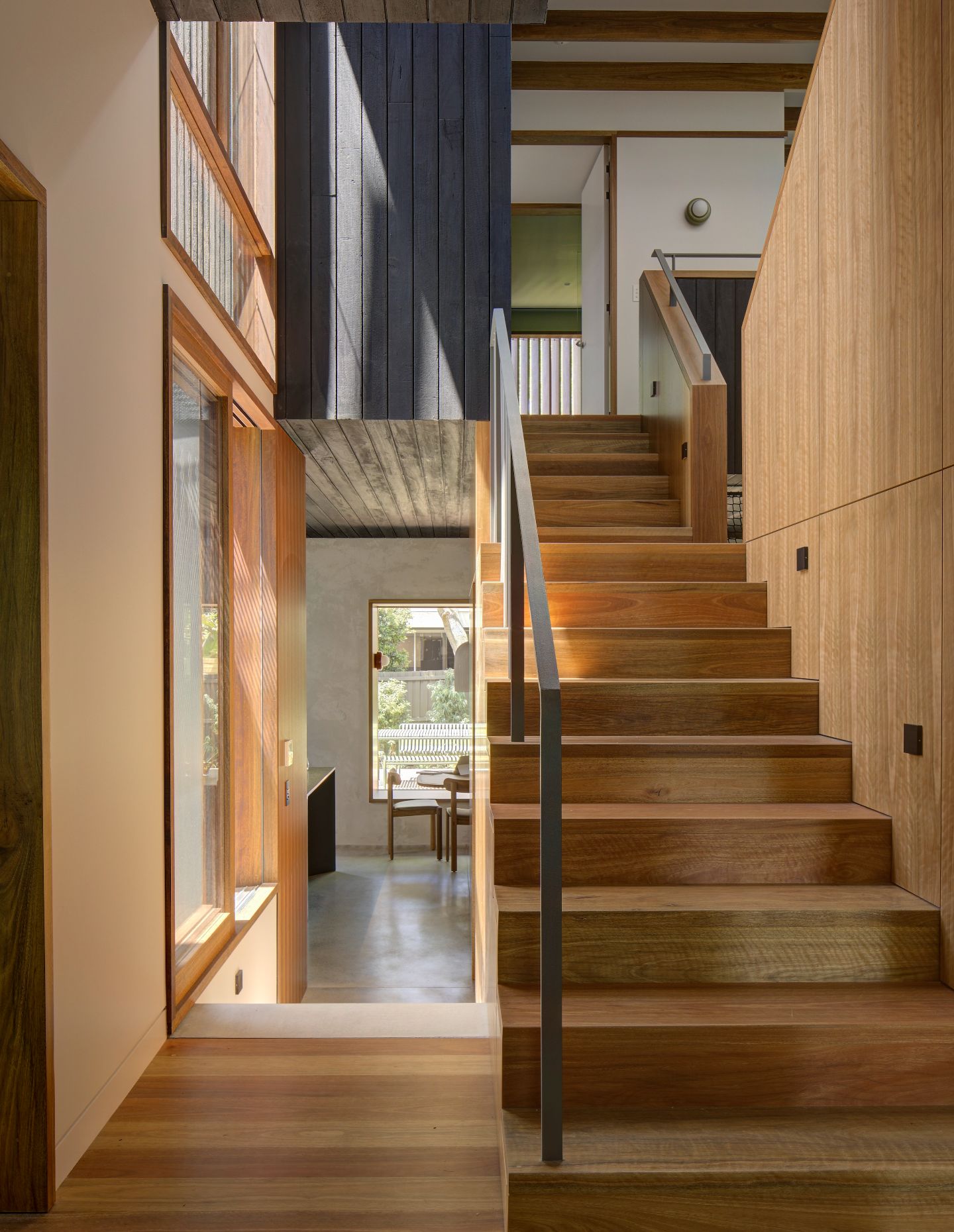
Jarad Grice, senior associate and project architect, describes the staircase as the home’s unifying element. “The central spotted gum stair is the heart of the house. It draws the spaces together as a solid timber core with its own spatial presence. A lightwell above brings natural light deep into the home, creating playful shadows throughout the day.”
Related: Refined refuge
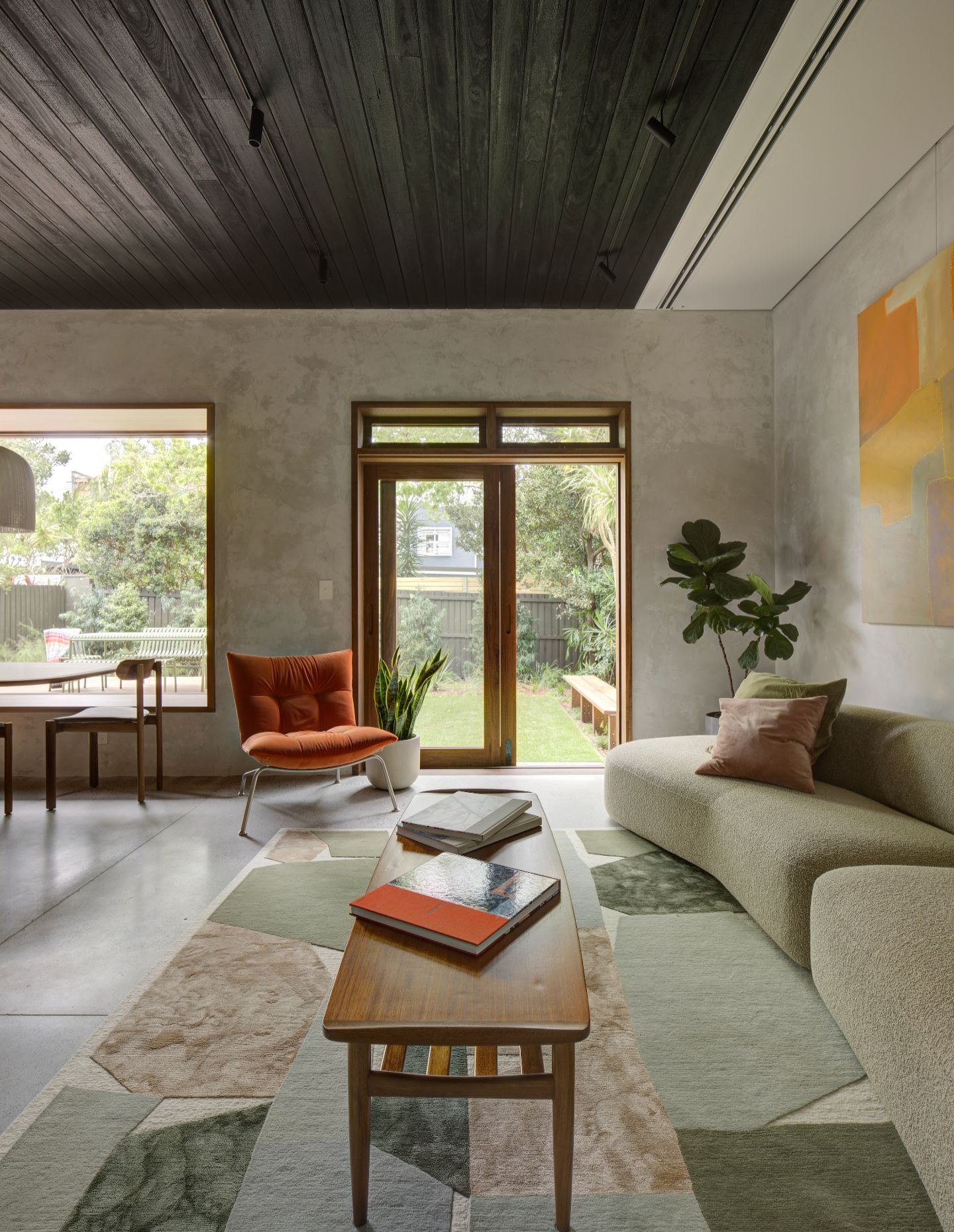
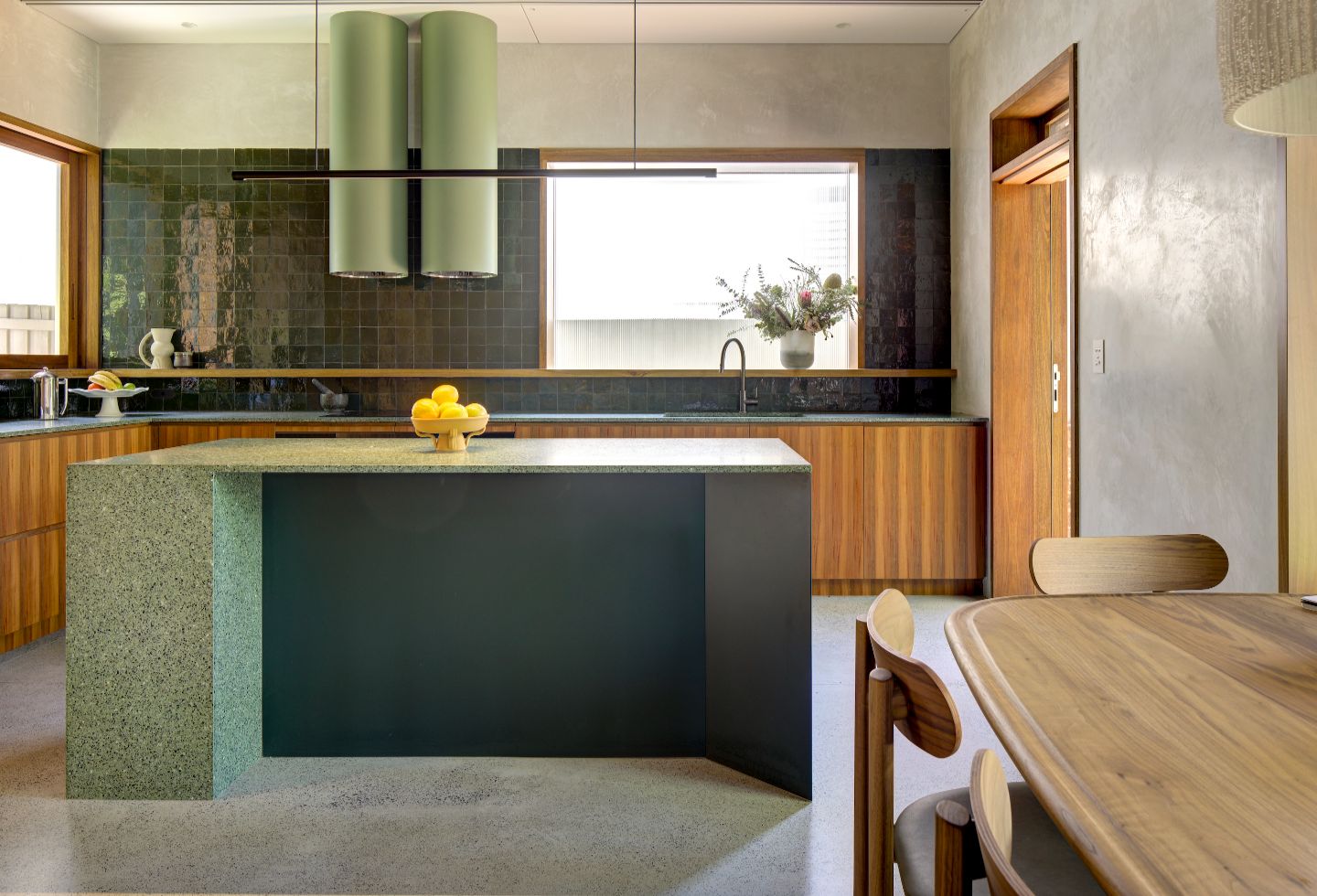
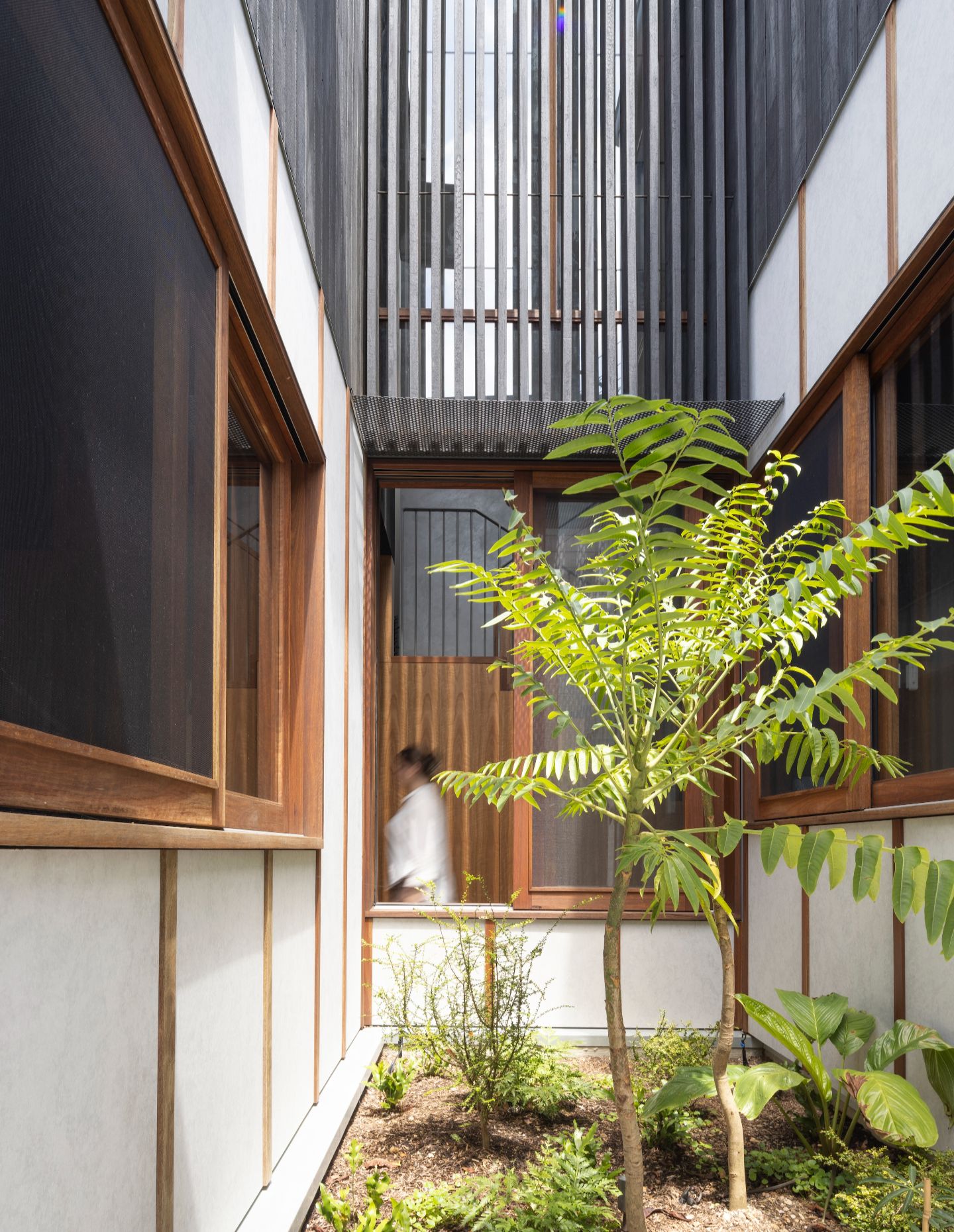
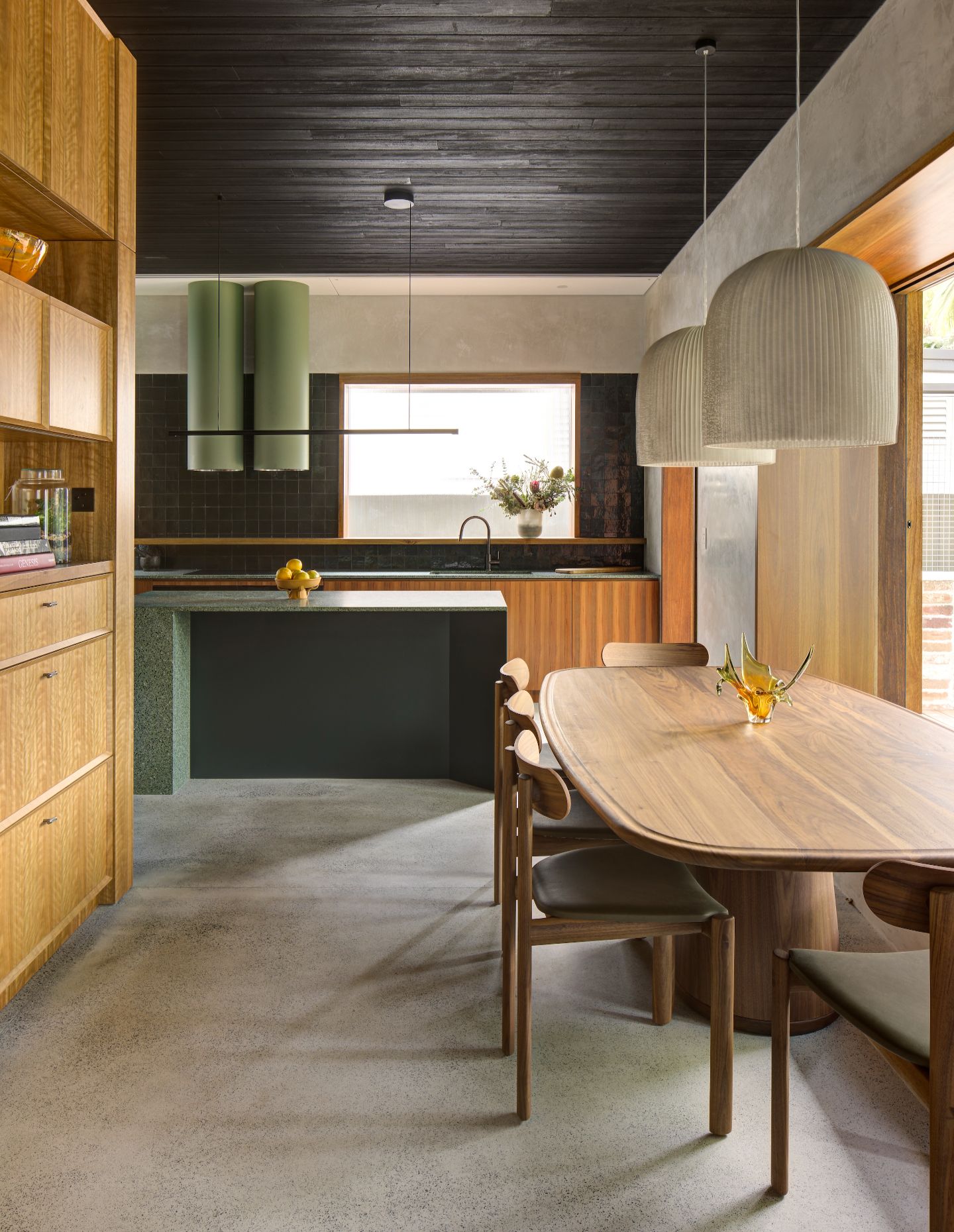
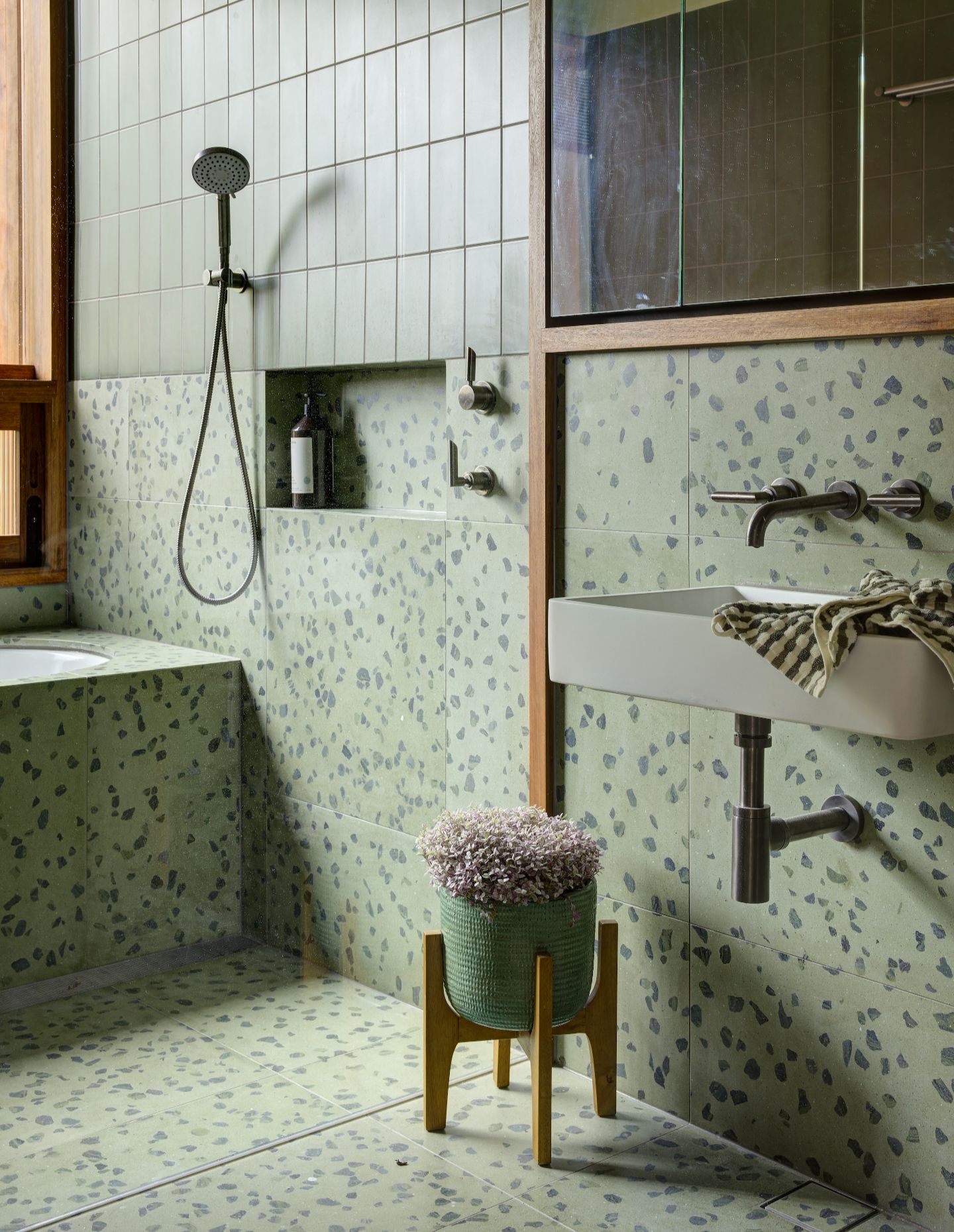
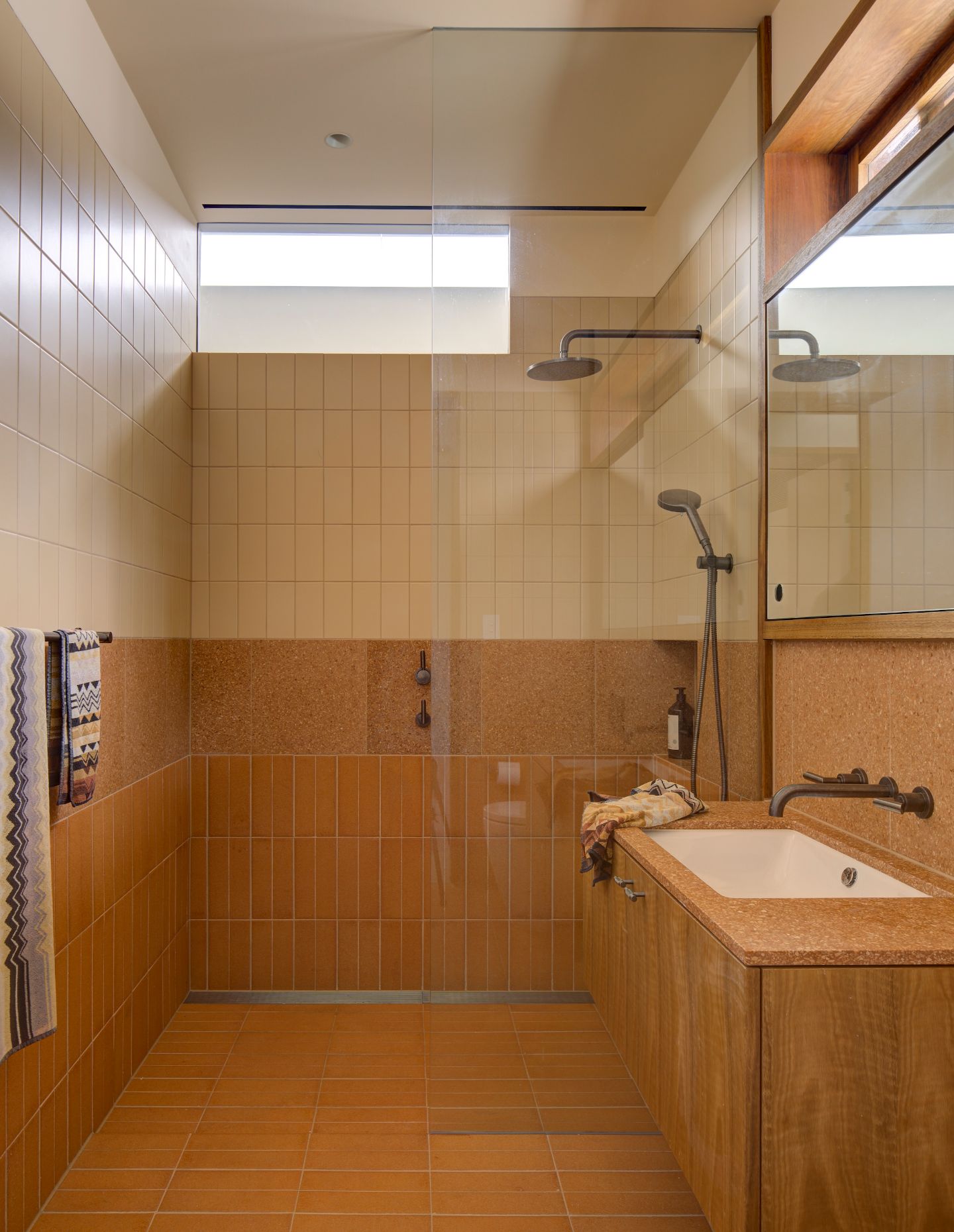
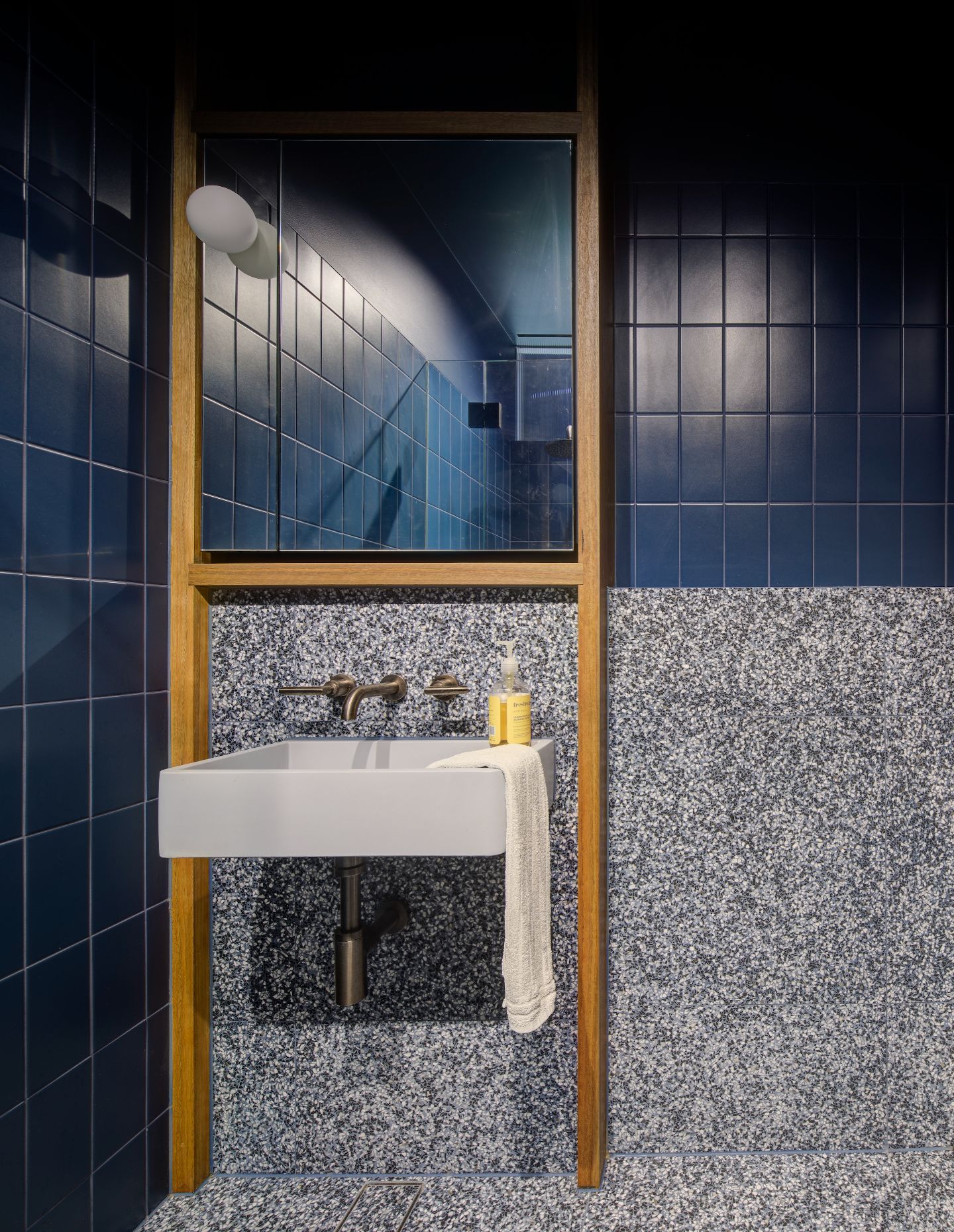
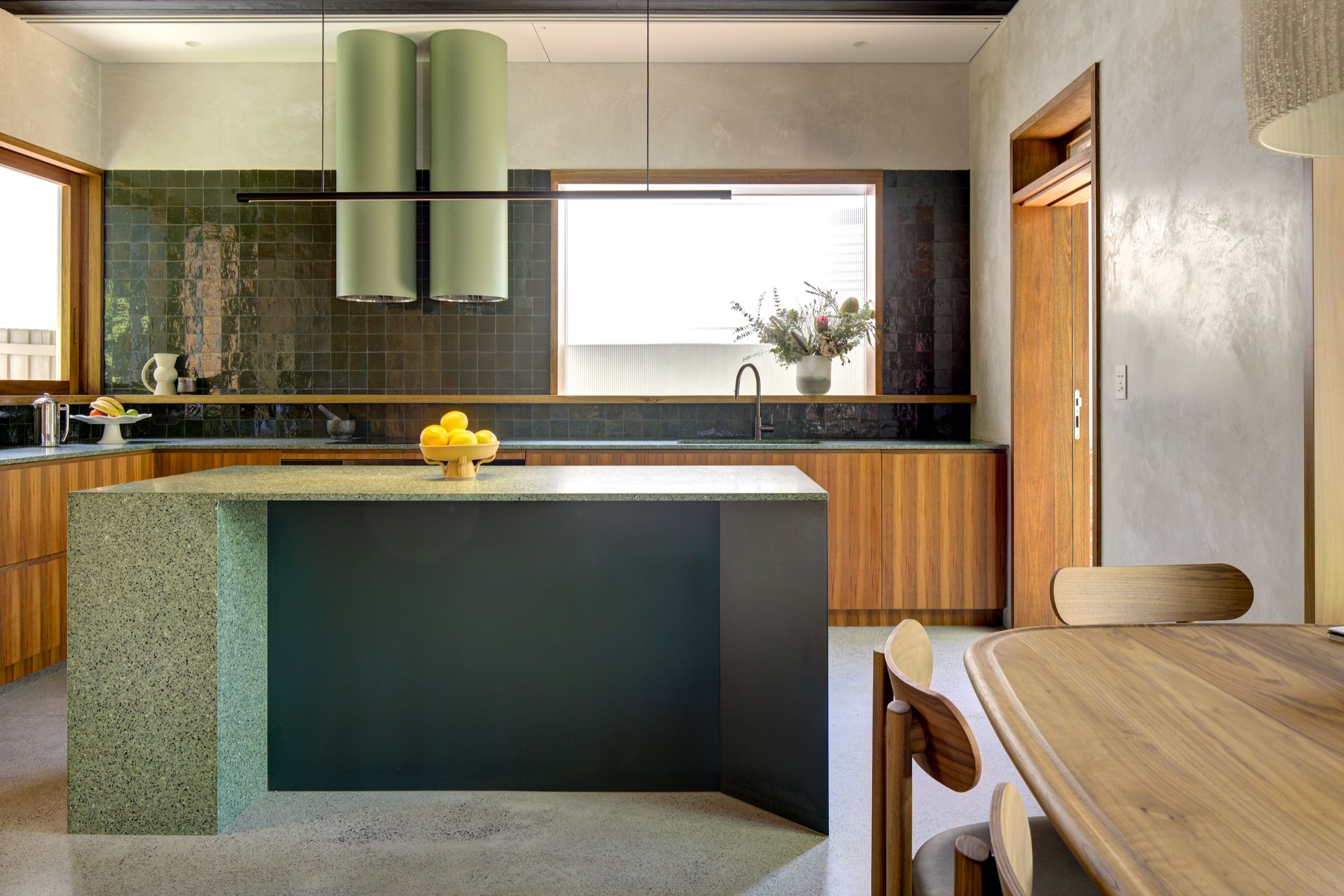
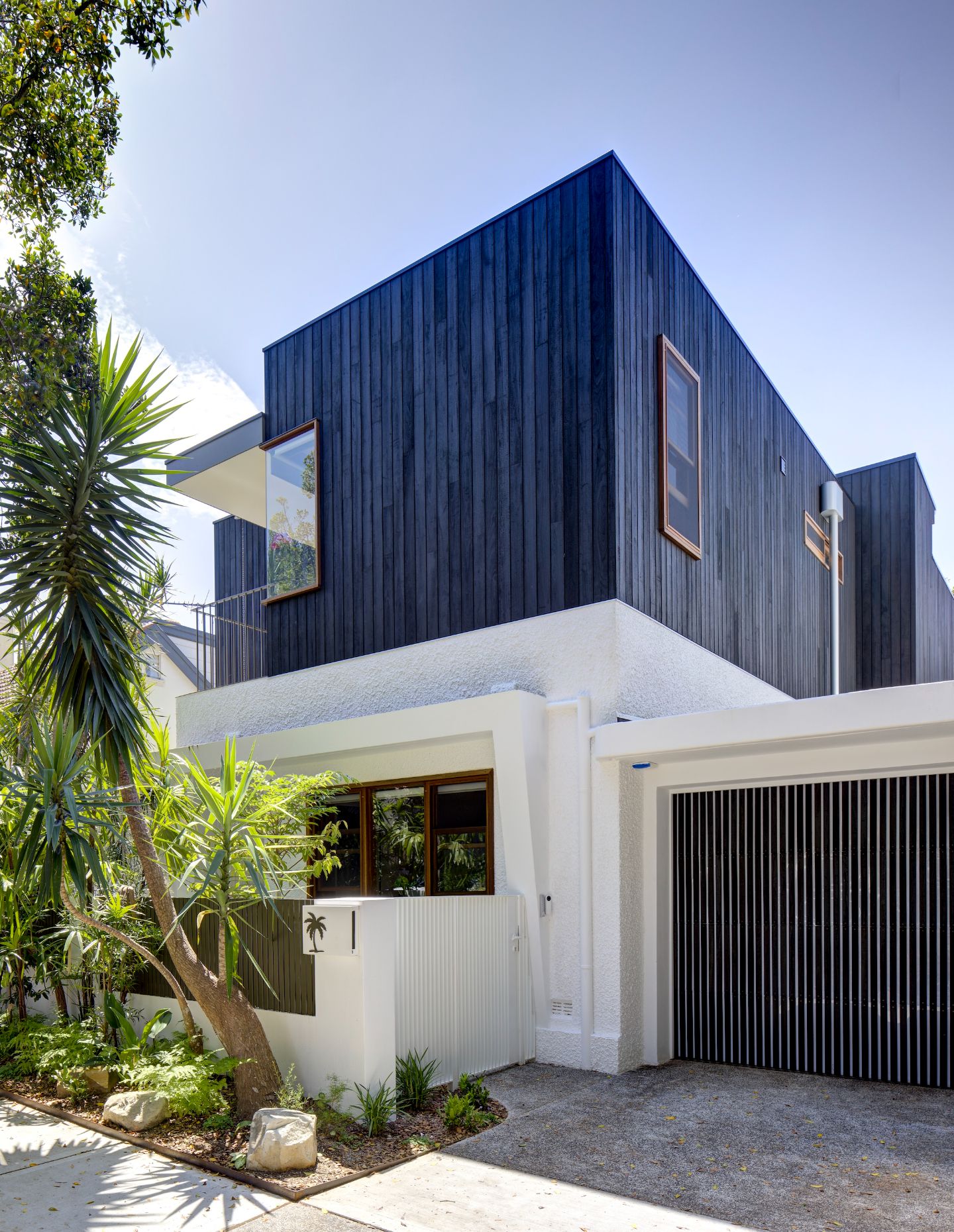
Materiality has been used to great effect, with old and new carefully balanced. Externally, charred timber cladding wraps the first-floor addition, contrasting with the original bungalow, now finished in its retained white popcorn render. Inside, a palette of earthy tones reflects the Australian hardwoods used throughout the windows, joinery and detailing, extending into the selection of tiles and terrazzo.
Spotted gum is used consistently across the stair, pantry, joinery, nooks and mesh hammock, combining solid and veneer panels. Horizontal elements such as picture rails and tiled bands create visual continuity, guiding movement through the home.
Sustainability is embedded in the project through the preservation of the existing structure, minimising demolition waste, the use of Australian hardwoods, passive ventilation strategies and a fully electric system with photovoltaic panels and provision for battery storage. Roof periscopes assist in drawing warm air out while bringing daylight deep into the interior, where it reflects across varied textures and surfaces.
The landscape design, developed in collaboration with TARN, introduces a series of outdoor spaces, each with its own identity. An internal courtyard brings light and greenery into multiple areas of the home, while a rear deck floats above a small lawn, framing views from the living room’s window seat and reinforcing the connection between inside and out.
“The home demonstrates how a thoughtful approach can respect existing structures while significantly improving environmental performance,” says Sam Crawford. “The result is a living environment that nurtures its inhabitants.”
Waverley House is a sophisticated response to redesign for future living. It positively embraces colour and authentic materiality while providing room to move as well as intimate spaces for privacy. This is not a home that shouts at you, its genius is in the subtlety of all its parts that come together so beautifully.
Once again SCA has conceived a thoughtful and intelligent design for this renovation, creating the ideal environment for living well.