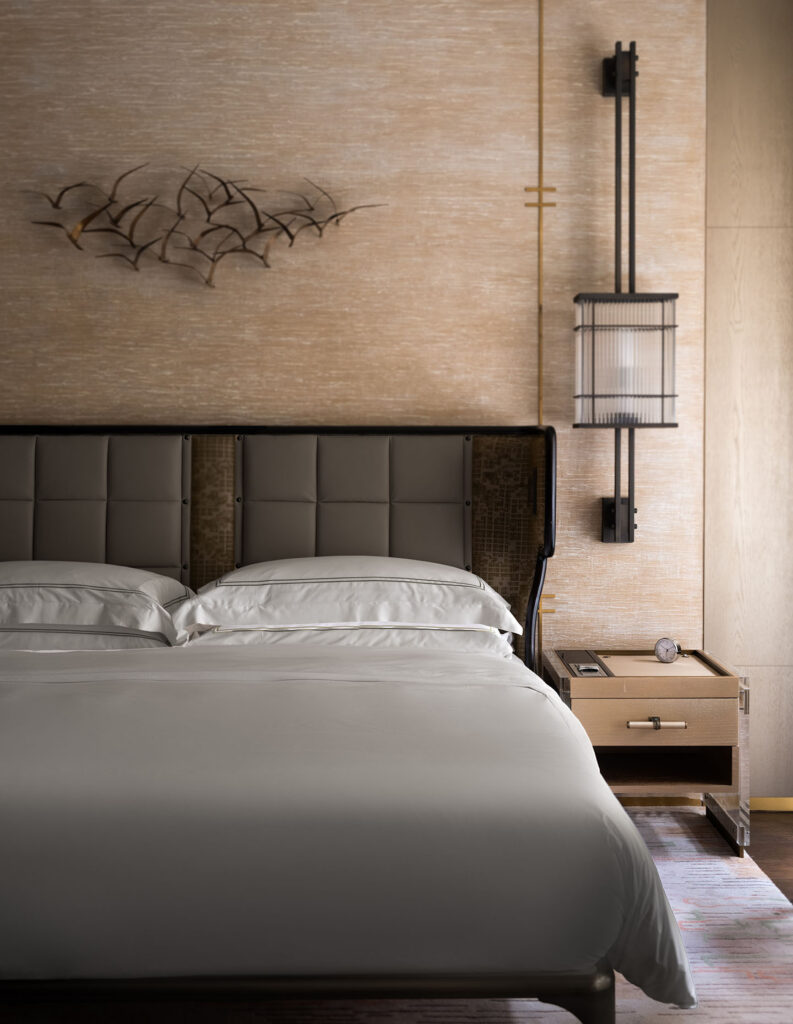

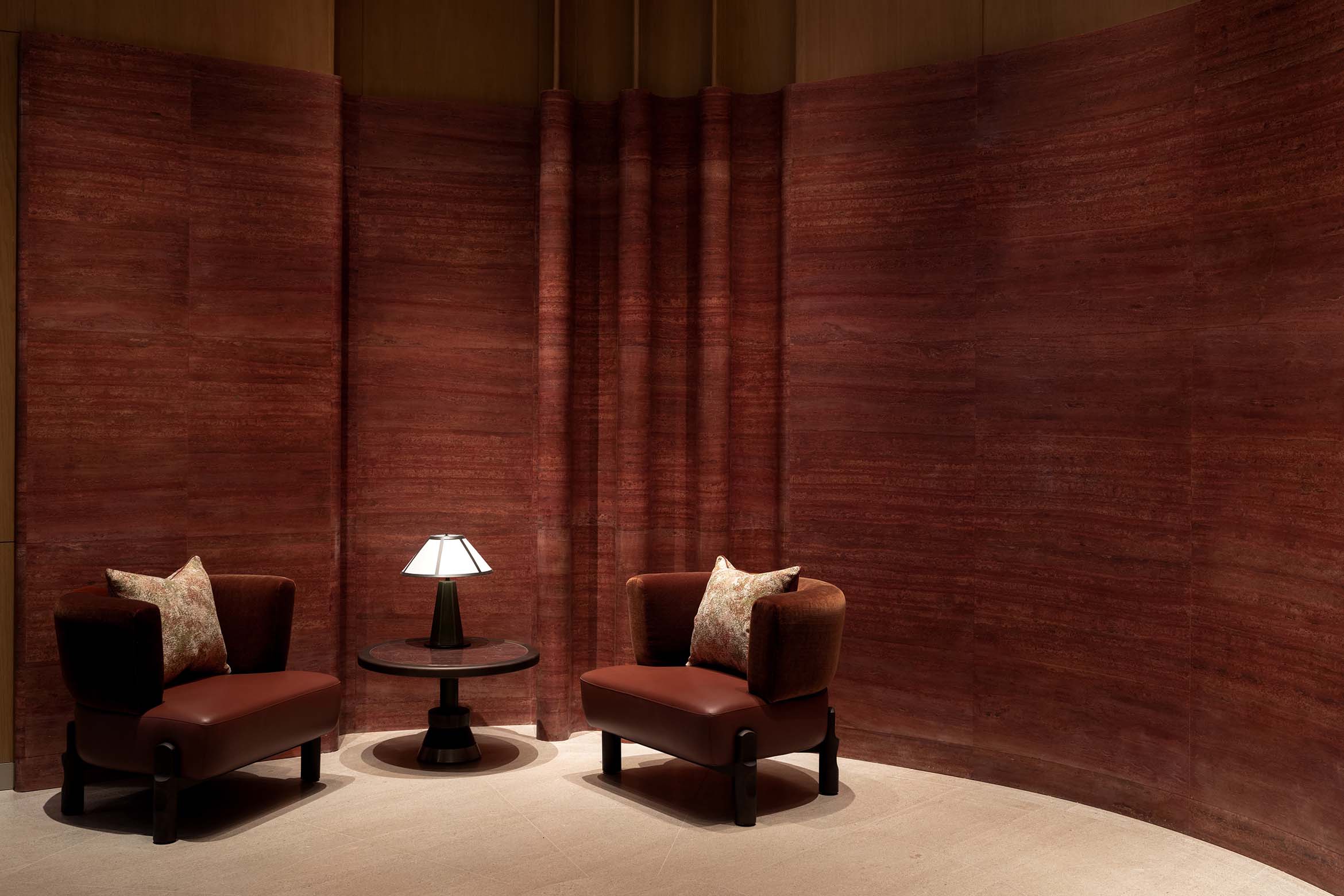
Joyce Wang Studio has completed a new renovation of Mandarin Oriental The Landmark, Hong Kong, revisiting a hotel the practice first reimagined more than a decade ago. Across its 109 rooms and suites, arrival spaces, public areas and spa, the design takes a more locally grounded approach, informed by Hong Kong’s historic residences, skyline, creative community and textile heritage.
We spoke with Joyce Wang, Principal of Joyce Wang Studio, about returning to the project and the idea of a lived-in mansion.
You first redesigned this hotel more than a decade ago. What was different about returning to it now?
It’s been such an honour to return to the hotel and to have the chance to be part of its journey and grow with it in a city that I know and treasure so dearly.
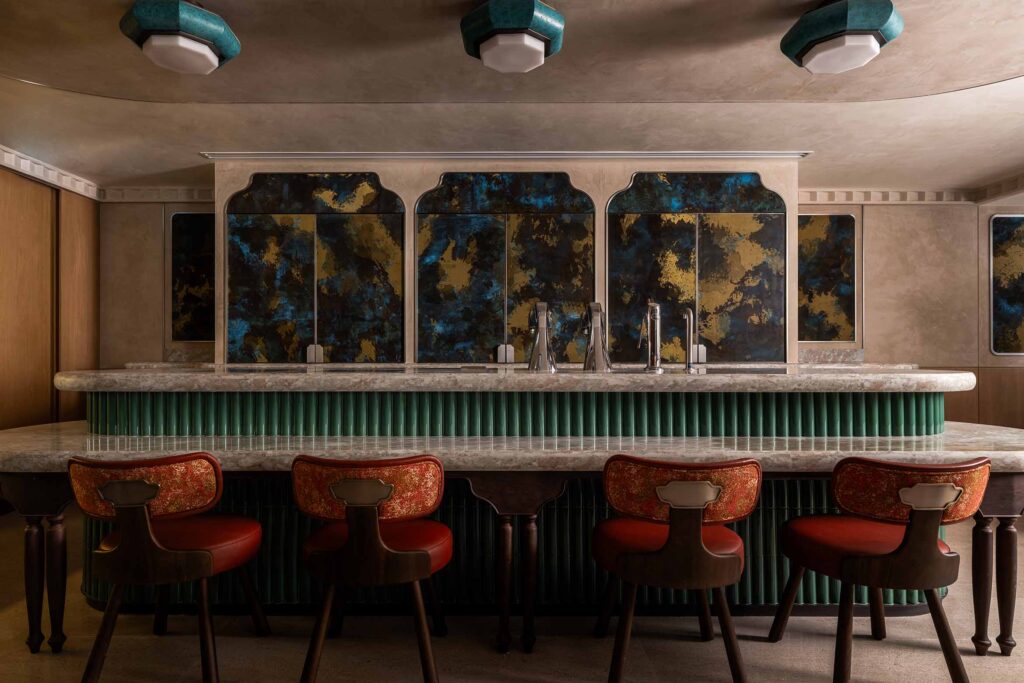
In terms of the design itself, the first iteration had a much more monastic quality to it. The materials were more monochromatic, textures were cool, geometries were angular and it was inherently more international in its aesthetics.
Returning to the project for this renovation, there was a renewed confidence to carry the city into its interiors, to be playful with its textures and to lean into its eclectic layers. Art was a foundational part of our philosophy for the space, with a commitment to featuring local artists. There are beautiful and intricate stories to uncover behind each piece.
How did the idea of a “lived-in mansion” shape the design, and what does that concept offer that a traditional luxury hotel cannot?
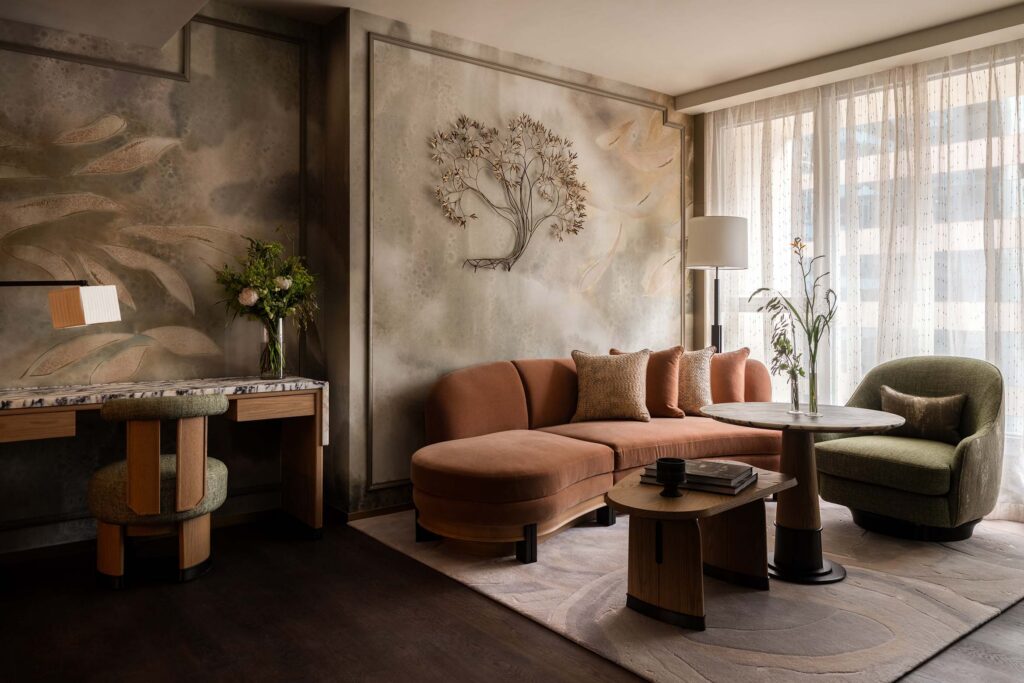
Our approach was very much rooted in the idea of crafting a lived-in mansion for guests. Hong Kong has so many incredible historic residences, and we drew inspiration from the colonial country manors frequented by the Tai Kwuns of a bygone era, celebrating the beauty of these homes that continue to fascinate today.
We layered in artwork and objects that felt authentic to a home, where the idiosyncrasies of character and personality come alive. From sculptural vases to artisanal vessels, the accessories were carefully selected to feel like objects collected over time for one’s own home.
We wanted the space to have an intimate and residential feel, where guests feel welcomed and cocooned.
Related: Light House looks to the past without living in it
Hong Kong is referenced throughout the project, from the skyline to historic architecture. How did you avoid turning those influences into nostalgia?
Our intention was to honour these references through a contemporary lens, embracing the city within the interiors so it feels personal and grounded in its surroundings.
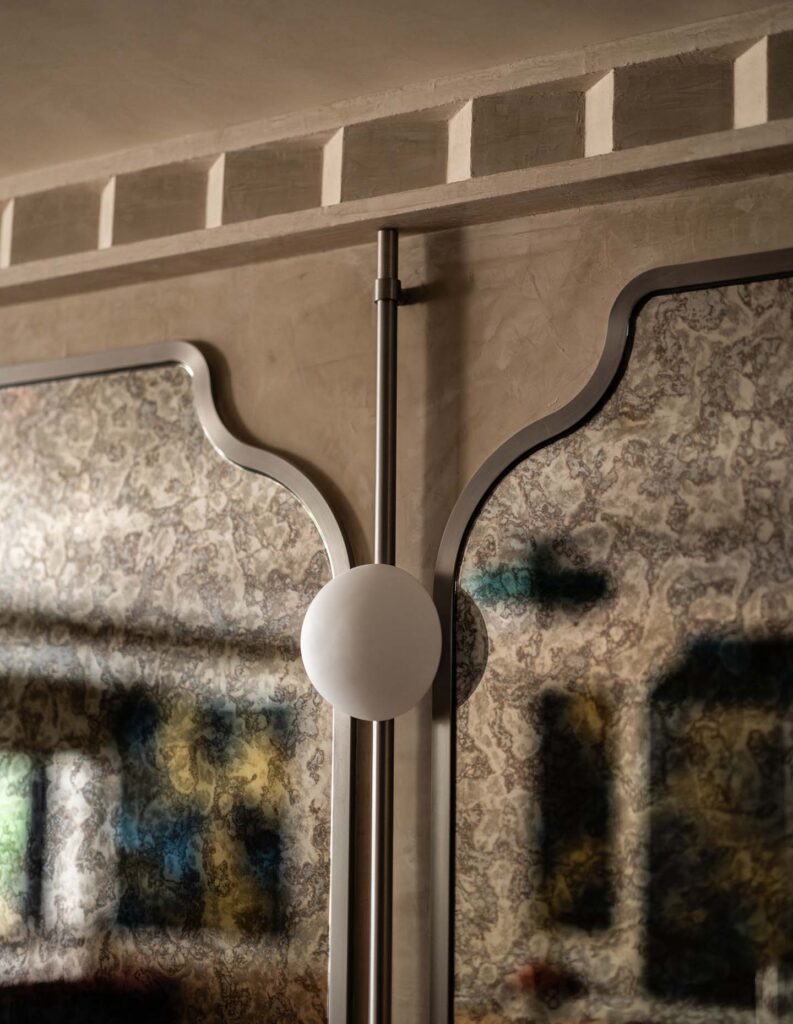
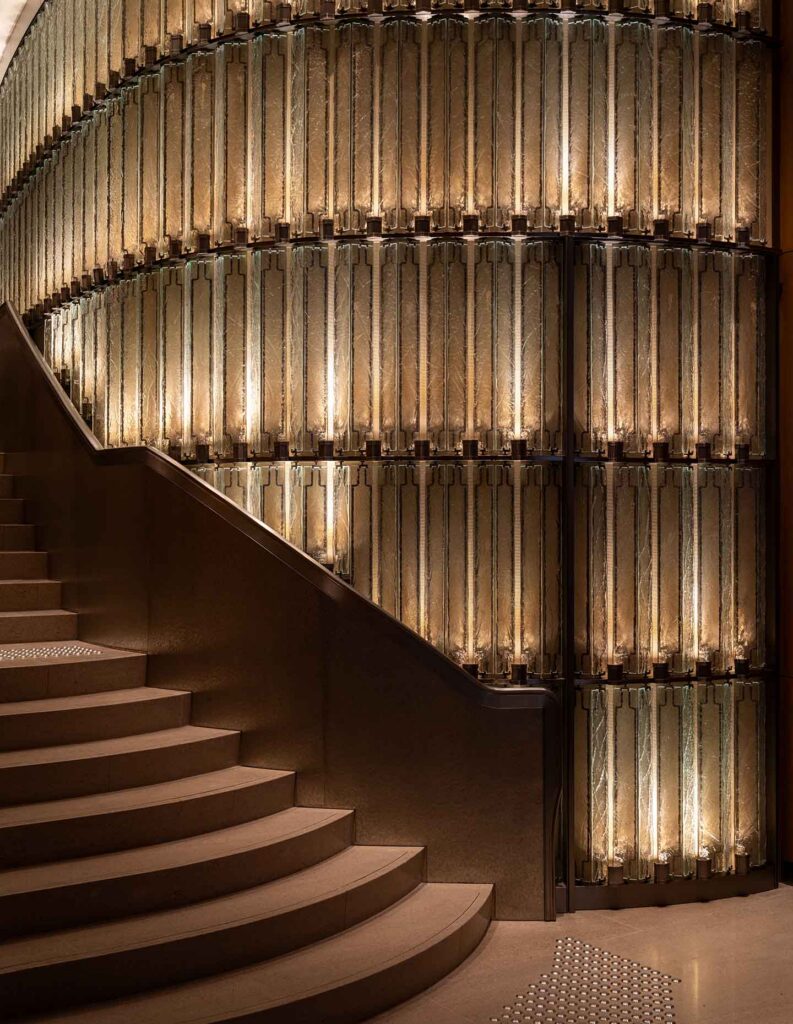
Instead of displaying the skyline through traditional artworks, we created custom artworks that have been transformed into carpet designs, tapestries and églomisé glass.
The project also provided the opportunity to work with Long River Label Maker Factory, the last standing commercial weaving factory in Hong Kong. We visited the factory and struck up a collaboration that allowed them to challenge their production capabilities.
Drawing on their heritage of making clothing labels for fashion brands, the studio developed artworks and lampshades alongside them to display in the lobby as art pieces in their own right. The hotel’s renovation has been a platform to showcase the pride of these fabricators, sharing a piece of Hong Kong’s heritage as a textile innovator.
What role does art play in your design process?
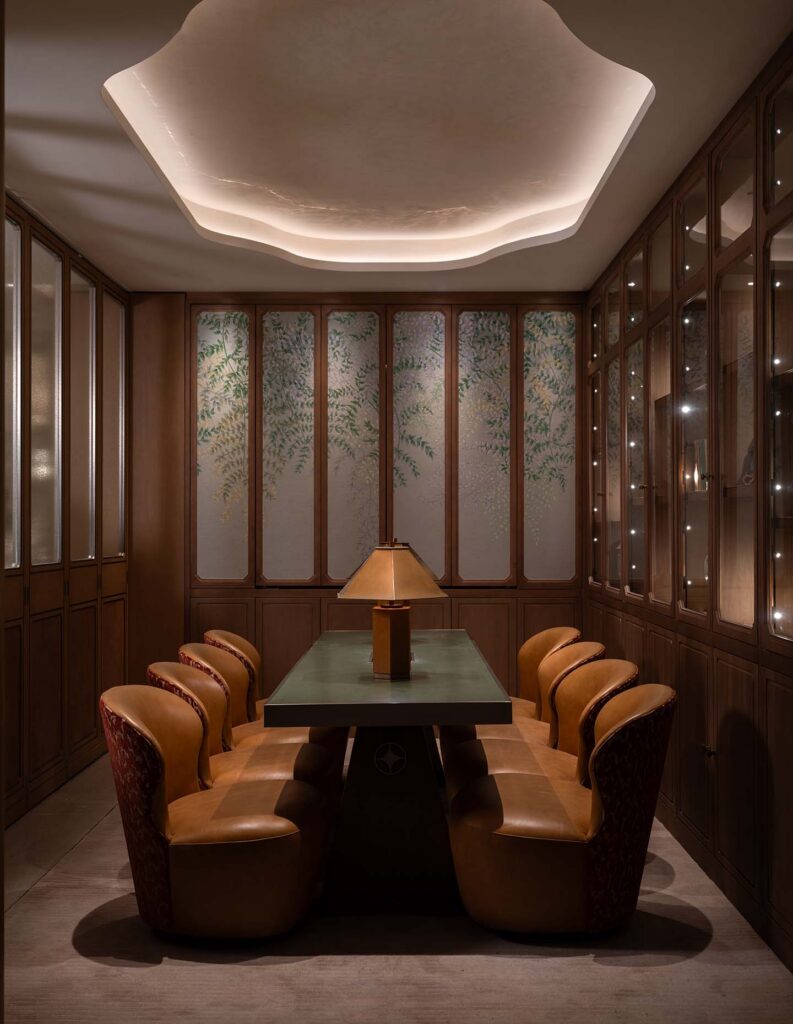
Art plays an integral part in our process, guiding the journey through a space and revealing itself to guests as they move through it.
Artwork is embedded within carpets, tapestries, églomisé glass and architectural surfaces, transforming art from decoration into an immersive spatial experience.
We have also collaborated with Chris Cox of Cox London on an art installation featuring sculpted florals, buds and foliage from native Hong Kong botanics. The piece will, for the first time, combine techniques traditionally employed for a maquette and a finished work.
After rounds of testing and conversations, it culminates in marrying the handmade quality of plaster with an aged patina, creating a suspended piece that showcases the old and the new.
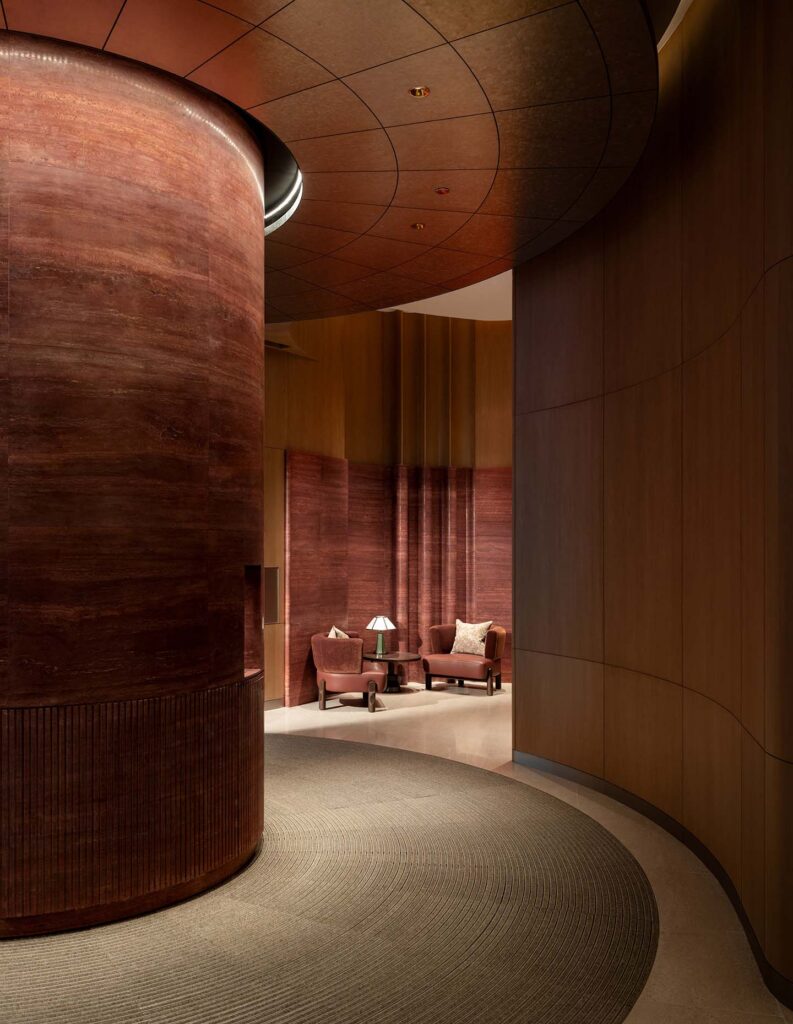
Many of the spaces feel intimate and residential despite the scale of the hotel. Why was that important for contemporary travellers?
There’s definitely been a shift post-pandemic in how we experience hotels, and I have noticed that in myself too.
Beyond being pampered, we want to move, eat, sleep and feel well, now more than ever. I’m drawn to hotels that create that sense of intimacy, a home away from home, while still inviting curiosity and connection.
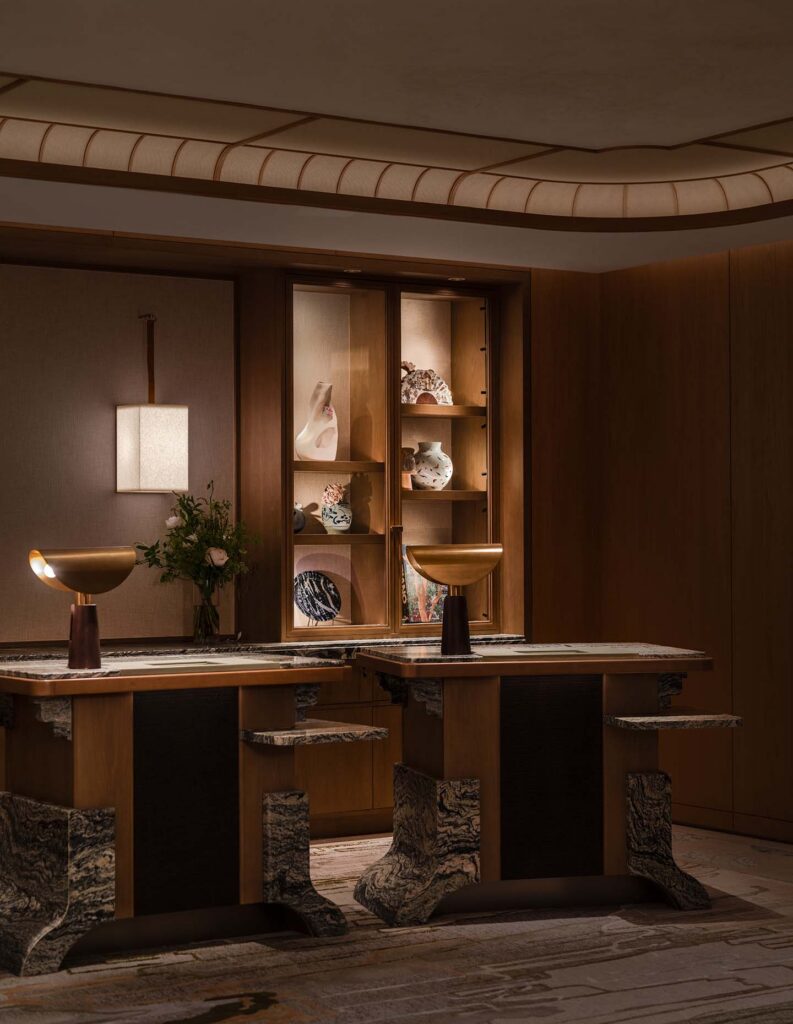
What does luxury mean to you today, and how is that reflected in this project?
For me, luxury is found in nuance: the thoughtful layers of detail and craftsmanship that come together to create something that feels distinctly one-of-a-kind.
Authorship is also important for me to feel luxury. Someone must stand behind the work, and the yearning to know how it all came together, to know the magic and the magician, means our work was done well.