
Tell us about the site context.
The site sits in a uniquely elevated pocket of the suburb of Eaglemont, positioned near one of the highest points in the area. This natural rise defines the architectural approach from the outset, offering sweeping views across Eaglemont’s lush green canopy toward the Melbourne CBD. The significant fall across the site — from side boundary to side boundary and from back to front — was not only a technical consideration but also a key design driver, informing how the house settles into the land and interacts with its surroundings.
Eaglemont itself is known for its leafy landscape, and this site is heavily influenced by its established neighbouring trees. Rather than working around the vegetation, the design intentionally embraces it, creating an experience where interior spaces feel immersed within the treetops. From many viewpoints inside the home, the occupants appear to sit amongst the foliage, strengthening the connection between the built form and its natural environment.
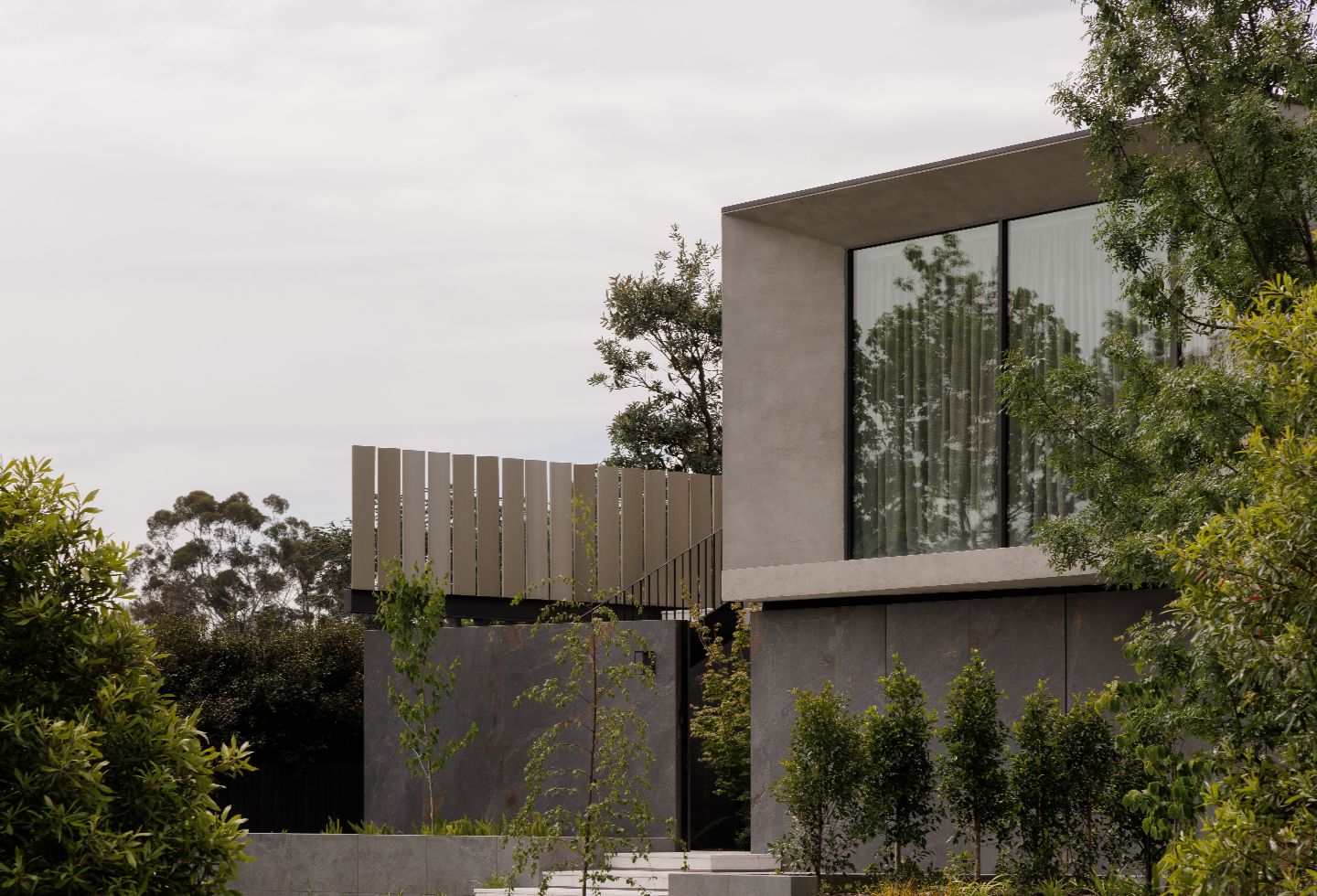
The elevated ground plane brings both opportunity and complexity. While it enables dramatic outlooks toward the city, it also introduces direct sightlines into neighbouring backyards. This challenge became a catalyst for one of the project’s key architectural elements: a line of anodised aluminium blades running the length of the western elevation. These screens preserve privacy, filter sunlight and frame views without compromising the openness that the site affords.
Access into the home was another important consideration. The elevated approach inspired a crafted entry sequence — beginning in an enclosed courtyard and moving upward via terrazzo steps — culminating in the moment where the city panorama reveals itself. The site’s topography, vegetation and orientation collectively shaped a design that both celebrates its elevated context and responds sensitively to its suburban surrounds.
What can you tell us about the clients and their brief?
The clients are a young couple with three teenage children and a small dog. Their family life played a central role in shaping the brief, particularly the growing needs of their active children. Creating a home that supported both their individual activities and shared family time was essential.
Functionally, the brief called for a highly considered, multi-level family home with generous amenity. The clients required substantial basement facilities — including a five car garage, gym, sauna and a rumpus/games room — reflecting their desire for recreation, storage and wellness spaces integrated into daily life. On the ground floor, they requested four bedrooms, a large kitchen supported by a butler’s pantry, multiple living spaces, study and extensive indoor-outdoor connections including a pool, alfresco and external lounge areas. A roof deck with alfresco and terrace areas expanded the brief further, capitalising on the elevated site’s city views.
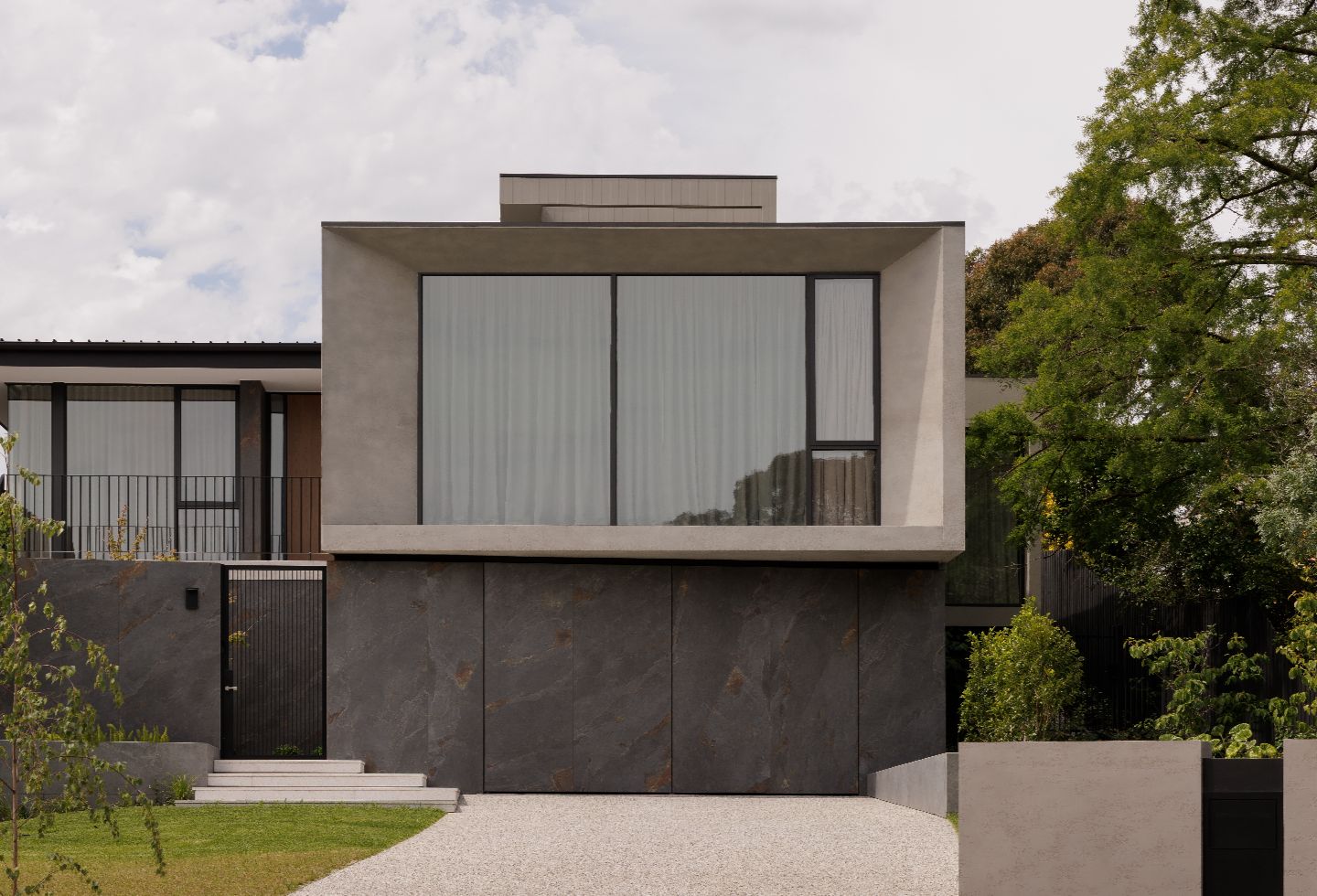
Aesthetically, the clients were intent on celebrating the site’s outlook toward the Melbourne CBD. Capturing and framing this view became a key design priority. They were also drawn to a bold, minimal and solid architectural expression, specifically requesting the use of large format stone or tile for the façade. Internally, they sought a calm, warm, family focused environment that balanced robustness with refinement.
Ultimately, the brief demonstrated a strong commitment to creating a long term family home — one that supports teenage lifestyles, provides generous entertaining spaces for extended family gatherings and takes full advantage of the site’s exceptional outlook and natural surroundings.
Related: Once upon a house
What are the key material and structural choices?
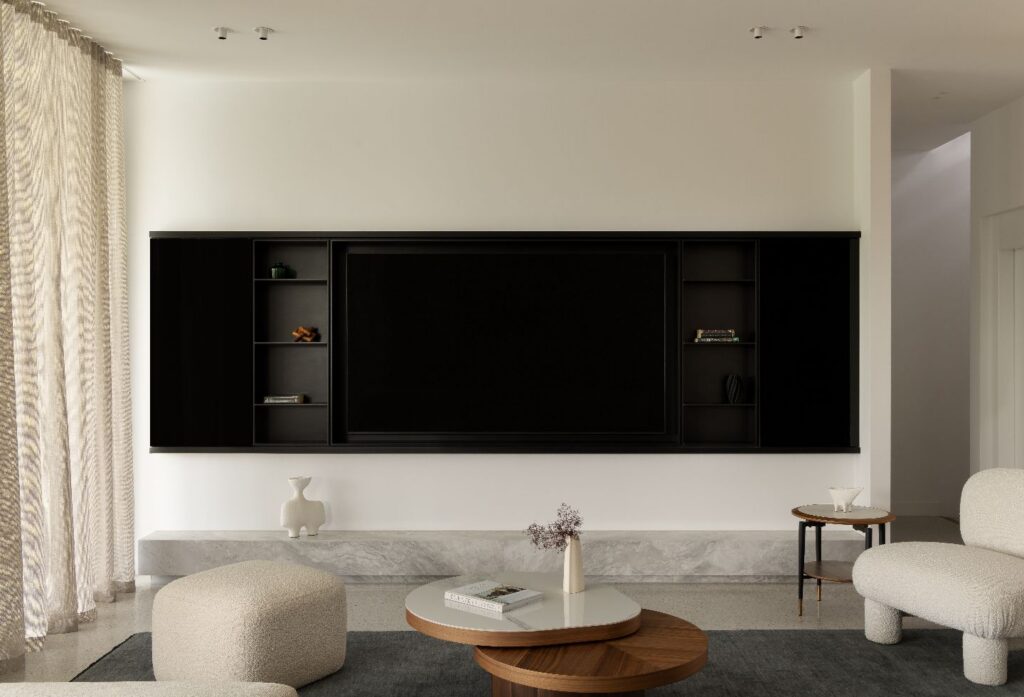
The project is grounded in a robust palette of large-format tiles, concrete brick and rendered finishes, establishing a monolithic exterior. Anodised aluminium screens add both performance and visual depth.
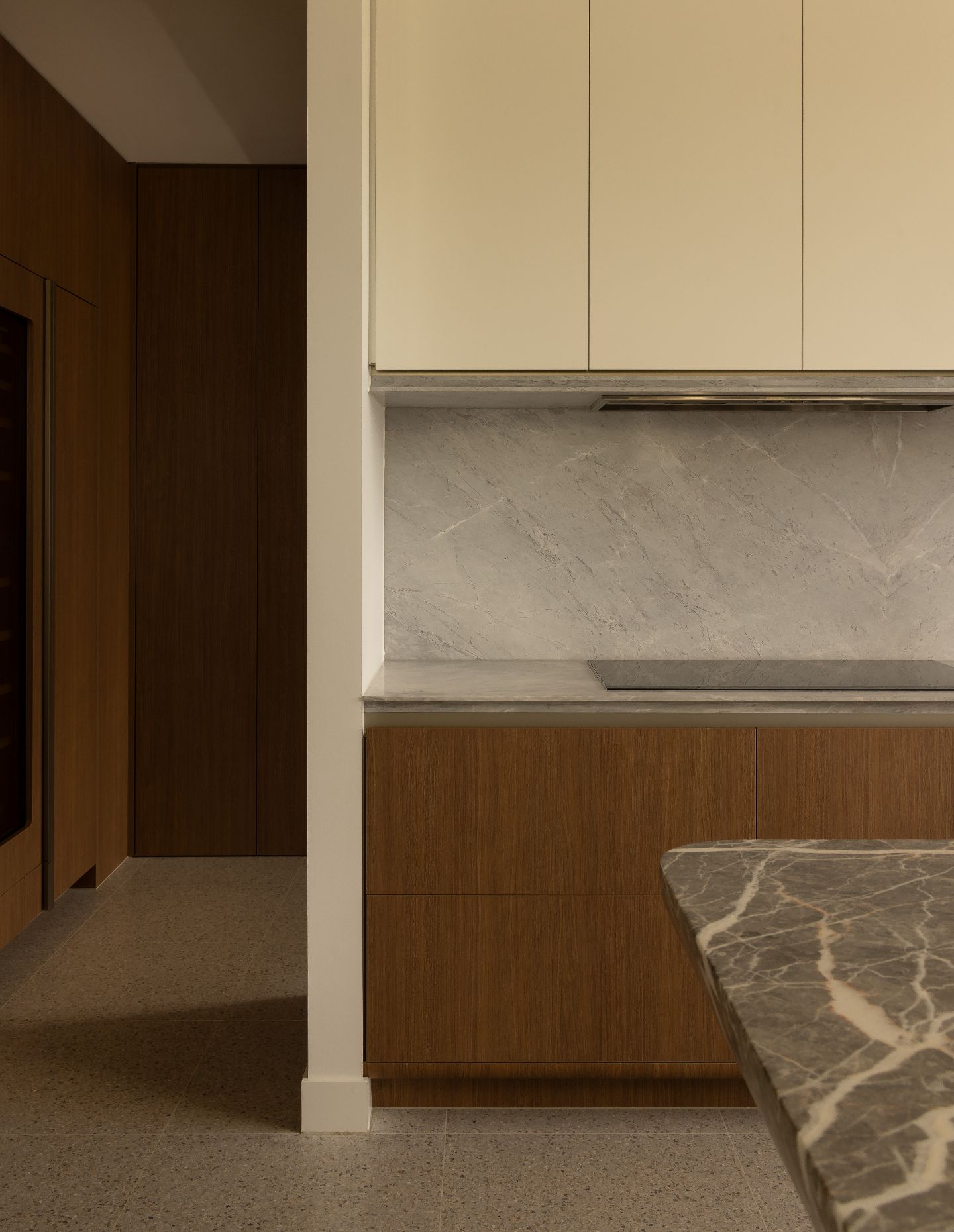
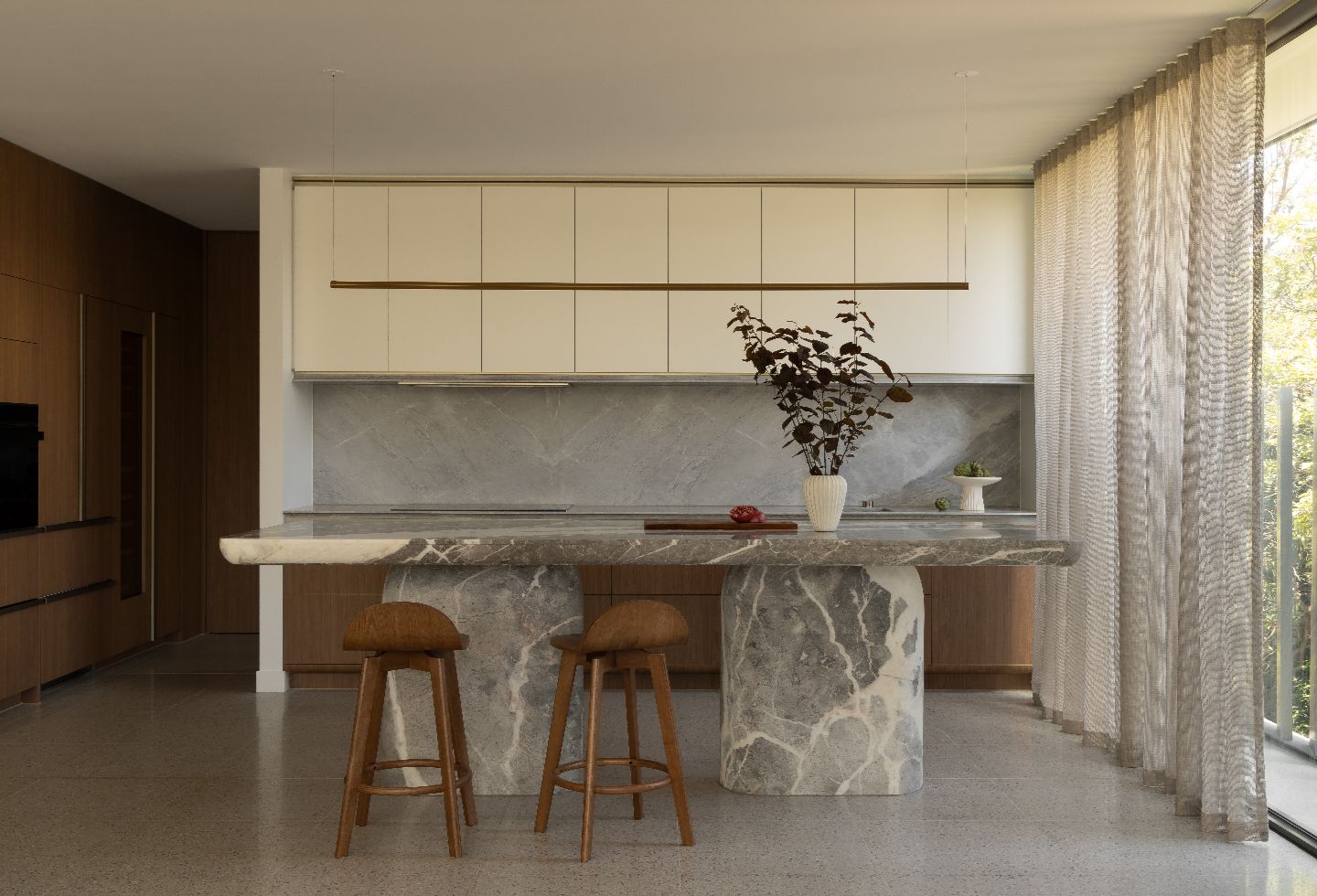
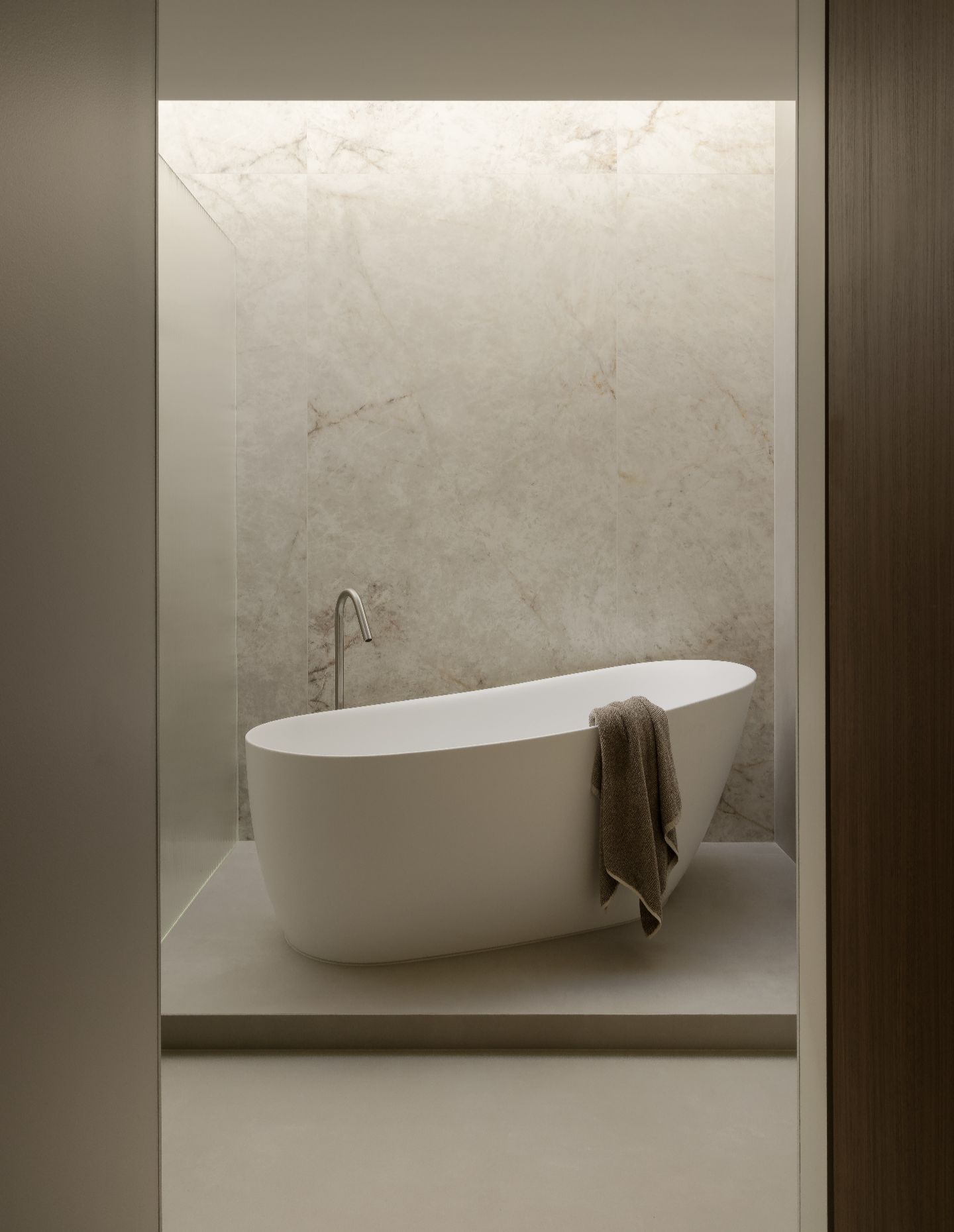
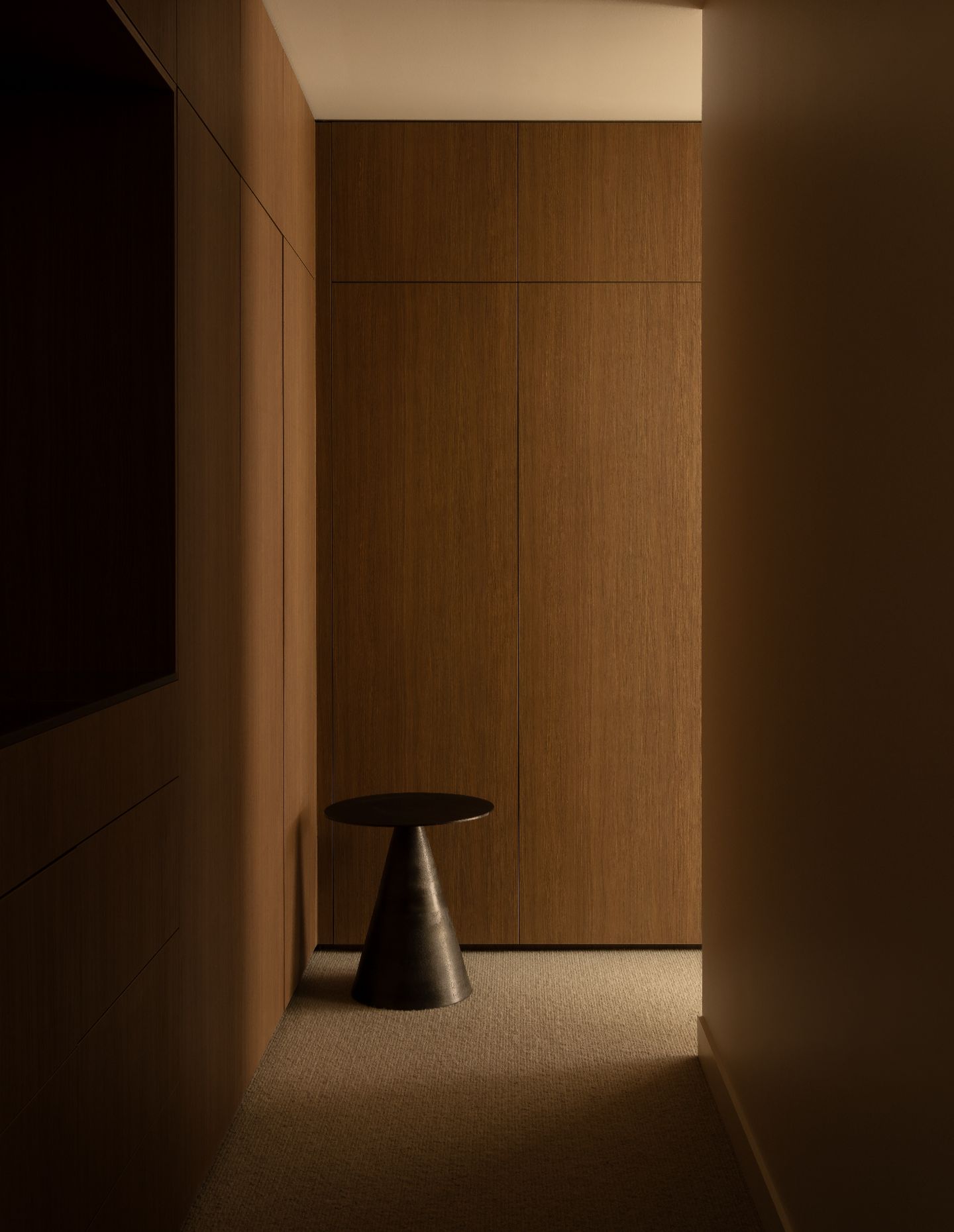
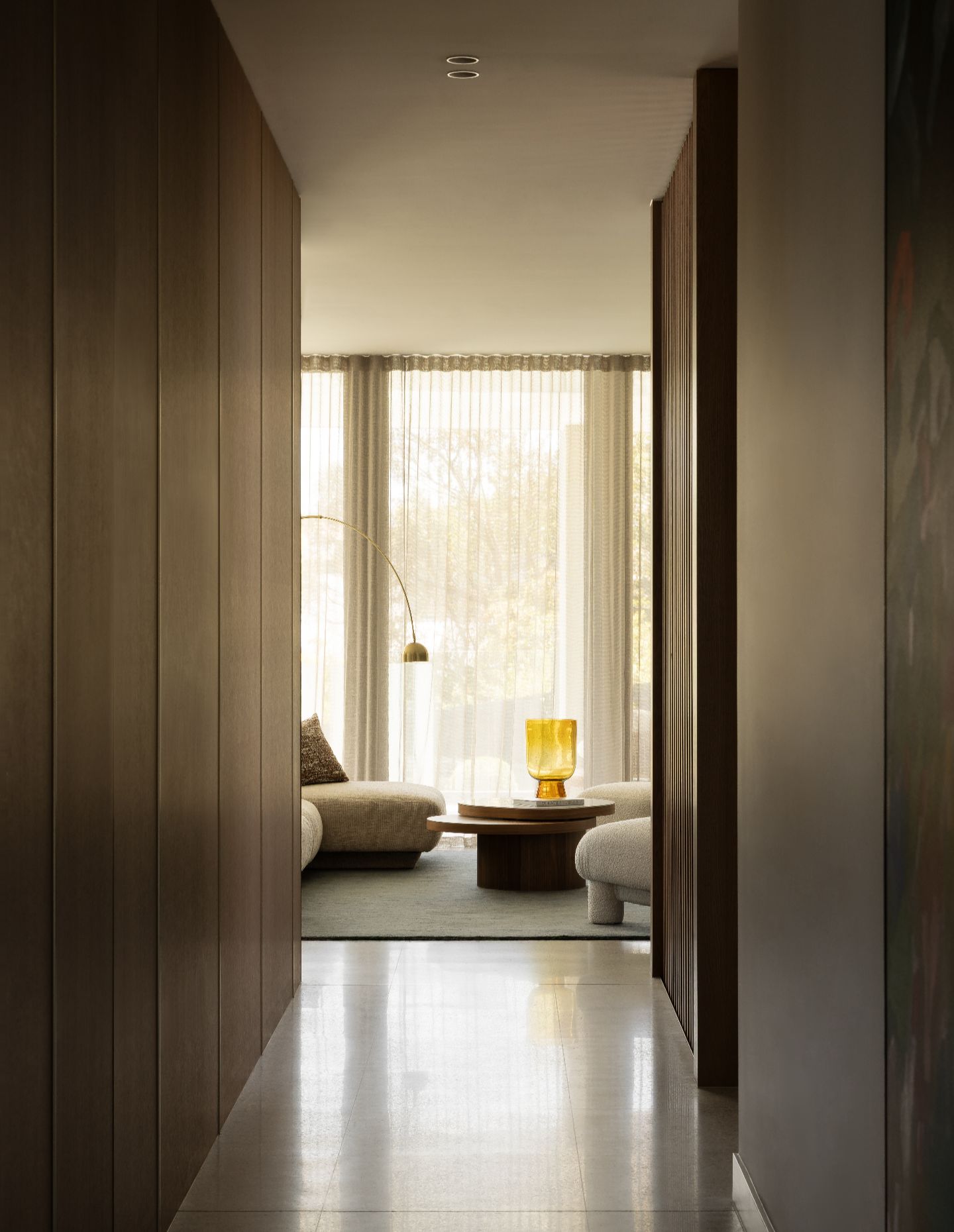
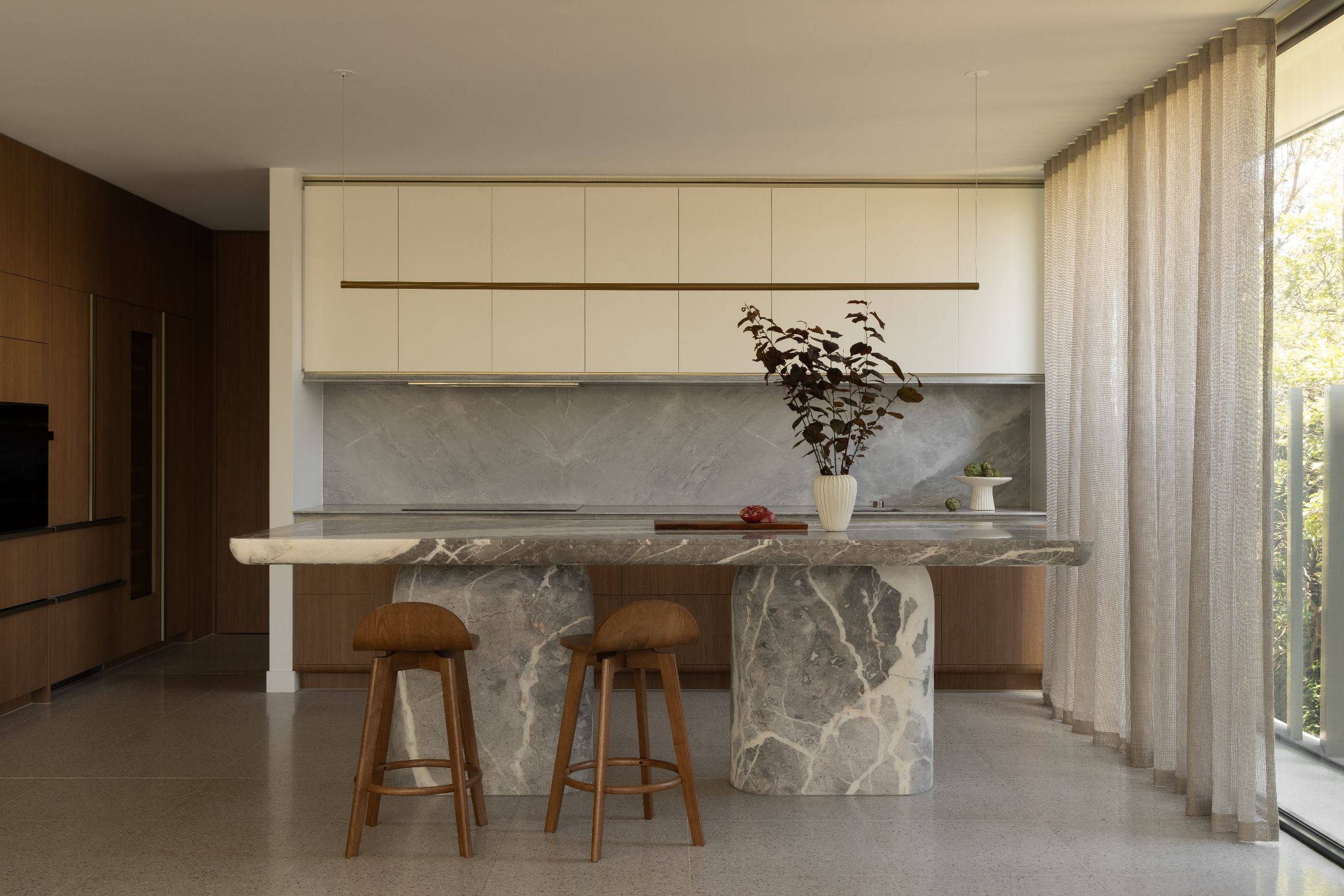
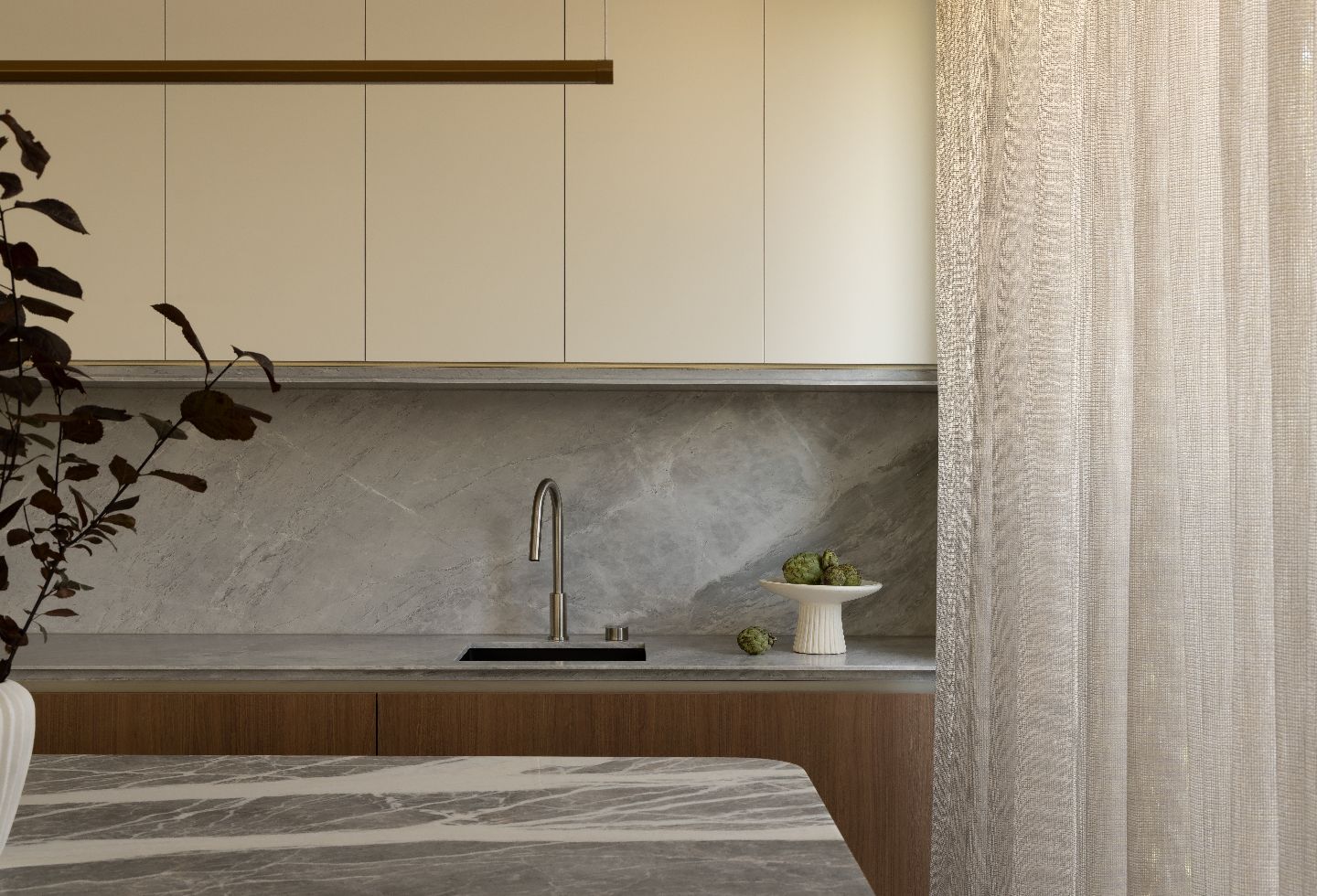
Internally, custom terrazzo flows continuously from exterior to interior, complemented by timber panelling and sculpted stone elements. Structurally, the house combines core-filled blockwork with steel and timber framing, balancing durability with efficiency.
How does the design address functionality?
The home is organised across three levels, each tailored to different aspects of family life — from recreation and wellness in the basement to living and sleeping spaces on the ground floor and entertaining on the roof.
Strong indoor-outdoor connections were central, as was managing privacy and solar exposure through screening and orientation. Environmental performance is supported through solar panels, double glazing and durable, low-maintenance materials.
What are your favourite parts or moments in the design?
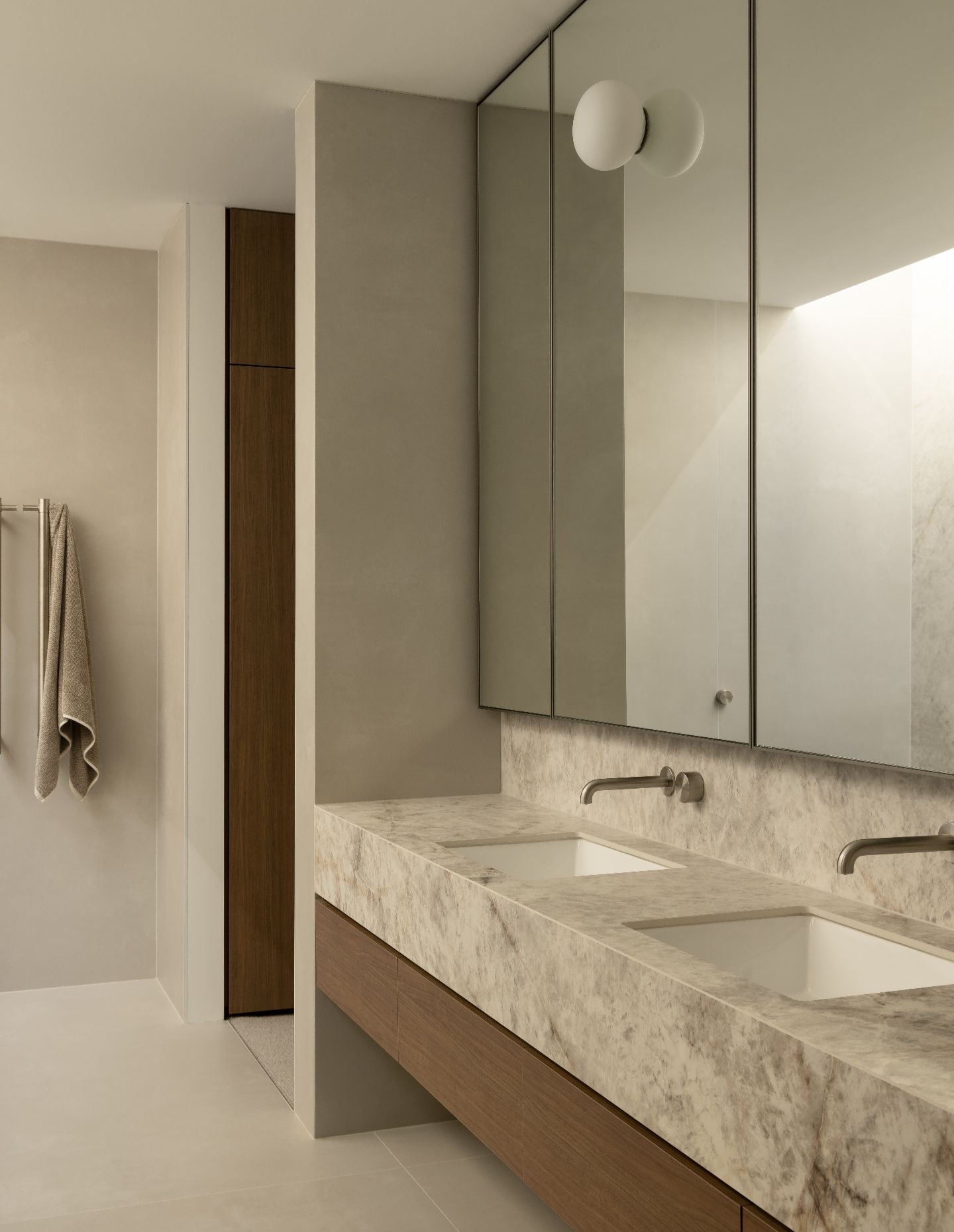
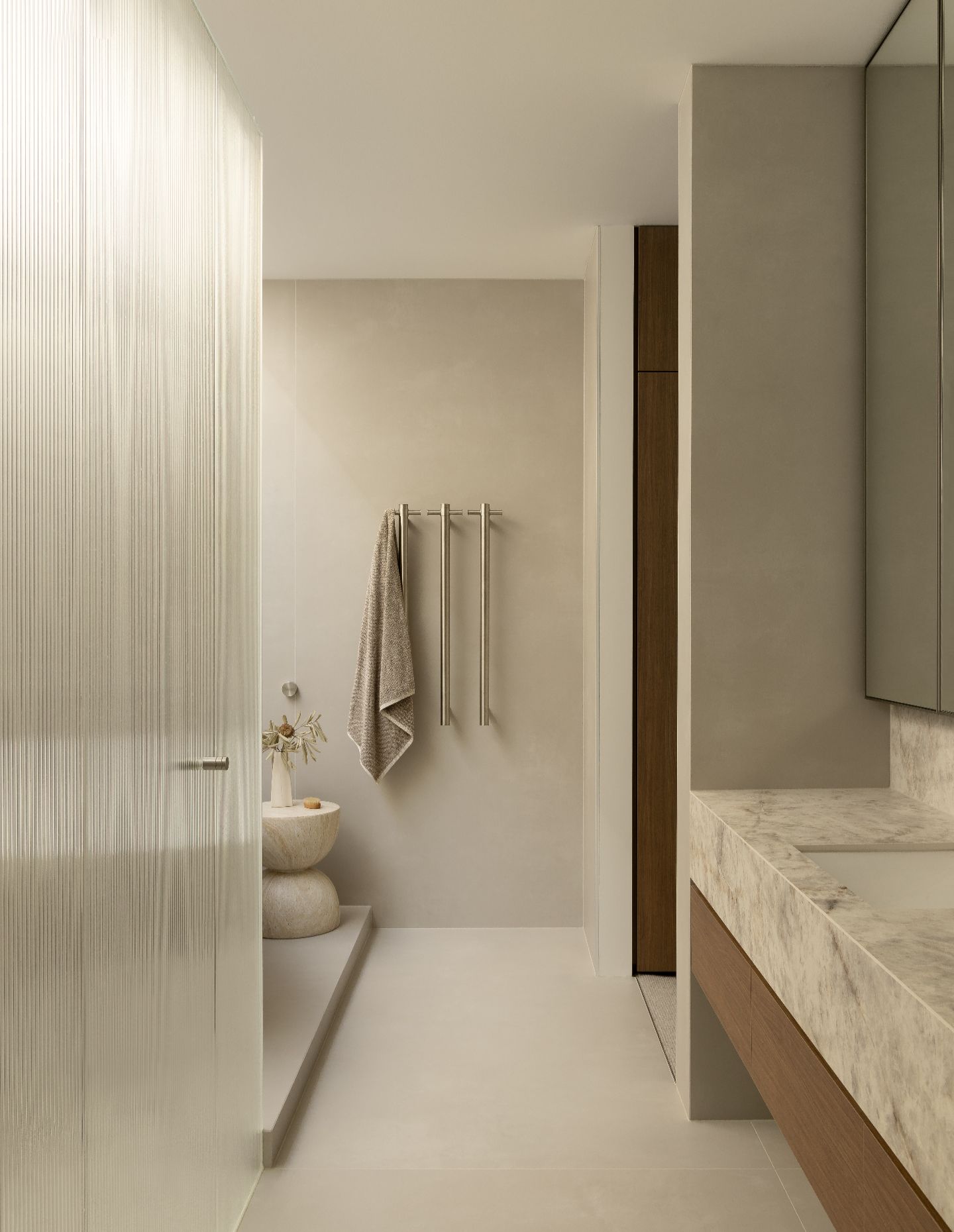
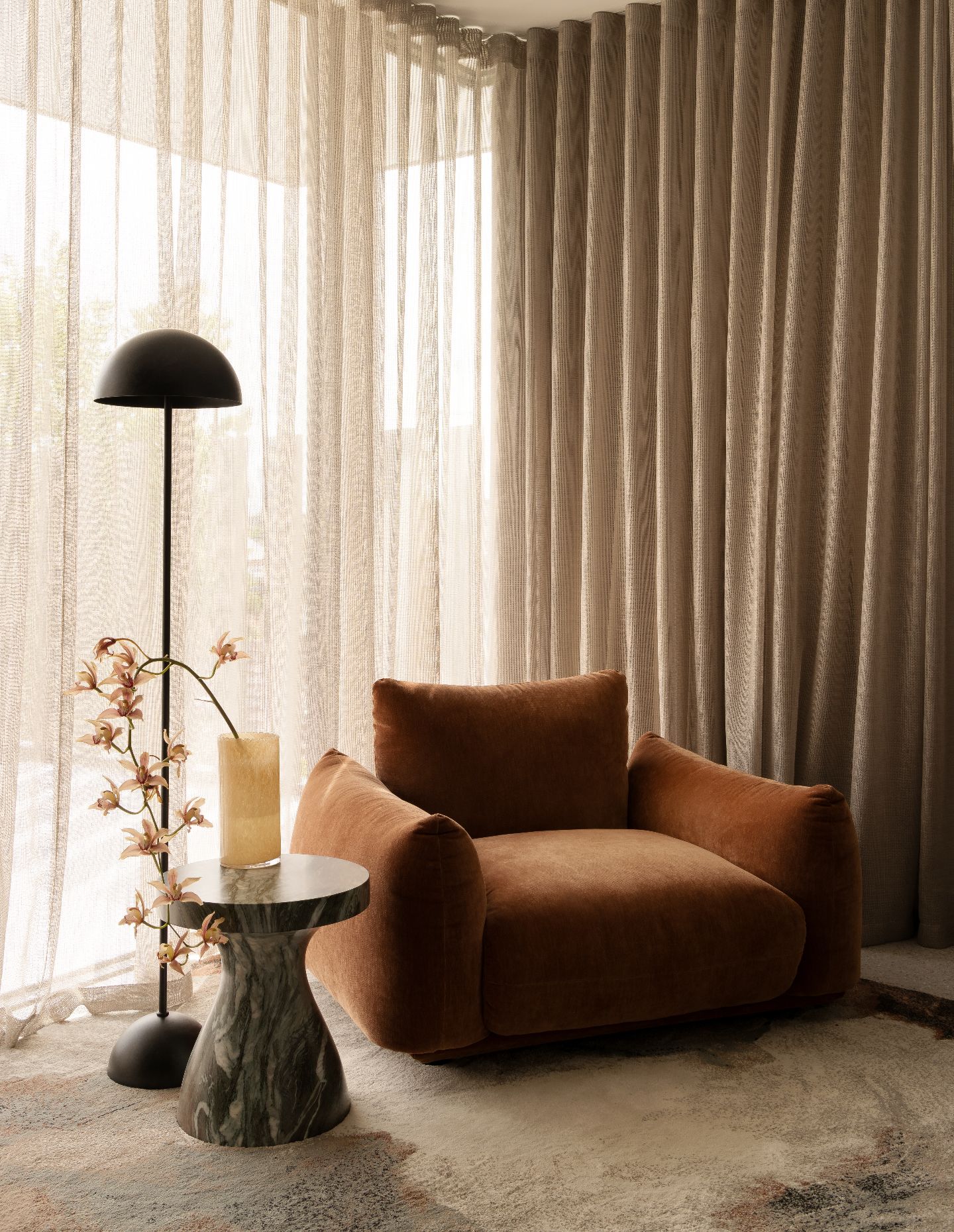
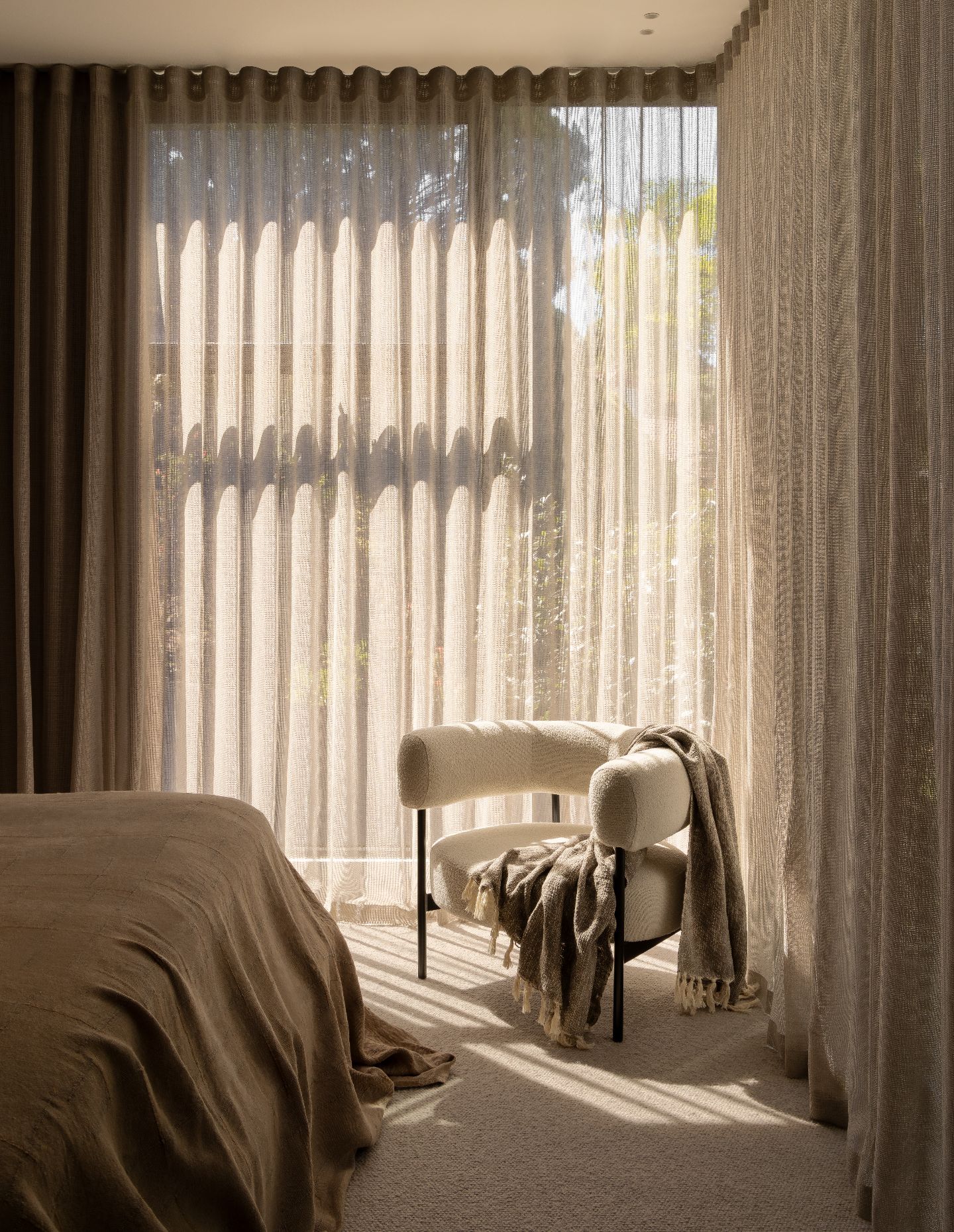
There are several moments within the home that stand out as particularly successful, each revealing the way light, materiality and architectural form interact throughout the day. One of the most compelling is the way sunlight moves around the building, creating a sequence of changing atmospheres. In the morning, light slowly spills through the ensuite skylight, illuminating the reeded shower screen with a soft glow. By midday, the sun tracks toward the rear of the house, where deep eaves protect the alfresco while allowing just the right amount of filtered light into the living spaces. In the afternoon, sunlight washes across the western façade, energising the anodised aluminium screen and allowing warm, dappled light to filter into the interiors.
Another key favourite element is the timber screen surrounding the staircase, which not only acts as a beautiful sculptural feature but also brings natural light deep into the basement level. It frames the end of the main hallway in a warm, tactile way and reinforces the home’s connection to natural materiality.
Together, these moments encapsulate the essence of the design—spaces that are calm, warm and sculpted by both form and light, creating a home that feels alive throughout the day.