
Tell us about the site context.
The house is set within a dense orchard landscape on the outskirts of Vapi, where nature is present as an enveloping condition. Rather than dissolving into this context, the project chooses to engage with it through contrast — establishing its own identity through mass, proportion and a carefully curated material palette.
The site is structured into two distinct yet complementary zones: one that accommodates the house along with its courtyards, sit-outs, kitchen garden and pool deck, and another that opens out as a larger landscaped expanse for social interaction. This zoning allows the architecture to mediate between intimacy and openness, grounding itself while still extending into the landscape.
What can you tell us about the client and their brief?
The brief emerges from a duality of scale and intimacy. The client envisioned a seven-bedroom family home capable of hosting large social gatherings, while still retaining a sense of closeness and comfort for everyday living.
This tension between the collective and the personal becomes the central organising principle of the project, informing how spaces expand and contract — transitioning from larger, open volumes to more contained, individual environments that respond to daily rhythms.
Related: A contemporary ritual of dining in Xi’an
What are the key material and structural choices?
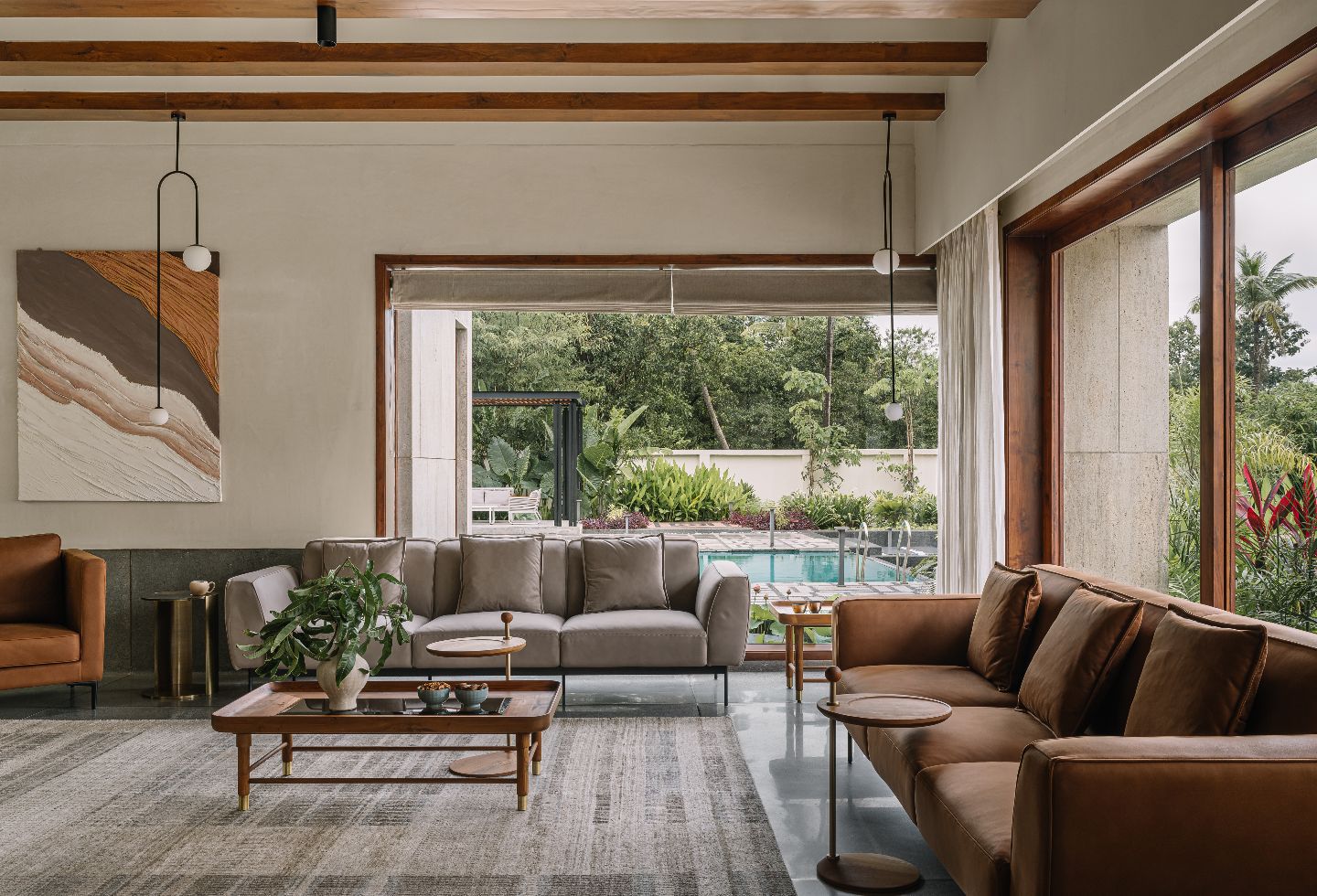
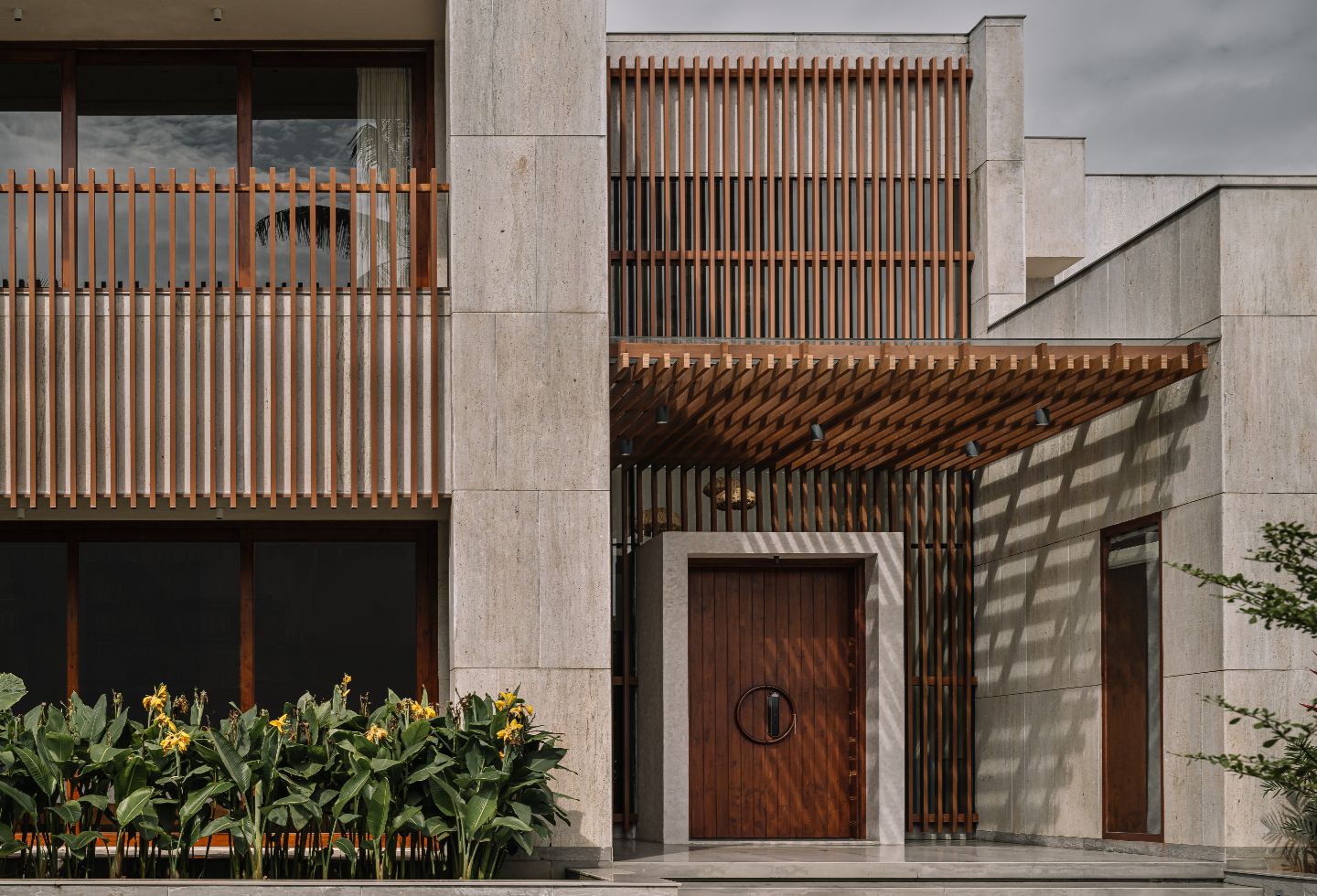
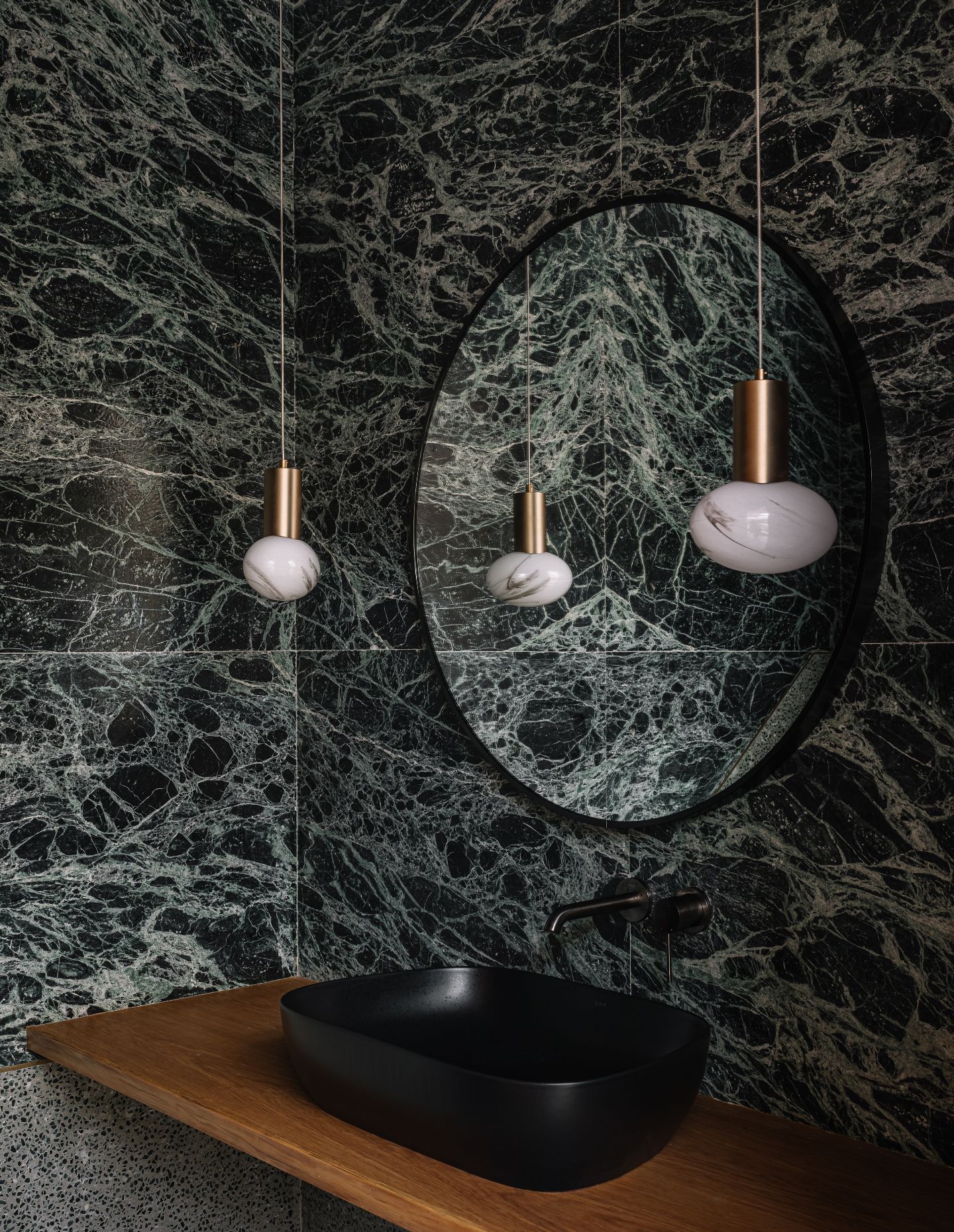
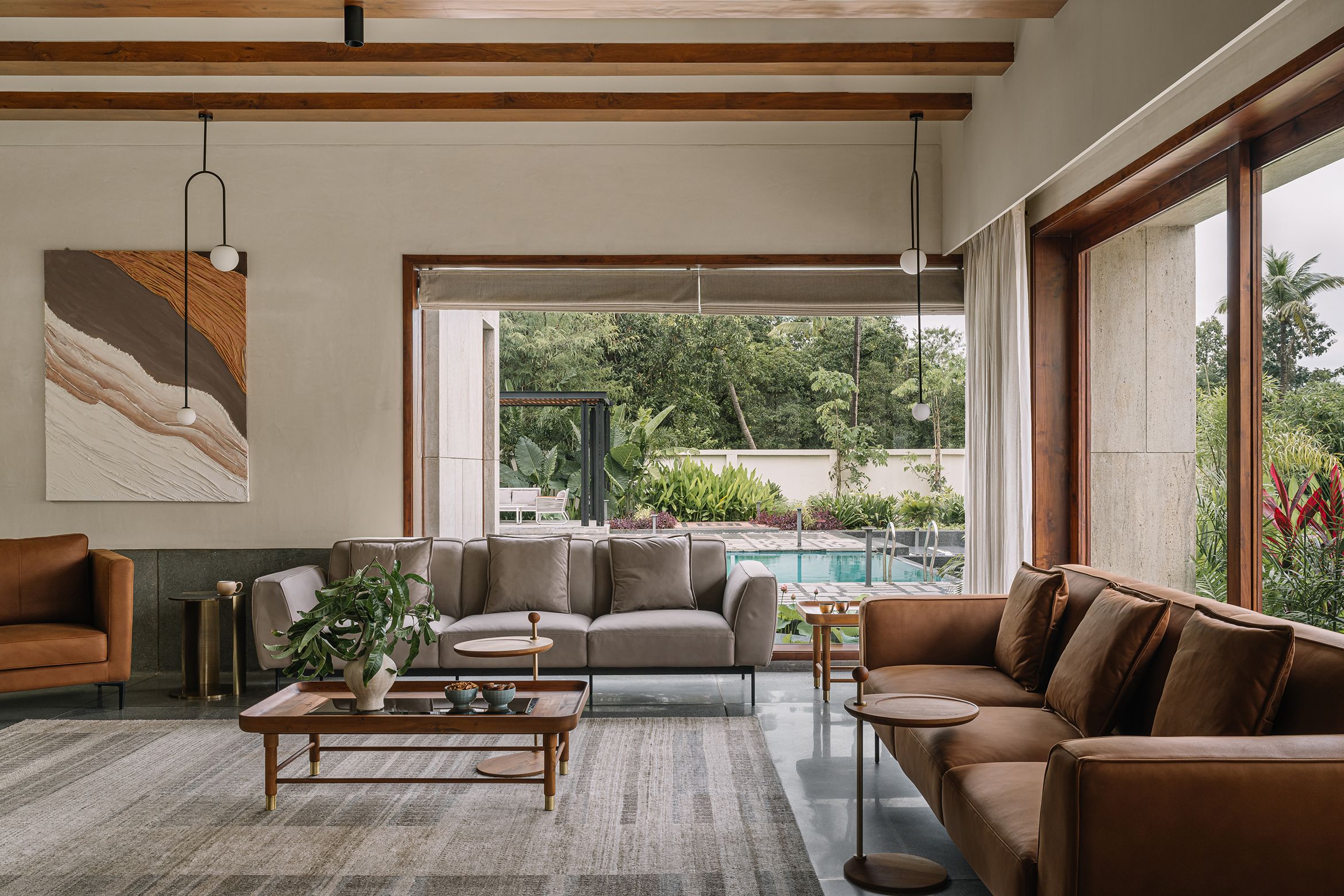
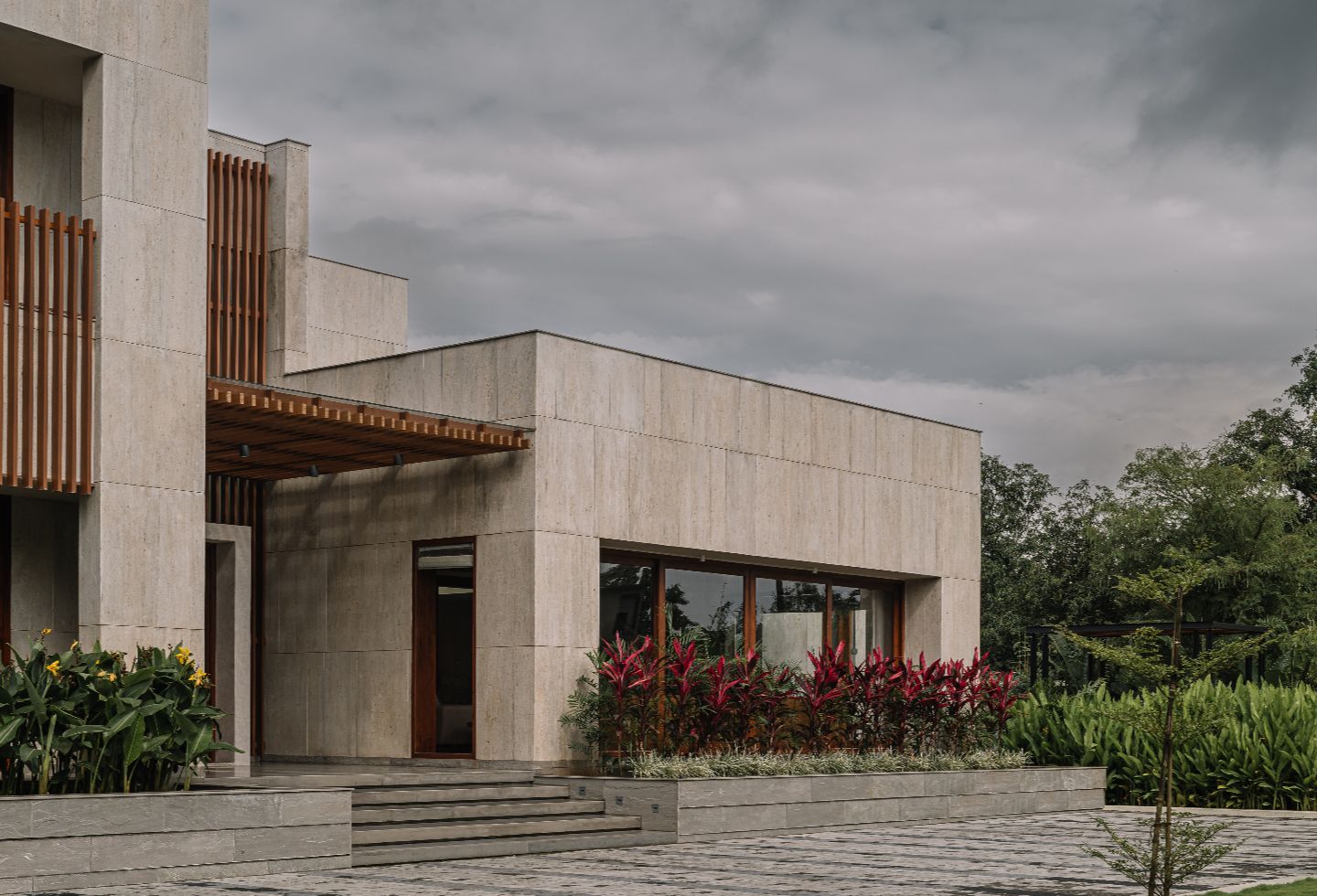
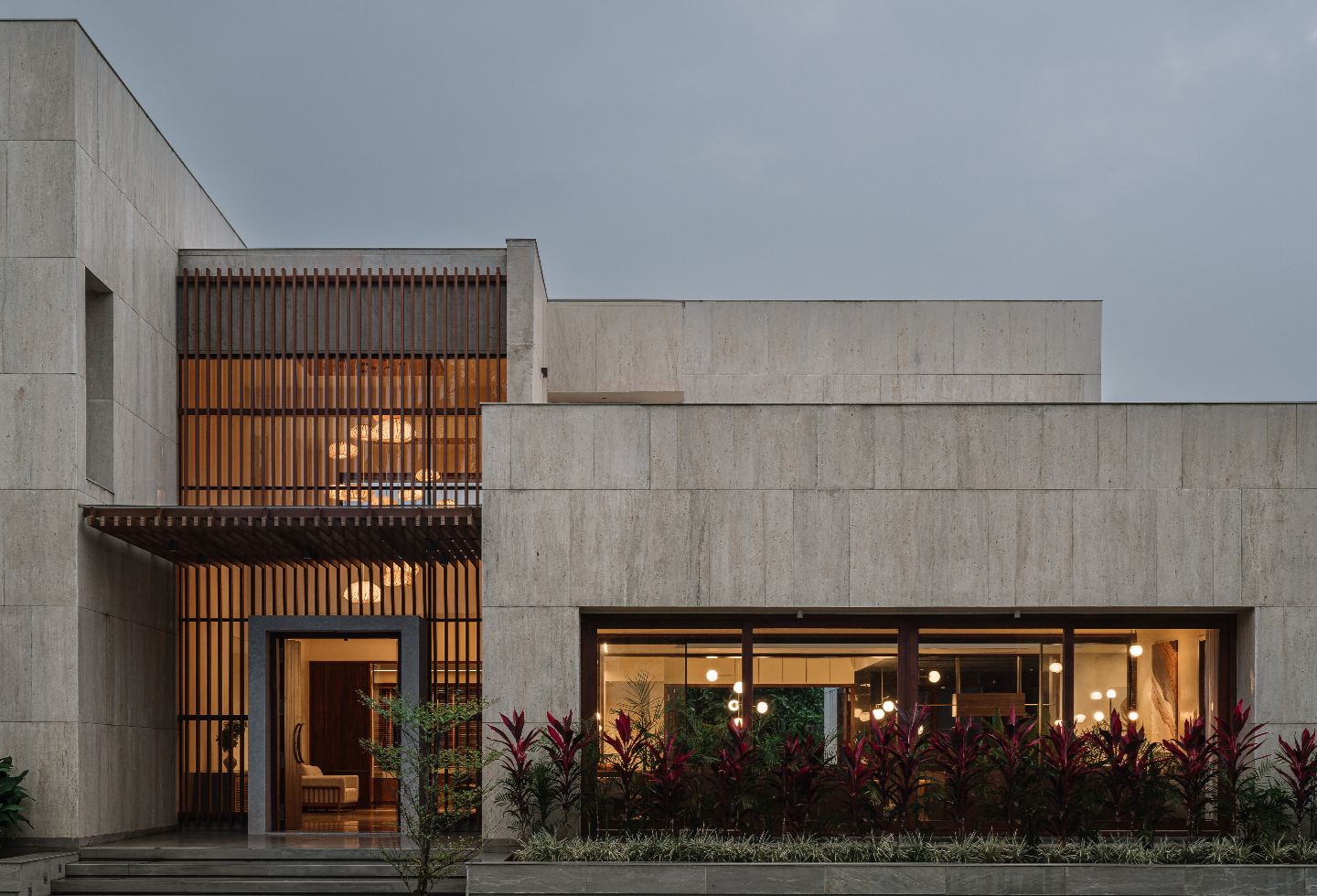
The project is anchored in a restrained but deliberate material language, where each element contributes to a larger tonal continuity. Grey limestone forms the plinth, grounding the building, while off-white granite defines the external mass. Inside, this palette is translated into lime plaster walls and cast-in-situ terrazzo, allowing exterior and interior to remain connected yet distinct.
Wood, marble and metal are introduced as secondary layers, adding warmth, tactility and variation without disrupting the overall coherence.
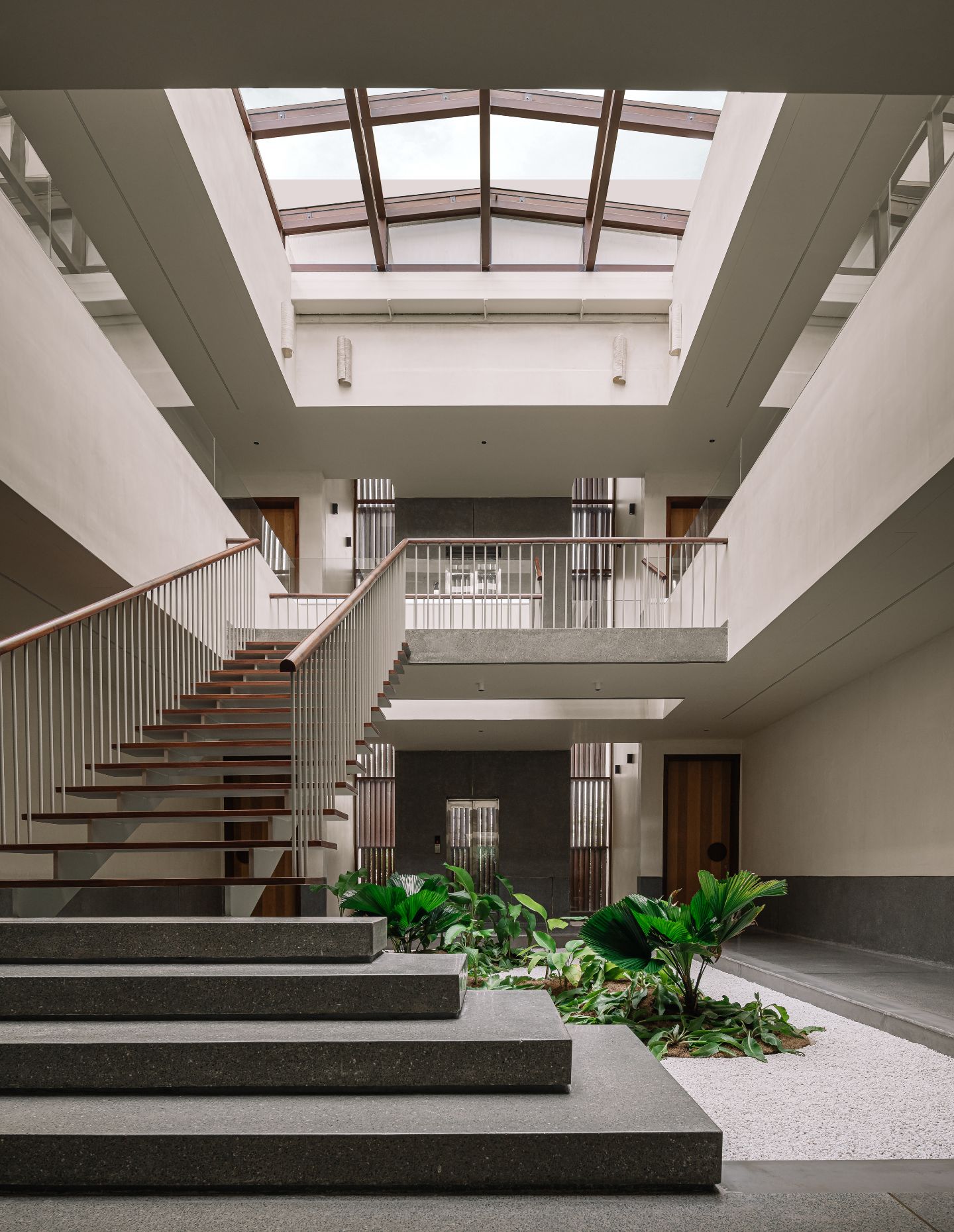
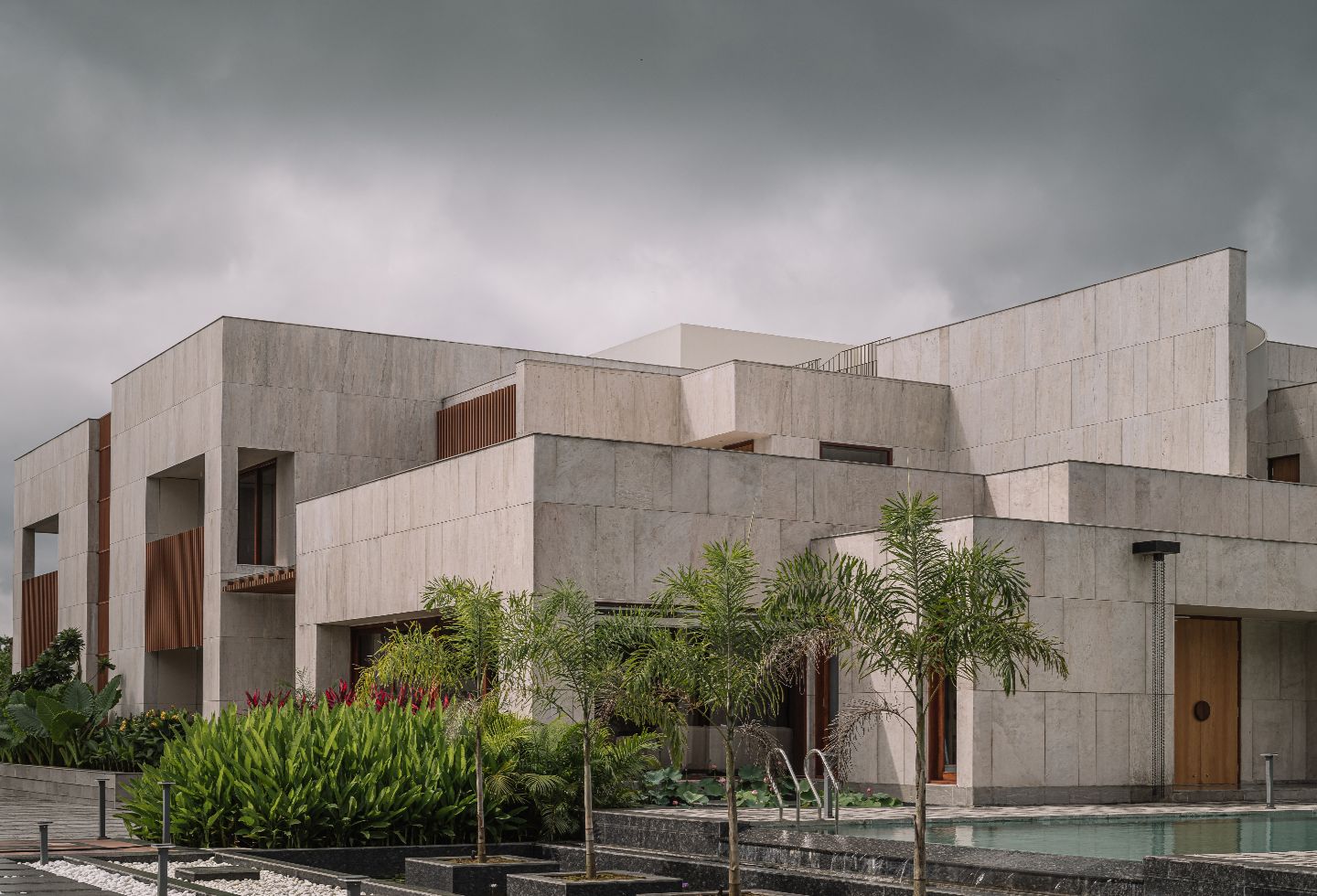
Structurally, the house is composed as a series of cuboidal volumes, articulated through aluminium fins and layered elevations that break down its scale. Double-height spaces, courtyards and a gradual stepping of the mass towards the pool establish a clear spatial hierarchy. The staircase becomes both structural and experiential — transitioning from a solid terrazzo base into lighter, floating elements, culminating in a suspended landing within the courtyard void.
What key functional requirements does the design address?
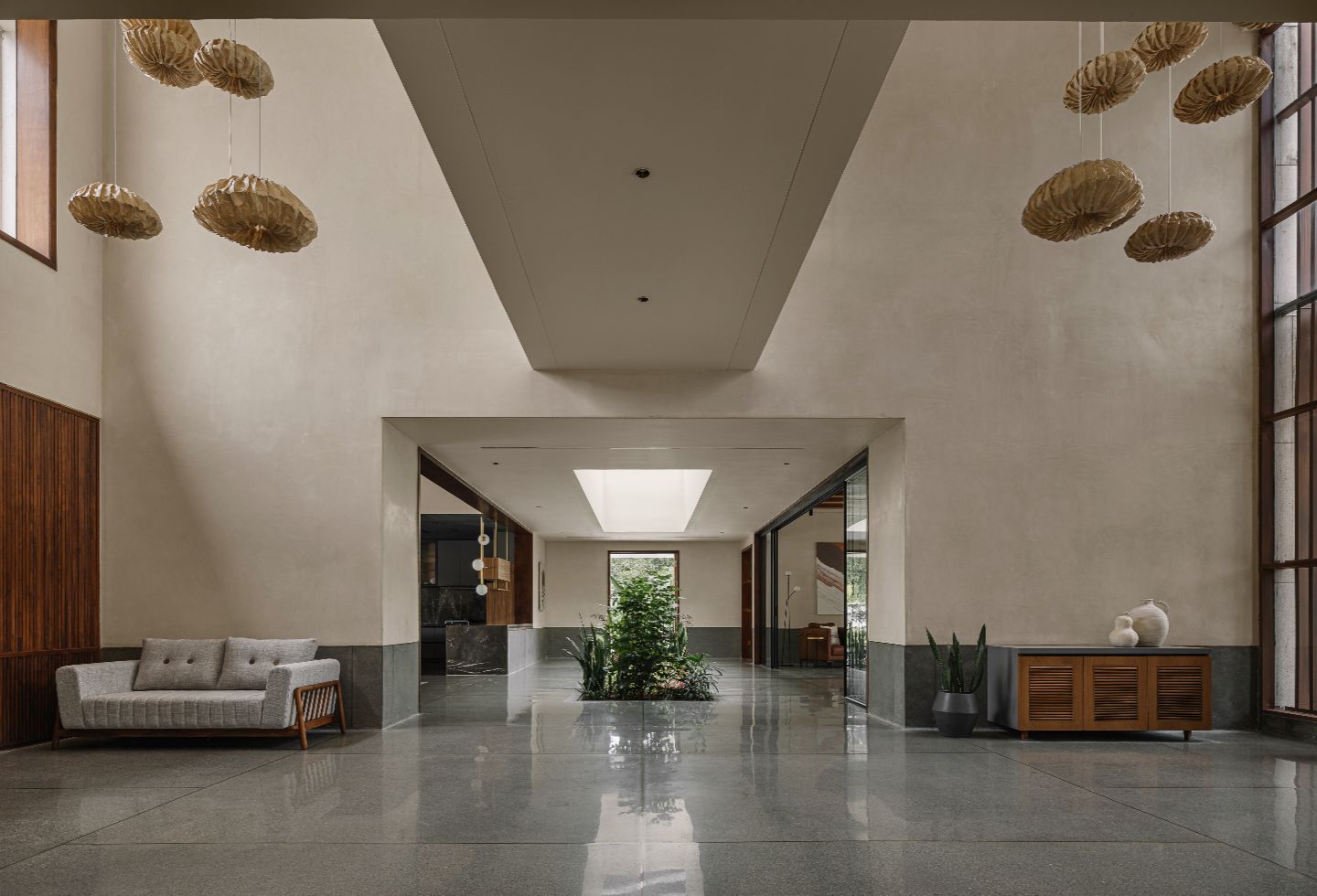
At its core, the design negotiates between collective and private modes of living. This is resolved through a clear division into two wings — public and private — connected by a central vestibule that acts as a threshold between them.
The program accommodates a wide range of functions, from living, dining, kitchen and puja spaces to bedrooms, a bar, gym and rooftop areas, allowing the house to operate across multiple scales.
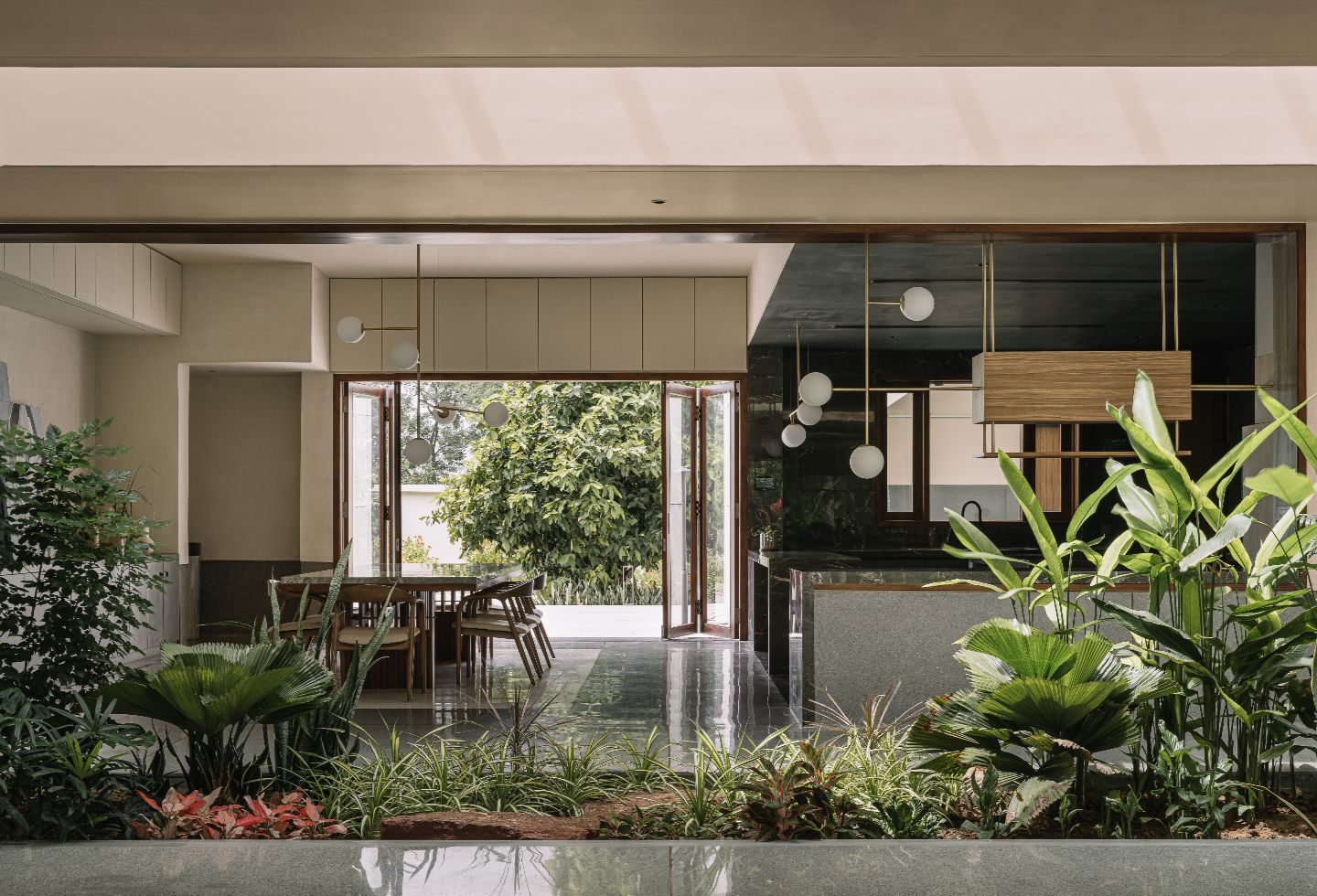
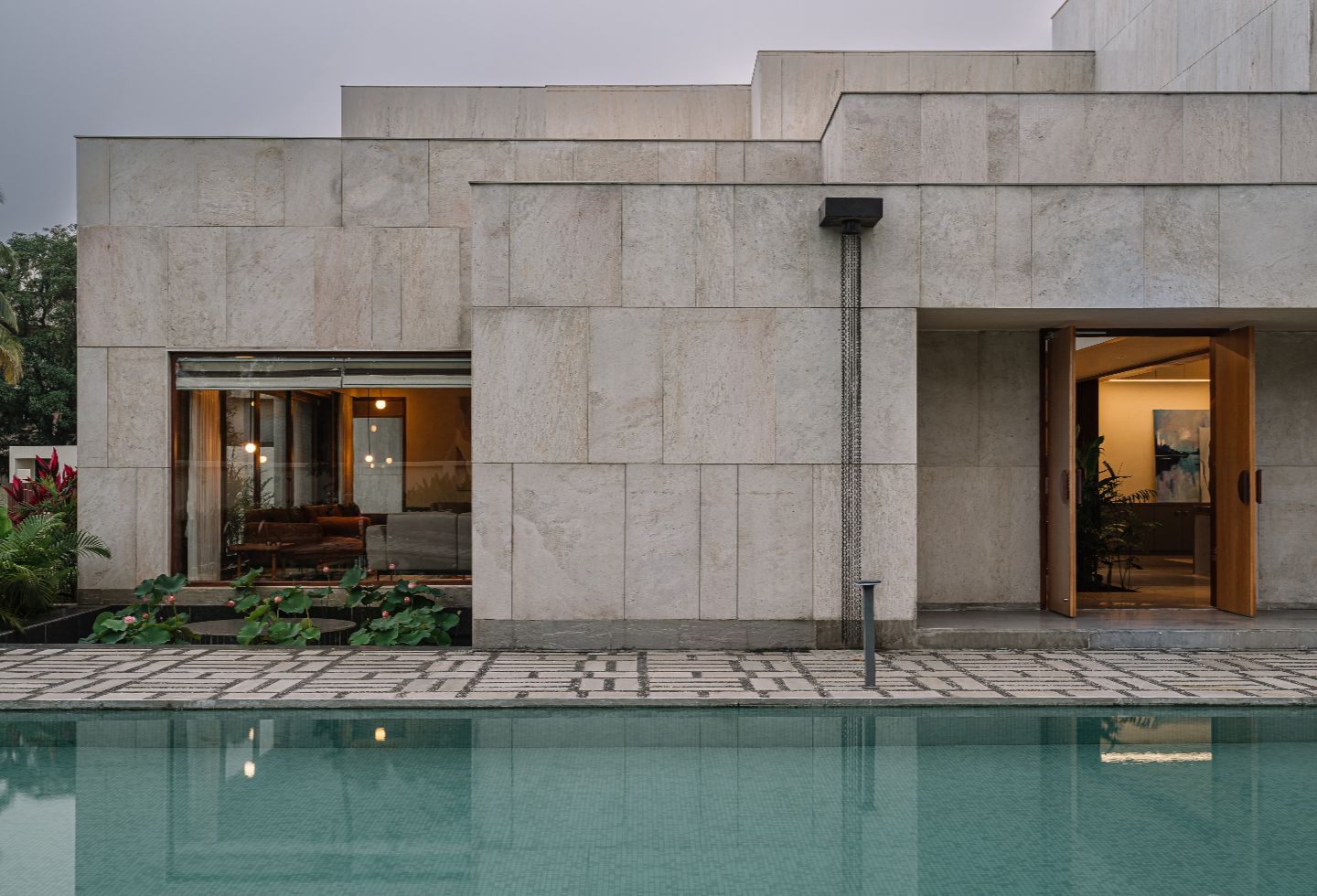
Courtyards play a critical role, not only in bringing light and ventilation into the plan, but also in allowing the landscape to permeate the interior. They act as spatial anchors, organising movement and reinforcing the house as both inward-looking and outward-reaching.
What are your favourite moments in the design?
The most compelling moments arise where space, material and movement converge. The central courtyard with its evolving staircase is one such instance, where a solid base gradually dissolves into lighter, floating elements, creating a sense of suspension within the void.
The double-height entrance vestibule establishes an immediate spatial clarity while drawing in light and volume. Equally significant is the differentiation between courtyards — one linear and connective, guiding movement towards the pool, and another more expansive, centred around the staircase and experienced as a volumetric pause.
A consistent elevated skirting detail runs across spaces, quietly tying the house together and allowing variation in material expression while maintaining a unified visual language. These moments reflect an approach where architecture is carefully calibrated — balancing permanence with change, and solidity with lightness.