
Tell us about the site context.
The project is located in Xi’an, China — a historic city deeply rooted in the culture of ancient Chang’an. The site sits within a contemporary urban commercial context, surrounded by modern retail and dining environments.
The design draws heavily from the city’s iconic architectural heritage, including the Giant Wild Goose Pagoda, ancient city walls and traditional cave dwellings (yaodong), while responding to the flow and scale of a busy modern dining district.
What can you tell us about the client and their brief?
The client’s brief requested an interior that balances strong cultural identity with commercial practicality: to reflect the grandeur and history of Xi’an, create a memorable dining atmosphere, support efficient daily operation, and appeal to both local customers and contemporary urban visitors.
What are the key material and structural choices?
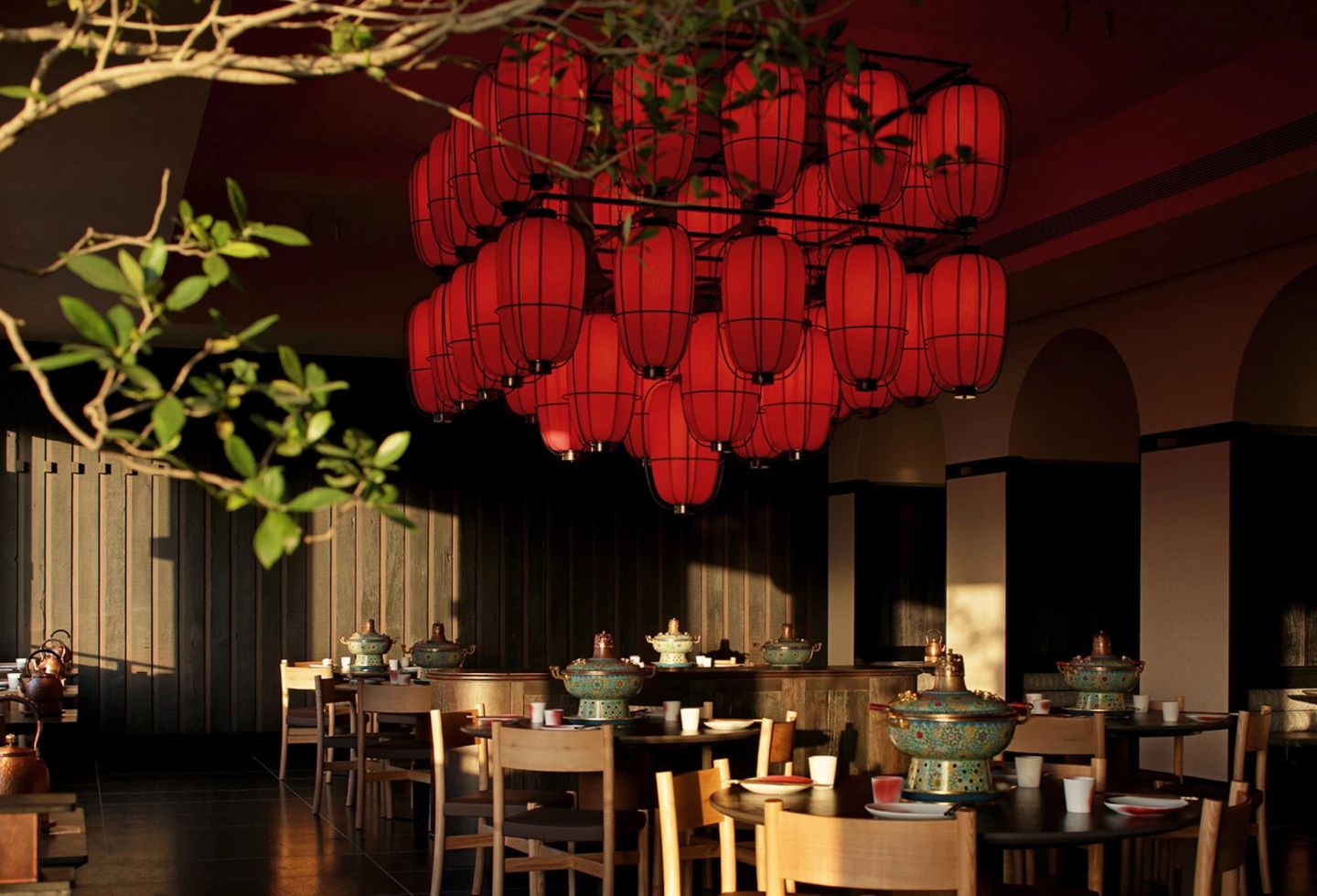
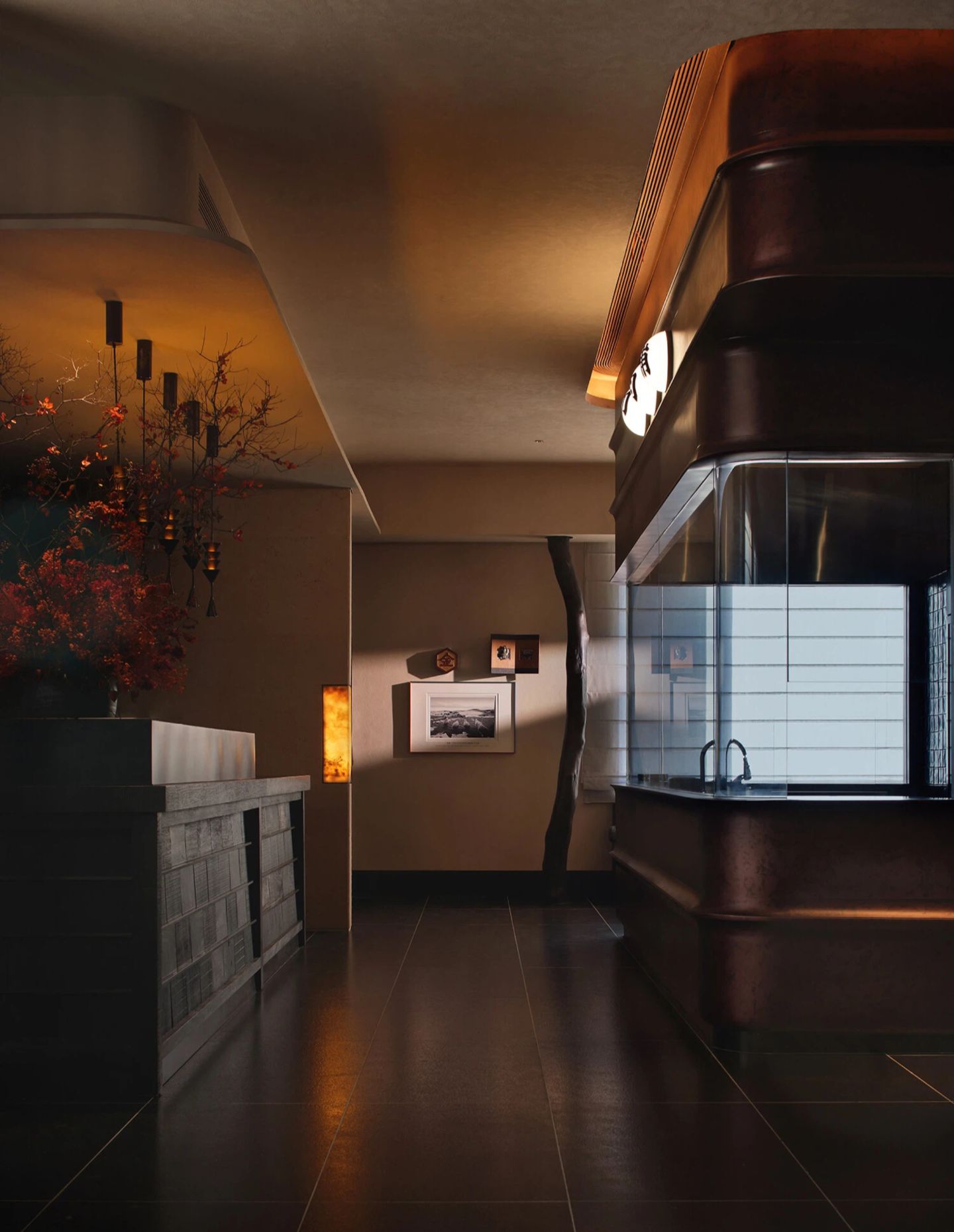
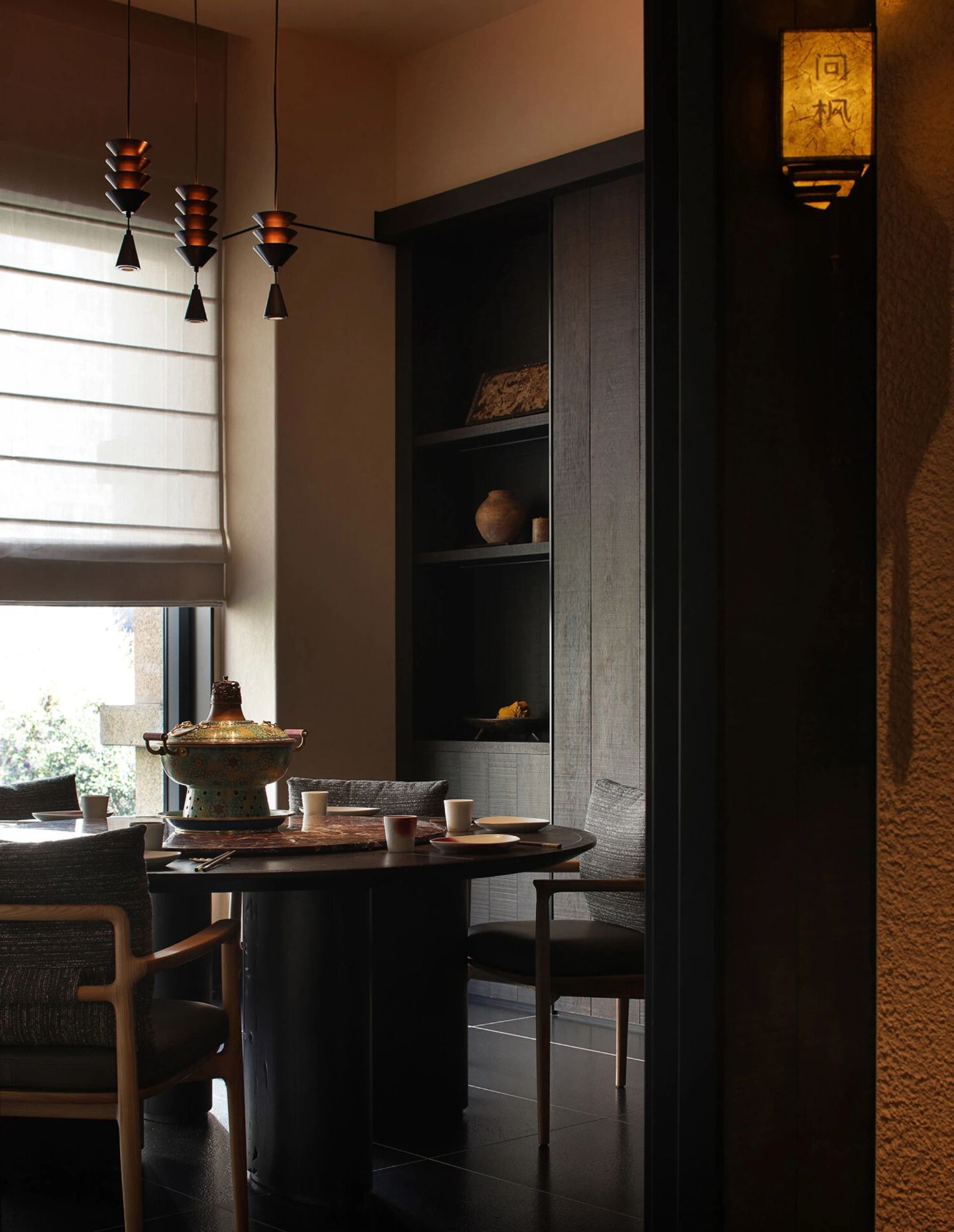
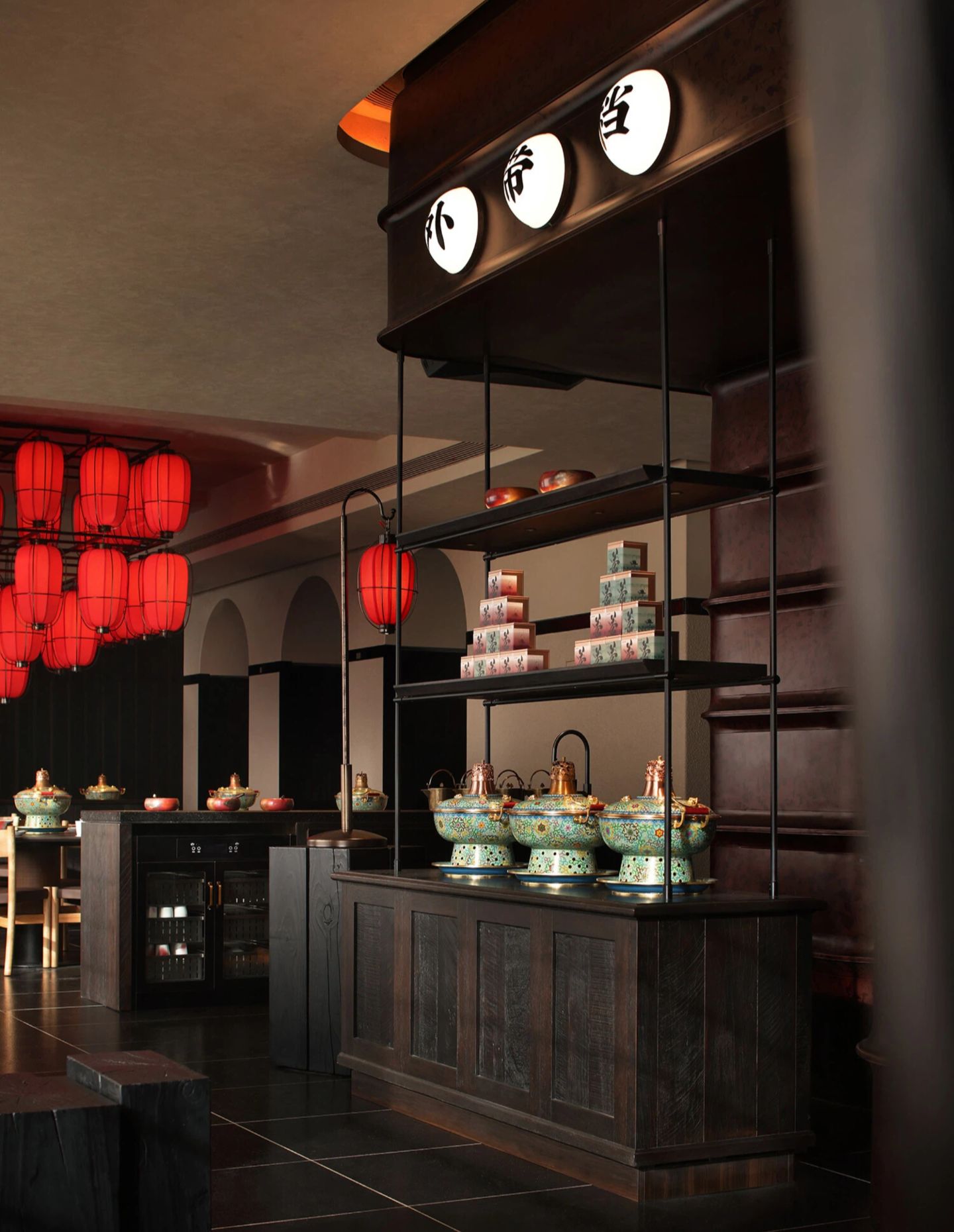
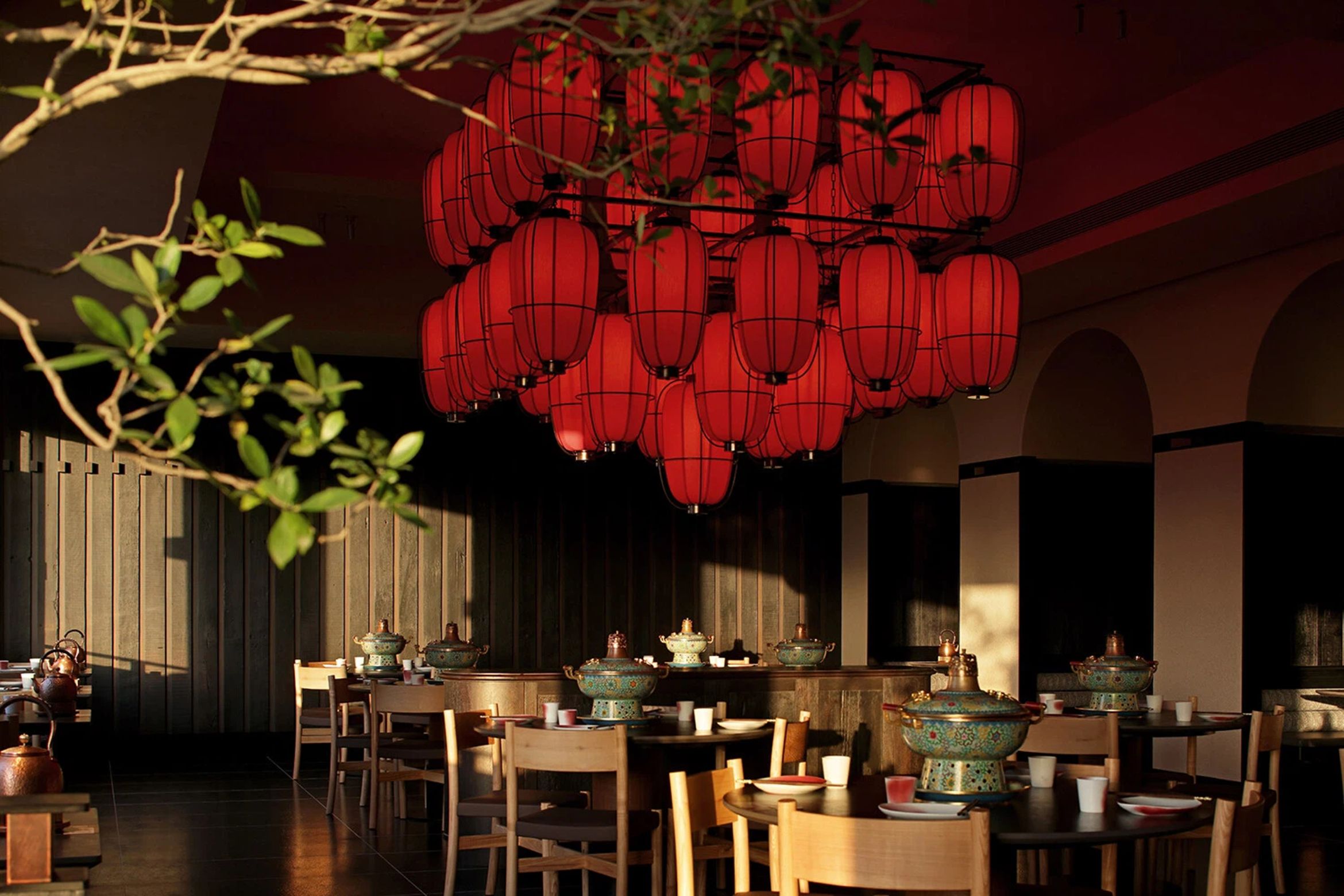
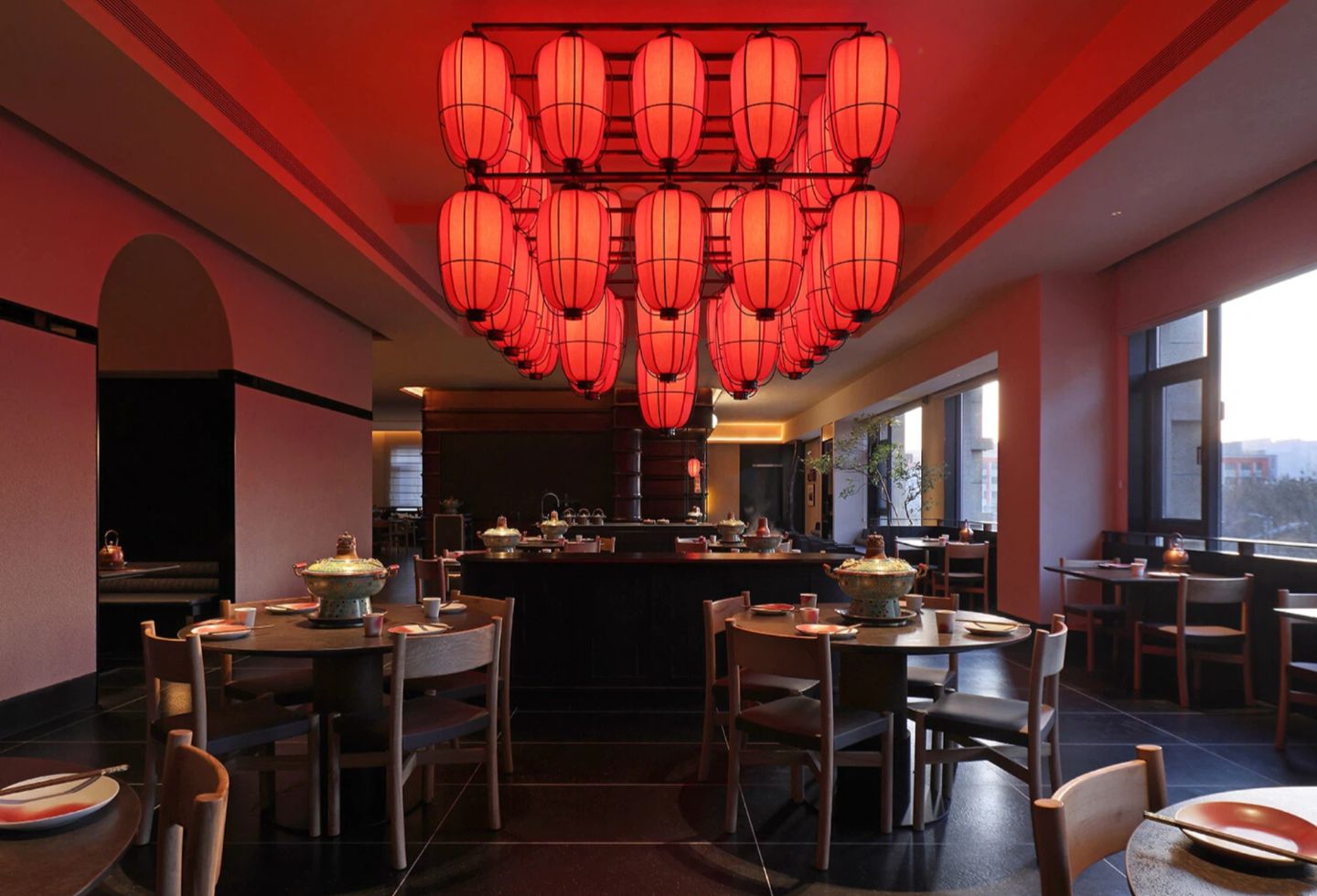
Key materials include carbonised wood (referencing traditional cave dwellings and timber structures), earth-tone mineral paints, ink-coloured bricks with subtle metallic flecks, water-washed sandstone, aged pottery and solid copper accents.
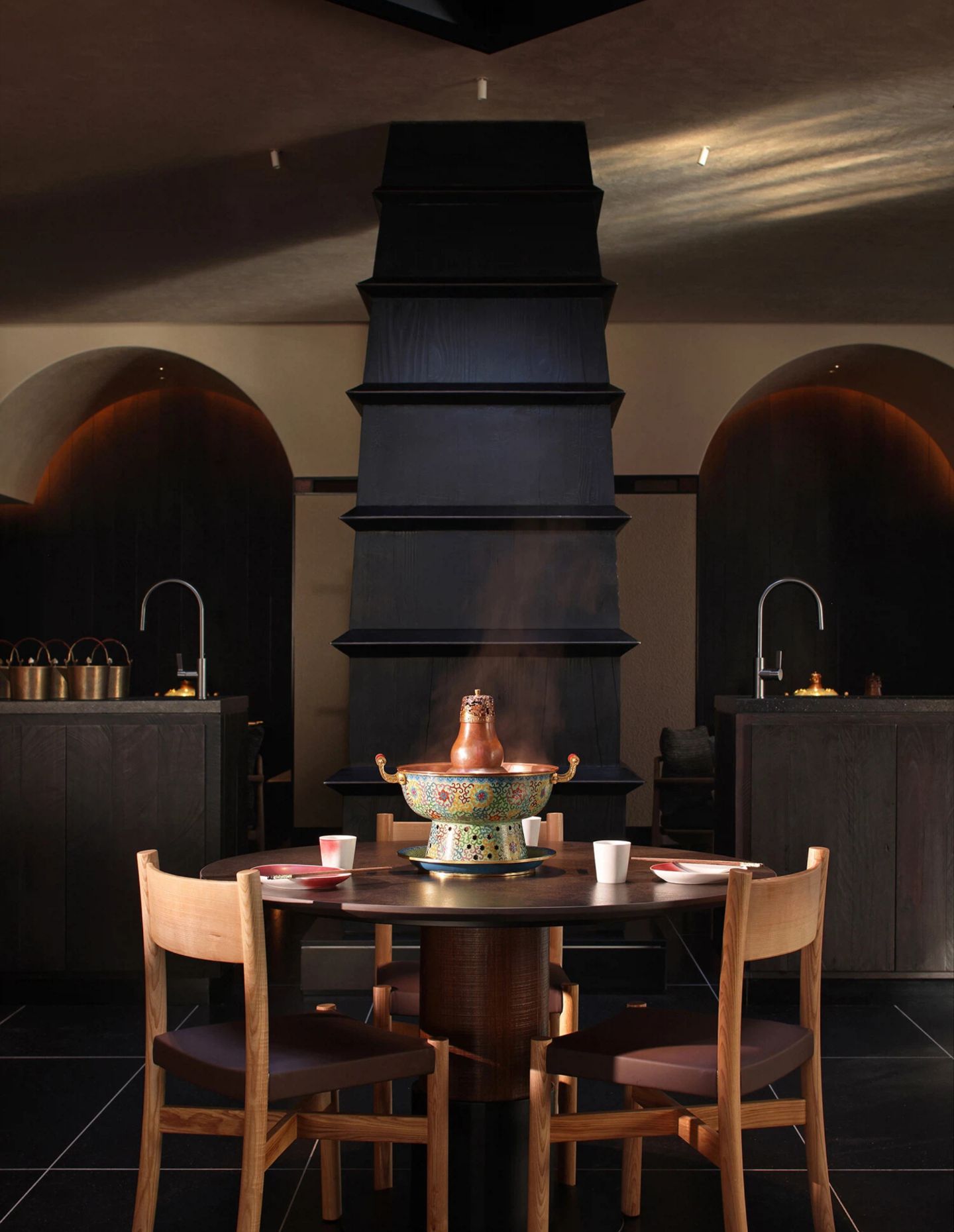
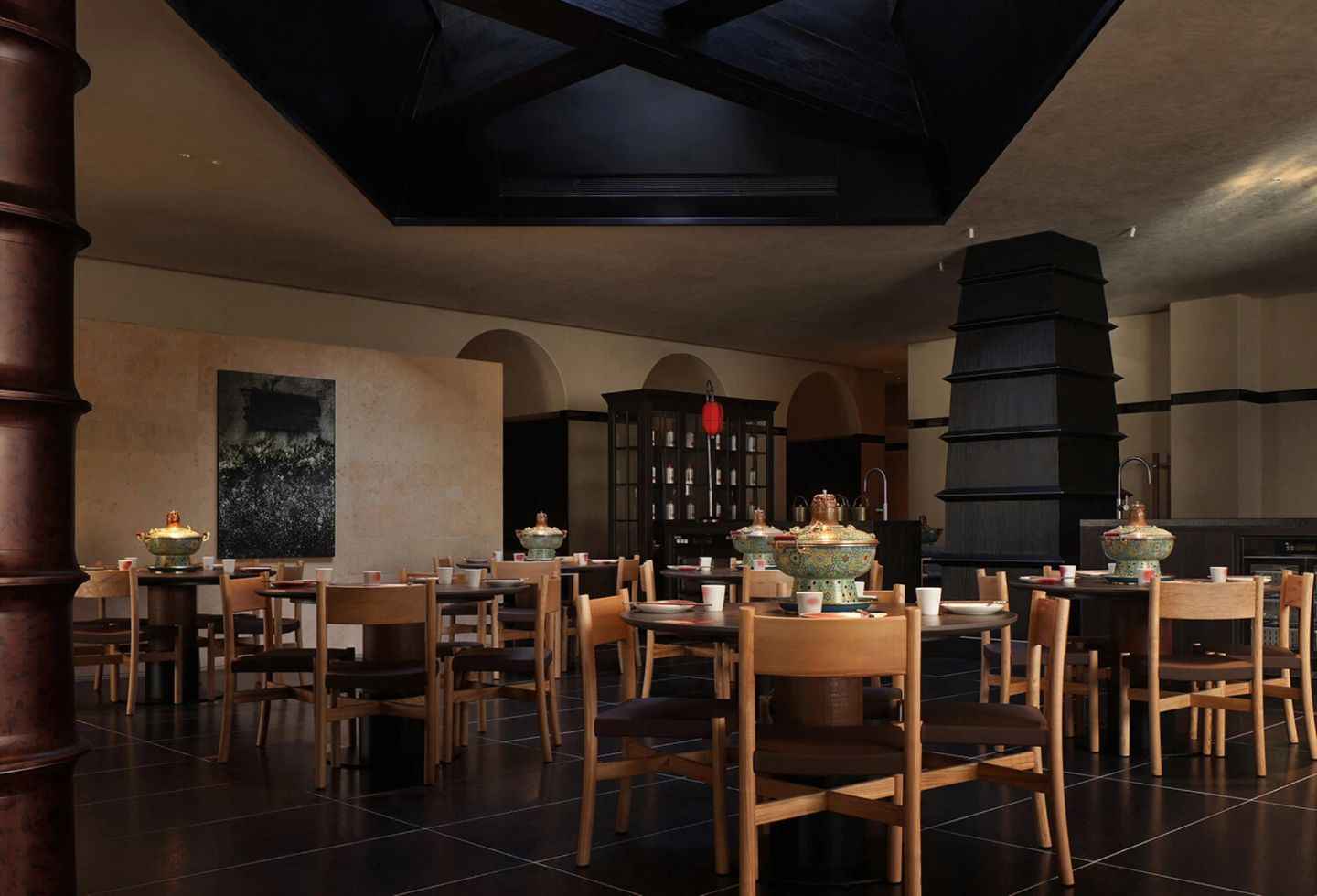
Structurally, the design uses layered spatial zoning, arched openings echoing Chang’an’s city gates, freestanding booth forms that act as symbolic ‘city walls’, and a central sculptural pagoda installation as the spiritual focal point.
The layout maintains an open flow with clear circulation paths, integrating indoor and semi-outdoor zones through large glass windows.
What key functional requirements does the design address?
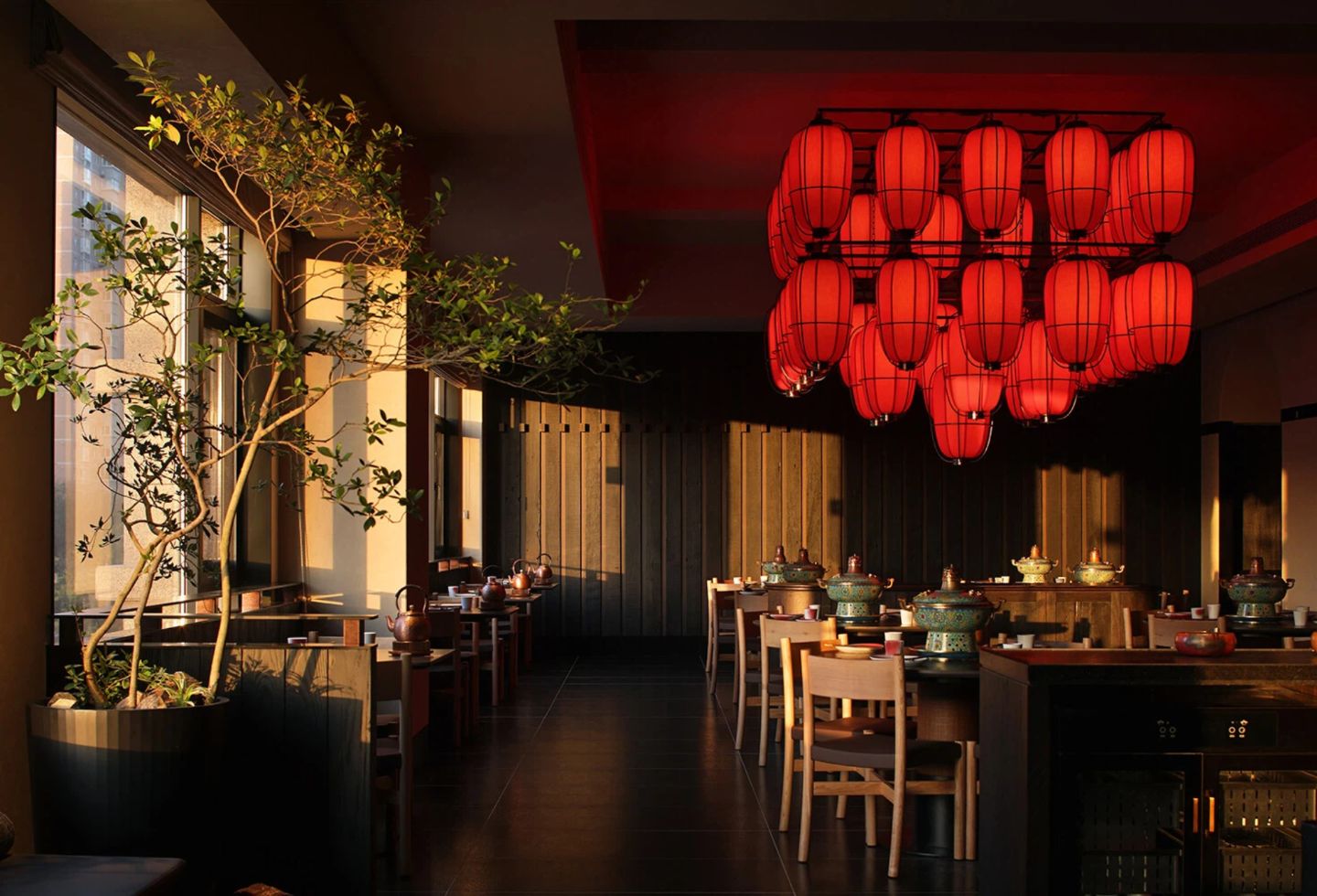
The design addresses multiple functional needs: efficient customer circulation, separating entry and waiting areas, main dining, private zones and service paths; clear visibility and access to the open kitchen, enhancing the dining experience; and flexible seating layouts including communal areas, intimate booths and inner dining zones.
It also considers acoustic and spatial comfort through enclosed booth forms while maintaining openness, alongside practical lighting layers for ambience, food presentation and wayfinding. The spatial language is designed to be scalable and replicable for future chain expansion.
Related: Carefully crafted Coastal House
What are your favourite parts or moments in the design?
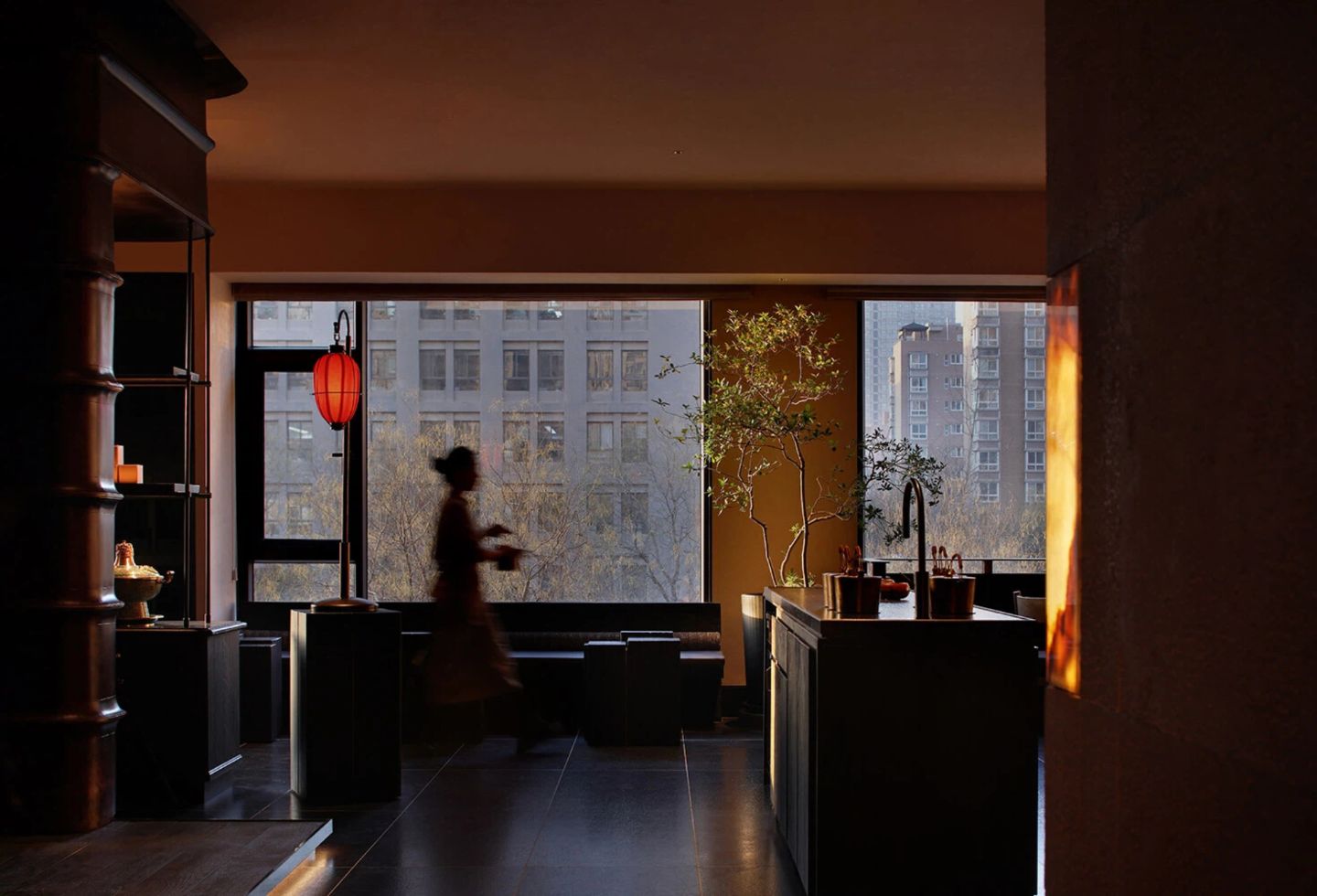
One of the most powerful moments is the arrival sequence — the warm wooden threshold that acts as a gentle transition between the busy city outside and the calm, cultural interior.
Another highlight is the central symbolic pagoda structure — simplified yet instantly recognisable — which anchors the entire space and carries the spiritual weight of Xi’an’s heritage.
We also value the interplay of light across ink bricks, textured wood and copper surfaces, creating shifting moods throughout the day. The arched booth openings, which evoke both city gates and cave dwellings, offer intimate yet connected dining moments that balance privacy and social energy.