
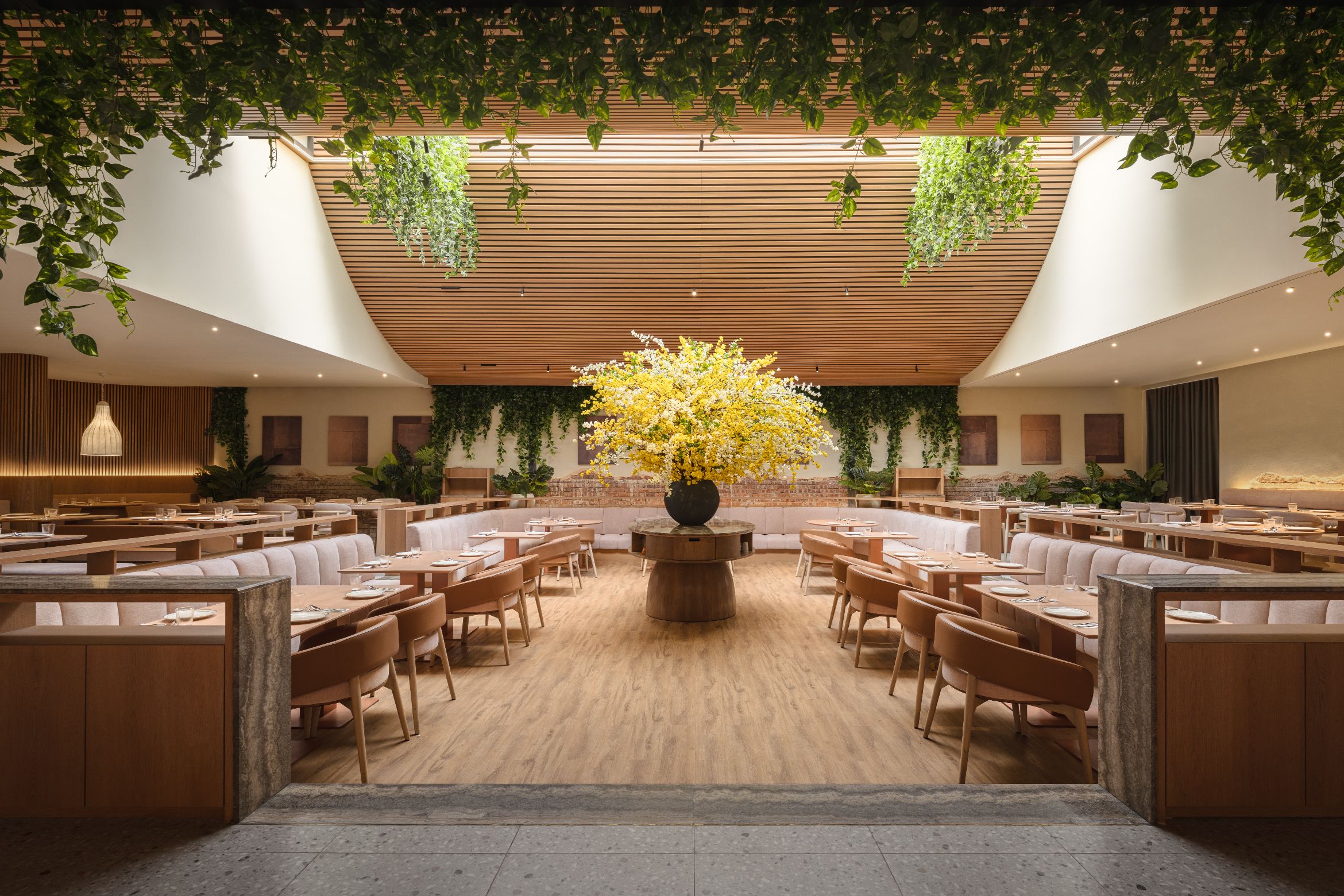
Sun & Moon occupies a quiet corner of Imbi, set back from the street inside a bungalow that had long been left unused. Rather than erasing the building’s past, Spacemen Studio chose to work with it, allowing age, texture and light to guide the project’s transformation.
The venue operates across two distinct modes. During the day, it functions as a brunch café, open and calm. As night arrives, the atmosphere shifts toward something more intimate, becoming a lounge animated by music and low light. The architecture does not change, but the way the space is experienced does.
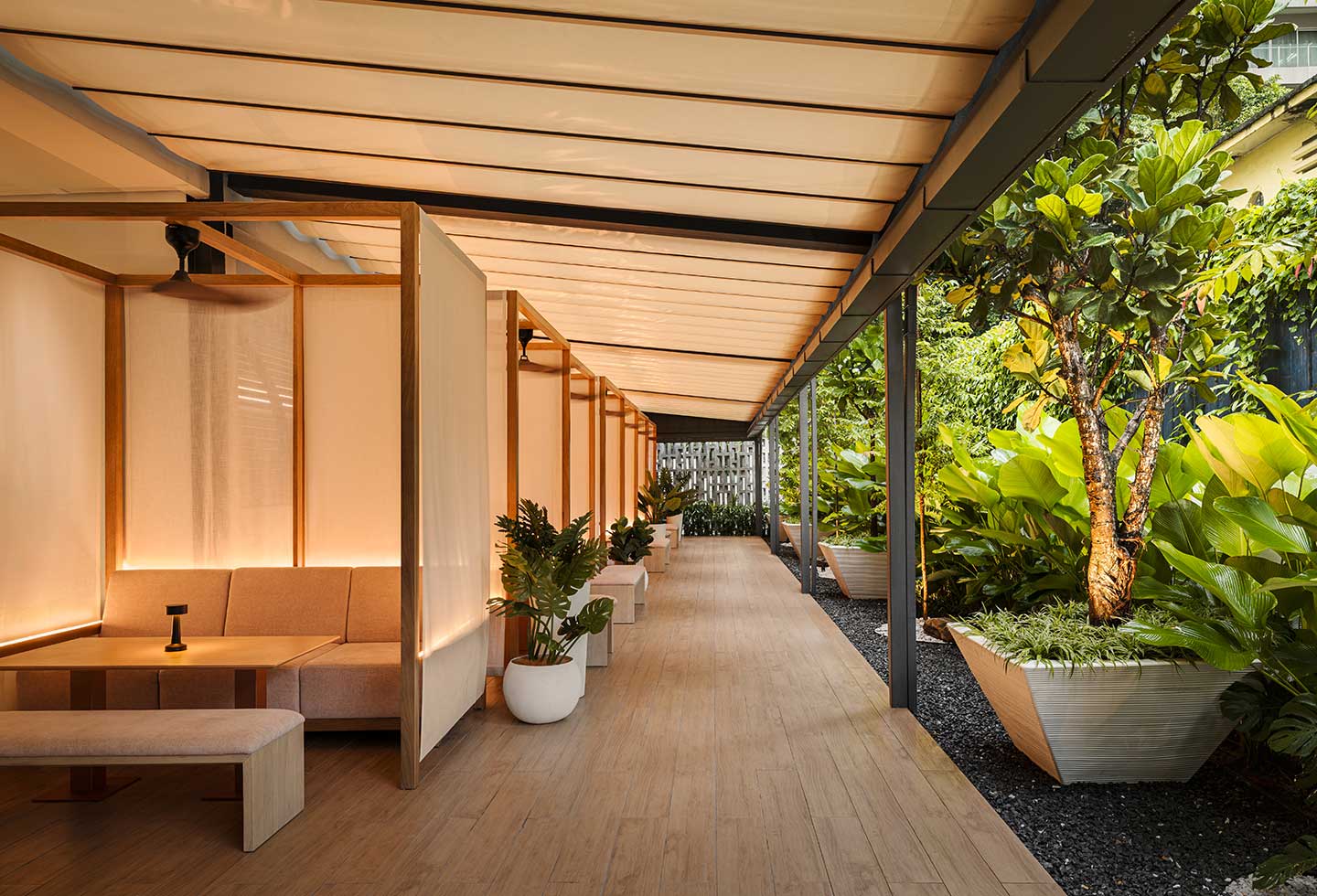
At the threshold, an ebony tree sits directly beneath a circular skylight. It acts as a waiting area, but also as a clear marker of intent: nature is not added as decoration here. It is positioned as a central architectural element, one that immediately softens the transition from city to interior.
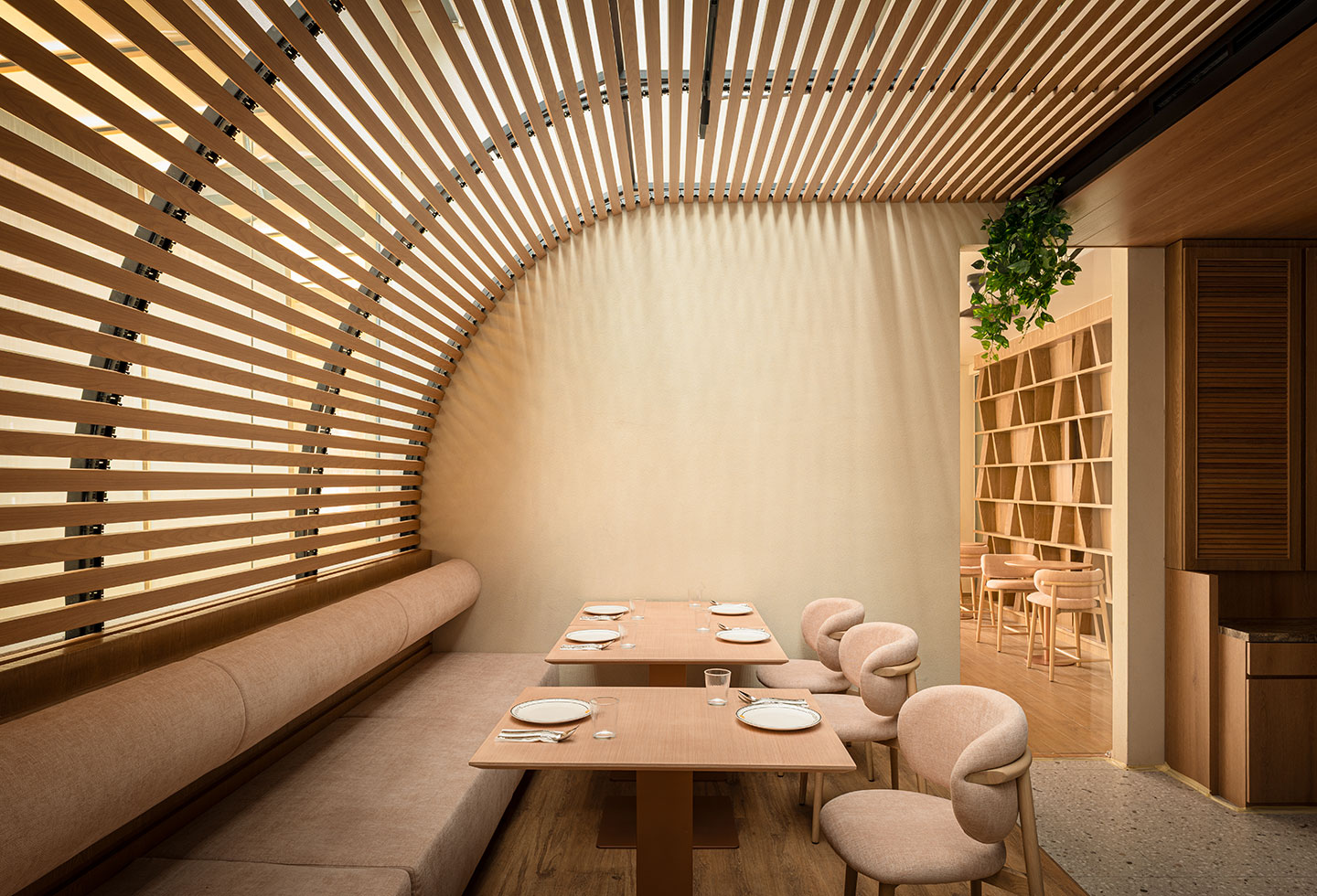
Inside, the material palette is deliberately limited. Light oak, reclaimed timber, grey travertine and soft-toned textiles create a restrained backdrop, while exposed brick walls remain visible, carrying traces of the bungalow’s former life. The decision to leave these surfaces intact gives the interior a sense of continuity rather than replacement.
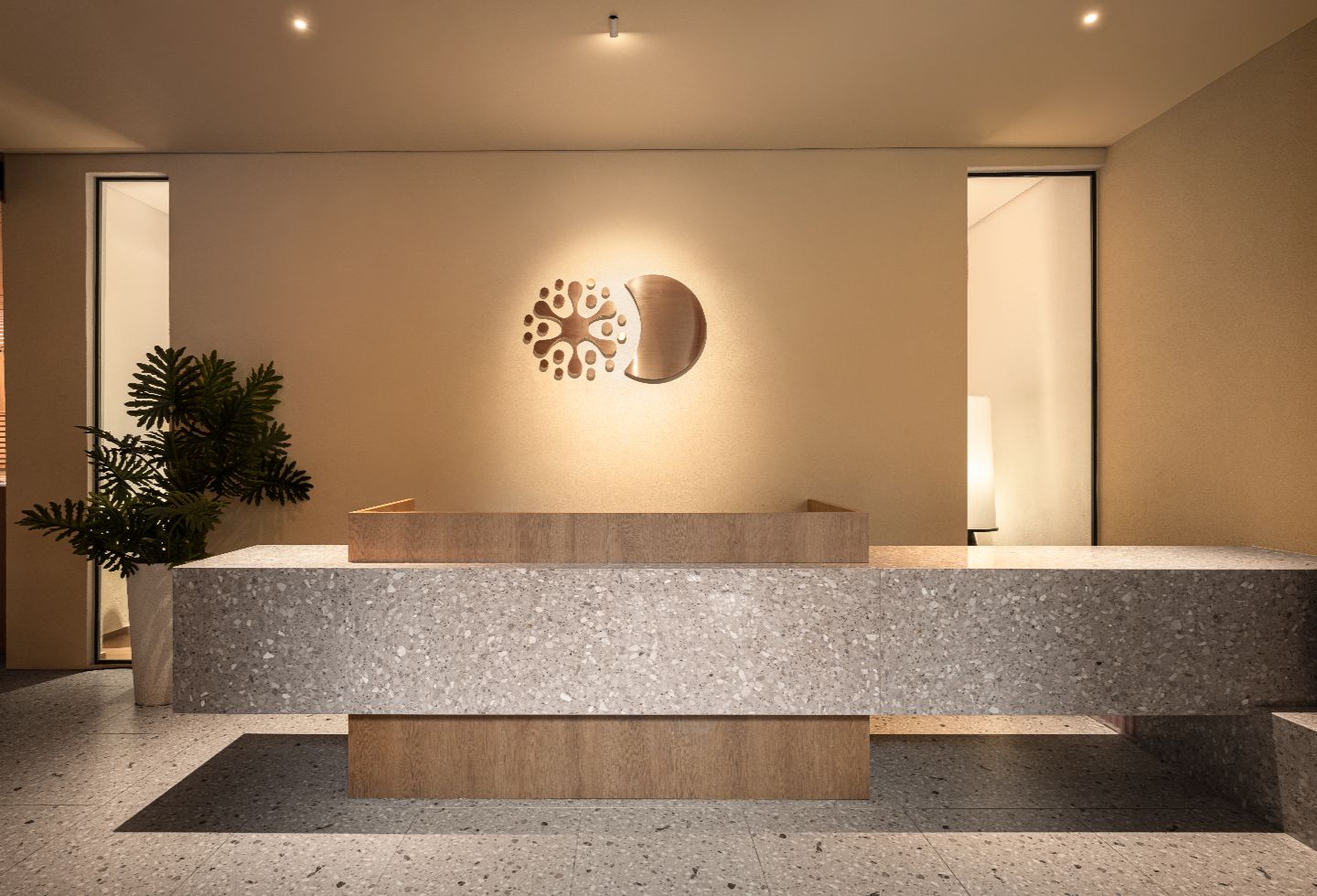
Natural light becomes an organising force. Above the Sun Bar, a glazed ceiling filtered by timber slats casts slow-moving shadows across the travertine counter. These changes are subtle, but they register over time, quietly reinforcing the space’s daytime identity.
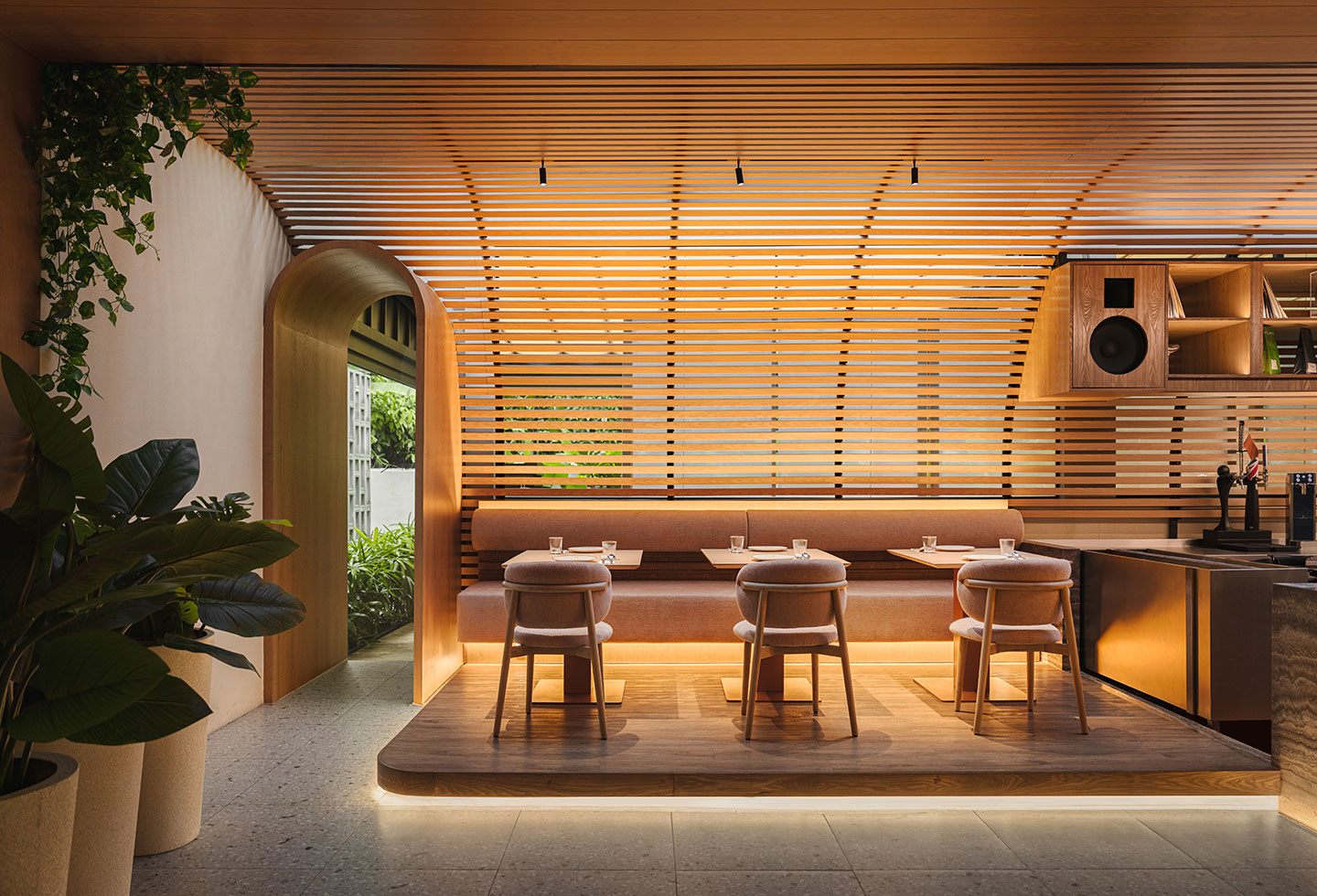
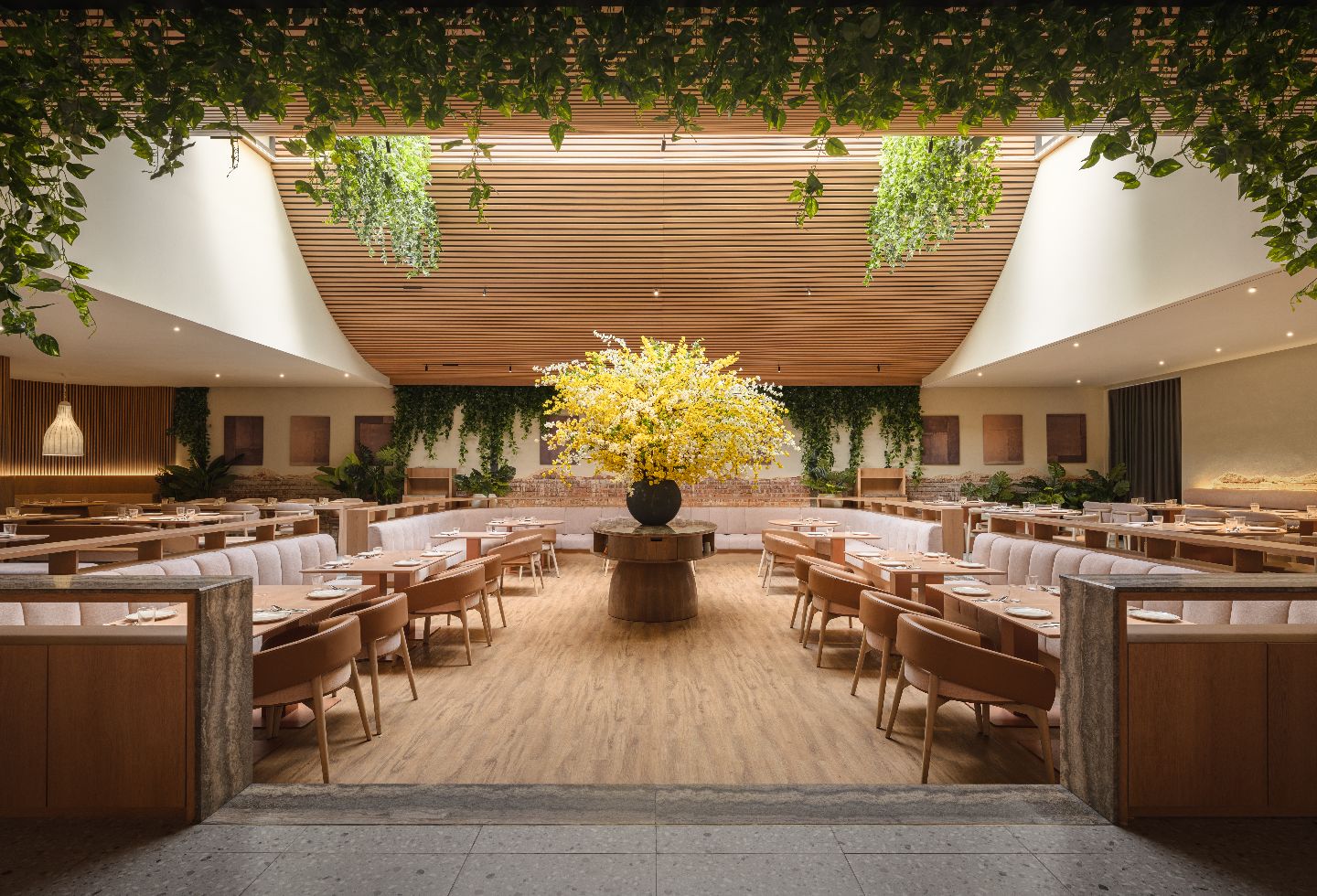
The centre of the plan is marked by a sunken dining area set beneath a long, linear skylight. This recessed zone draws people inward and anchors the entire venue. By day, it is filled with soft, even light. By night, it becomes the social core of the lounge, defined by warmer illumination and a more enclosed atmosphere.
Related: Between salt and stone
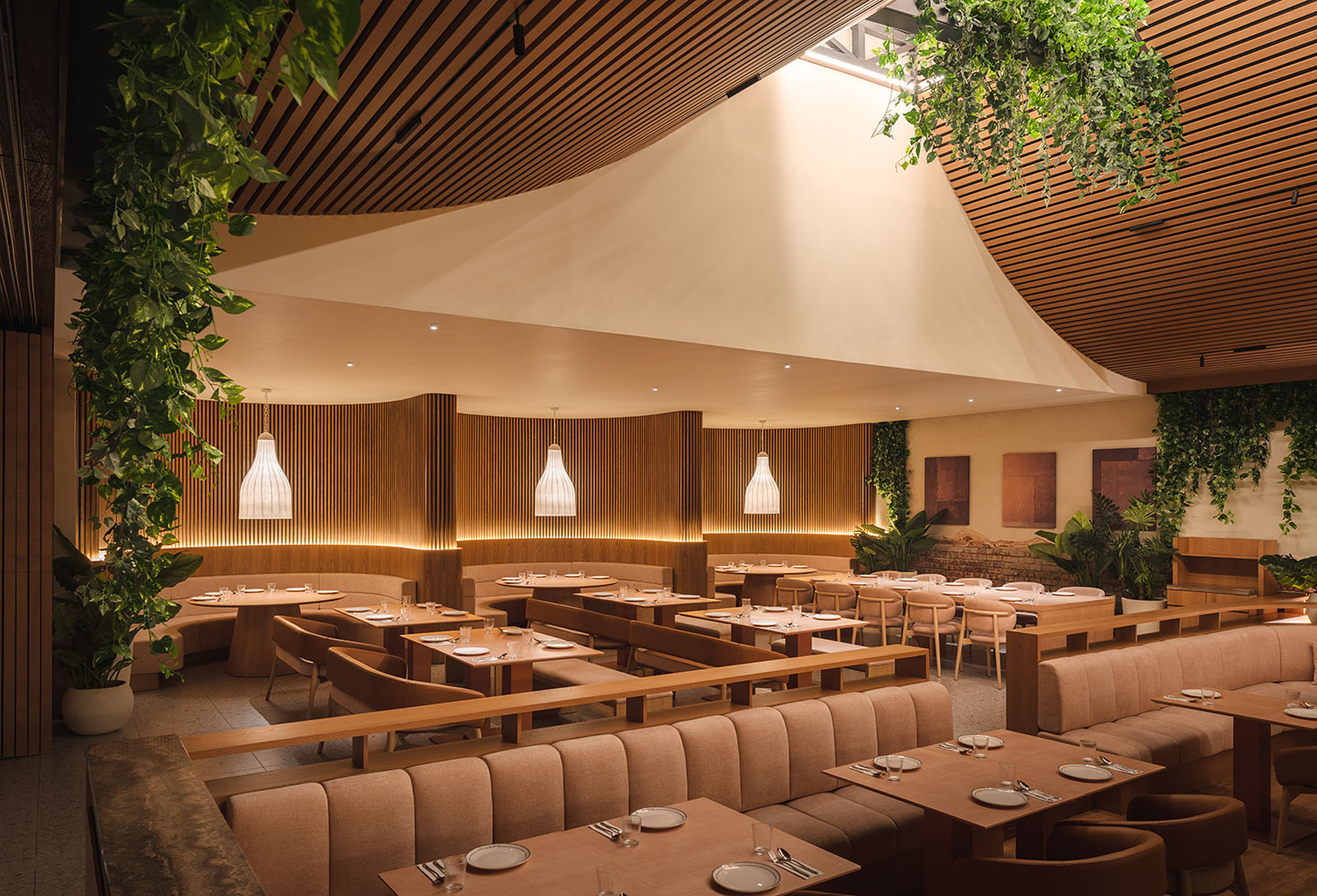
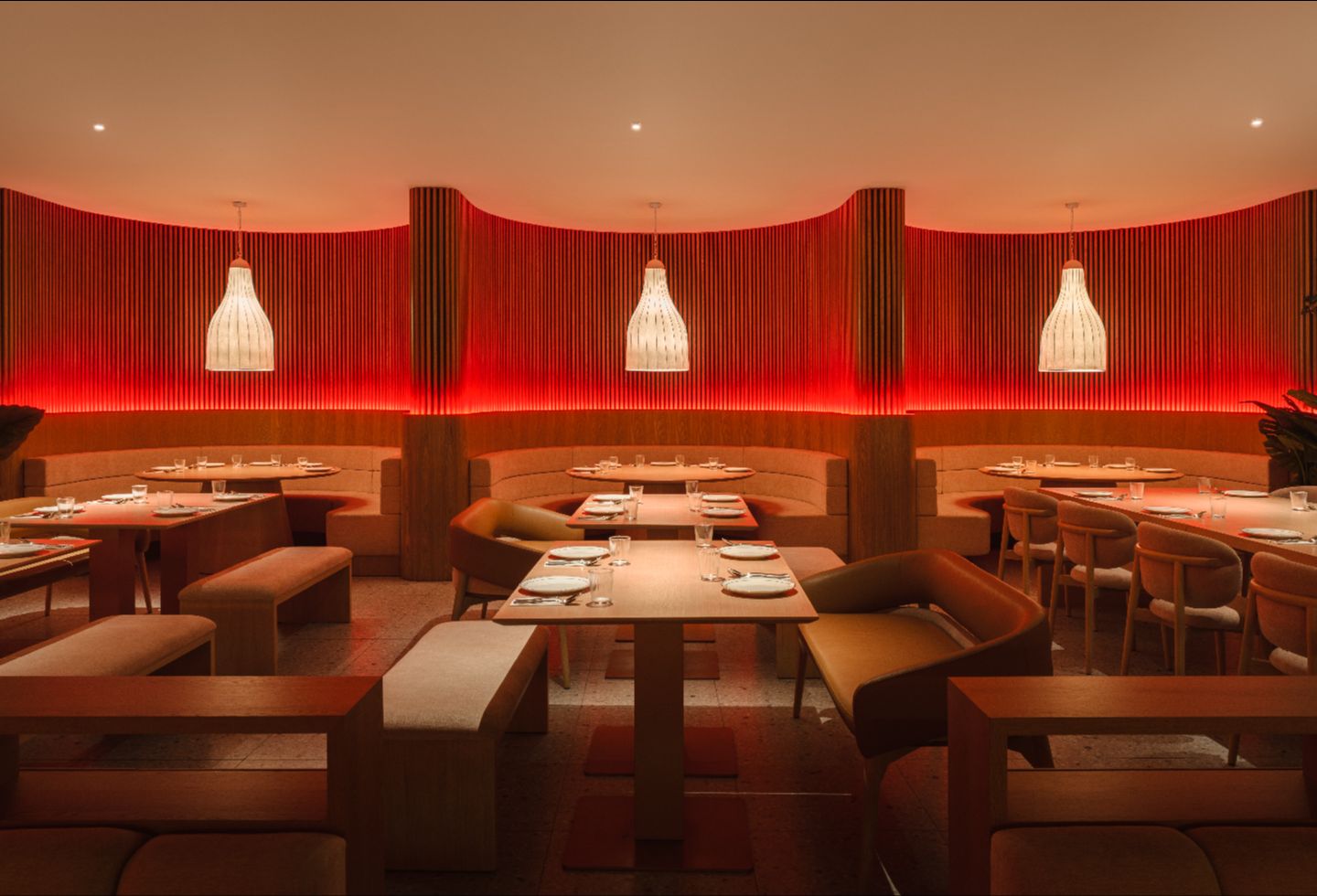
Around the edges of the space, semi-private dining areas are formed using vertical timber slats. These create moments of separation without fully closing off the room, offering a sense of privacy while maintaining visual connection. The scale remains intimate, avoiding the feeling of a large, continuous floor plate.
As evening approaches, the character of the interior deepens. Timber surfaces darken, lighting becomes more directional, and the sunken pit takes on a new energy. The shift does not rely on dramatic gestures. Instead, it emerges through accumulated changes in tone, sound and shadow.
Sun & Moon is less concerned with defining a single identity than with accommodating change. It moves easily between calm and activity, day and night, without forcing a division between the two. In doing so, the project reflects the rhythm of the city around it — not as spectacle, but as something lived in.