
From early experiments with plastics to contemporary sustainable materials, Kartell’s era-defining designs have often been developed by technical curiosity. Beneath the surface of some of the most eye-catching forms, the material story is changing. This is where contemporary design finds its most interesting tension: how to preserve what makes an object iconic while adapting it for the environmental realities of the 21st century.
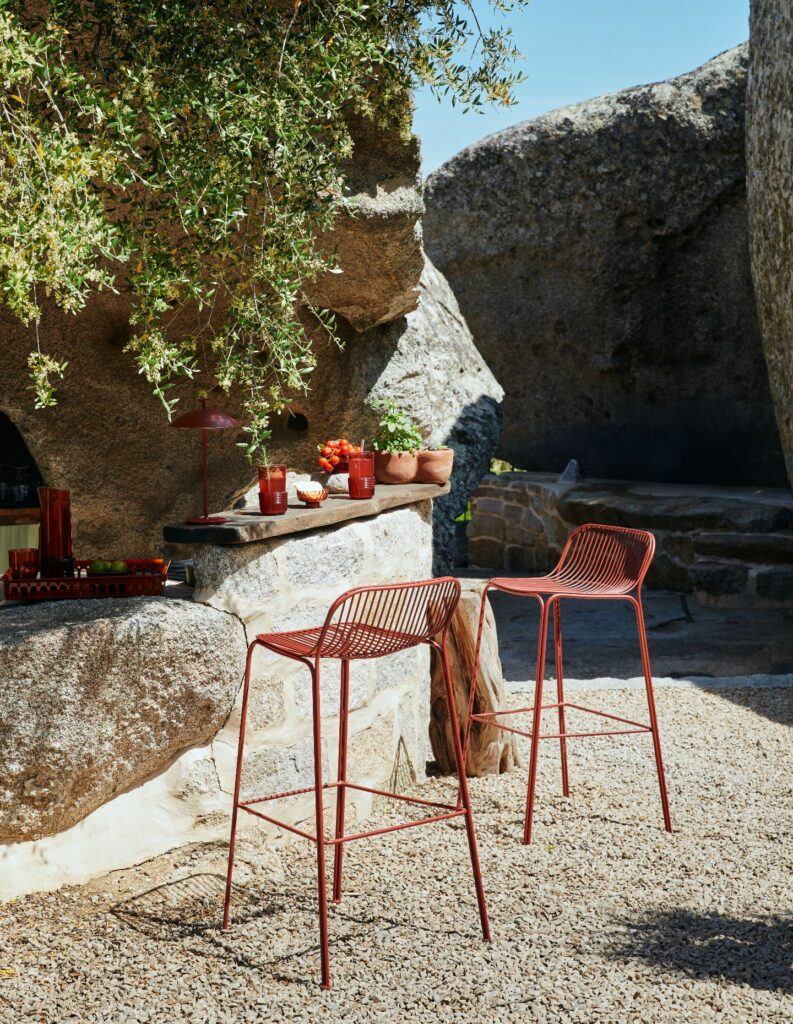
Kartell is as much about process as it is appearance, and today that focus has shifted towards sustainability, alongside a progression into outdoor furniture. Outdoor spaces play a central role in contemporary living, especially in Australia, acting as extensions of the home. Terraces, gardens and poolside settings are places of pause and connection, and Kartell approaches them with the same design rigour and emotional pull.
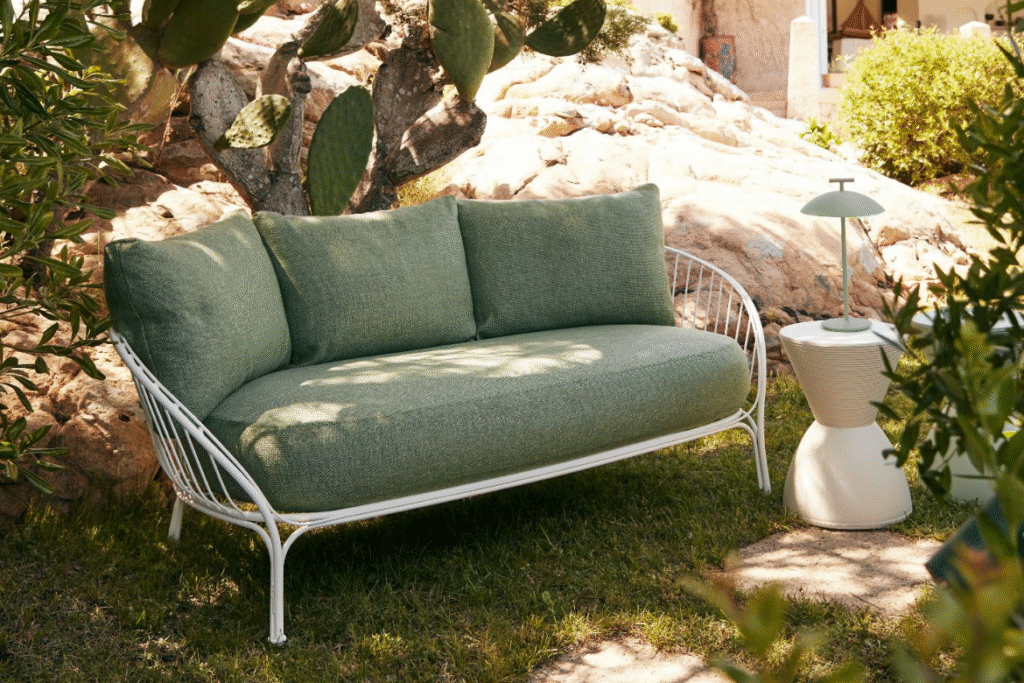
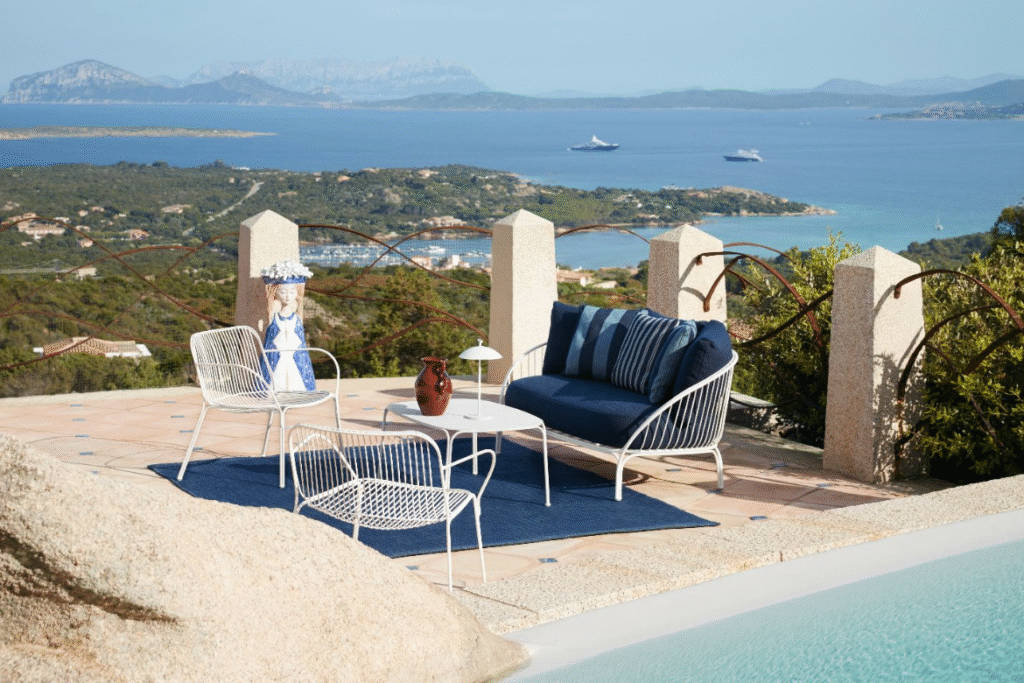
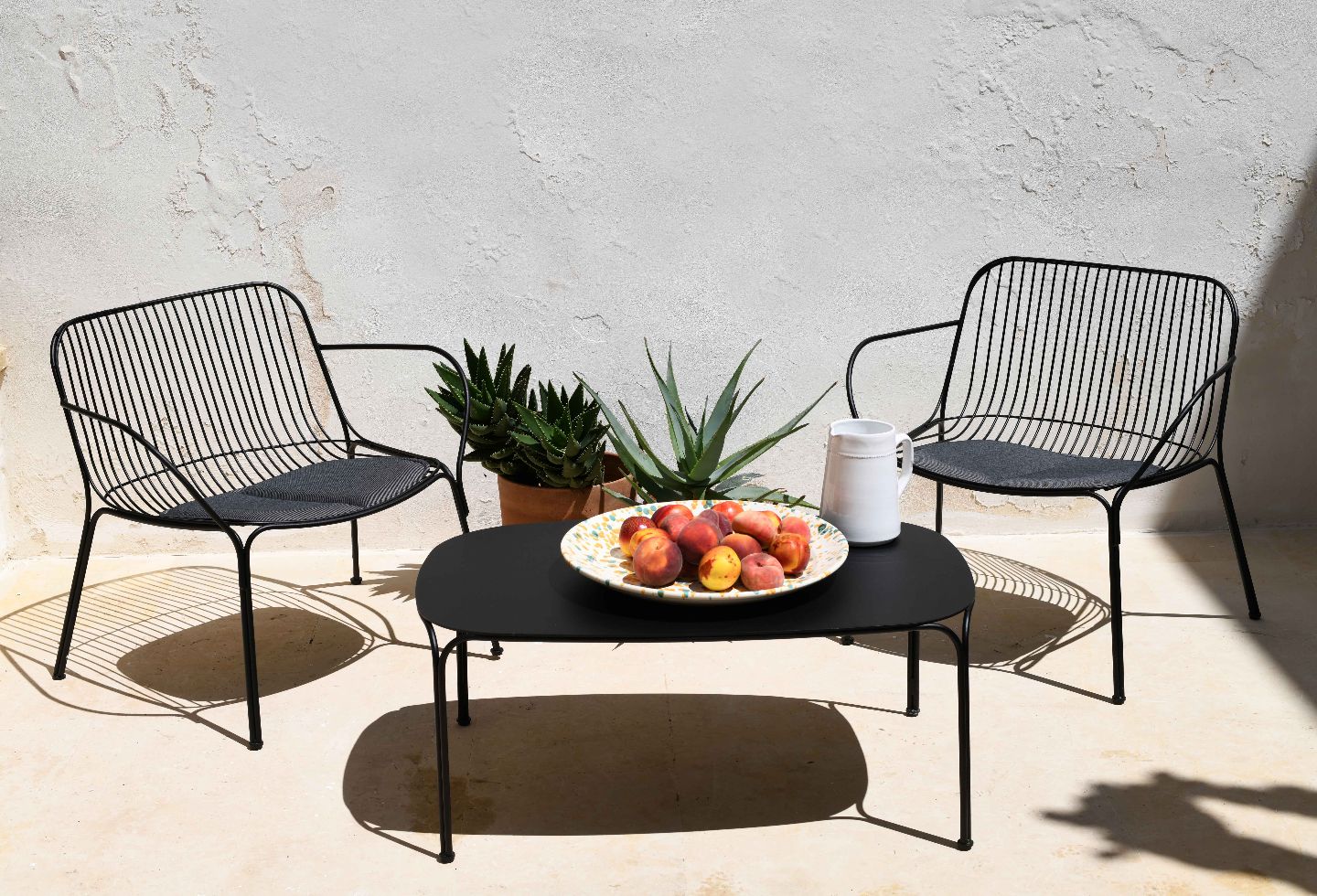
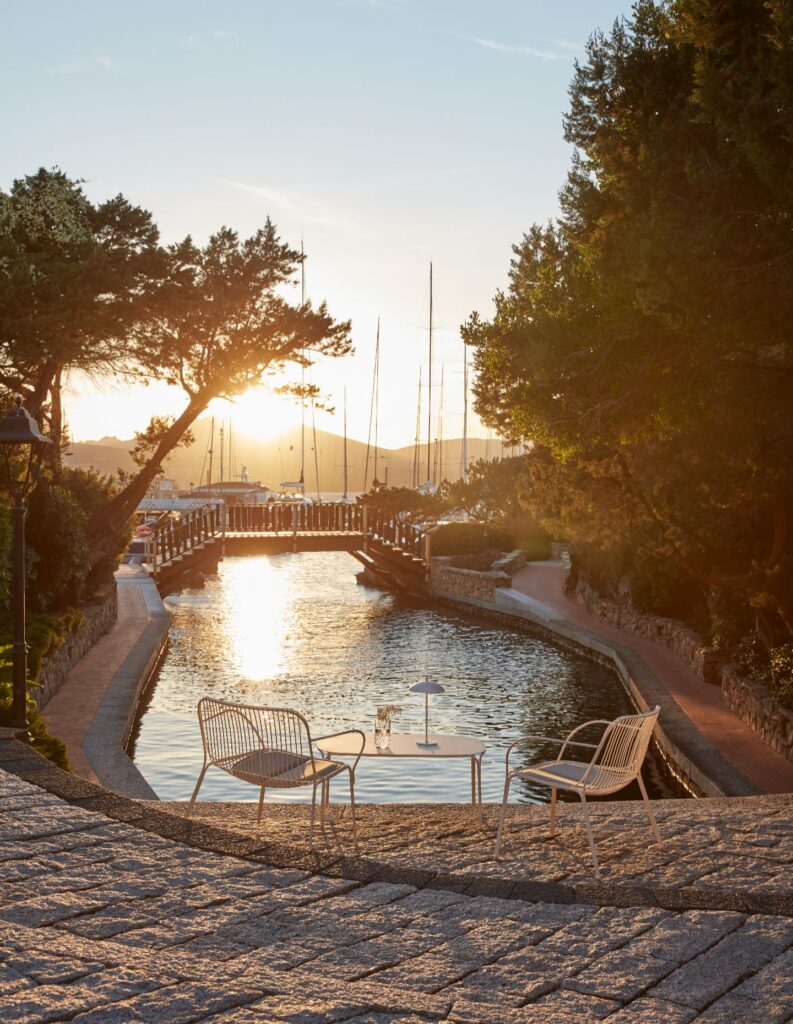
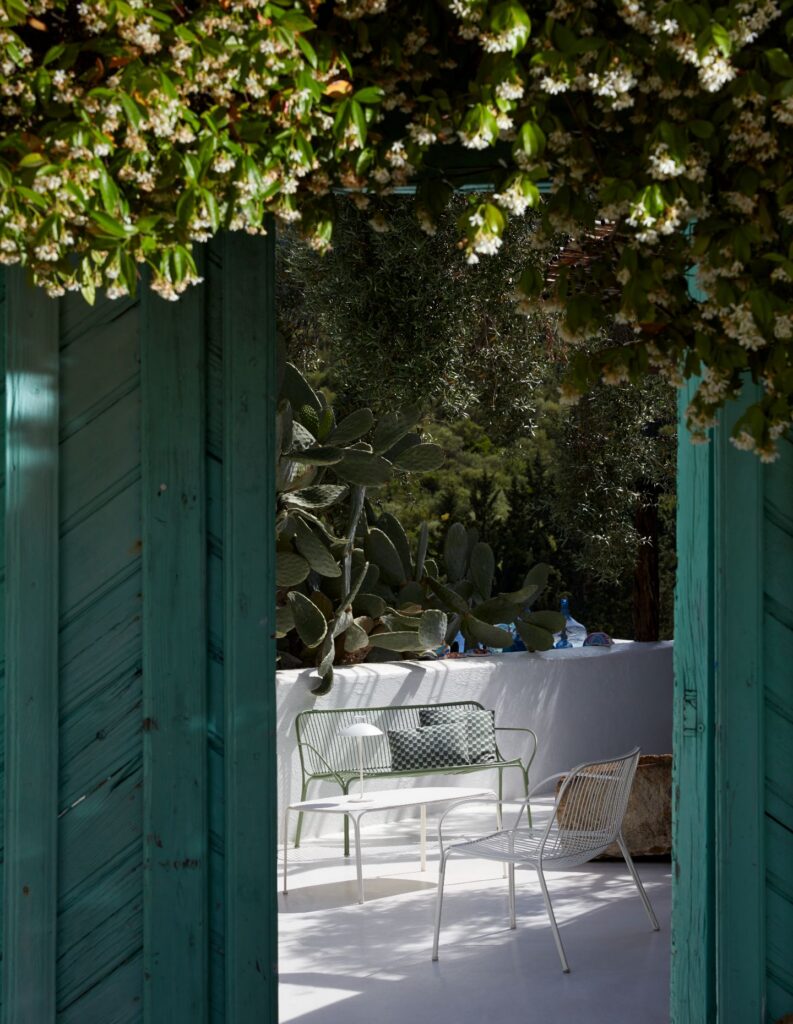
Take the HiRay Outdoor Collection, designed by Ludovica Serafini and Roberto Palomba, which captures the essence of life outside and the durability required for longevity. Built using a welded-wire construction, the collection references traditional European garden furniture while presenting a distinctly contemporary profile. Curved geometries soften the structure, while the seat cushions are made from polyurethane thermoformed foam covered with innovative fabric made from recycled PET bottles. Its furniture designed for lingering with a visually restrained design and a generous, comfortable spot to sit.
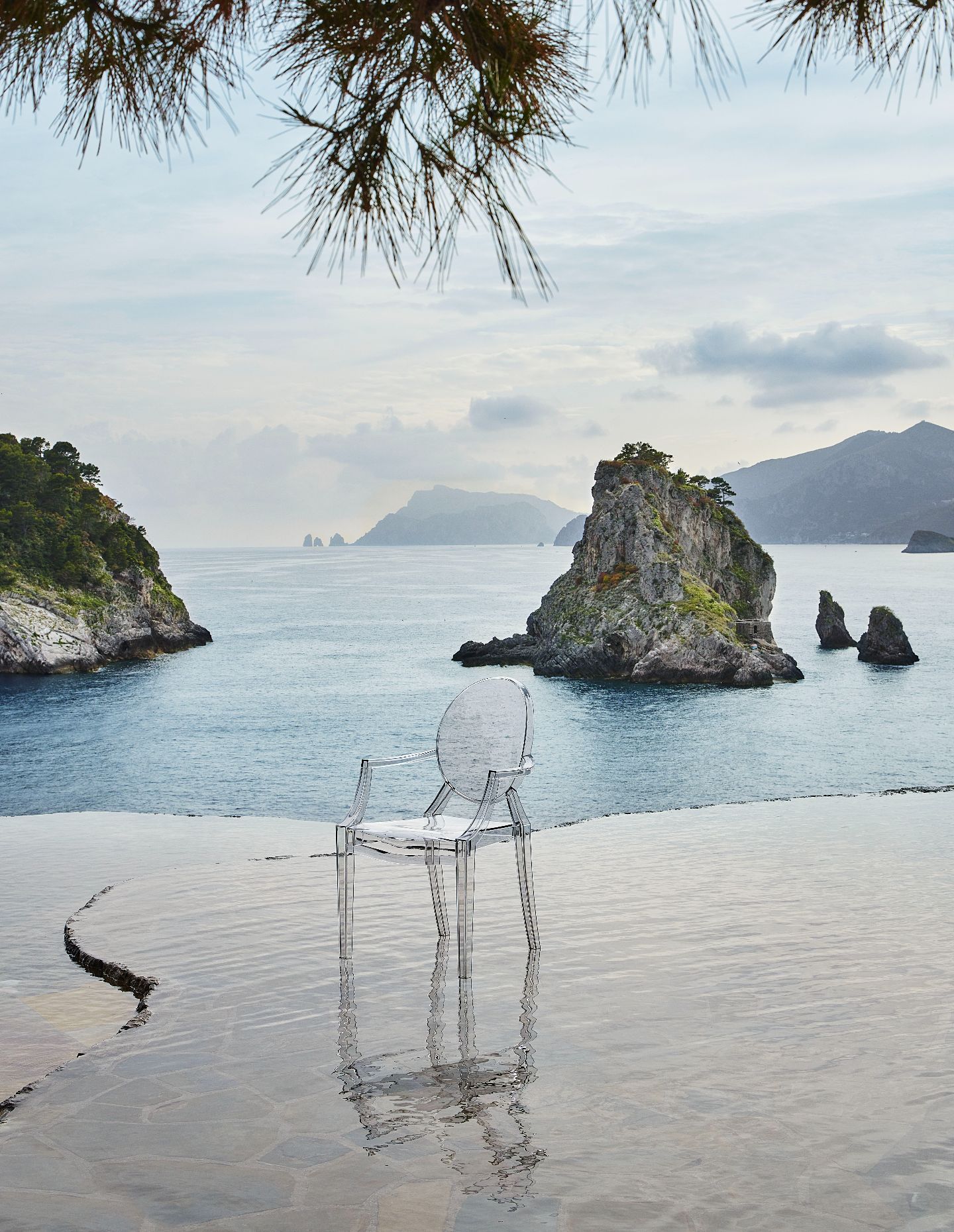
For the Louis Ghost Chair by Philippe Starck the shift in materiality could almost go unnoticed as it retains its unmistakable baroque outline – but is now produced in Polycarbonate 2.0. A new development from Kartell, Polycarbonate 2.0 introduces a renewable, cellulose-based alternative to plastic. It reduces CO₂ emissions by up to 60 per cent while preserving its transparency and strength. Stackable, weather-resistant and charismatic, it remains as recognisable today as its first release in 2002.
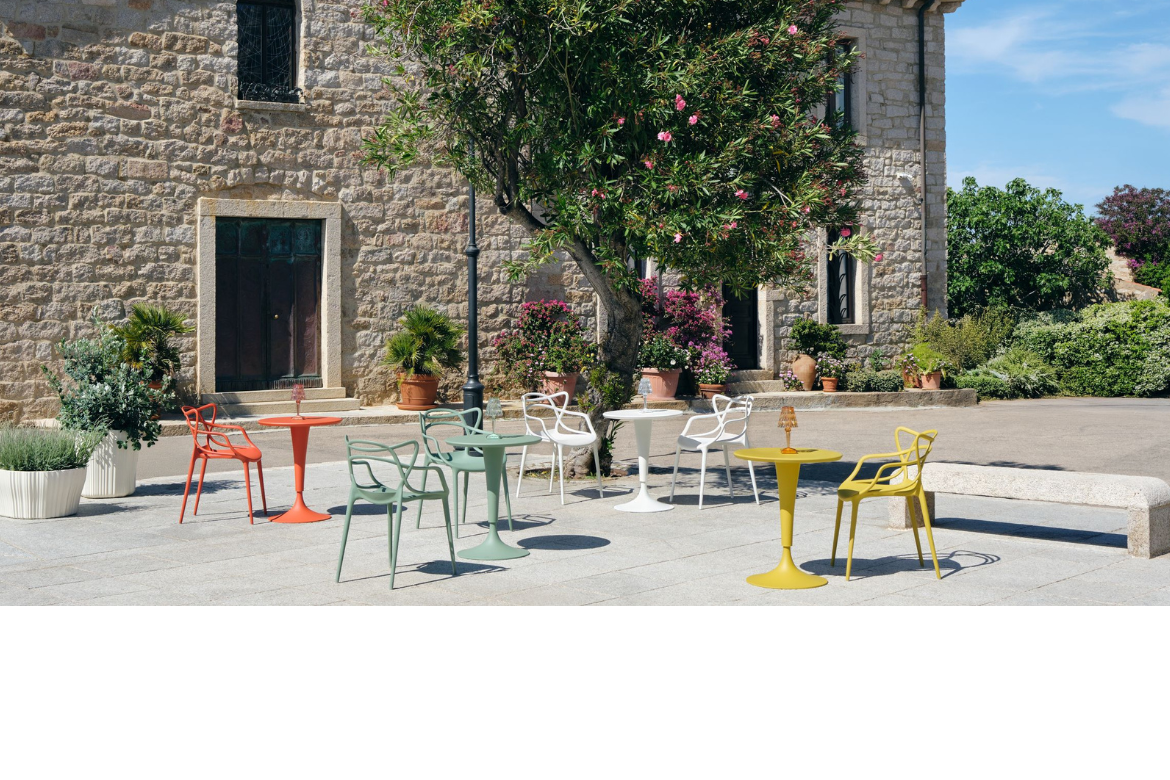
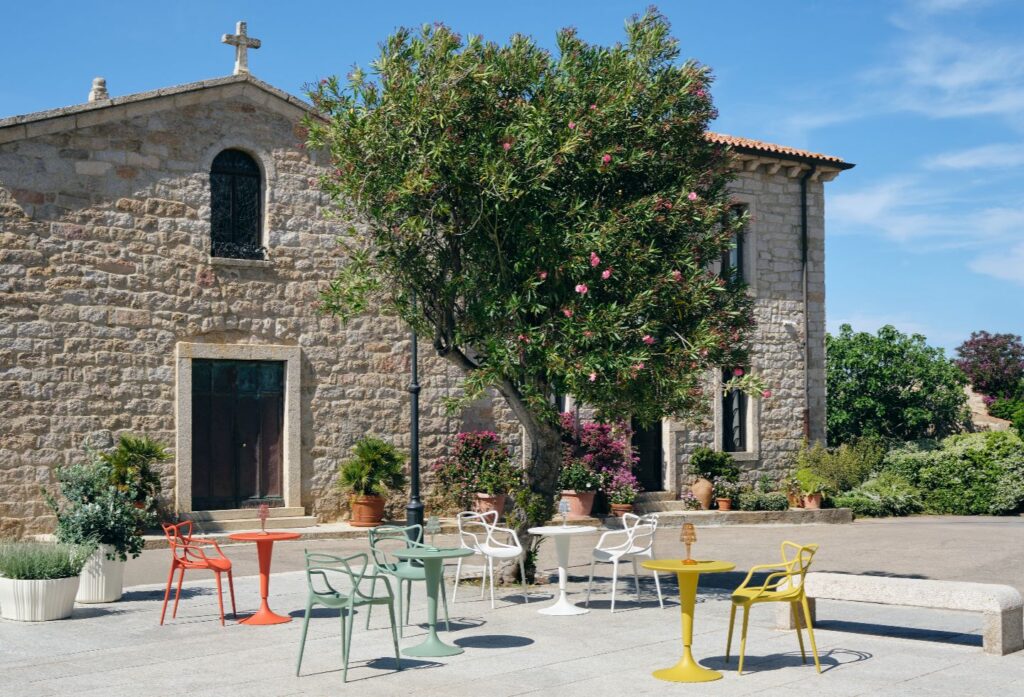
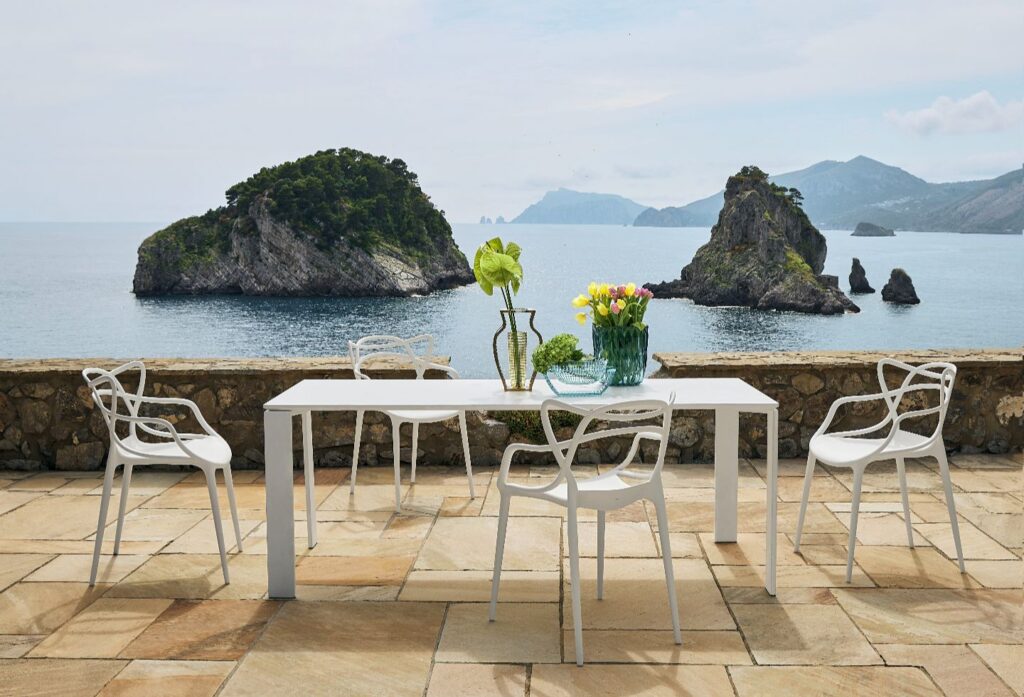
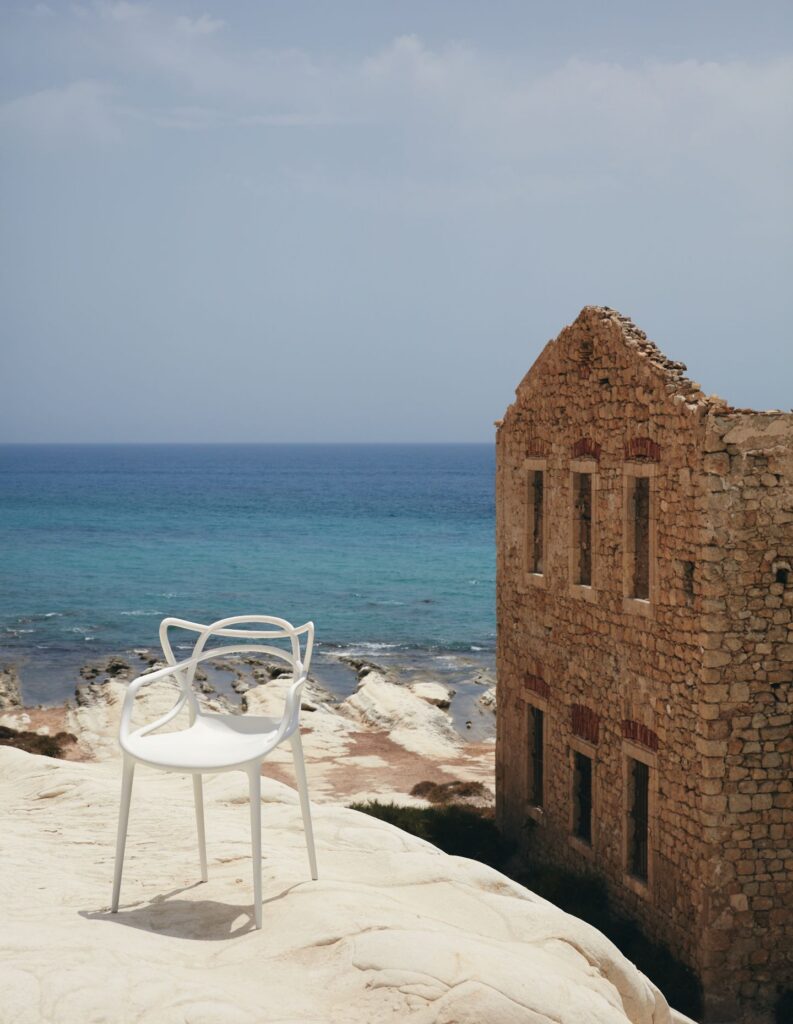
Another Starck icon, the Masters Chair, follows a similar logic by embracing contemporary manufacturing while retaining its iconic silhouette. Lightweight and outdoor-ready, it remains sculptural without being precious, a reminder that innovation is often about refinement rather than reinvention.
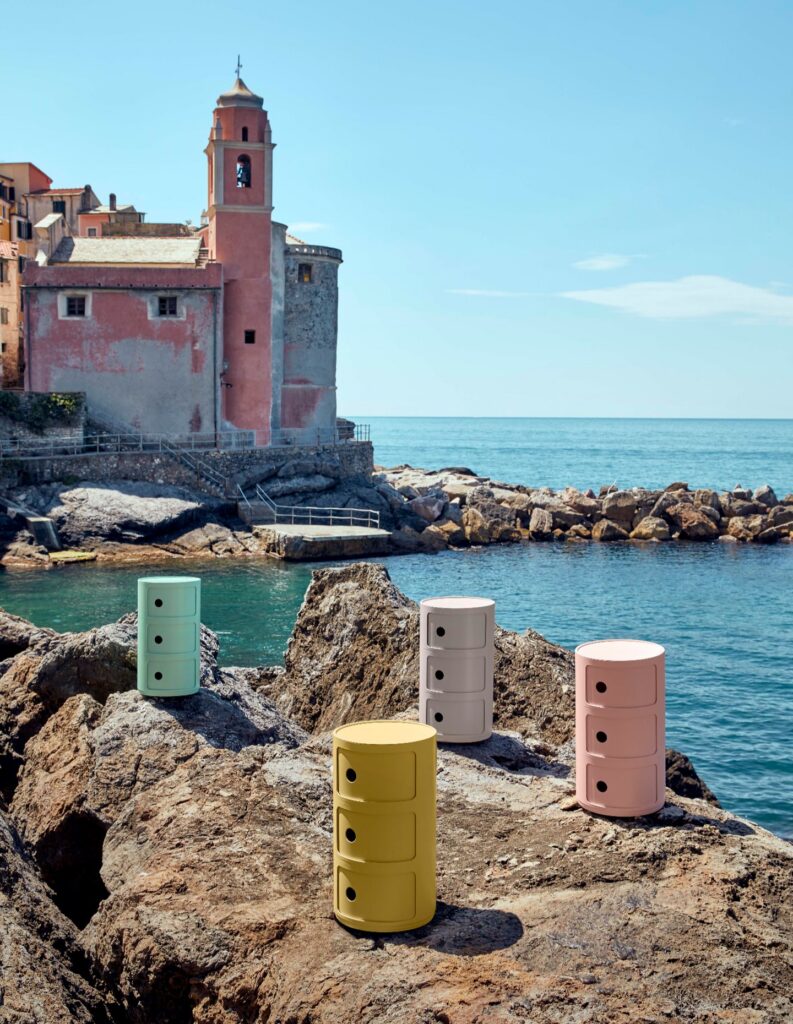
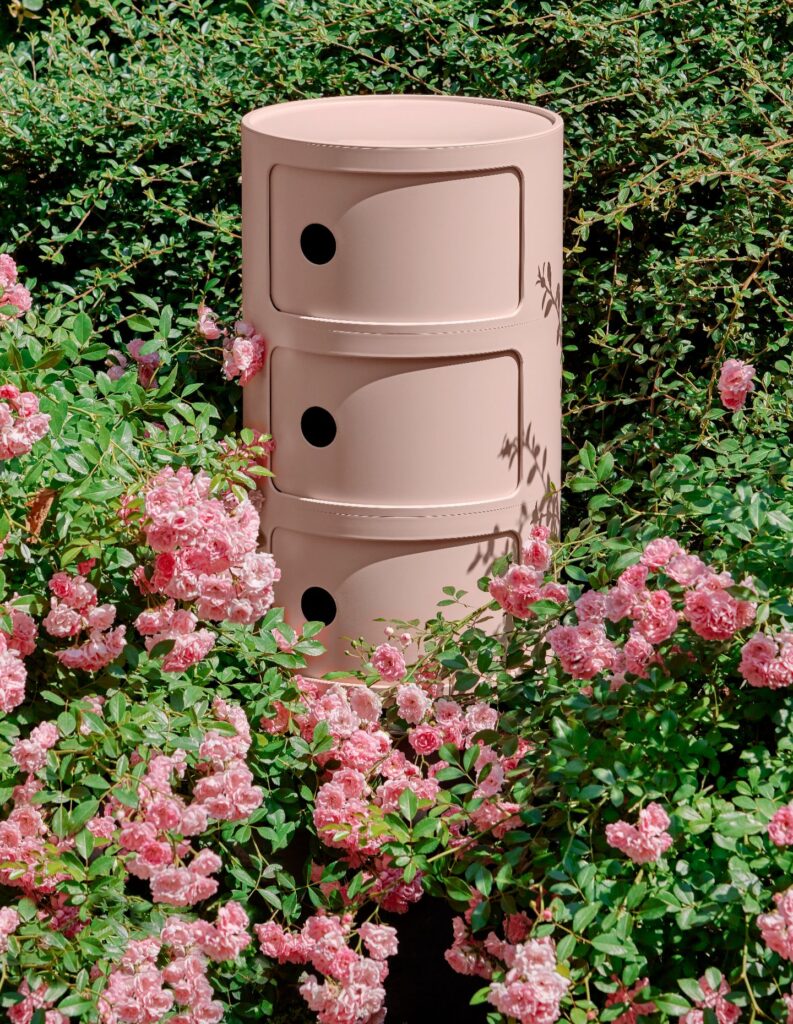
Kartell’s material research extends beyond seating. The Componibili Bio originally designed by Anna Castelli Ferrieri in 1967, reworks the storage icon using a biopolymer derived from agricultural waste, aligning the same familiar form with circular design principles and contemporary environmental goals.
Available through Space Furniture, Kartell’s ever-evolving collection invites a broader reconsideration of how we furnish our lives. Design, after all, is not only about how objects look, but how they endure.
Space Furniture
spacefurniture.com.au