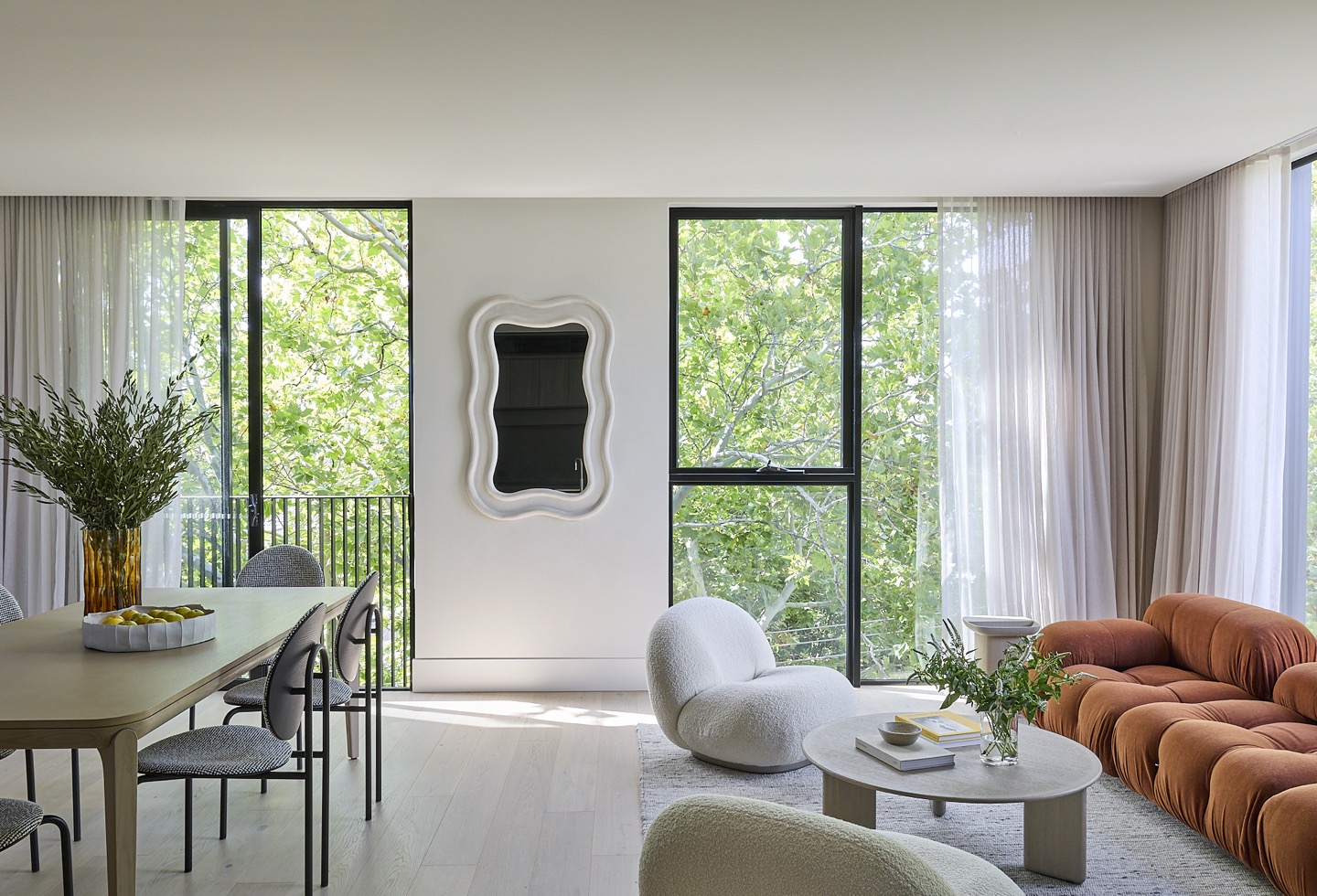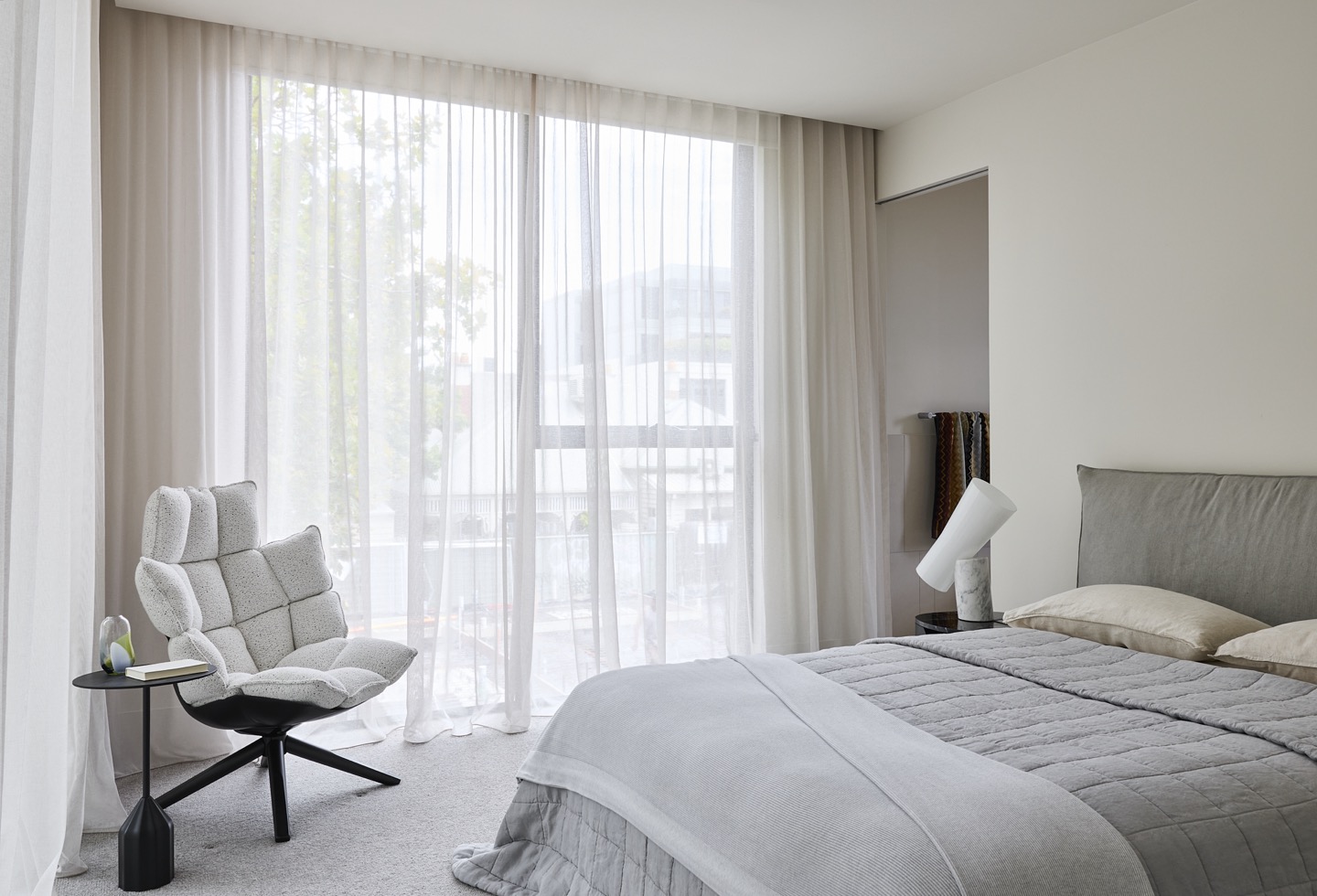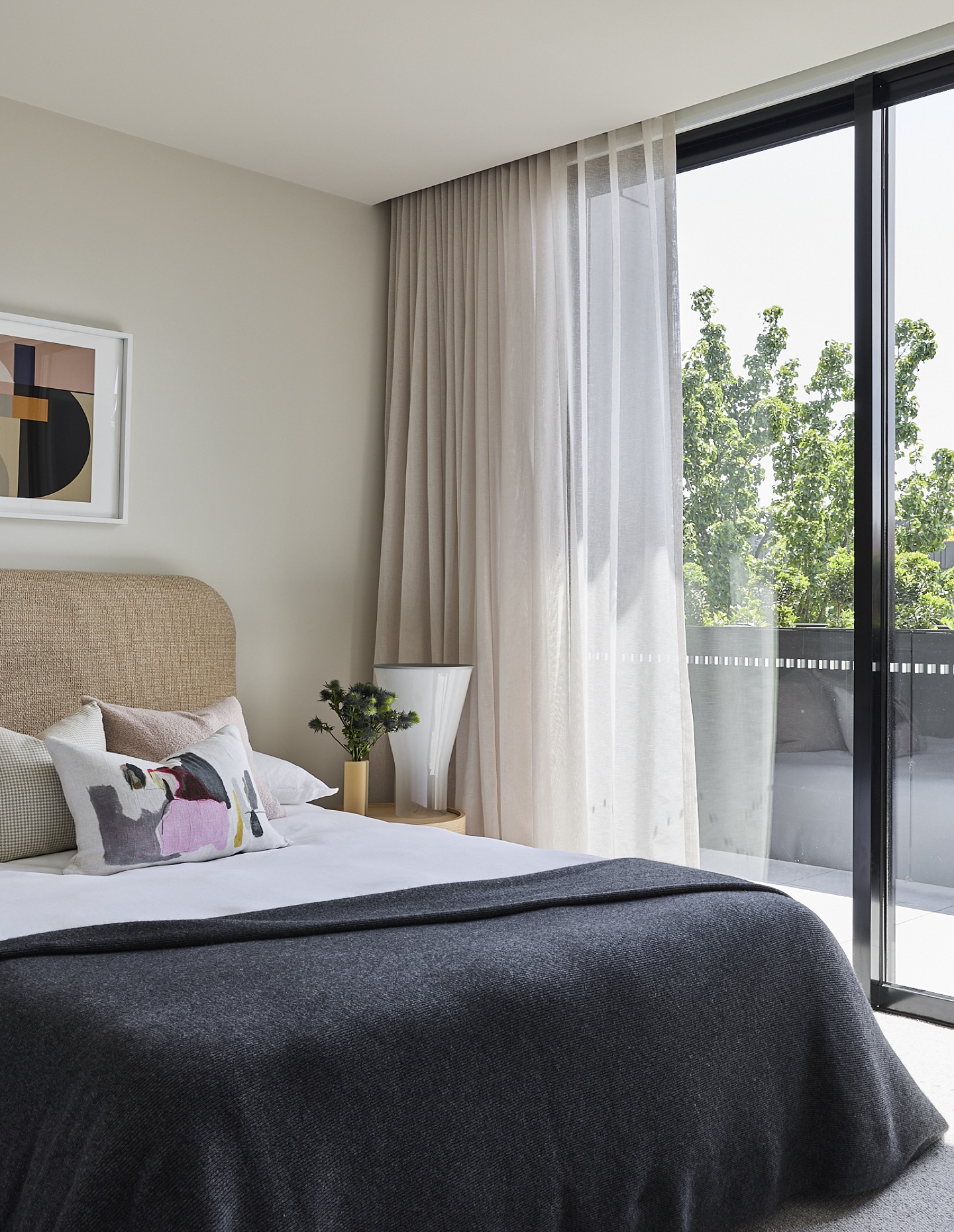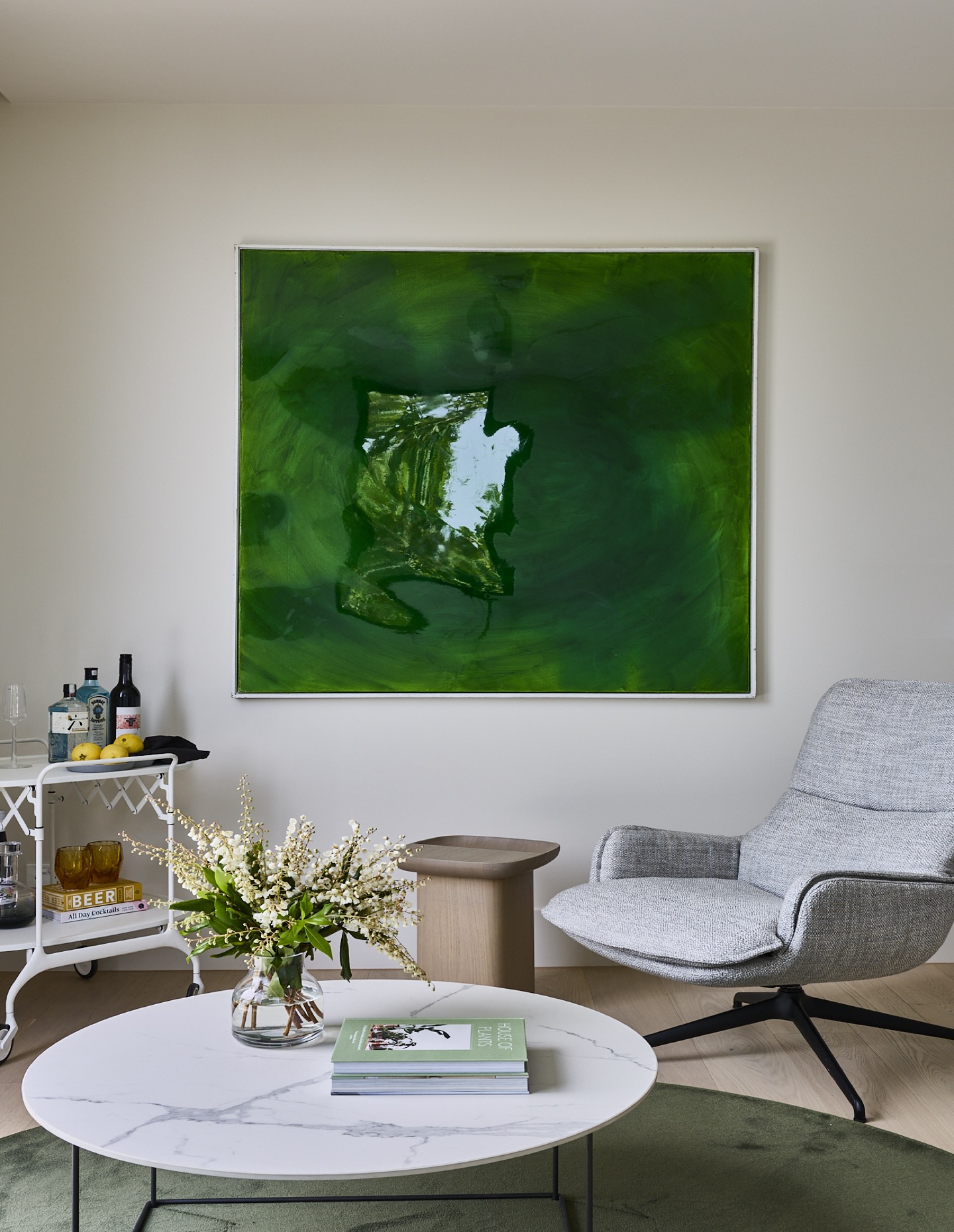

In Malvern East, Illowa by DKO sits within a familiar suburban condition, but approaches density with a degree of restraint. The project comprises four townhouses, each arranged vertically across three levels and a rooftop terrace, but its primary move is less about form-making and more about how it engages what already exists on site.
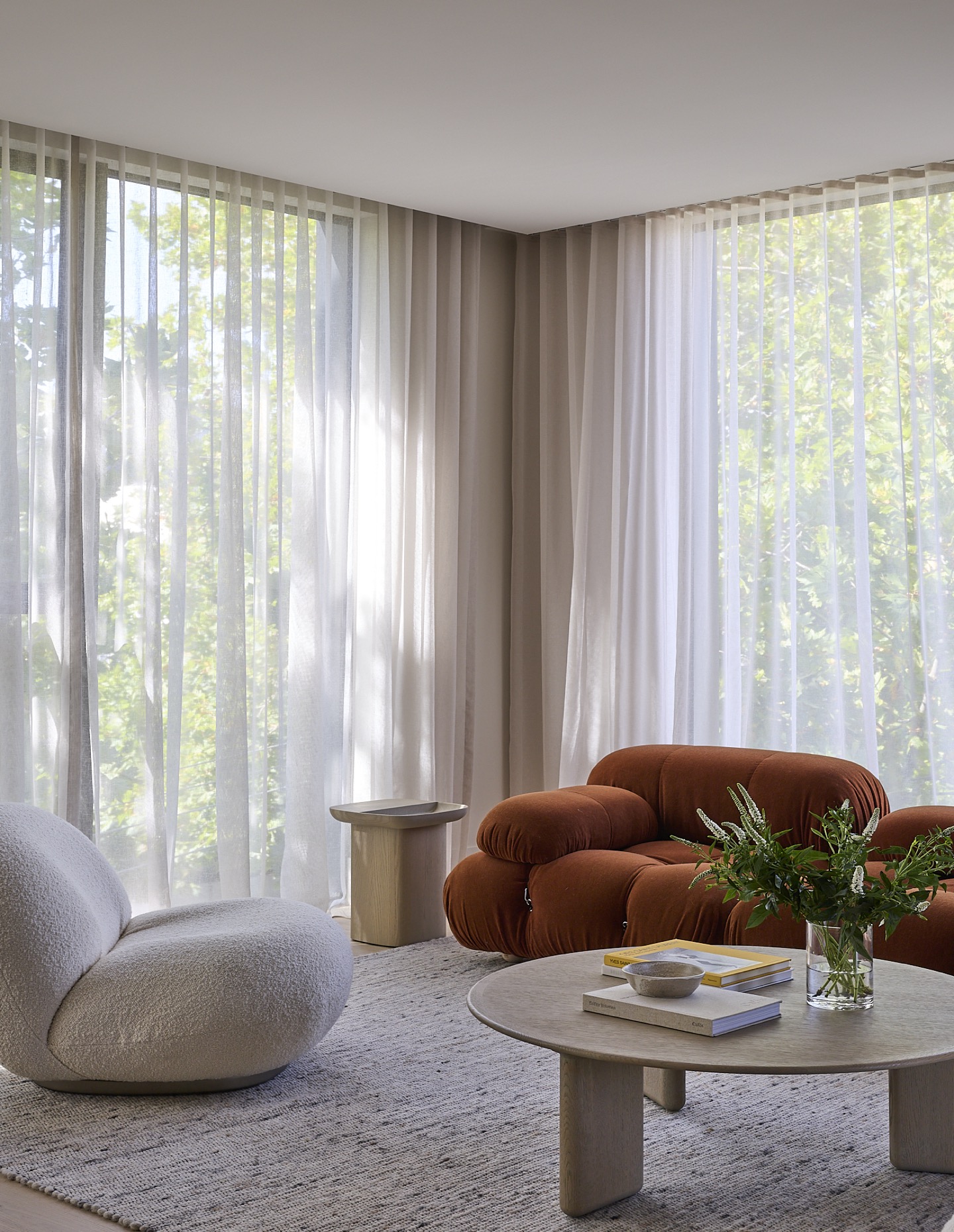
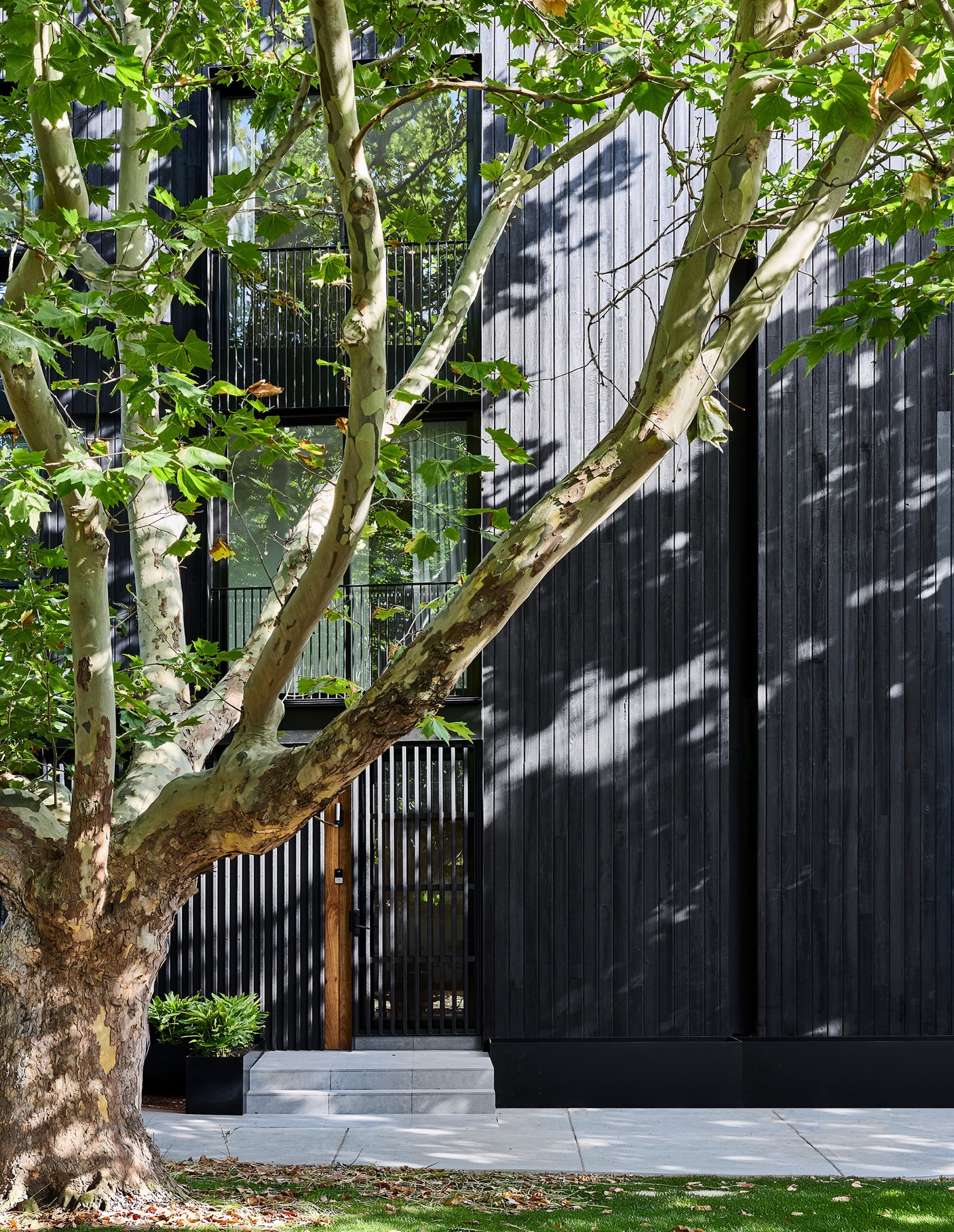
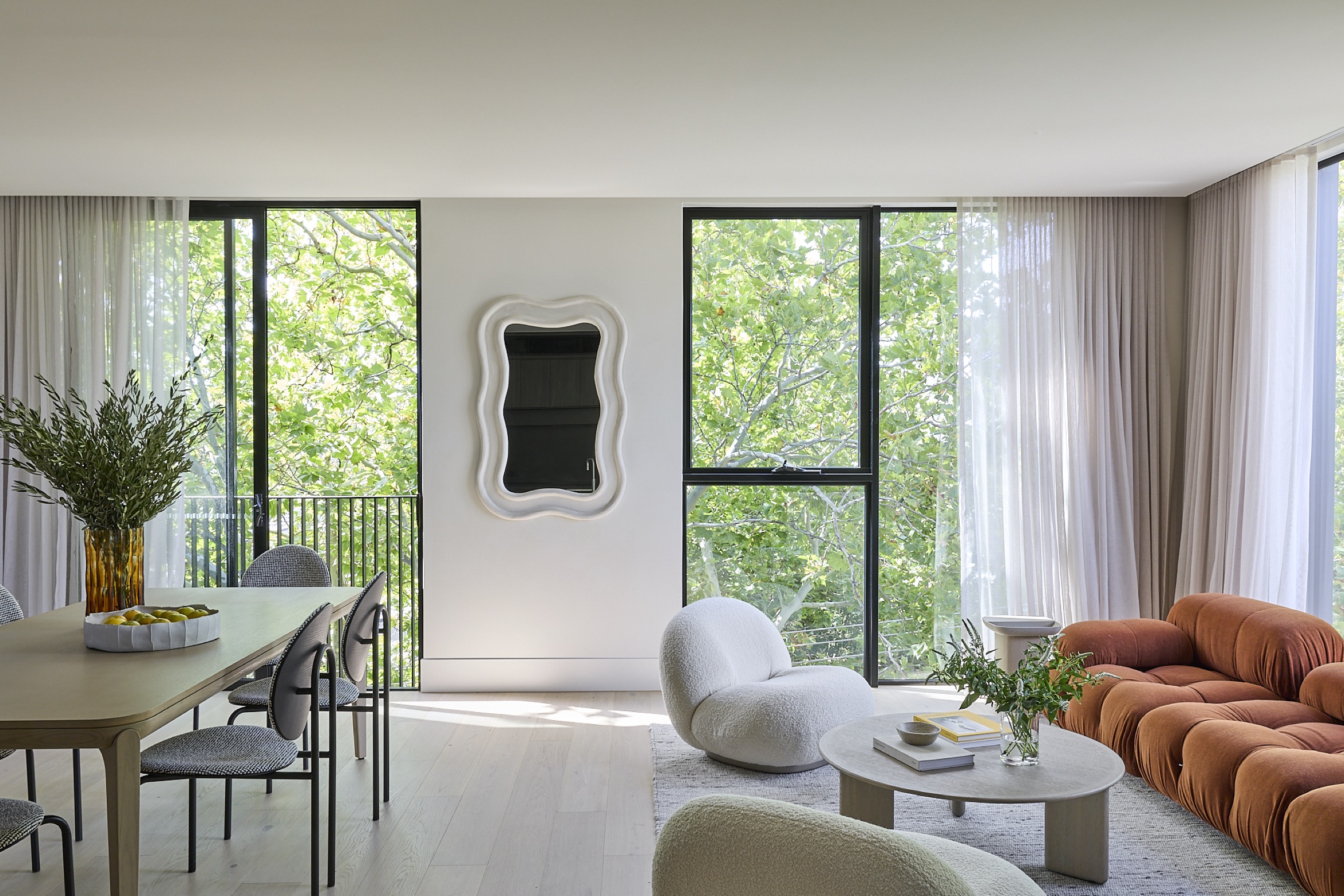
The mature plane trees that line Illowa Street become the project’s defining reference point. Rather than treating them as backdrop, the architecture is organised to meet them. Living spaces are lifted to canopy level, where filtered light and seasonal change begin to shape the internal atmosphere. As DKO director Sam McCubbin notes, the focus was on “connection, sensory engagement and social function” within a relatively compact footprint.
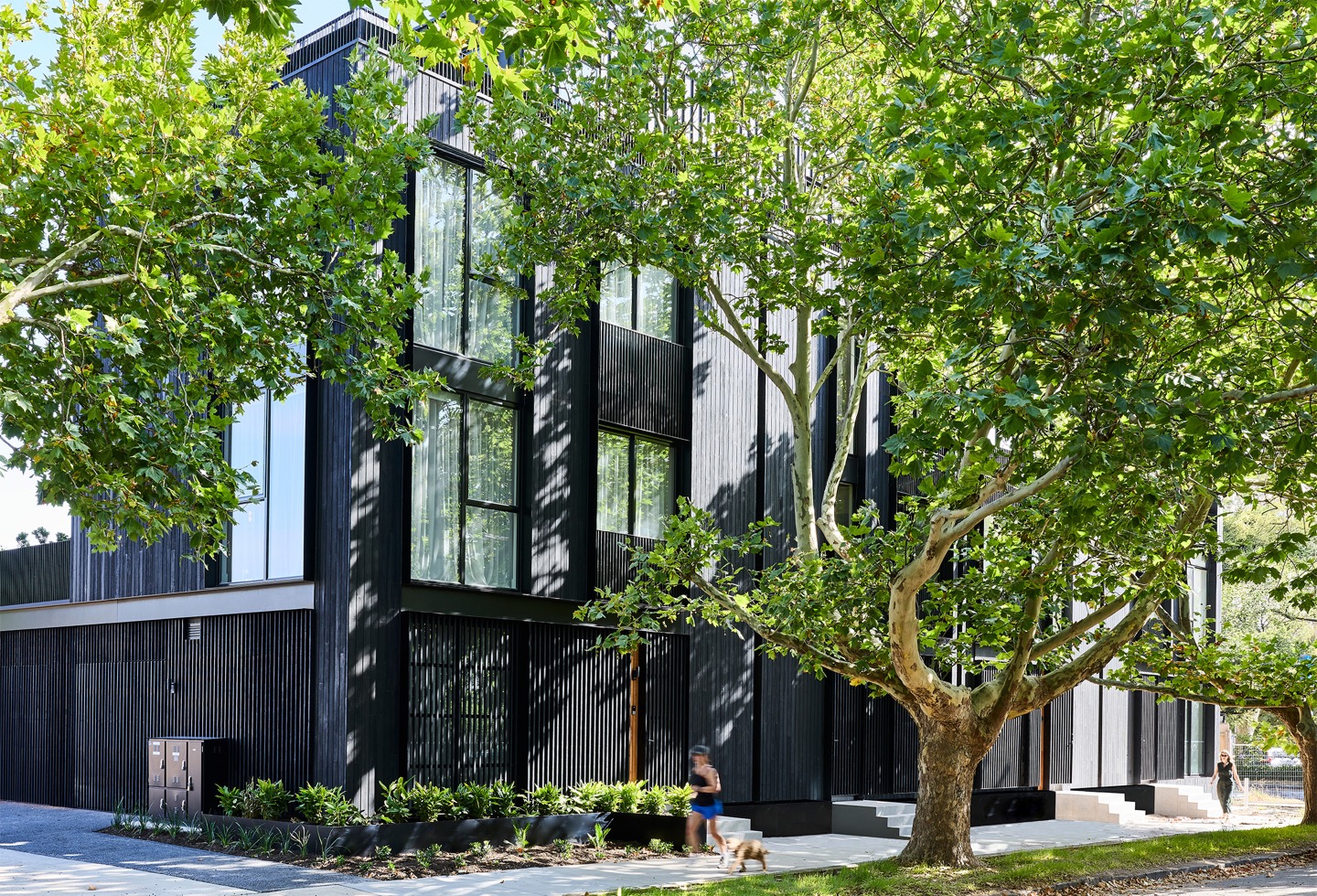
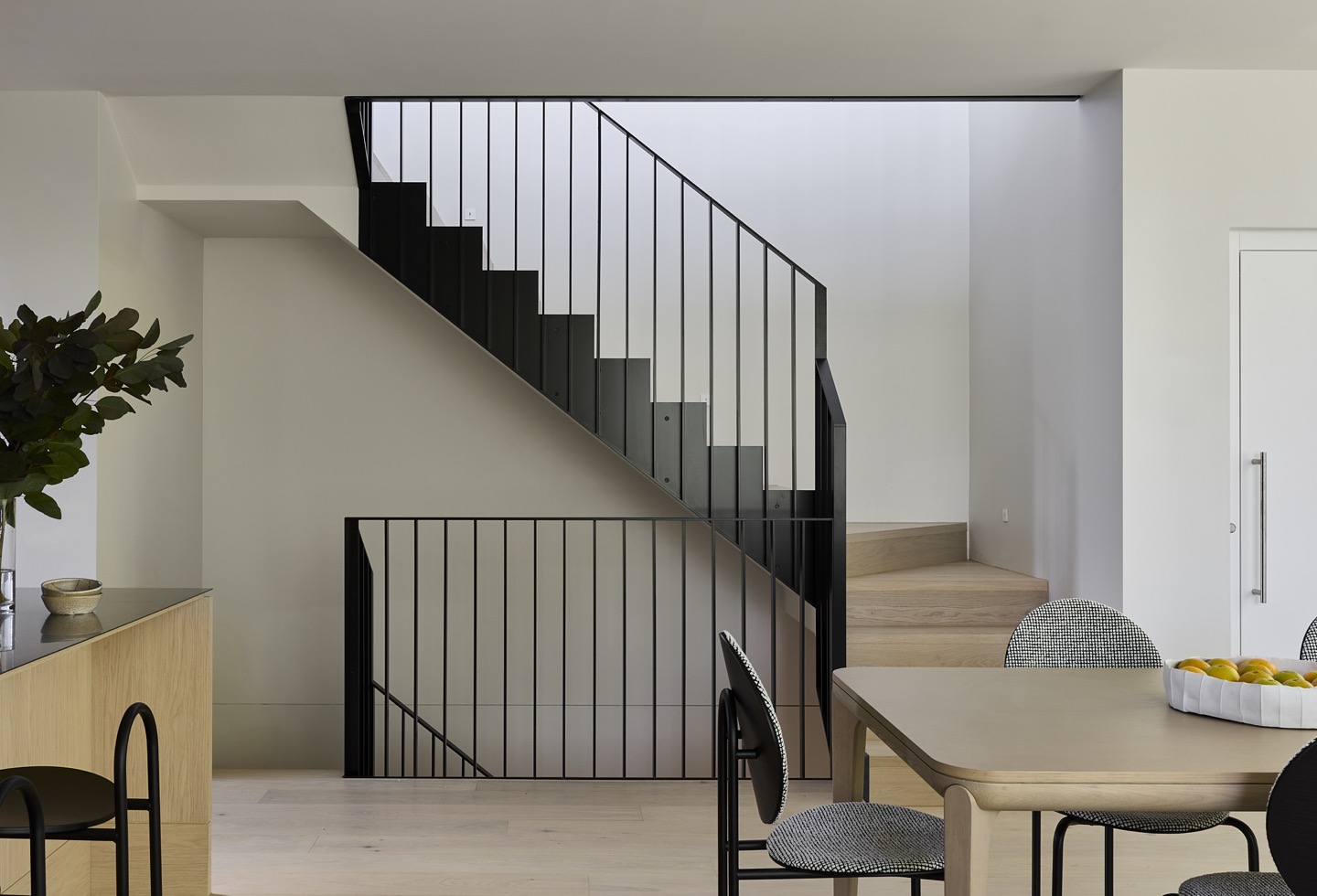
This emphasis on environmental experience carries through the planning. Openings are positioned to frame the trees rather than distant views, and cross-ventilation is embedded as a baseline rather than an added feature. The homes unfold vertically, culminating in rooftop terraces that extend the spatial sequence upward. “The homes unfold across multiple levels… maintaining connection to landscape and light,” McCubbin says.
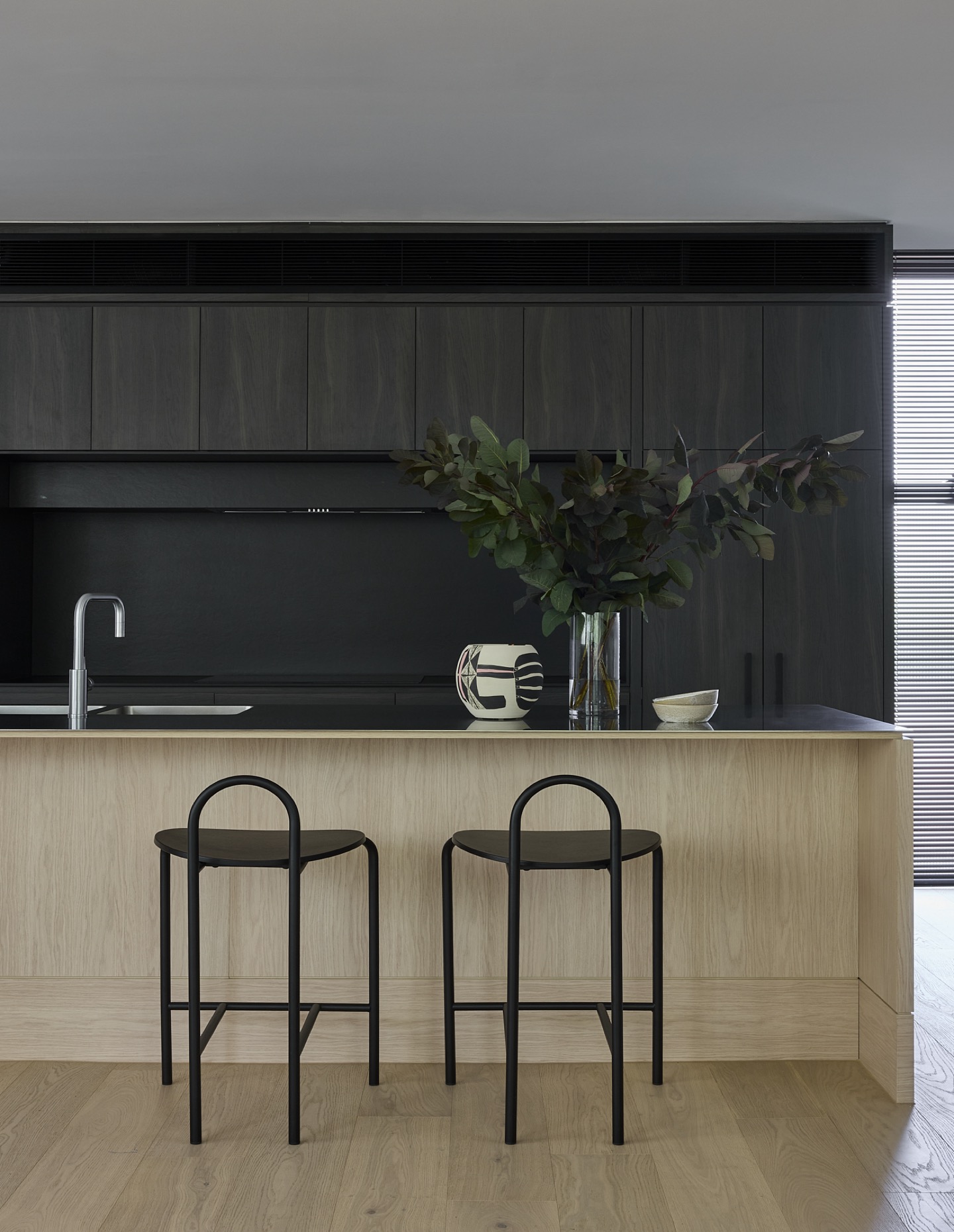
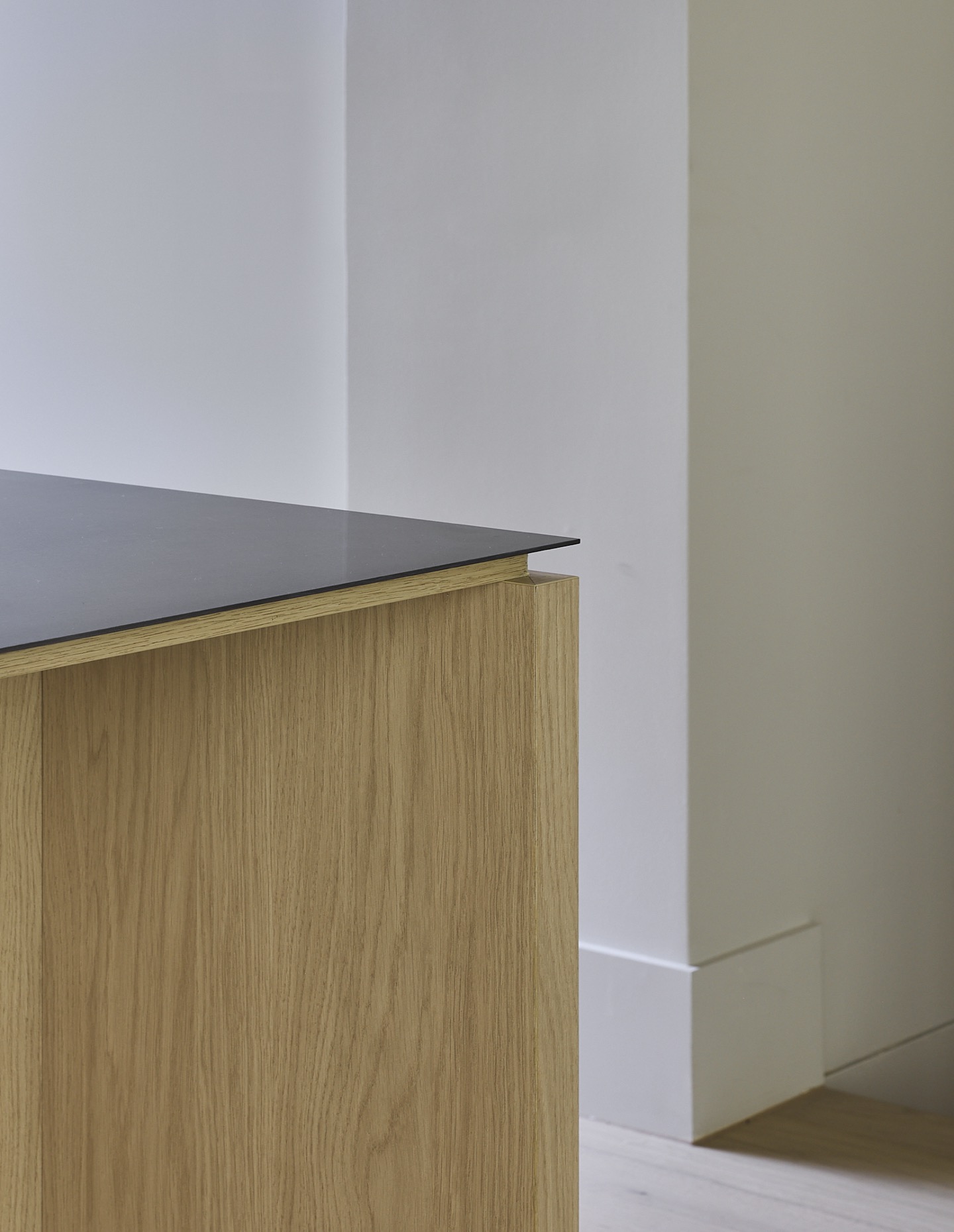
Internally, the organisation is straightforward. The kitchen sits at the midpoint of each residence, acting as both a functional and social anchor. A stainless-steel island bench is set against a darker base, introducing a controlled contrast that interior lead Isabel Munro describes as a balance between “monolithic solidity and sculptural refinement.”
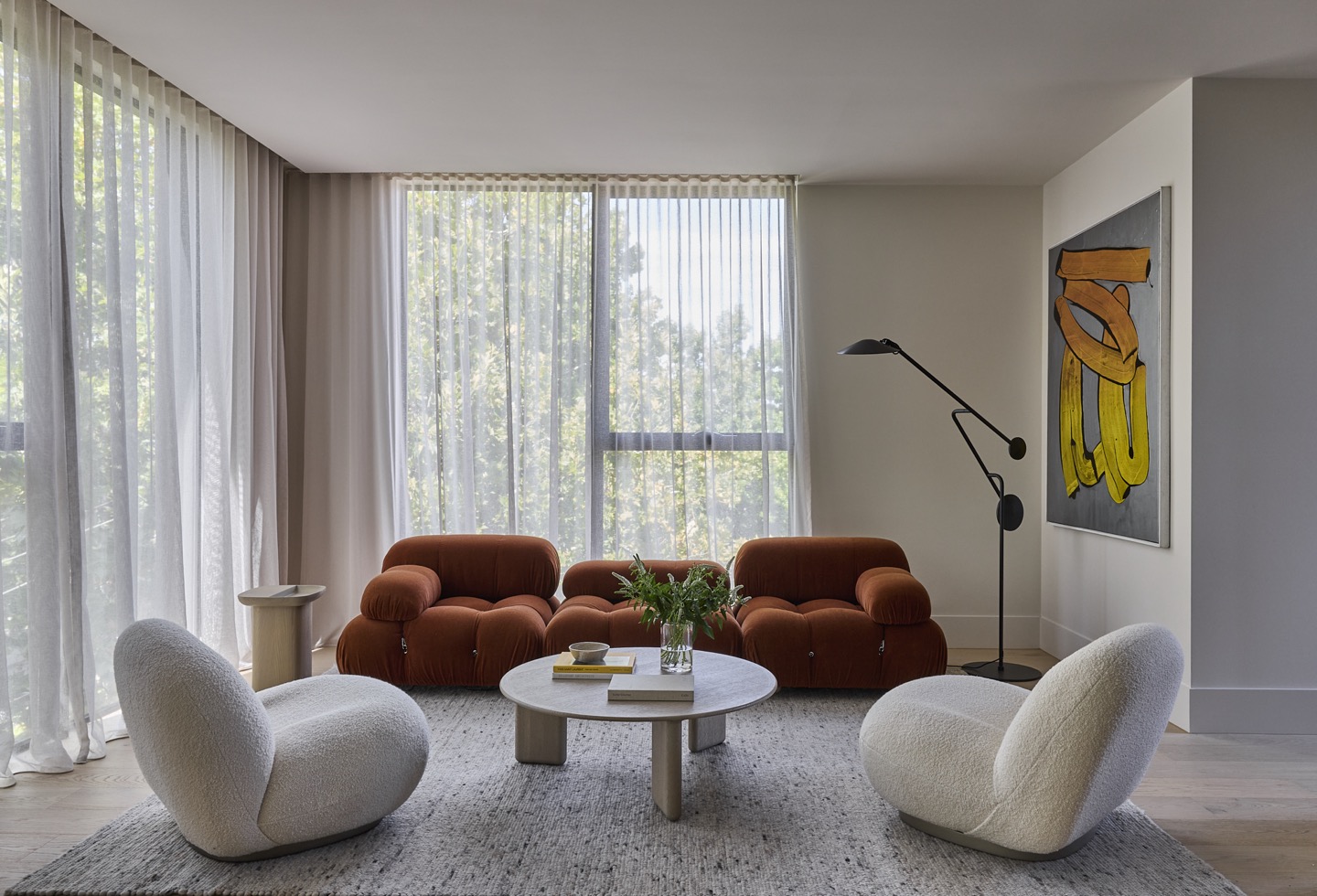
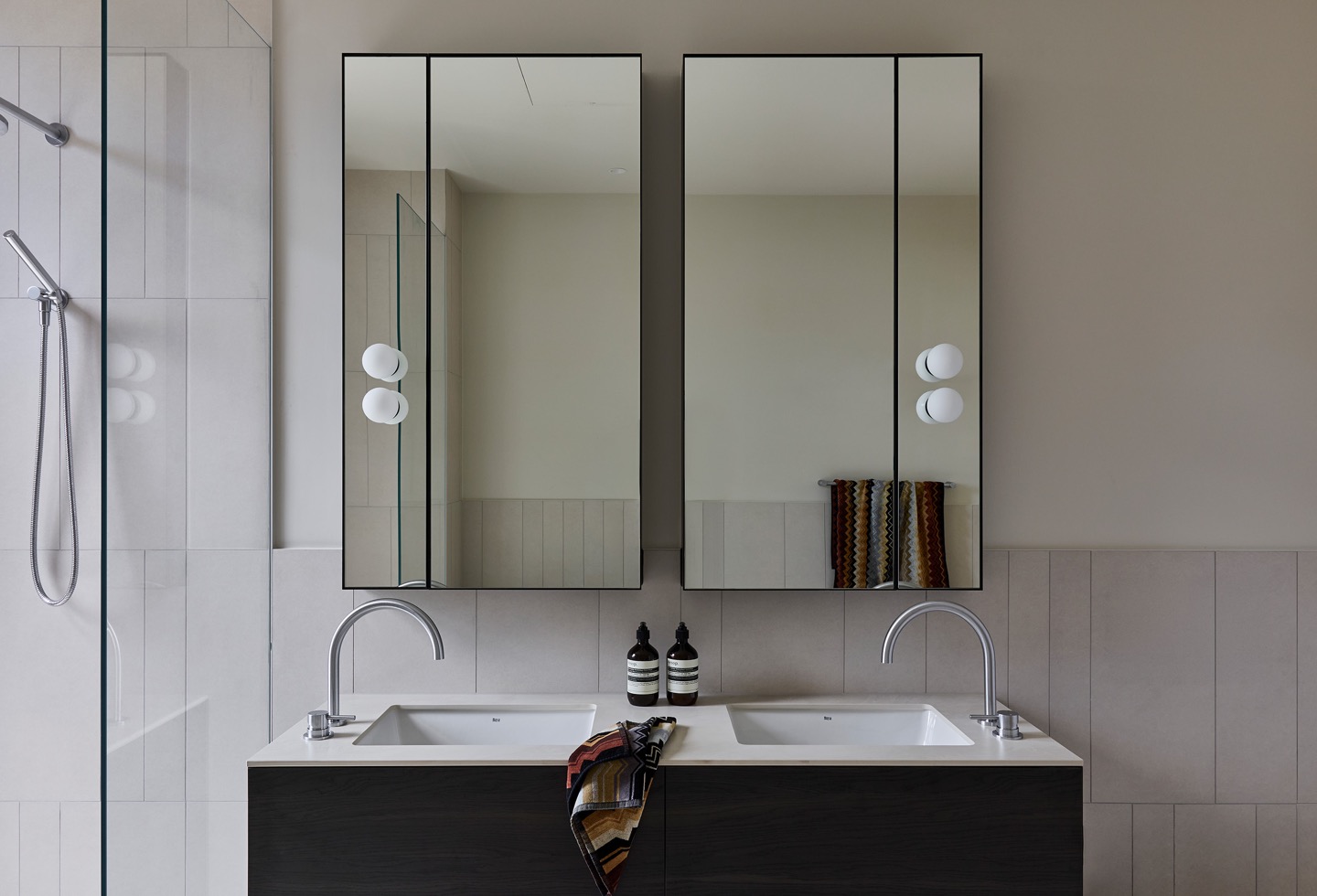
Material decisions follow a similar logic of consistency rather than variation. The dark, vertically expressed timber cladding defines the exterior, while internal finishes are carried through with minimal deviation. “The external and internal design narratives are in conversation,” says Munro, pointing to repeated details and a palette that avoids unnecessary shifts.
The use of Shou Sugi Ban reinforces this approach. Applied both externally and internally, the charred timber introduces texture and depth, but also a degree of durability. Its inclusion feels less stylistic than pragmatic — a material that can weather over time without requiring constant intervention.
Related: A dialogue between eras
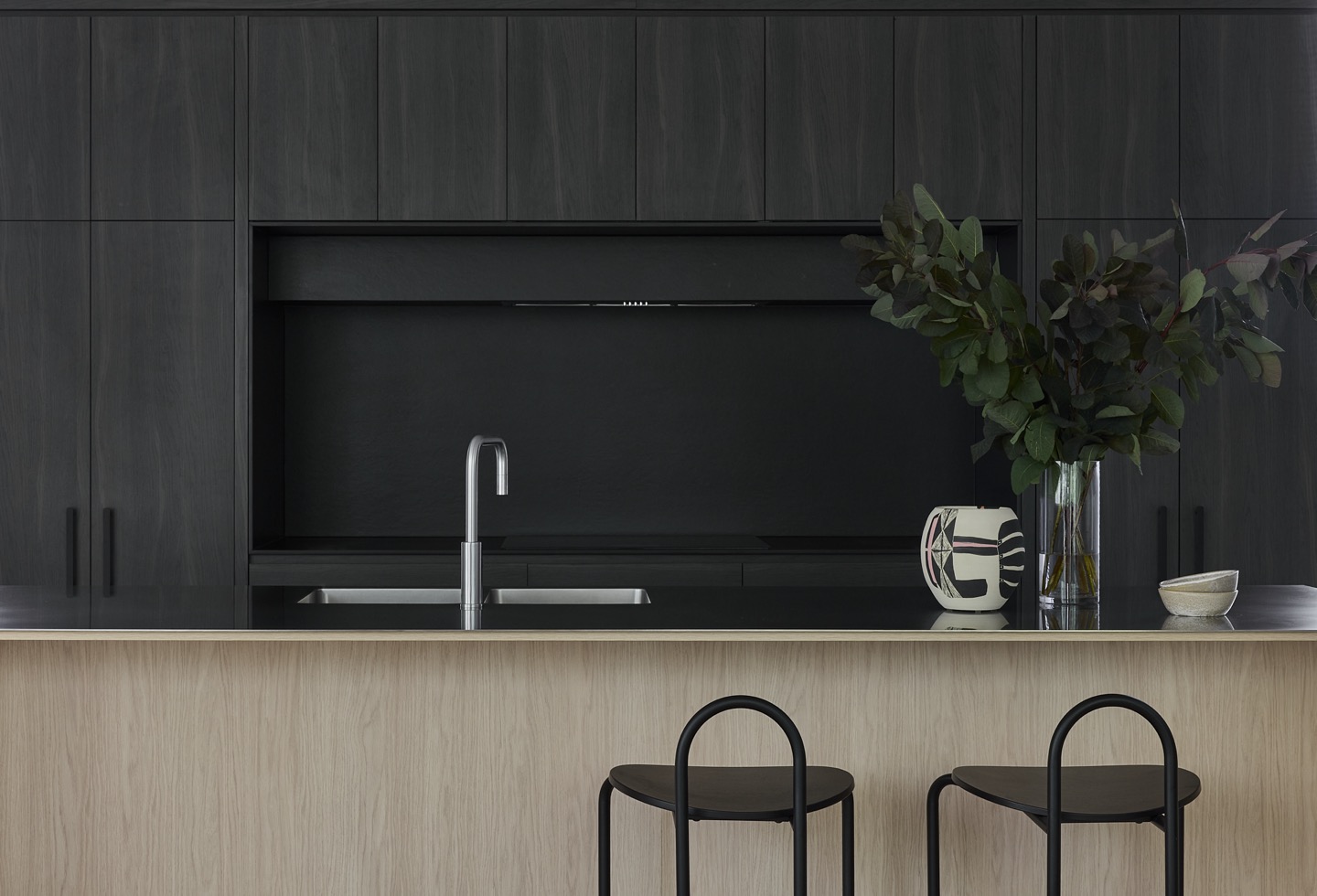
Illowa doesn’t attempt to redefine suburban housing outright, but it does question some of its defaults — particularly the tendency toward either over-articulation or generic repetition. Here, the architecture is pared back, relying on proportion, material continuity and environmental response rather than overt gestures.
The result is a set of homes that feel considered without being overstated. By prioritising “connection, sensory engagement and social function,” the project shifts attention away from density as a numerical problem and toward how that density is actually experienced.