
The homes we want to live in these days need to satisfy myriad requirements that include amenity, room to move and connection to landscape – all underpinned by sustainable initiatives. A new build can easily be designed to accomplish this, but for an alteration and addition, with a heritage component and a brief for multigenerational living, the solution becomes much more complex.
For Archier, an architectural practice with studios in Melbourne and Hobart, the renovation of Moor House in Tasmania provided an opportunity to bring life back to two heritage homes for multiple members of a family wanting to live their best life.
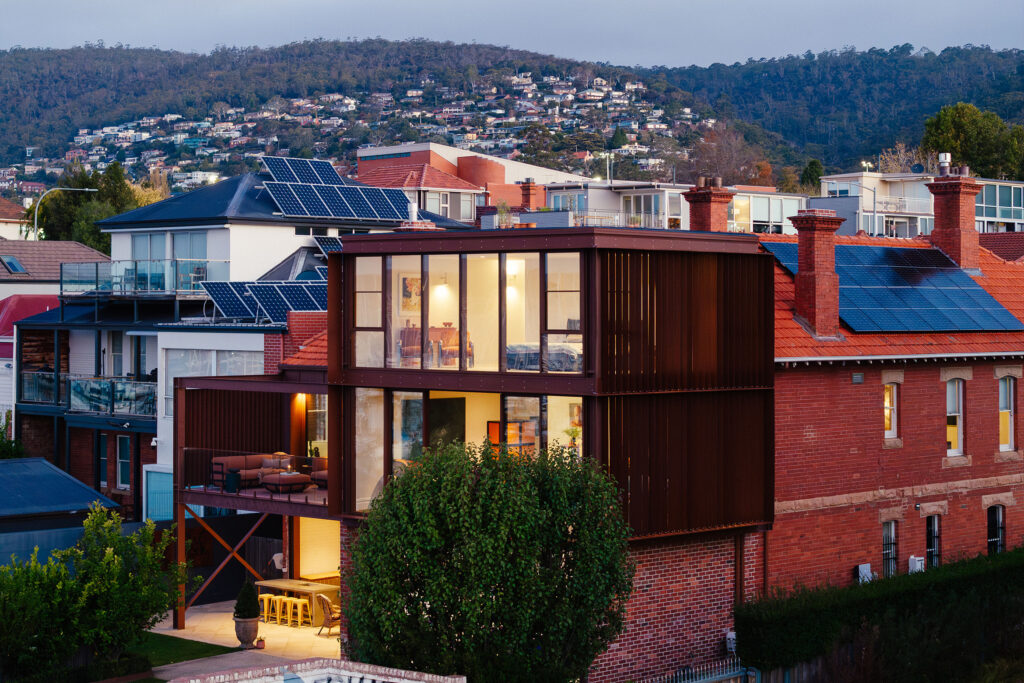
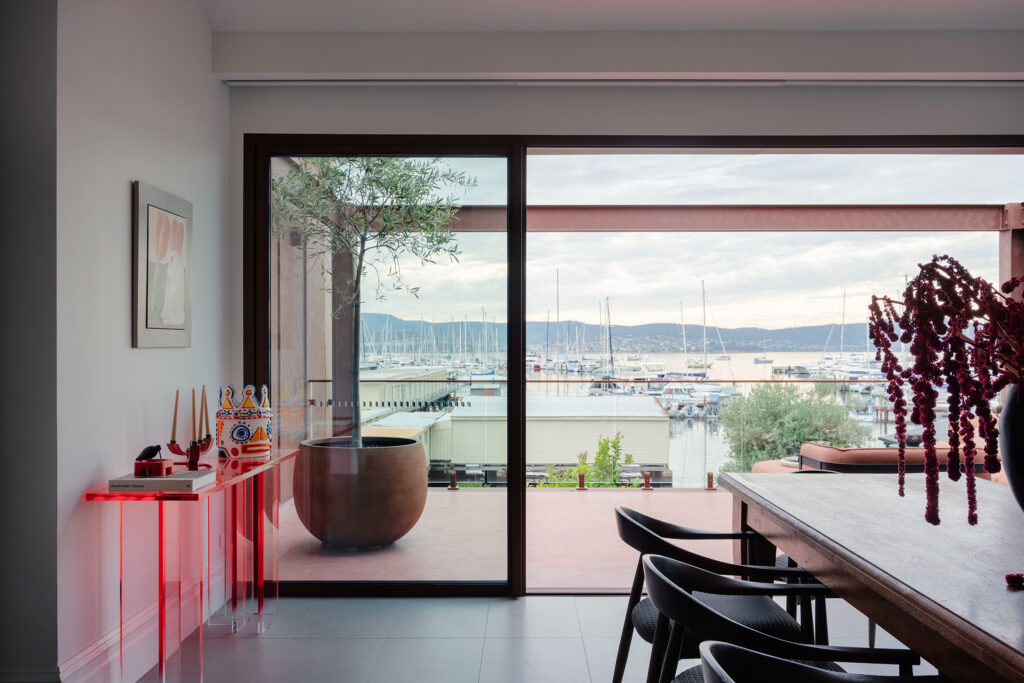
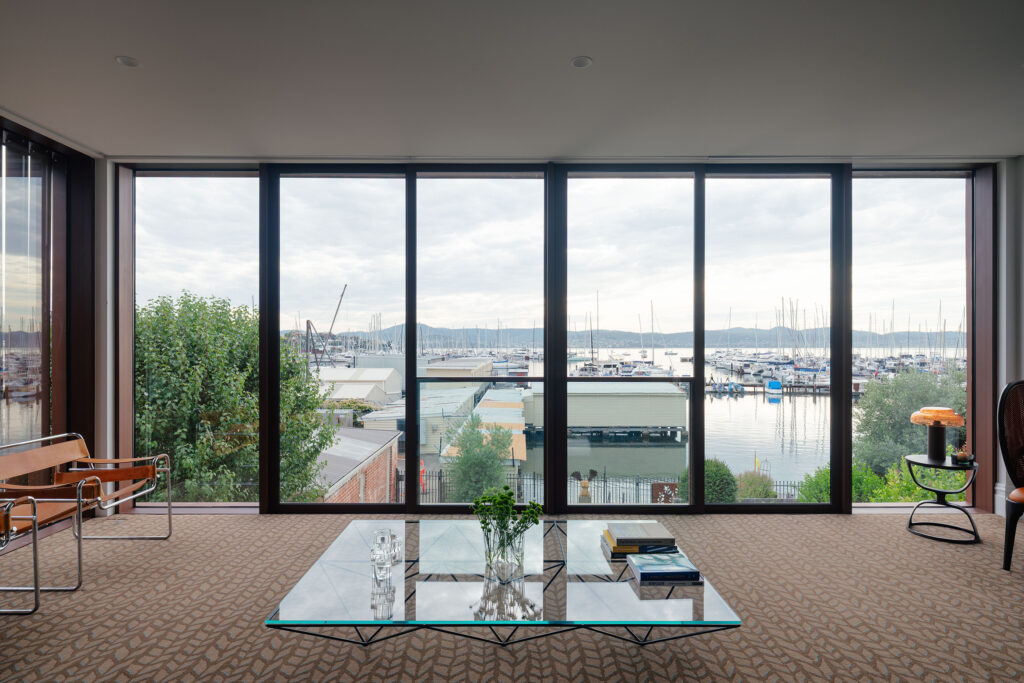
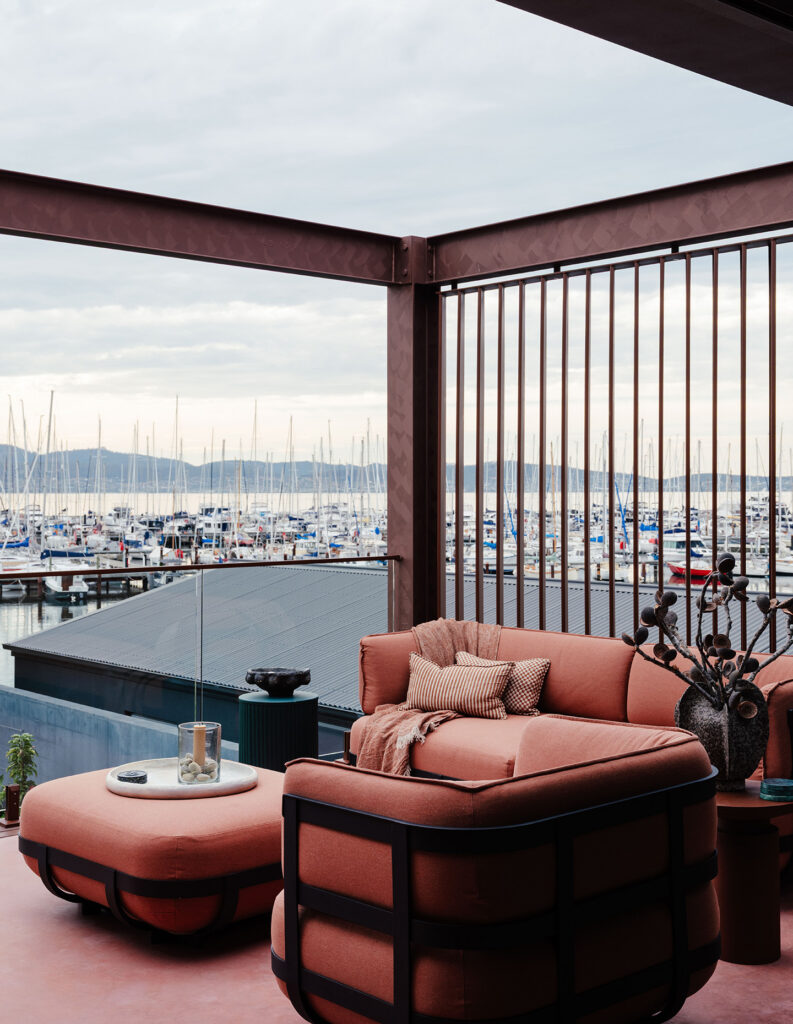
Moor House is located in a spectacular setting with sweeping views of the River Derwent and marina. Originally two heritage townhouses, the brief for the new residence was to combine the structures and conceive an addition that would suit the client, an older couple, as well as the young families of their daughters, who would reside in the home at different times. There should be privacy but also places to gather in the new three-storey residence, and the design would showcase the striking water views of the surrounding landscape.
With a heritage overlay, there were planning limitations, height restrictions and strict sightline requirements and, as a home for multigenerational living, spatial planning for two families was at the heart of the build. Chris Haddad and Josh FitzGerald, directors of Archier and their team have created a home with distinct zones and shared areas that maximise the floorplate and balance preservation with performance.
“The project became a negotiation between history and possibility. We were working within the constraints of a heritage fabric, while trying to open the home to light, landscape and a more generous way of living. It became a careful balance between what we could retain and what we needed to transform,” Haddad explains.
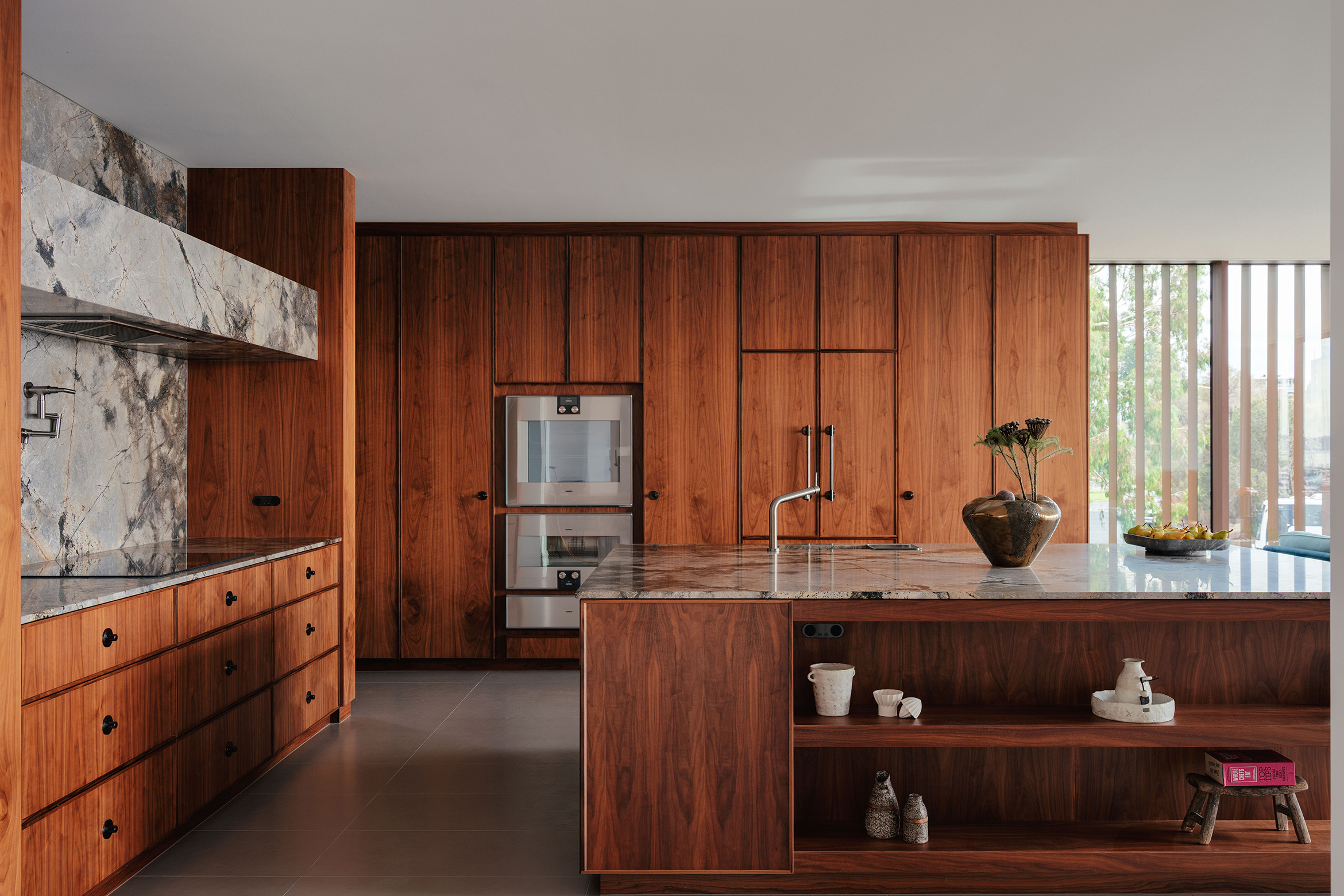
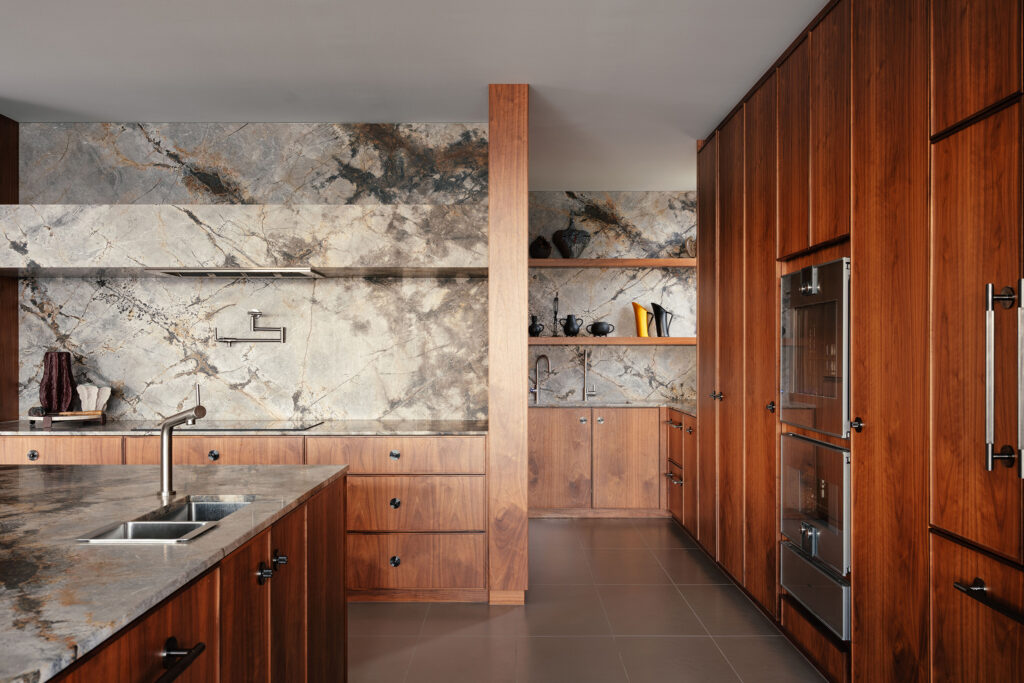
In order to achieve optimal spatial reform, the adjoining wall between the two townhouses was removed and the combined area became a large open-plan social space with shared lounge, kitchen and dining areas and access to an extensive deck. Sleeping quarters for both families are located on separate levels on either side of the public zone and, along with separate lounge rooms, there is privacy and retreat.
Related: Reframing the harbour
While each family has its own independent sleeping spaces, the public zone is the glue that brings everyone together. Thinking further ahead, Archier has created the two distinct private areas and a secondary kitchenette to future-proof Moor House, should the single residence be required to revert back to two homes.
Haddad comments, “At its core, the house is about connected independence. Two homes are brought together through a shared social heart yet carefully held apart through a gradient of privacy. It’s designed to evolve with the family, able to contract or expand as life changes.”
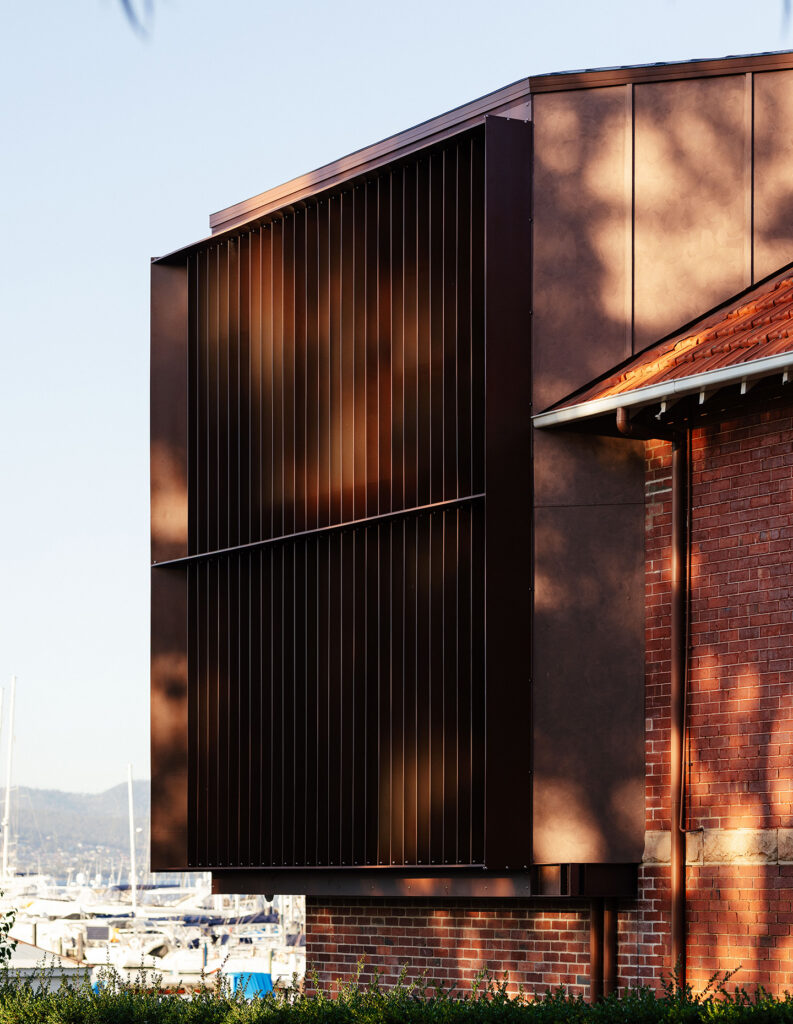
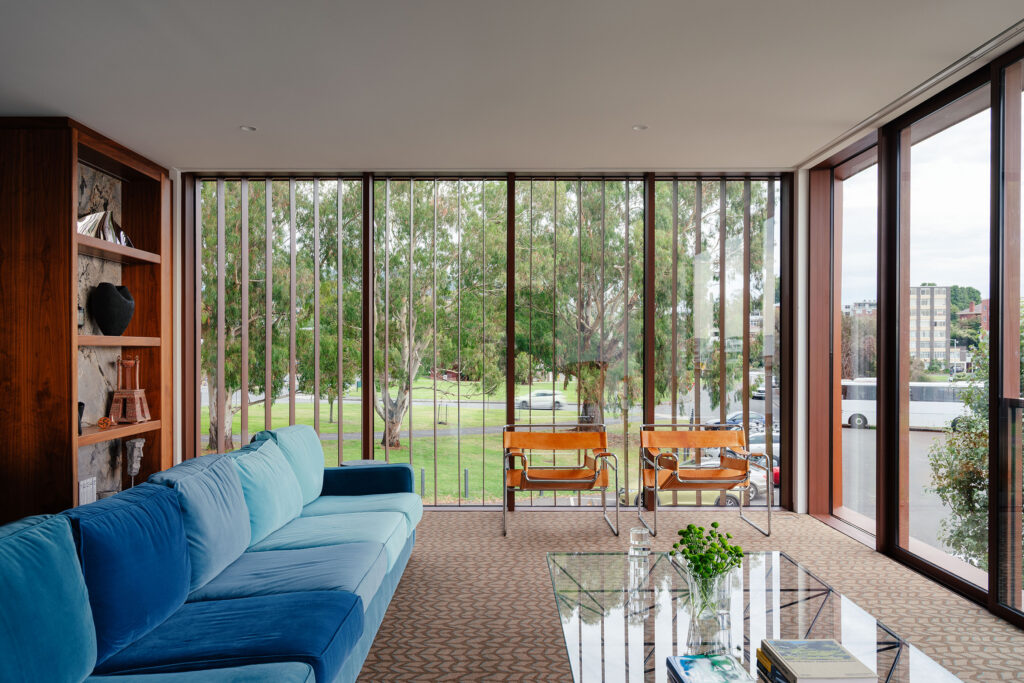
One of the striking features of Moor House is the floor-to-ceiling glazed corner where there are spectacular views to the north and north-west, as well as the local Sailing Club. To mitigate overheating from the northern sun, a large aluminium awning and fins were designed for the façade as a screening element. This inclusion has a dual function: to control harsh summer sunlight and allow more winter light, while also curating views and ensuring privacy from neighbours.
While the front rooms of the two houses have seen a superficial renovation, with the removal of walls to create more generous spaces and better circulation, the new build at the rear is where the major changes have occurred.
Materiality for the new addition complements the original red brick, and the muted, mottled rust-colour of the aluminium fins sits comfortably beside the terracotta roofline. Fibre-cement wall cladding and the custom awning have been finished in long-wearing Murobond Bridge Paint to ensure the structure is low maintenance and able to weather the elements. While the addition is obviously new, with a square and bold form, it remains visually sympathetic to the original homes.
FitzGerald reflects, “The addition is deliberately contemporary, but it draws from the qualities of the original building rather than copying it. We focused on material weight, tone and proportion so that it sits comfortably alongside the heritage fabric, while clearly expressing a new layer of architecture.”
There was considerable collaboration between architects and client, not only for the structural planning of the home but also for the interior, and this is evident in the beautiful resolution of the project both inside and out.
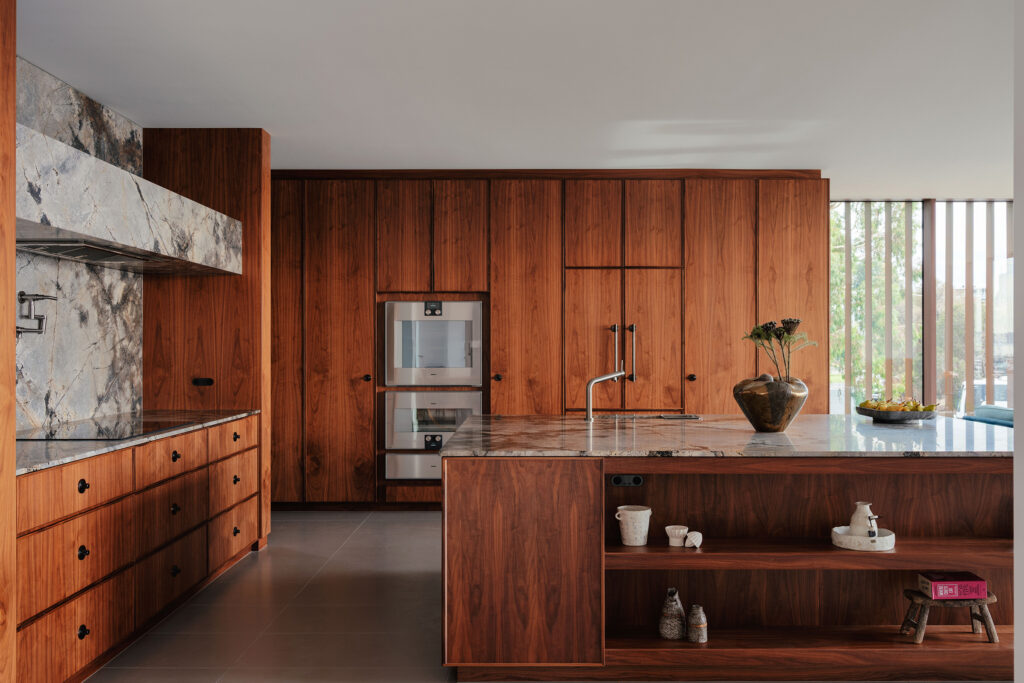
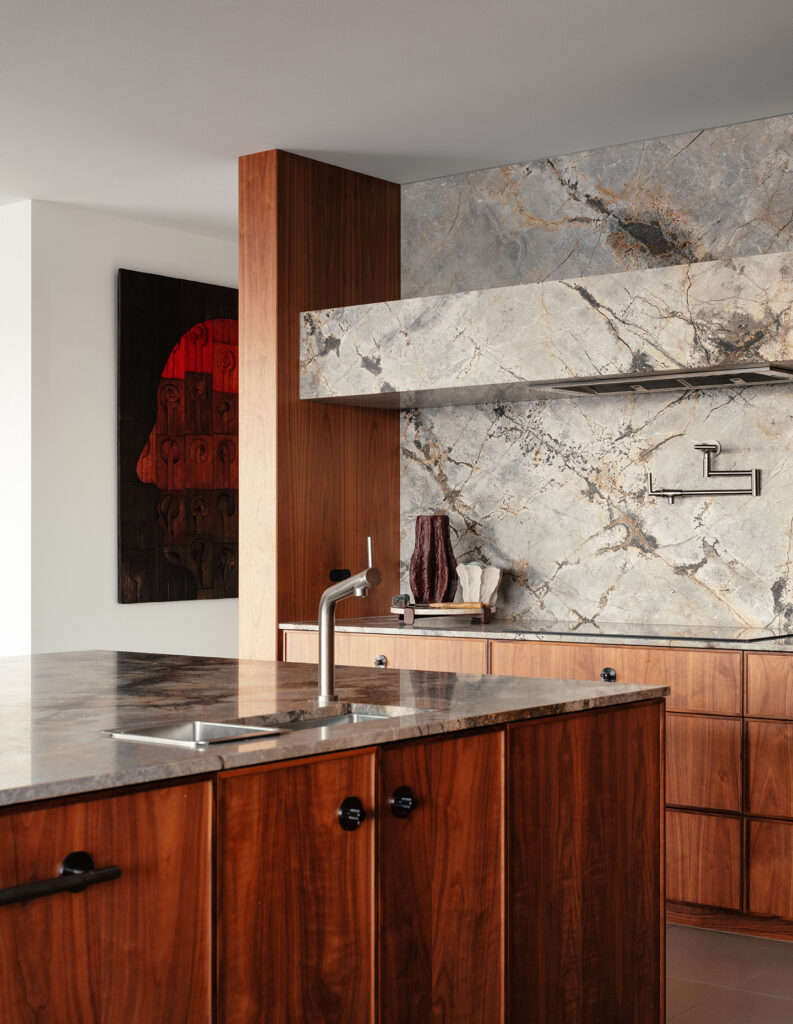
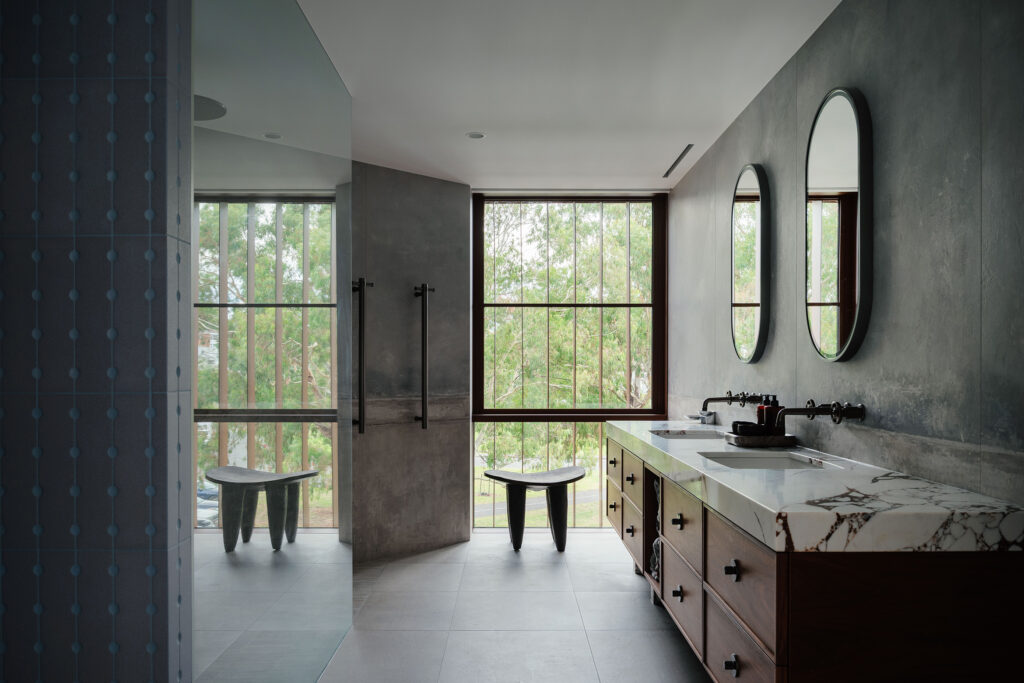
“It was a deeply collaborative process as one of the clients is an interior designer, Asimina Marios of Unique Floors Design. Internally, she developed the spatial language of our architecture to create a home that reflects their tastes and how they want to live,” says FitzGerald.
Combining two homes into one has its challenges, but creating spaces for family members of different ages and disparate needs takes great thought and experience. While multigenerational living has long been a constant in many Asian countries, it is now being embraced in Australia as a logical next step in addressing social and financial challenges.
With Moor House, Archier has designed a home that meets every need and creates a connected independence for both the younger and older households. The design ensures there is generosity of space yet places of intimacy, where contemporary expression coupled with a respect for the past ensures that this is not only a home for today but also for the future.