
Qode is a hospitality venue in Hyderabad by Studio Nilasha, completed this year. Located beneath an outhouse building beside a resort property overlooking Gandipet Lake, the project turns a largely nondescript 4,500-square-foot basement into a bar and outdoor lounge shaped by contrast: enclosed and open, dark and light, concealed and revealed.
We spoke with Nilasha, Principal Architect at Studio Nilasha, about transforming the site’s limitations into a spatial journey driven by materiality, lighting and atmosphere.
Tell us about the site context.
The site is located beneath an outhouse building adjacent to a resort property overlooking Gandipet Lake in Hyderabad. When we first encountered it, the space was a largely nondescript 4,500-square-foot basement with inherent constraints, including low ceiling heights and very limited access to natural light. However, it also presented a unique opportunity because of its concealed nature and its connection to the landscape outside.
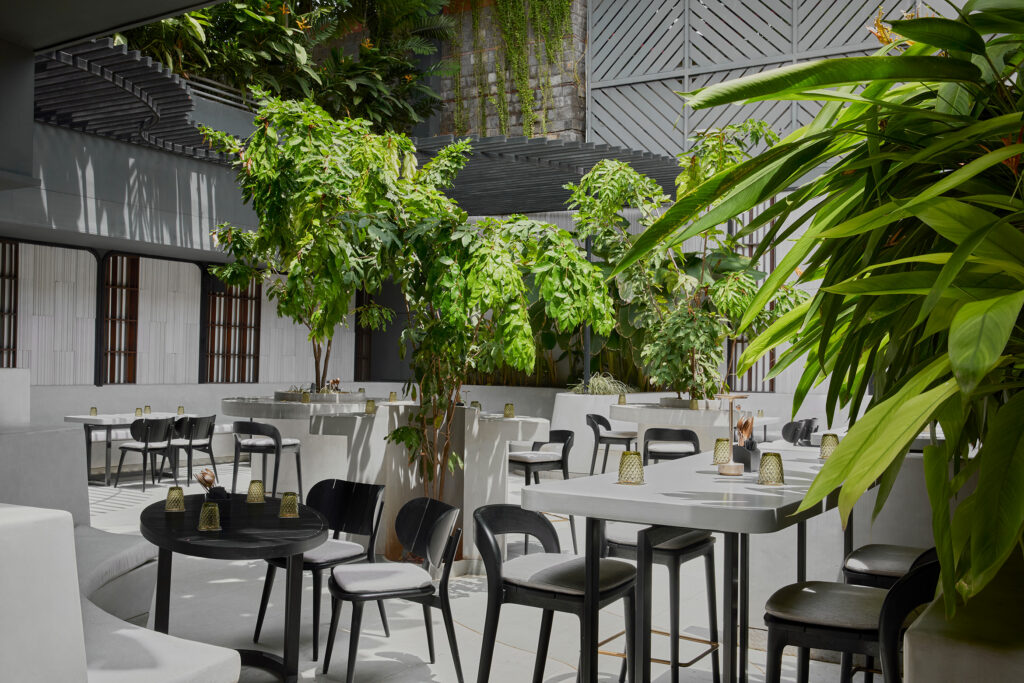
What made the site particularly interesting was the contrast between the enclosed basement interior and the open outdoor area surrounding existing mature trees. Rather than fighting these conditions, we chose to embrace them. The darker, more introspective qualities of the basement informed the moody, speakeasy-inspired indoor experience, while the outdoor lounge allowed us to create a lighter, more relaxed environment that engages with the natural setting. This duality ultimately became one of the defining characteristics of the project.
What can you tell us about the clients and their brief?
The client envisioned a hospitality space that would stand apart from the typical bar or restaurant experience. Rather than creating something overtly flashy or immediately revealing itself, they were open to a concept that encouraged exploration and discovery. This alignment gave us the freedom to think beyond conventional hospitality design and focus on creating a memorable spatial journey.
The brief was to transform an underutilised basement into a distinctive destination while making the most of its existing conditions. We wanted guests to experience a gradual sense of immersion, from the moment they discover the concealed entrance to the intimate indoor bar and finally the open-air lounge beyond. The objective was to create a space with a strong identity, where atmosphere, materiality, lighting and movement through the space would be just as important as the food and beverage experience itself.
Additionally, the design needed to accommodate different group sizes and social interactions while maintaining a sense of exclusivity and intrigue.
What are the key material and structural choices?
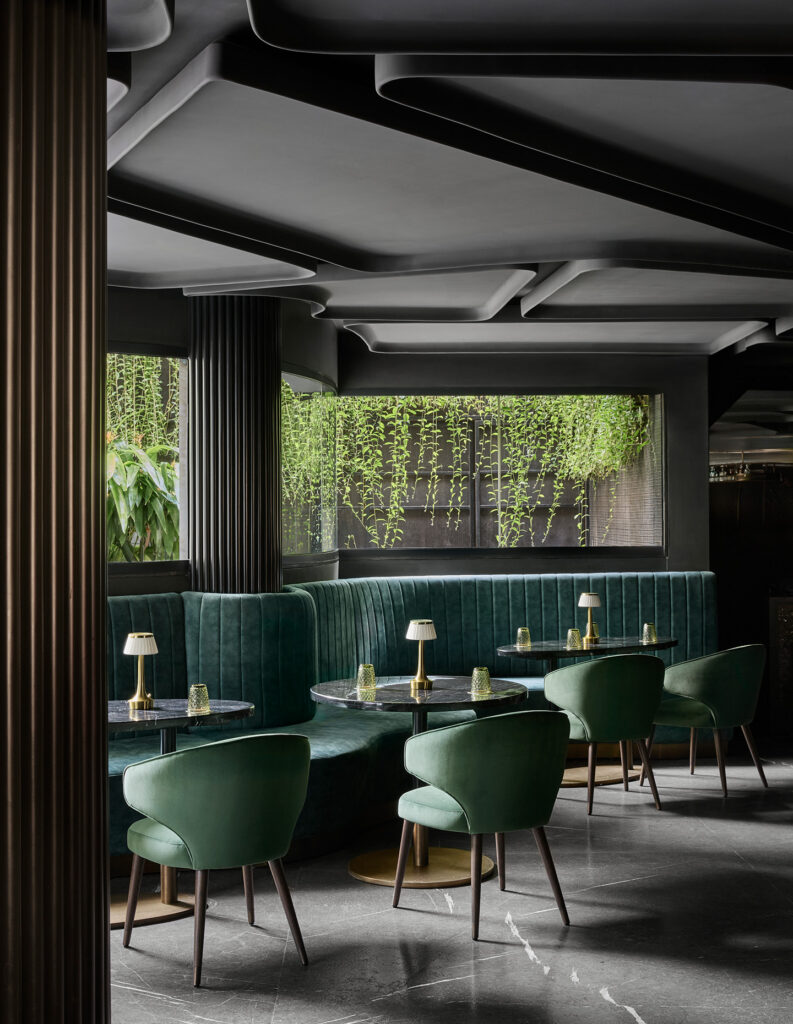
Materiality played a crucial role in shaping the atmosphere of Qode. Given the site’s low ceilings and limited natural light, we carefully selected materials that would enhance depth, texture and visual richness while reinforcing the speakeasy-inspired character of the space.
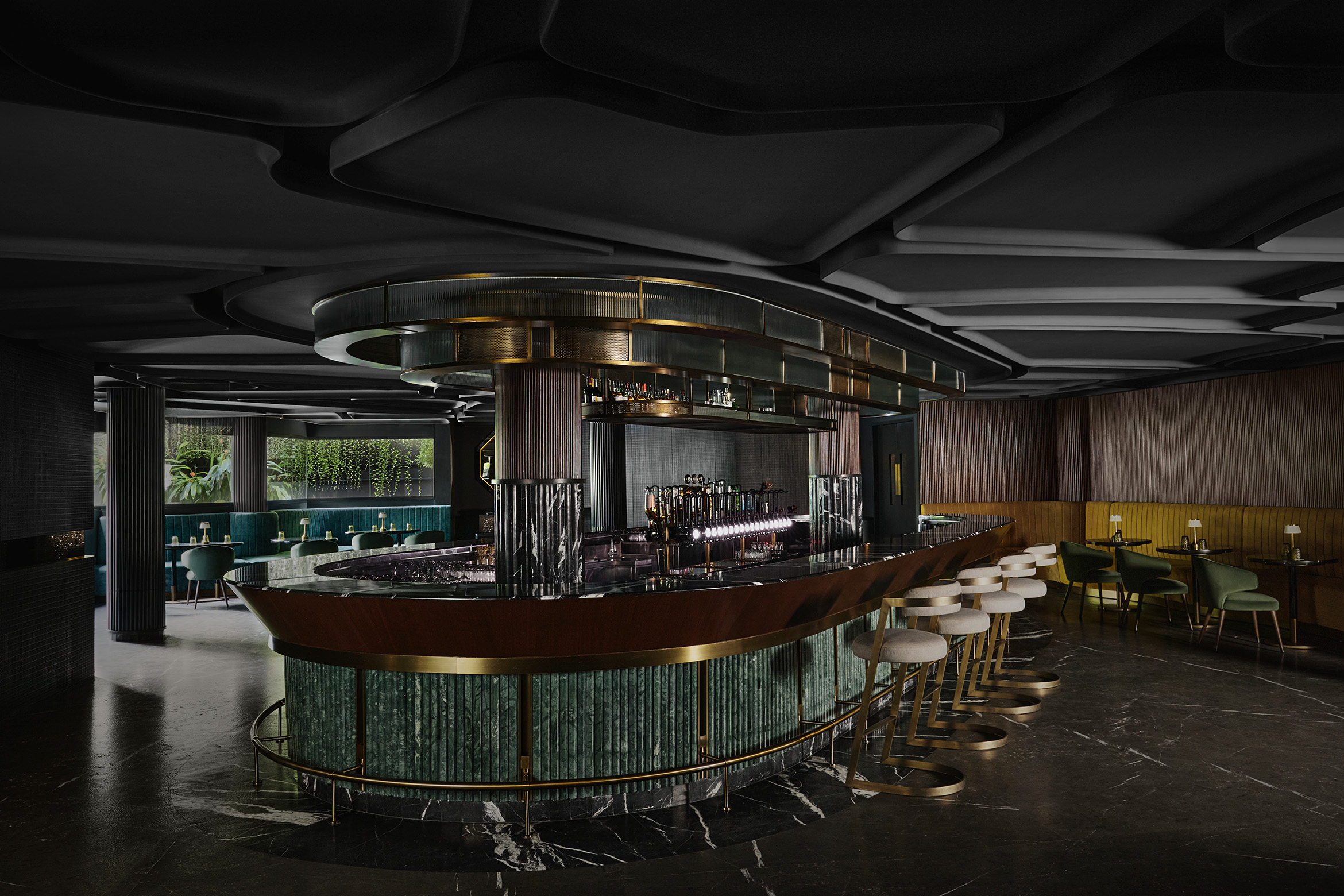
For the indoor bar, we used Black Marquina marble extensively, extending it from the flooring onto the bar counter to create a sense of continuity and sophistication. This was paired with Verde Guatemala marble, whose deep green tones introduced richness and complemented the jewel-toned palette of the interiors. Antique brushed brass accents were incorporated throughout the space to add warmth and a subtle sense of luxury.
Natural materials such as fluted walnut wood panelling and walnut-clad surfaces were used to soften the darker palette and bring a tactile quality to the interiors. We also introduced black 3D stone panelling, antique mirror finishes and textured wallpapers to create layers of visual interest and amplify the immersive mood of the space.
Related: Three pavilions in the wind
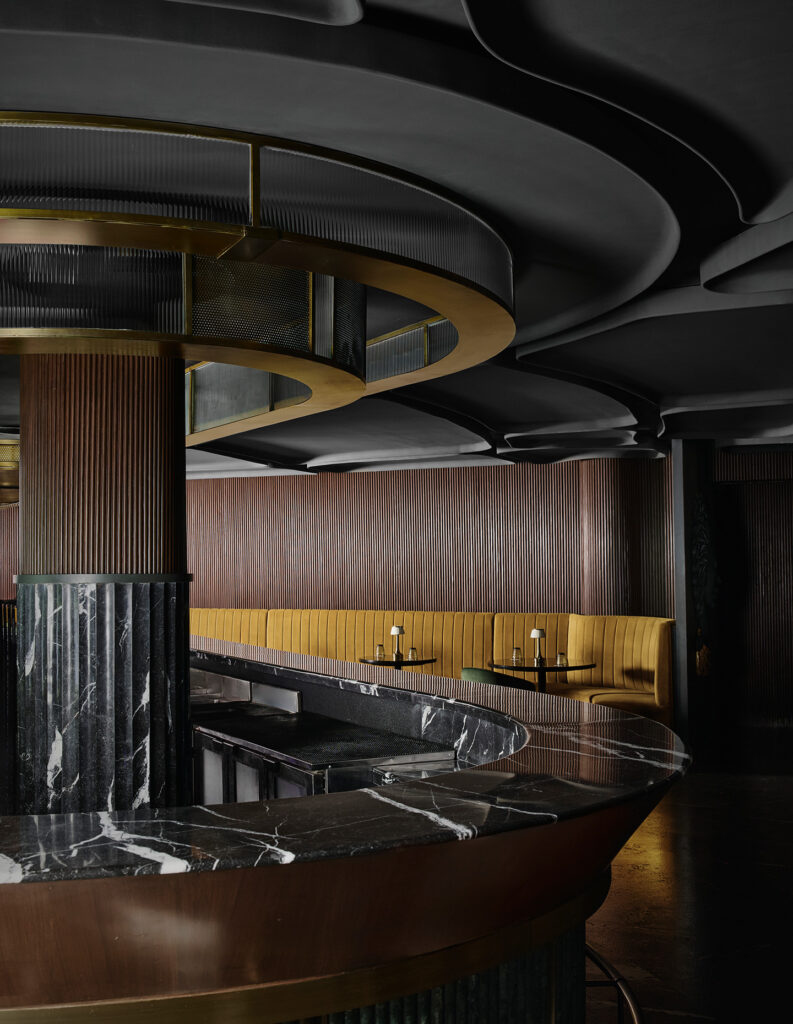
Structurally, one of the most significant interventions was the bar itself, which was designed around two existing columns within the basement. Instead of concealing these elements, we integrated them into the composition, allowing them to anchor the bar counter and become part of the spatial narrative.
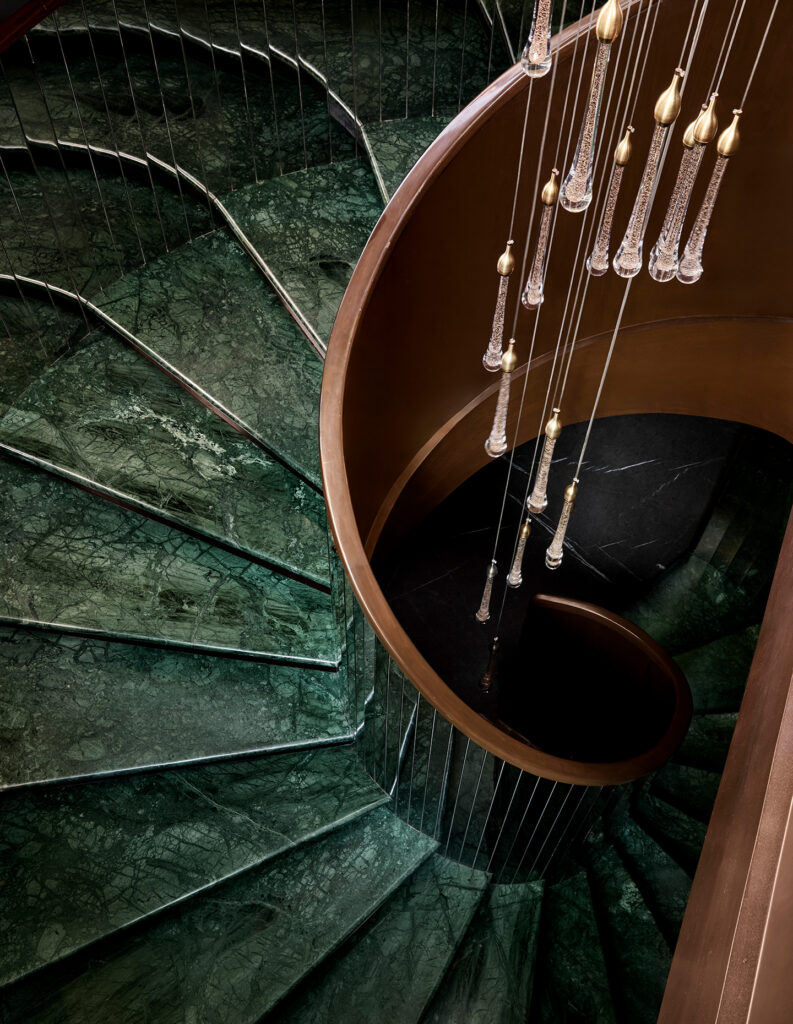
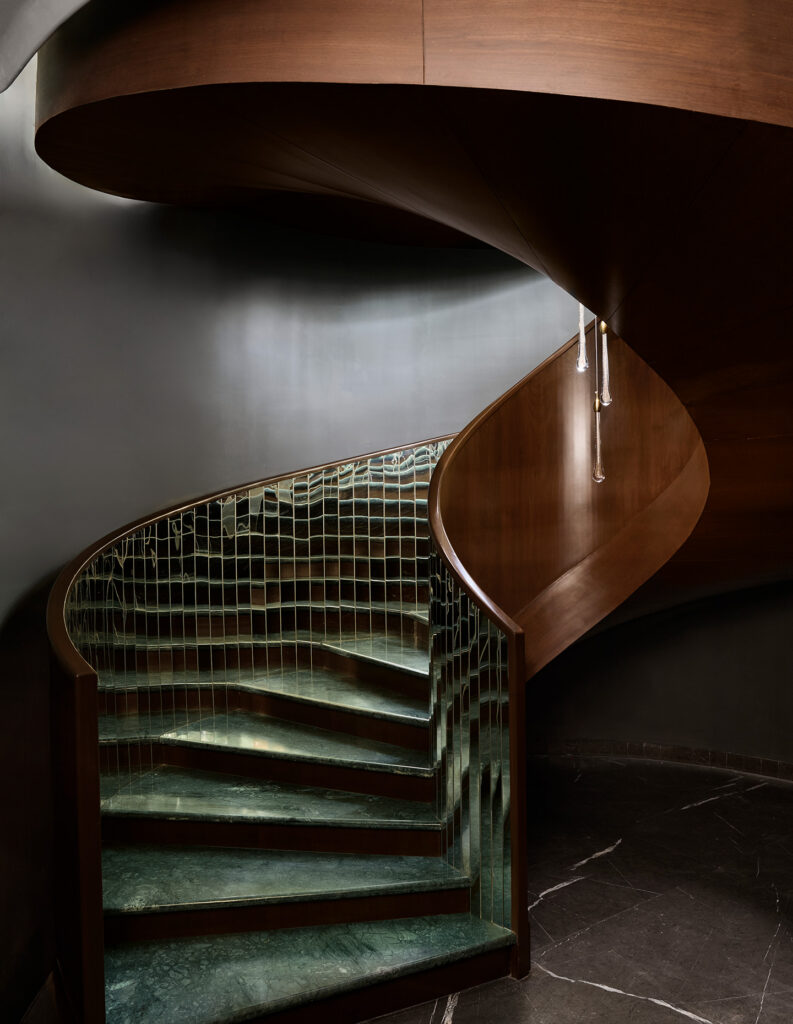
Another defining feature is the sculptural spiral staircase, clad in green marble and enclosed with walnut panelling and mirrored surfaces, which acts as a transition between the café above and the hidden bar below.
The ceiling design was equally important. We developed a three-dimensional geometric ceiling that conceals services while adding rhythm and movement to the space. Above the bar, a custom multi-tiered elliptical installation crafted from perforated brass sheets and fluted glass functions as both a lighting feature and storage element, becoming the visual focal point of the interior.
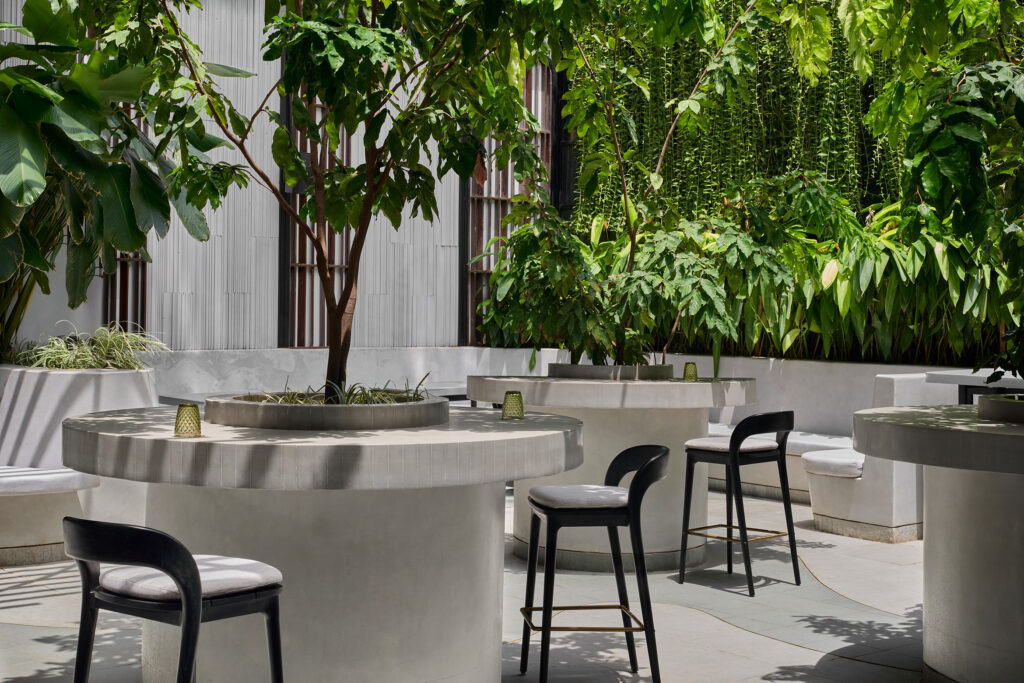
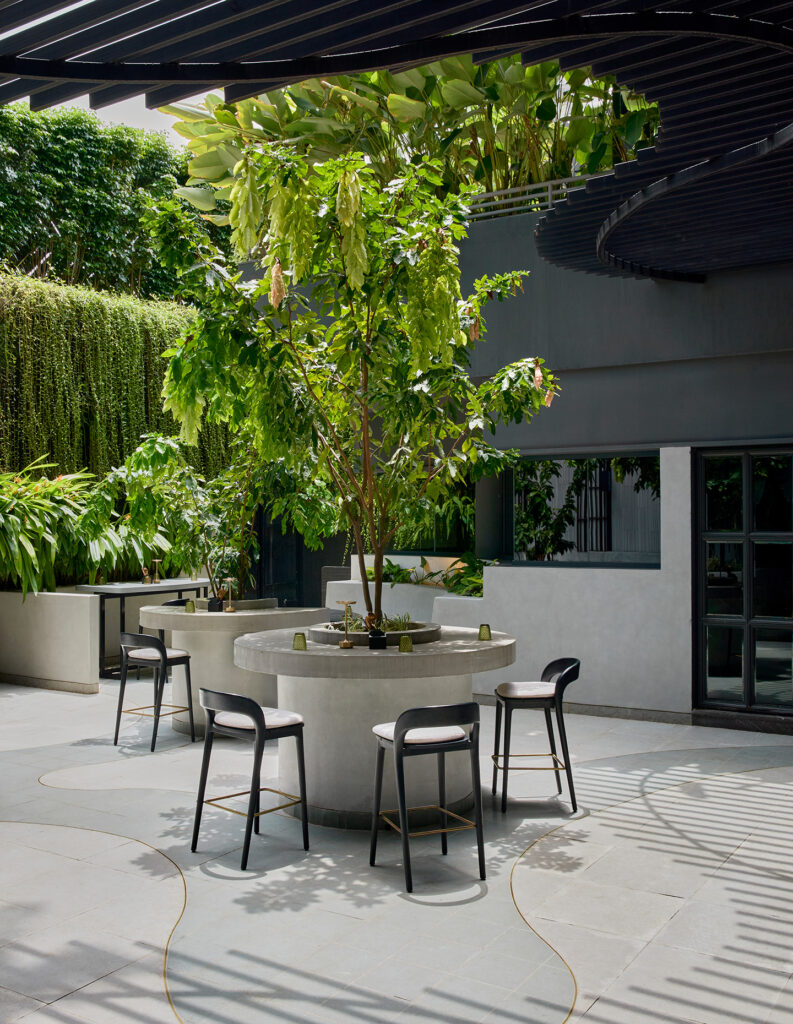
For the outdoor lounge, the material palette shifts to something more restrained and grounded. Grey and green Kota stone flooring, neo-cement finished seating, black-stained timber furniture and stone-top tables create a setting that feels connected to the landscape and allows the existing trees and natural surroundings to take centre stage.
This contrast between the richly layered indoor environment and the understated outdoor space was a deliberate design decision that reflects the dual character of the project.
What key functional requirements does the design address?
One of the primary functional requirements was to transform a challenging basement space into a comfortable and engaging hospitality destination. The existing site had low ceilings, limited natural light and structural elements such as columns that needed to be accommodated. Rather than treating these as constraints, we integrated them into the design, using materiality, lighting and spatial planning to create a welcoming and immersive environment.
The layout was carefully planned to support a variety of social interactions. We incorporated a mix of booth seating and more open seating arrangements to accommodate both larger groups and smaller gatherings. The bar counter was positioned as the central anchor of the space, ensuring efficient service while also acting as a visual focal point.
Circulation and guest experience were equally important considerations. We wanted visitors to move through the space in a deliberate sequence, from the concealed entrance and staircase, into the intimate indoor bar, and eventually toward the open-air lounge. This journey creates a sense of discovery while ensuring intuitive movement throughout the venue.
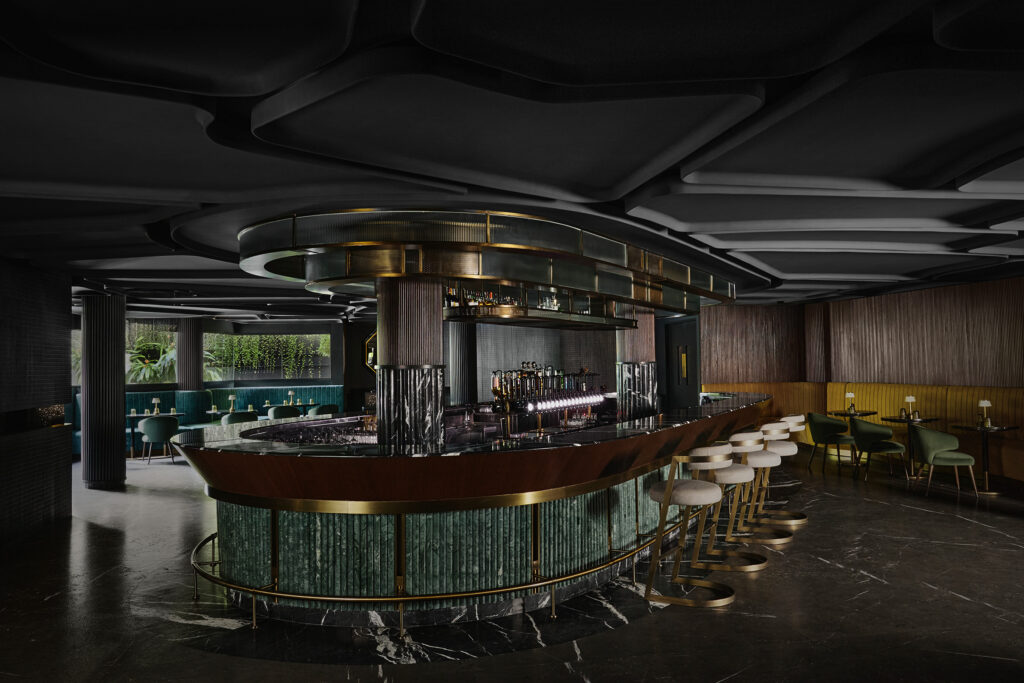
Lighting was another critical functional aspect. Since natural light was scarce in the basement, we relied on layered lighting solutions integrated into architectural features and furniture to enhance visibility, highlight materials and create different moods throughout the day and evening.
The design also addresses operational requirements by discreetly integrating building services within the geometric ceiling design, maintaining a clean aesthetic without compromising functionality. Additionally, the outdoor lounge expands the seating capacity and offers a contrasting experience, allowing guests to choose between an intimate indoor setting and a more relaxed, landscape-oriented environment.
Overall, the design balances atmosphere, comfort, operational efficiency and flexibility to support the venue’s hospitality functions.
What are your favourite parts or moments in the design?
One of my favourite moments in the project is the arrival sequence. I particularly enjoy how the experience begins almost unexpectedly from a quiet corner of the café above, where a sculptural spiral staircase gradually draws visitors into the space below. That transition from the familiar into something hidden and immersive perfectly captures the spirit of Qode.
I am also especially fond of the bar counter and the ceiling installation above it. The way the Black Marquina and Verde Guatemala marbles interact with the brass detailing and integrated lighting creates a rich focal point that changes character throughout the evening. The custom elliptical feature above the bar not only serves a functional purpose but also becomes the visual heart of the space.
Another favourite aspect is the contrast between the two environments. Moving from the moody, intimate interior into the open-air lounge is a moment of release that feels quite dramatic yet seamless. The existing trees, natural light and restrained material palette outdoors create a completely different atmosphere while still feeling connected to the overall narrative.
Finally, I have a soft spot for the smaller details, particularly the restroom. Even though it is a compact space, the sculptural Black Marquina sink, textured surfaces and reflective metal ceiling allowed us to create a memorable experience in an area that is often overlooked. For me, these moments of surprise and discovery are what make the project special.