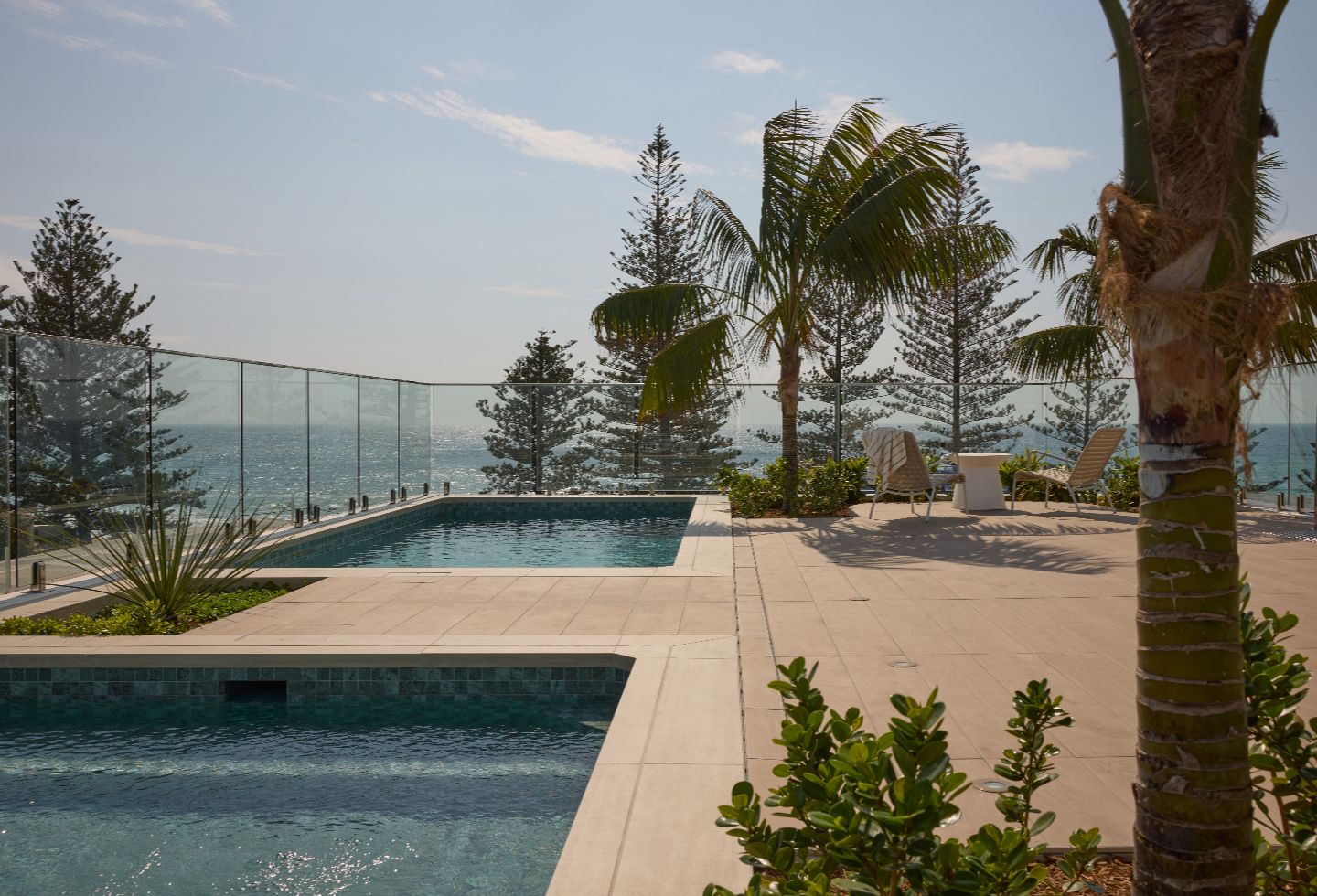

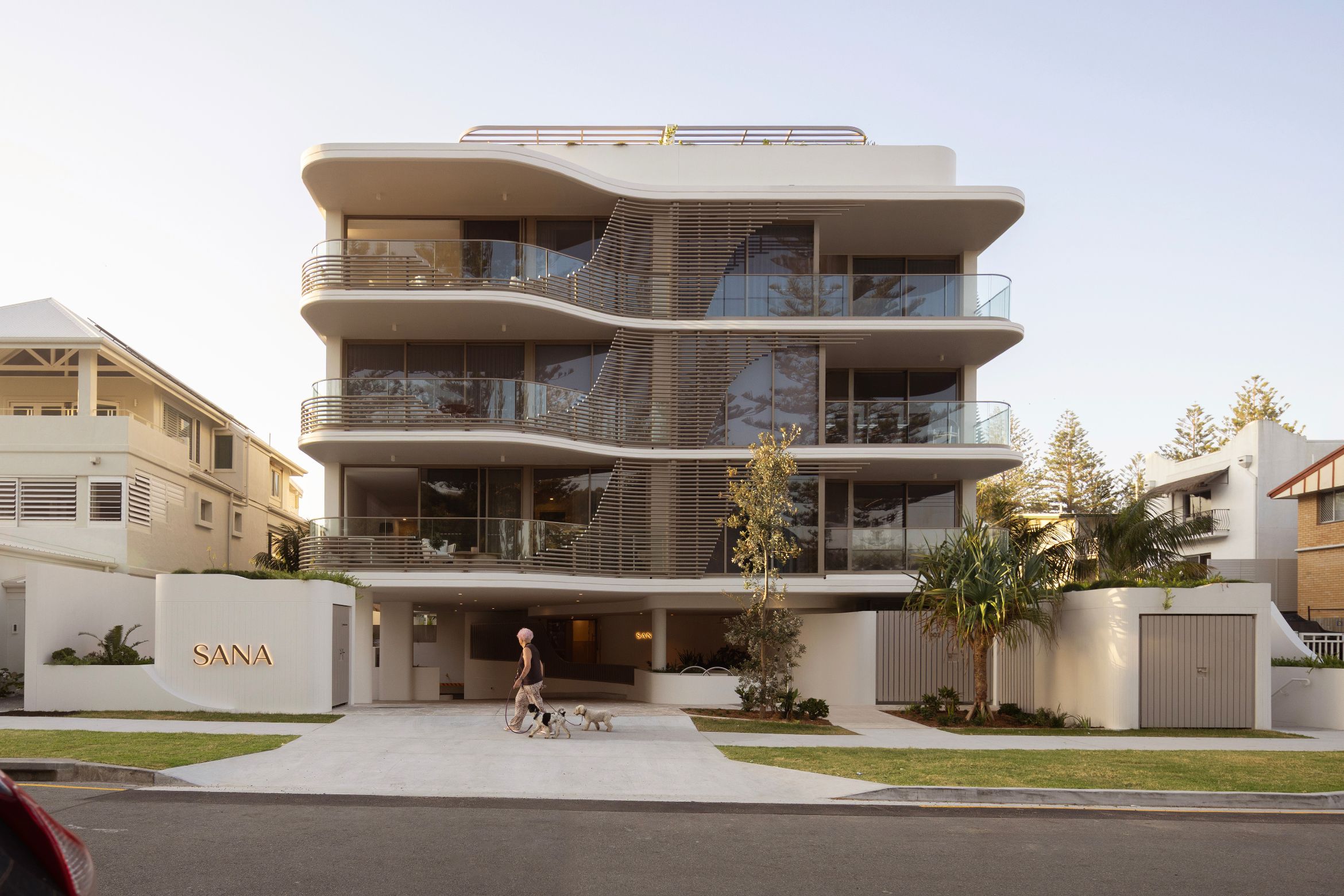
There’s a particular tension that defines much of the contemporary Gold Coast: the push toward density set against a lingering desire for something more intimate, more local, more liveable. At SANA Miami residential development, that tension is carefully negotiated.
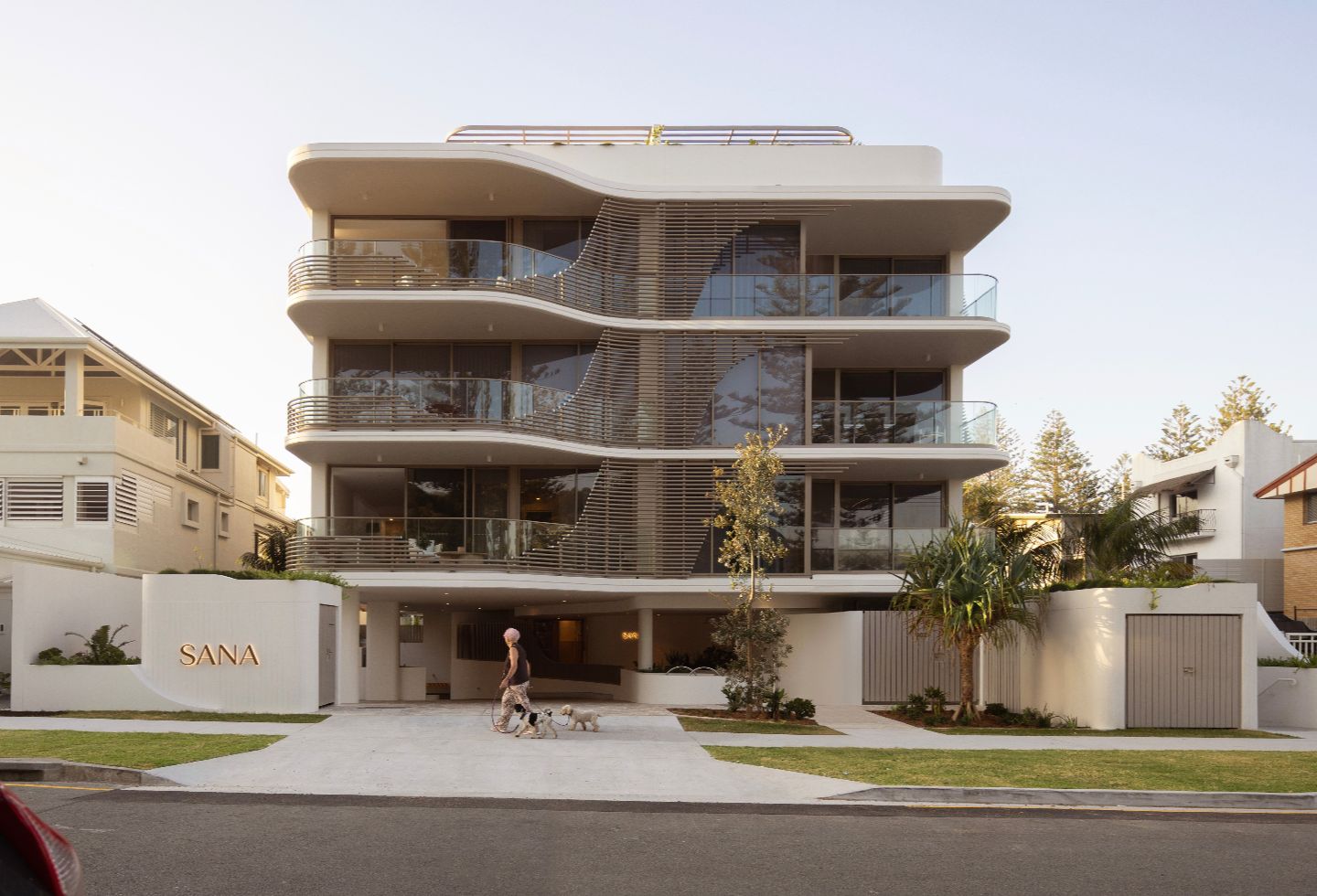
Completed by Plus Studio for Kraft Projects, with delivery by Alroe Constructions, the four-storey, 13-residence building sits one street back from the shoreline. It’s a modest move, but a deliberate one — privileging proximity without spectacle, and neighbourhood over skyline.
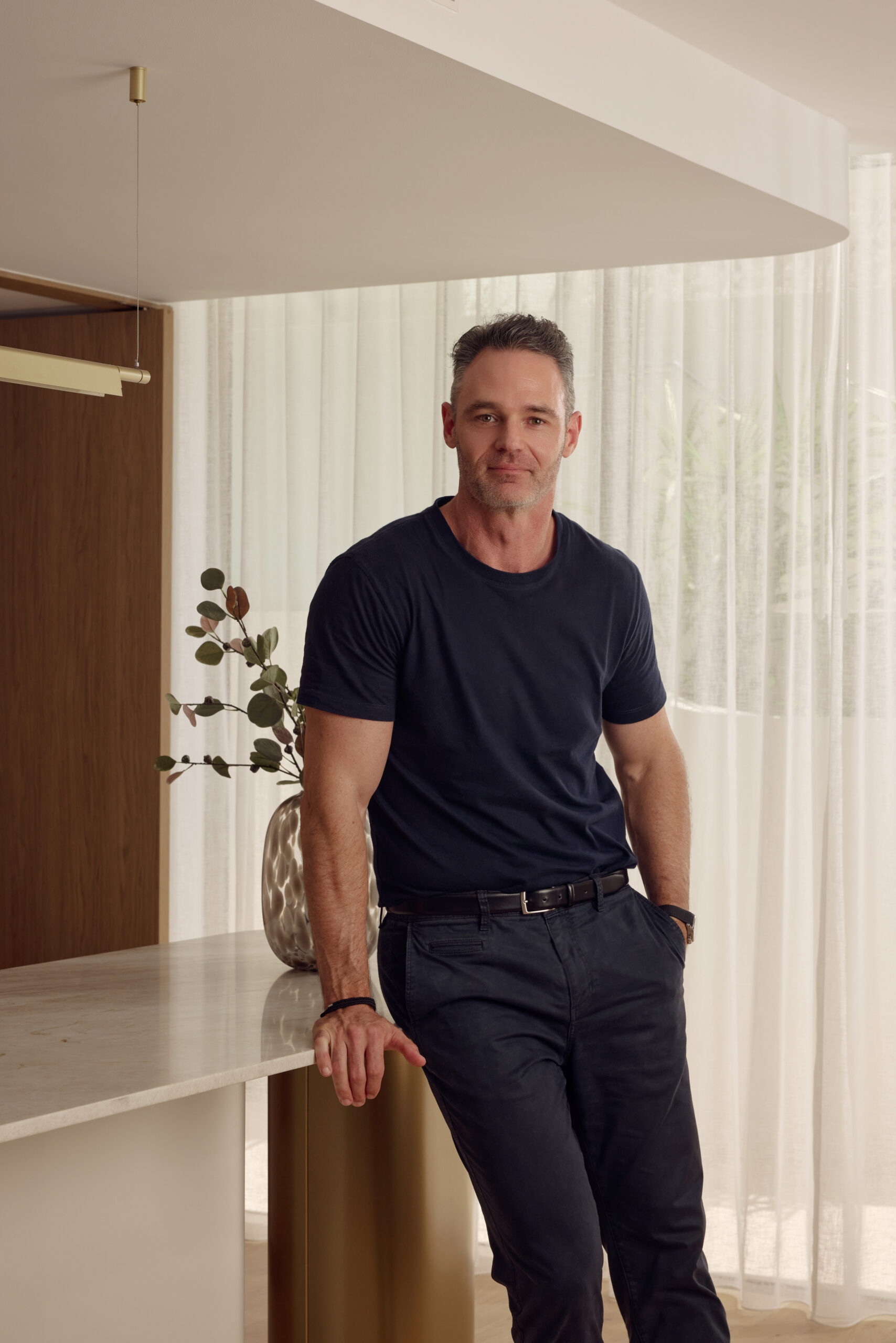
All apartments are now sold. But the project’s significance lies less in its market success than in what it suggests about an alternative model for coastal development. What follows is a conversation with Michael McShanag, Director of Plus Studio Queensland, unpacking how SANA positions itself against the prevailing grain.
SANA presents a clear alternative to the Gold Coast’s high-density model — what drove the decision to pursue a more restrained, mid-scale approach?
Miami has a very specific character, and it’s one of the Gold Coast’s most loved coastal pockets precisely because it hasn’t been overwhelmed by tower development. When Kraft Projects approached us, the brief was clear: a building that belongs here.
That meant working within the suburb’s height controls and taking the modest beachside scale of the 1970s and 80s as a genuine reference point. The market reinforced that thinking. There’s strong demand from owner-occupiers and downsizers who want quality, privacy and neighbourhood fit — and who aren’t finding it in the prevailing apartment product.
How did the dunal landscape of Miami inform the building’s sculptural form and material palette?
The dunes are never static — they shift, layer and refract light constantly. That became a useful formal reference.
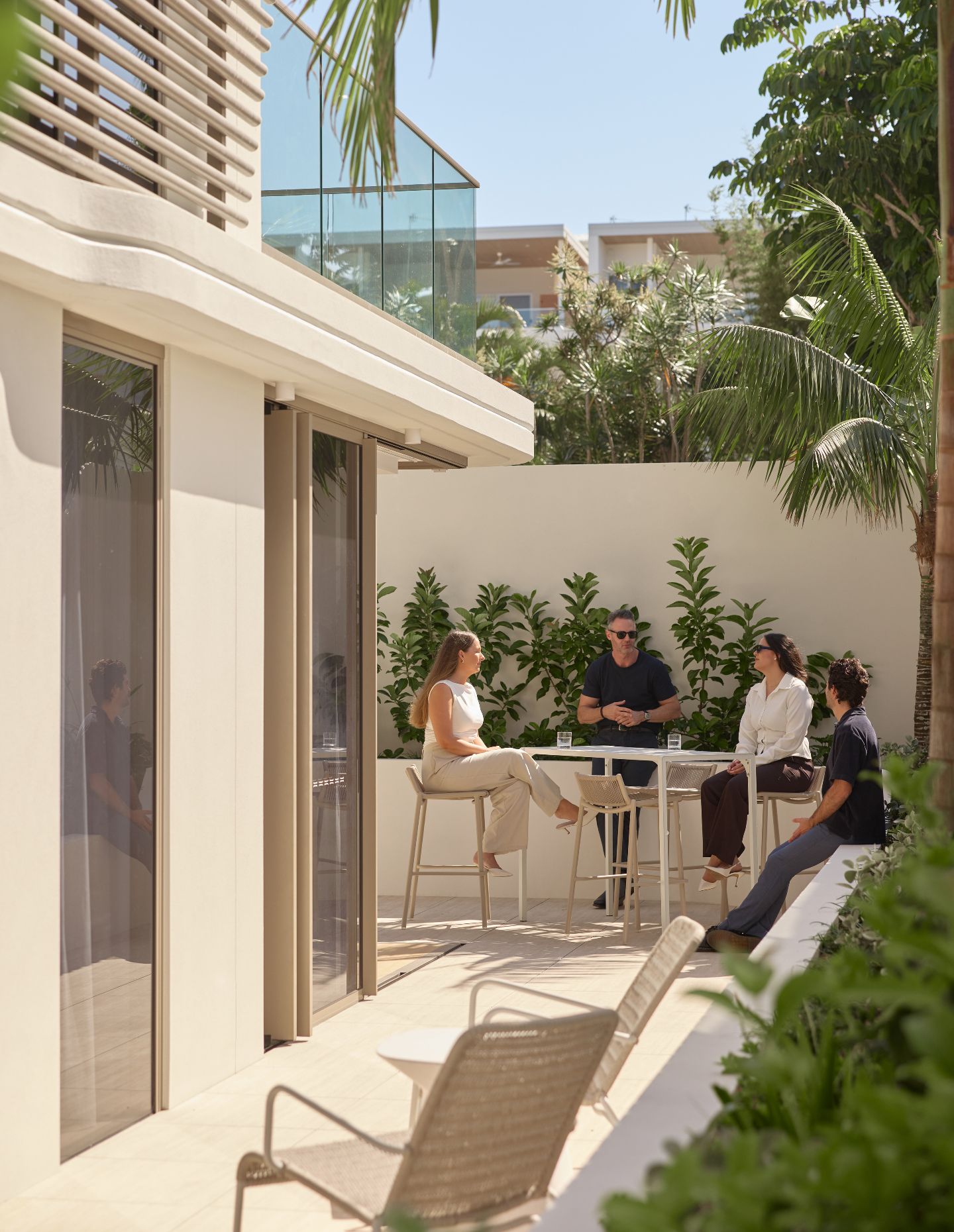
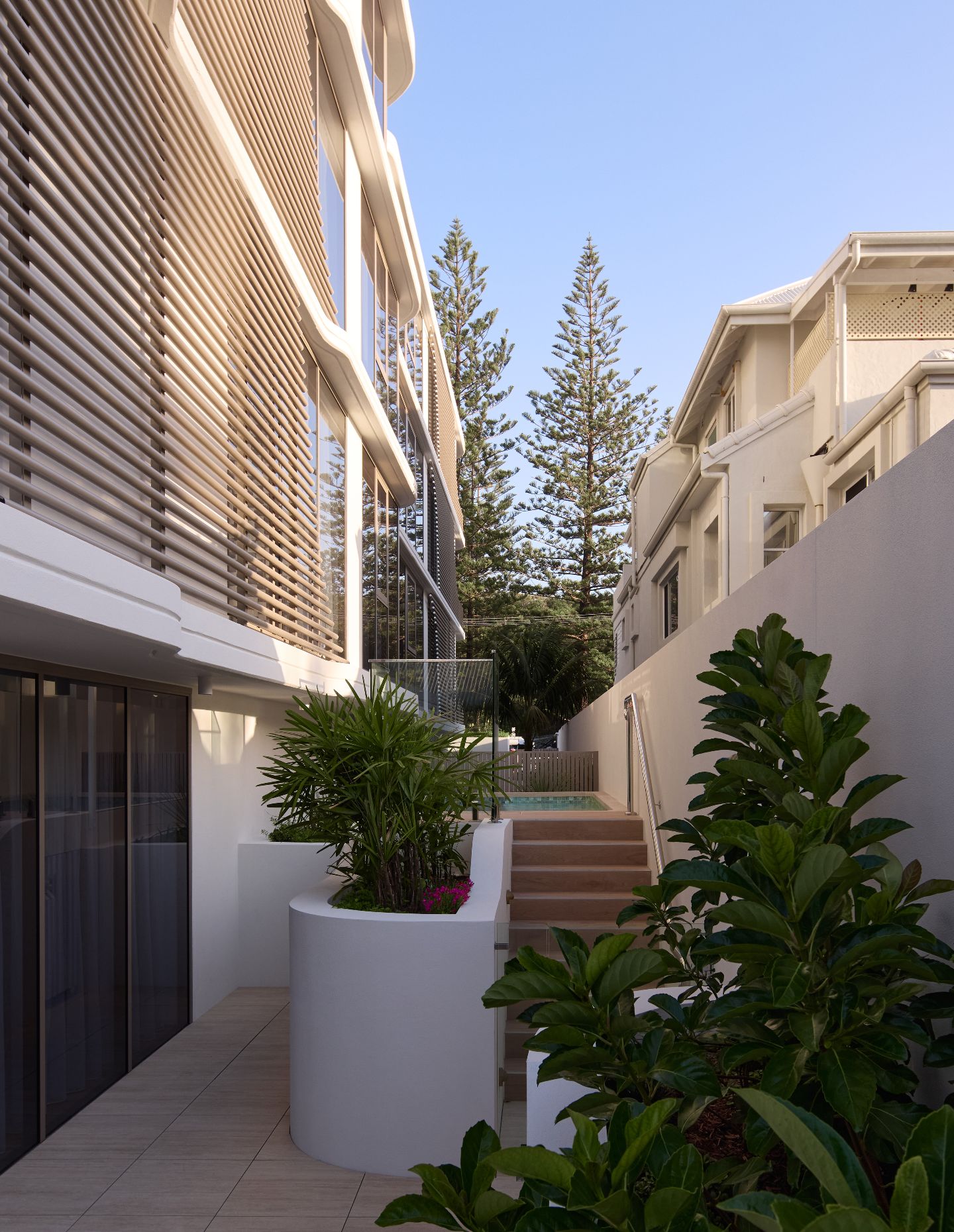
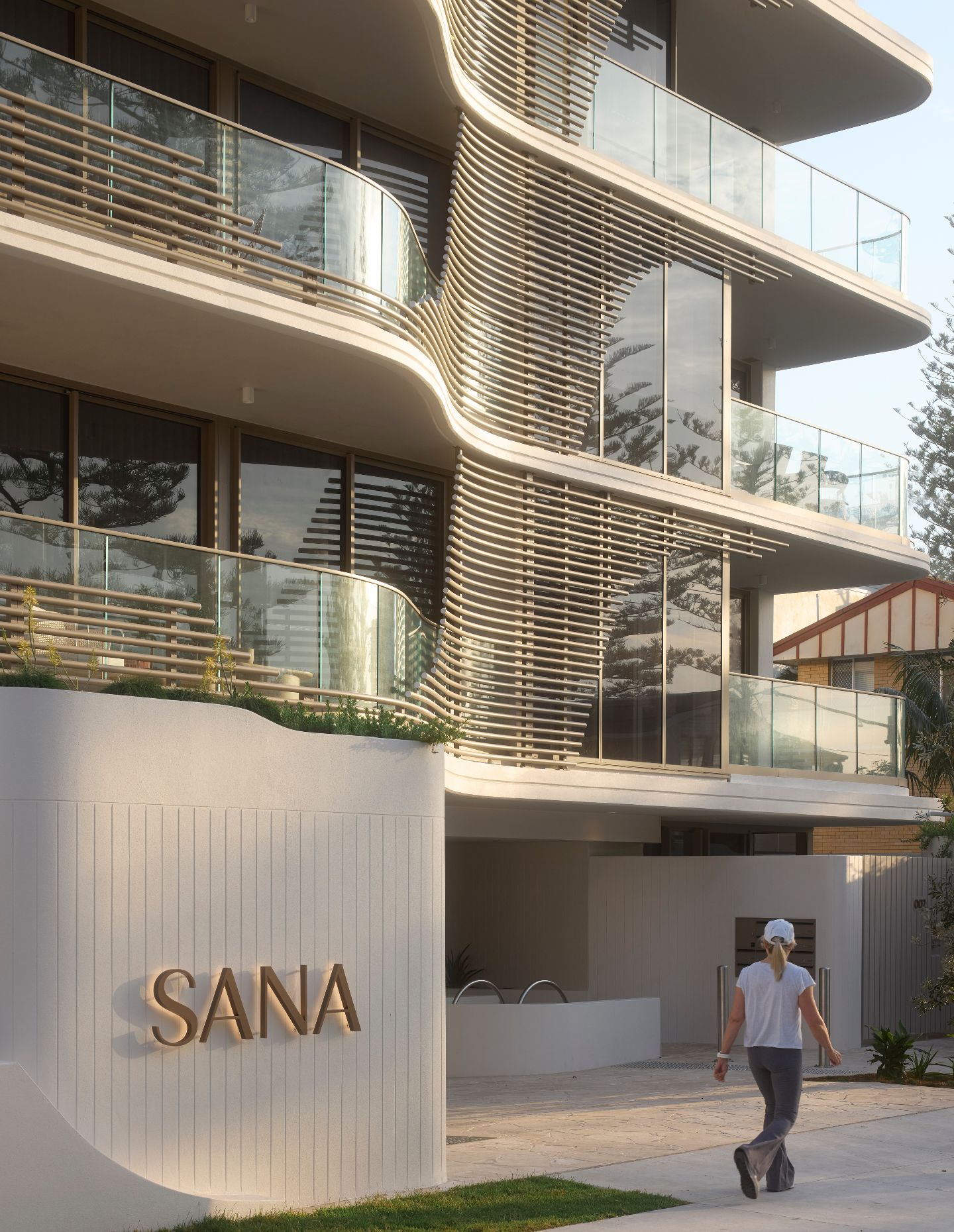
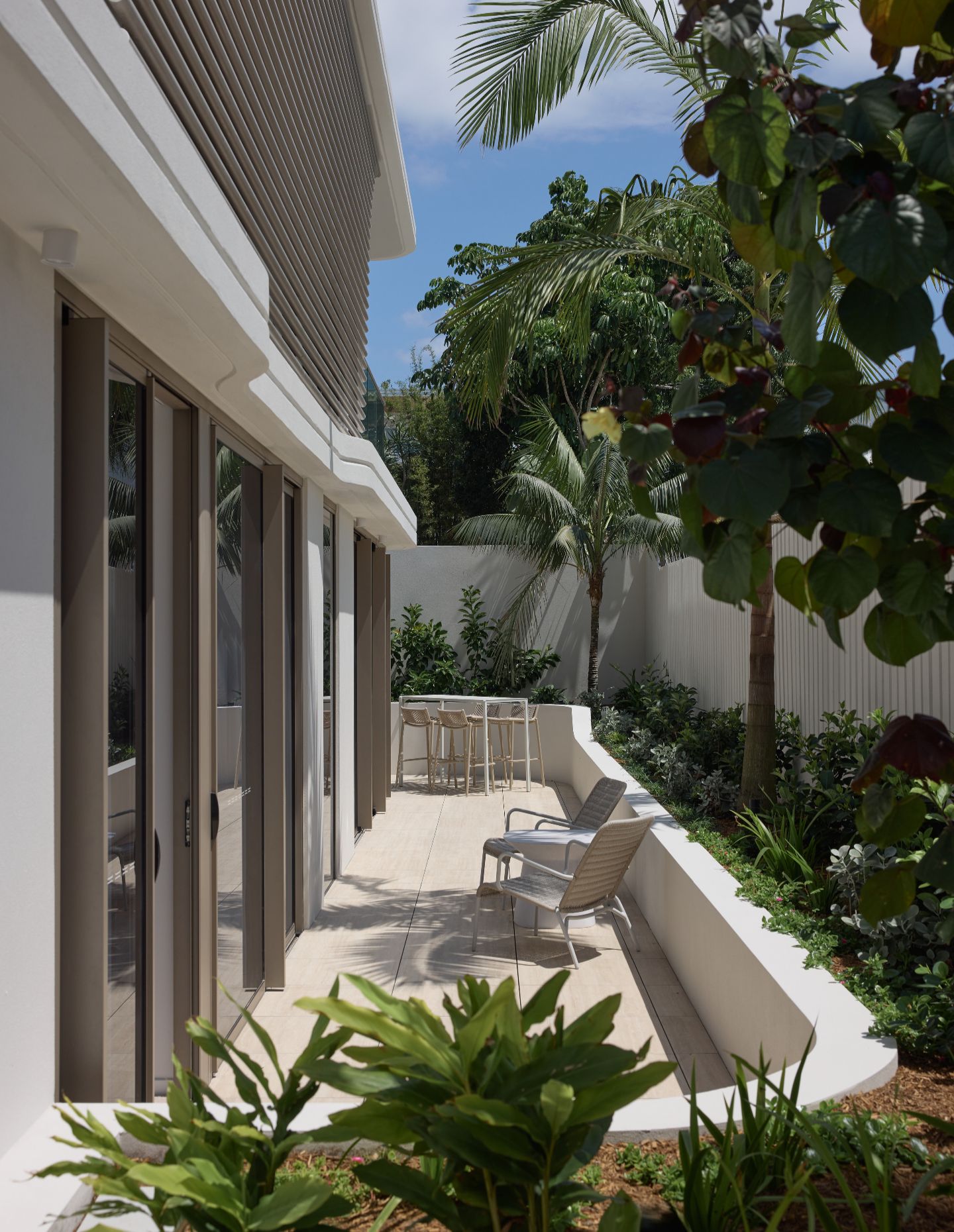
Timber-look aluminium battens move across the facade, creating a rhythm of shadow that changes throughout the day. The palette — rendered masonry and warm bronze aluminium — is deliberately restrained. It’s intended to feel coastal in a grounded way, rather than stylised or imported.
The building itself reads as layered rather than flat, echoing that threshold between suburb and shoreline.
Related: Bringing the harbour inside
In a project so close to the beach, how did you balance openness and outlook with privacy and a sense of retreat?
That tension is central to coastal living. Full-height glazing creates connection to light and landscape, but without mediation it compromises privacy.
Here, the batten screen does multiple jobs: filtering sunlight, softening views from the street and creating a sense of enclosure without closing the building off. Internally, living spaces extend onto balconies conceived as outdoor rooms — spaces that are actually used, rather than appended.
The result is a building that feels open, but not exposed.
The apartments are conceived as long-term homes rather than transient investments — what design decisions support that shift?
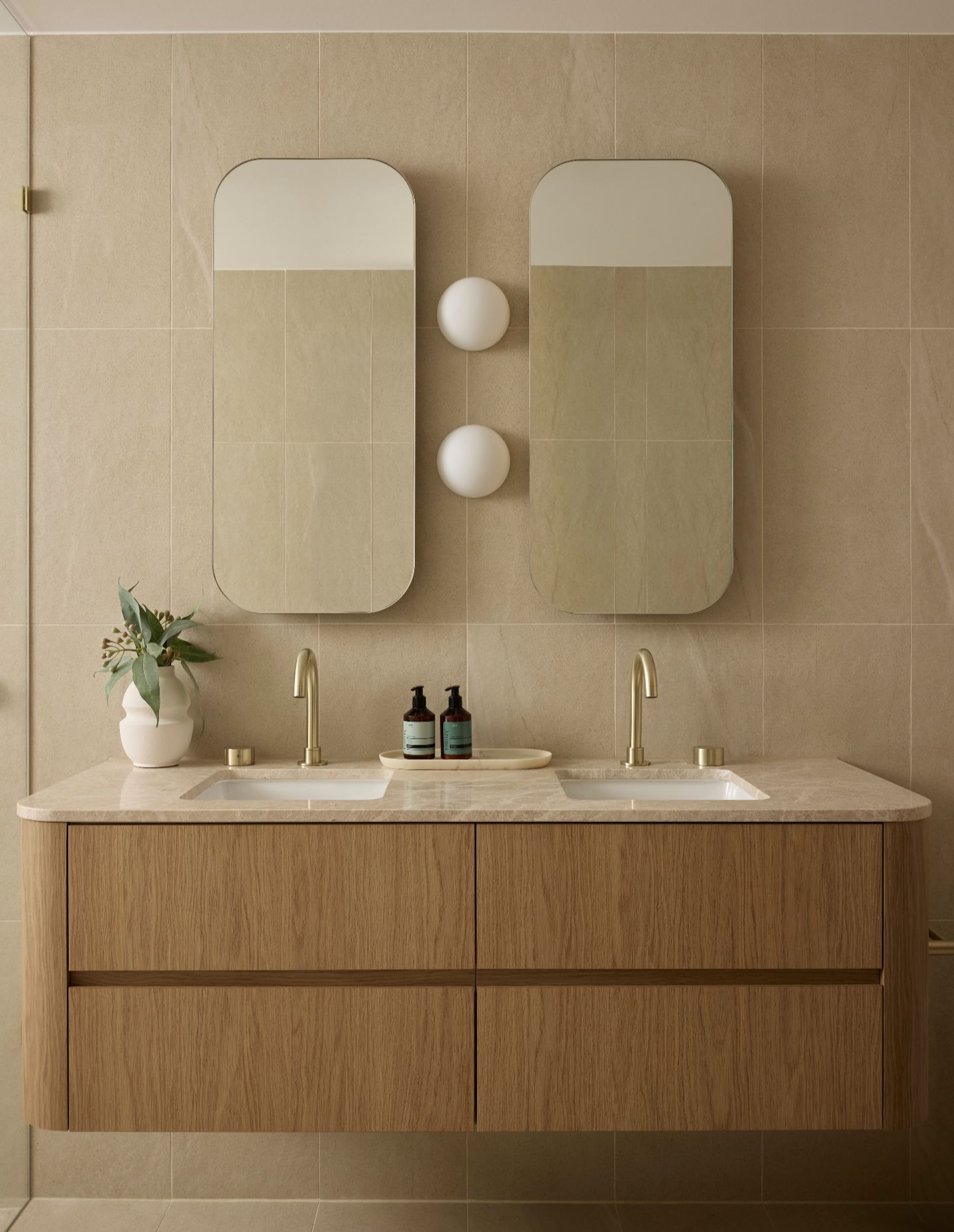
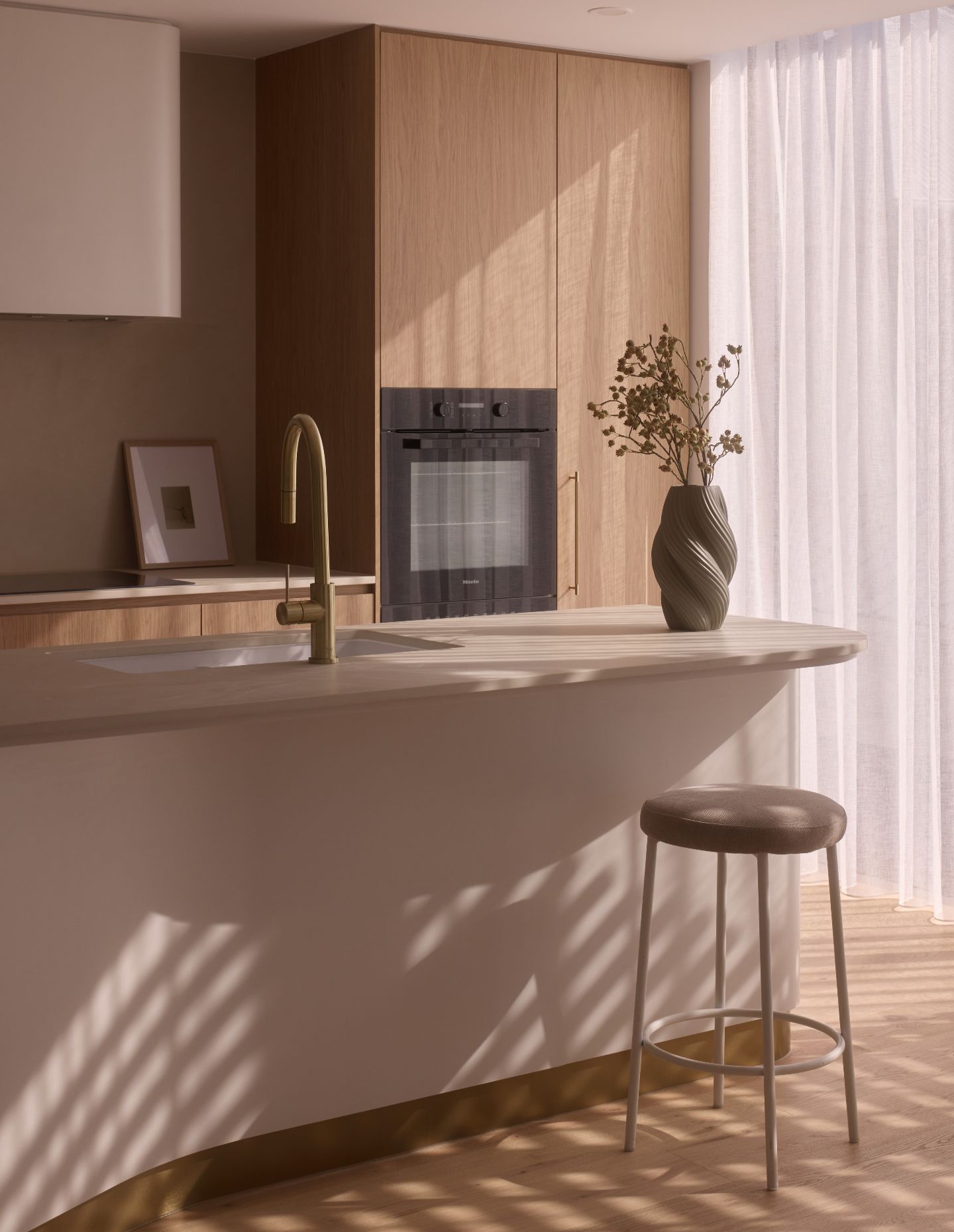
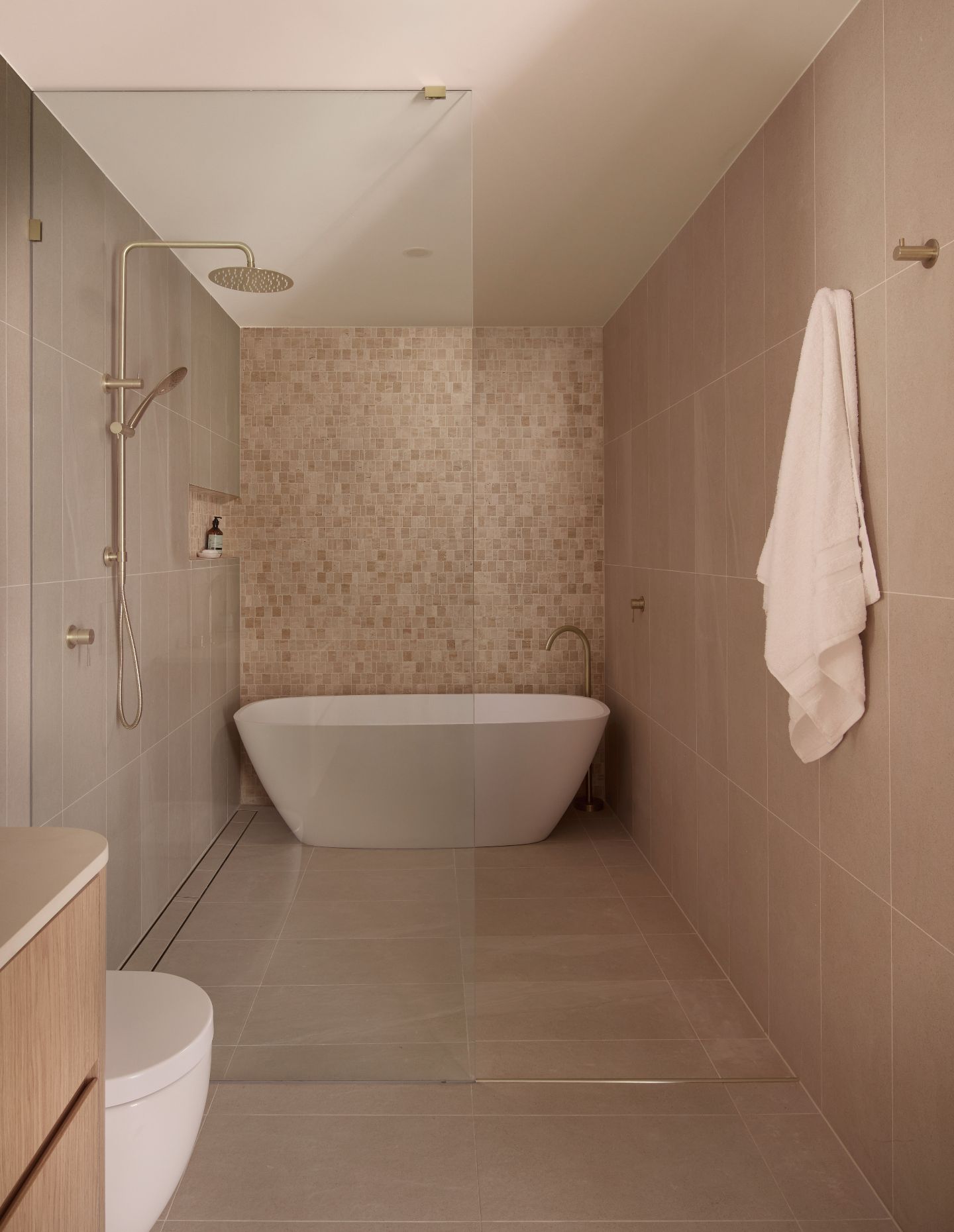
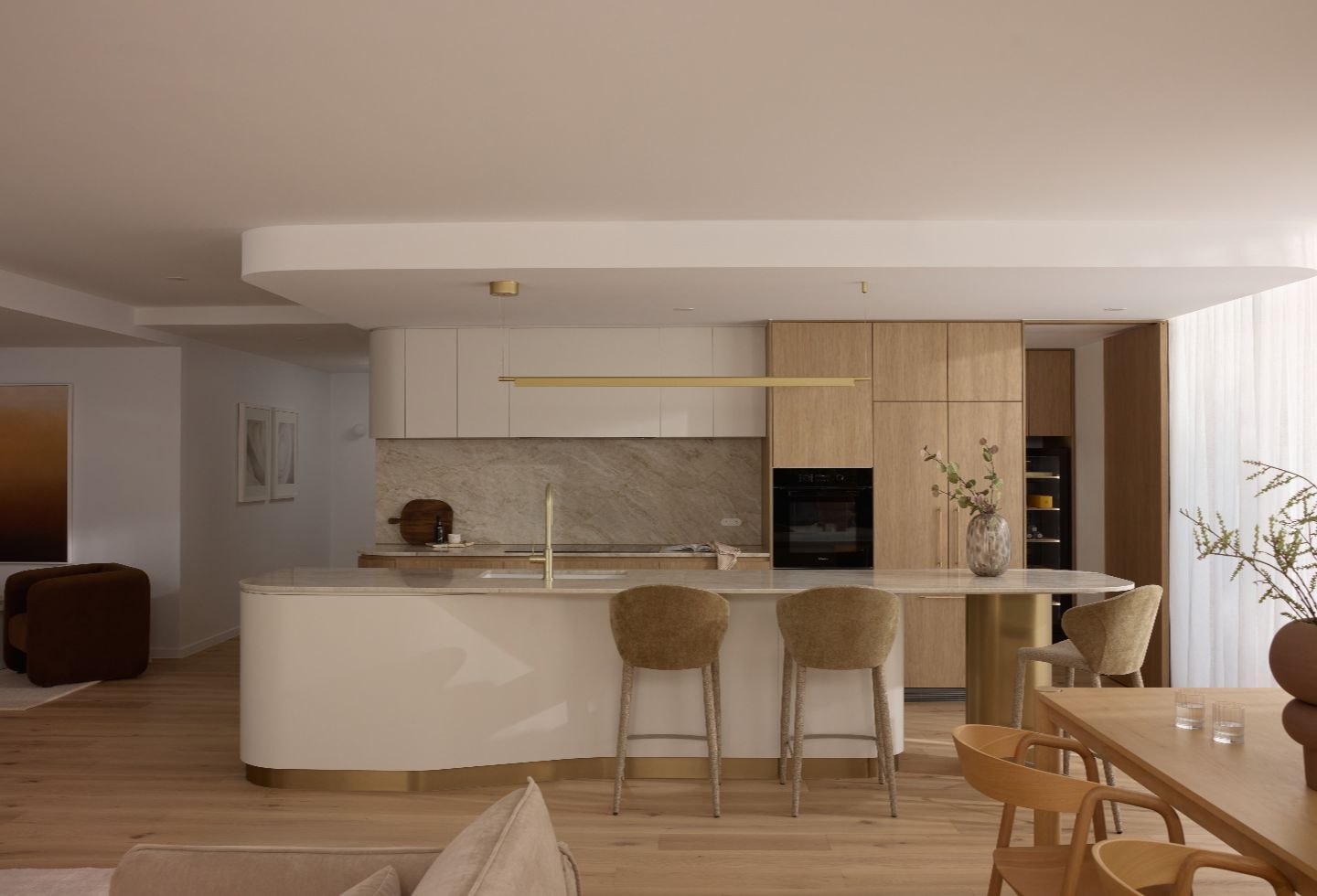
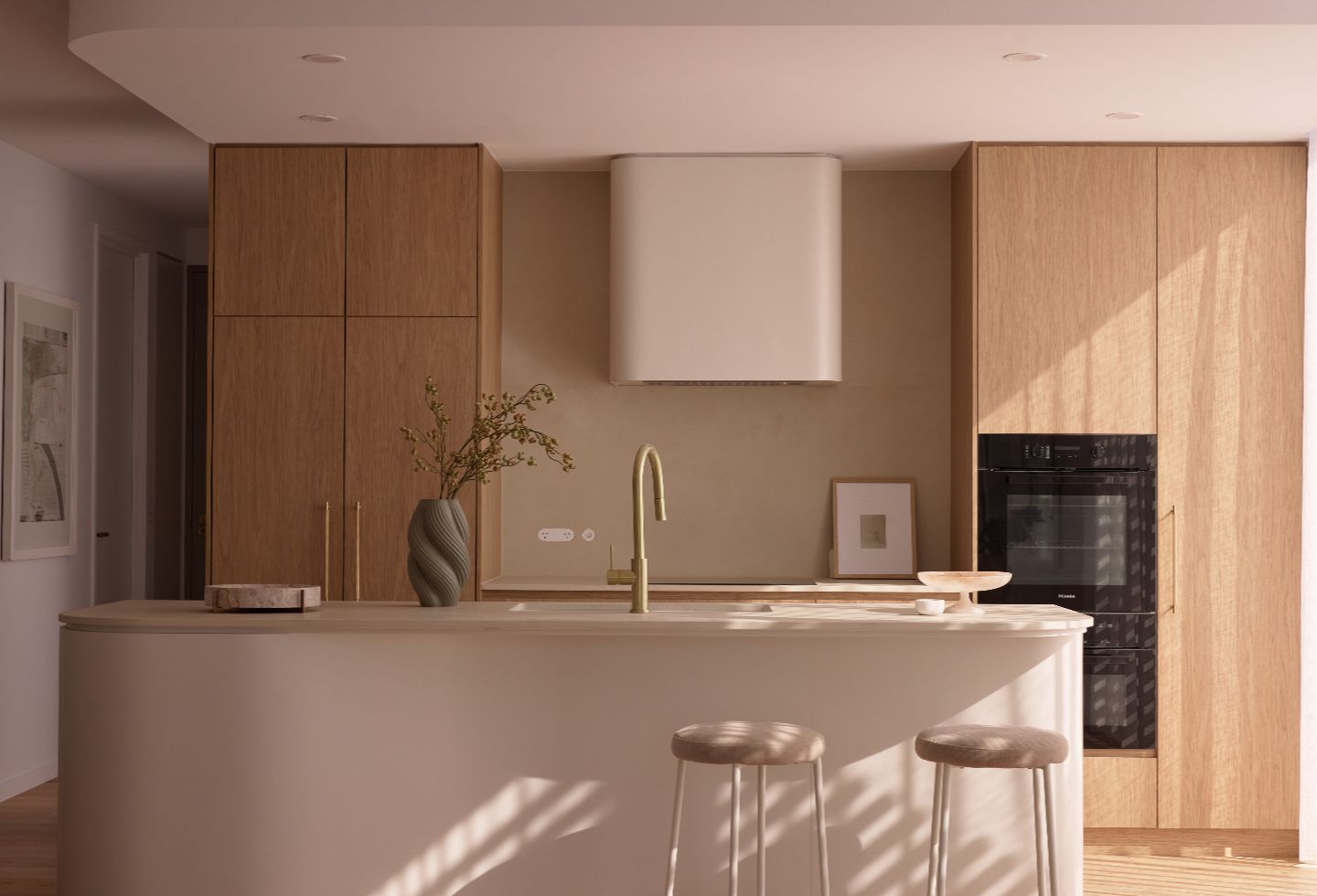
It starts with fundamentals: generous kitchens, proper storage, durable finishes. But there are also less obvious moves.
Eliminating internal corridors, for instance, allows apartments to open directly from the lift. It improves ventilation, but also changes the experience of arrival — from shared circulation to something more domestic.
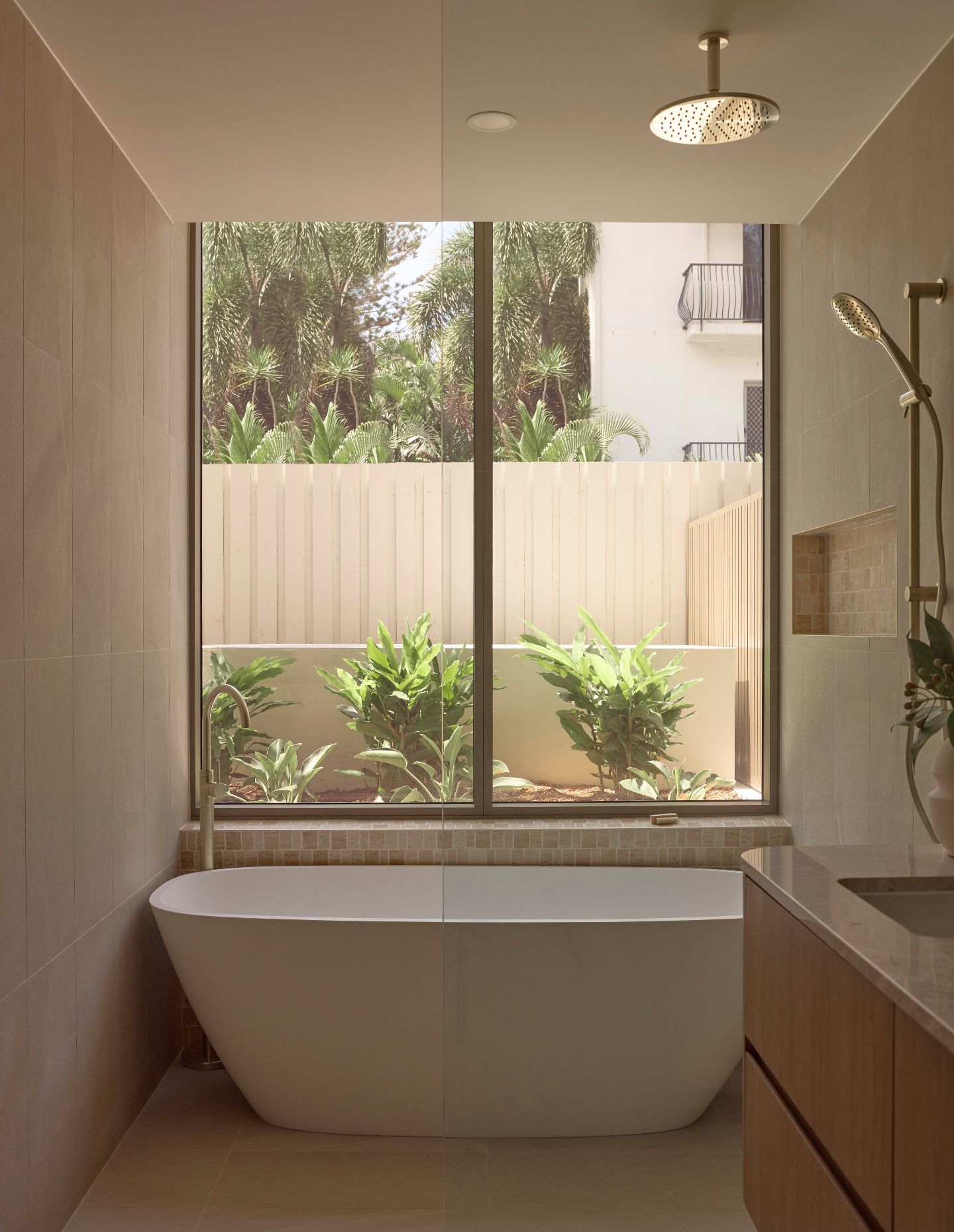
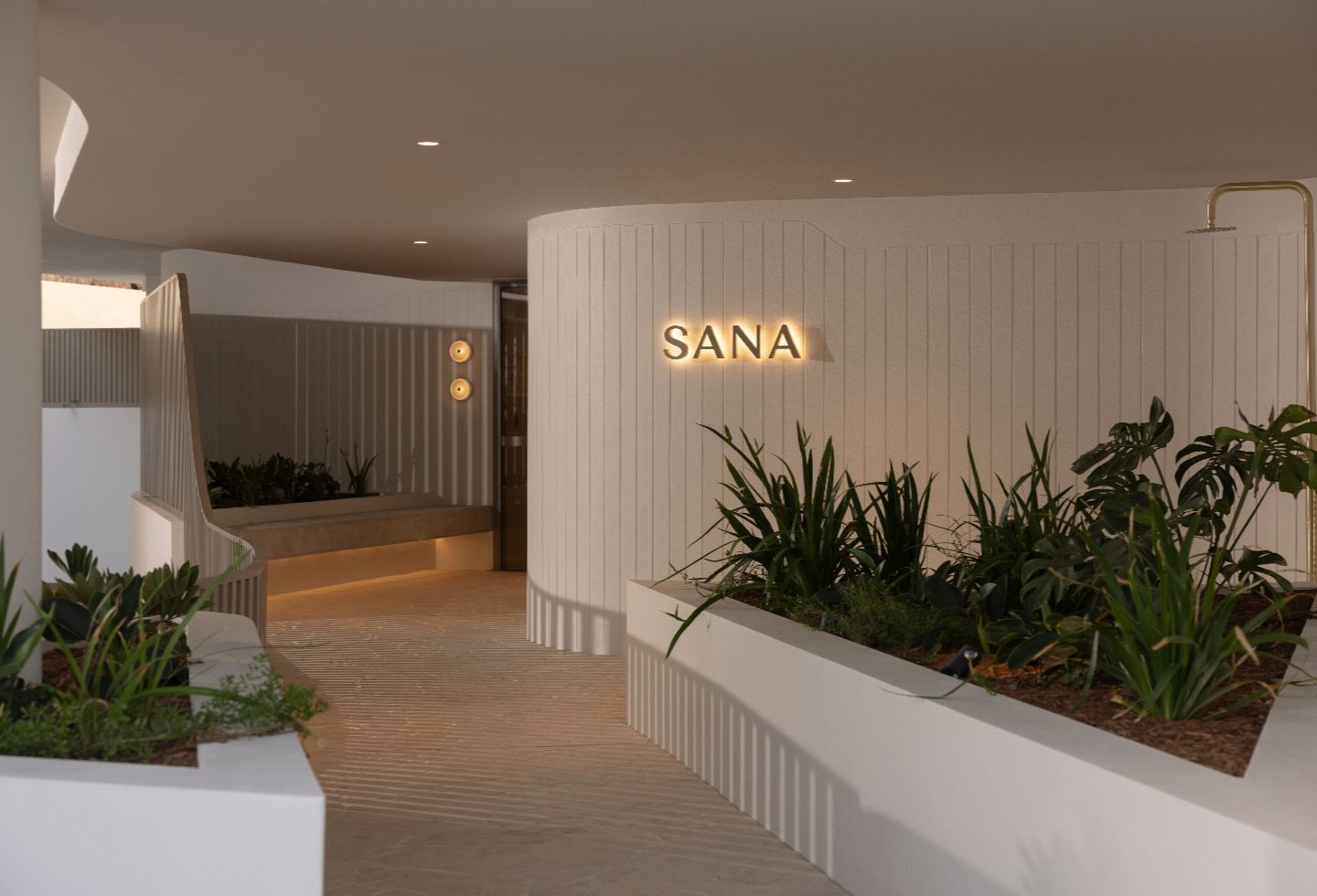
Then there are the smaller, practical decisions: ground-floor showers and rinse points for returning from the beach, layouts that prioritise cross-ventilation, and a mix of apartment sizes that allows downsizers to remain in the area without compromise.
It’s about designing for how people actually live, not just how they inspect.
How did Queensland’s sub-tropical climate shape the project?
Climate is both opportunity and constraint here. Orientation, shading and airflow aren’t secondary considerations — they’re fundamental.
The east–west orientation was leveraged to maximise natural light while managing heat gain. The screening operates as a genuine solar filter, reducing reliance on mechanical cooling. Cross-ventilation was prioritised by working the floor plates hard and removing corridors, allowing air to move freely through each apartment.
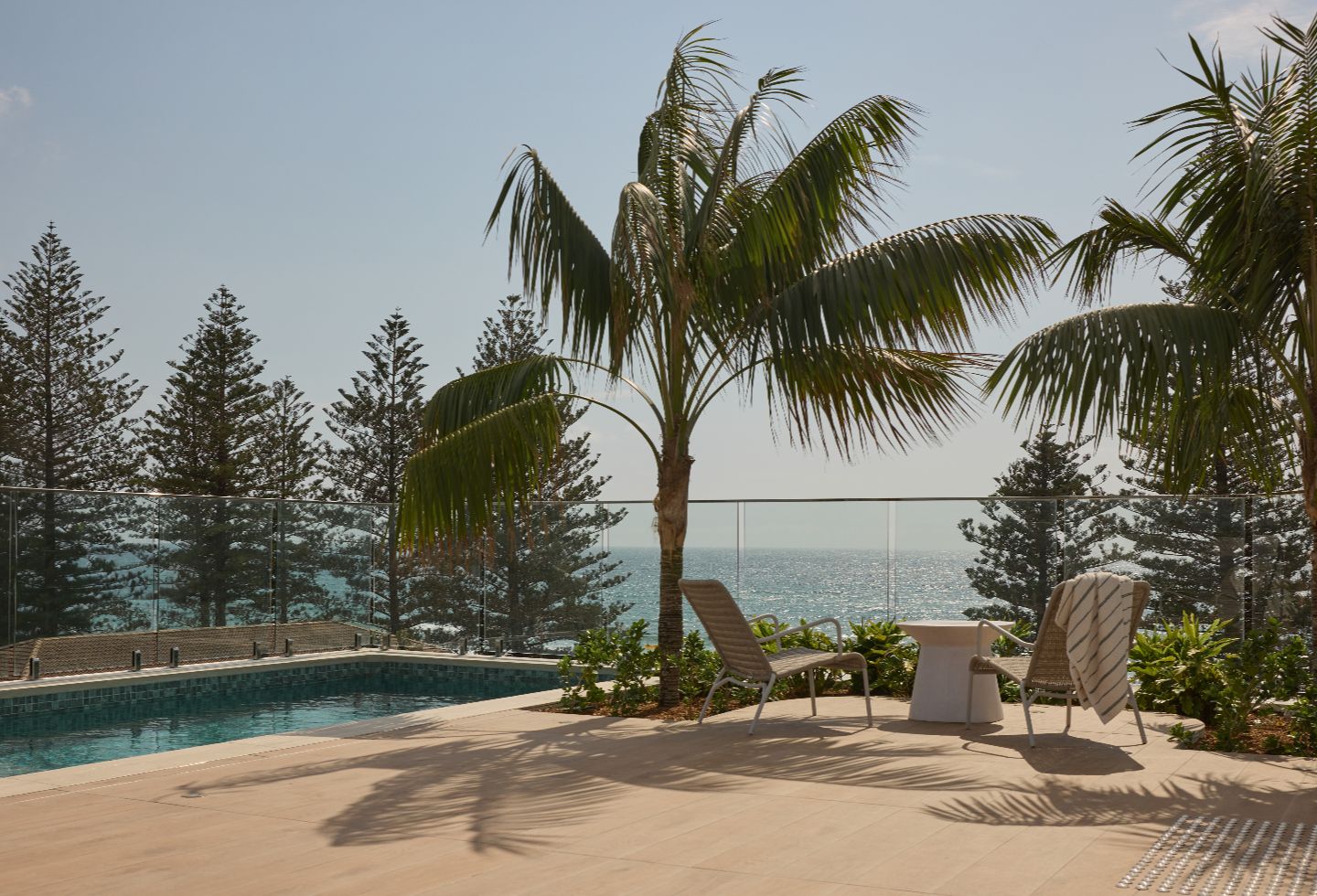
At ground level, a planted undercroft creates a cooler, more porous threshold — a quiet counterpoint to the sealed lobbies typical of larger developments.
Do you see this “human-scale” model as something that can be applied more broadly across the Gold Coast?
Yes — and SANA is partly a demonstration of that.
From a commercial perspective, the numbers are strong. But more importantly, the demand is consistent. Buyers are actively seeking well-resolved, mid-scale developments that offer both density and liveability.
Internationally, the most resilient urban neighbourhoods tend to maintain a human scale, even as they densify. That’s not just a design position — it’s borne out in how people choose to live.
For this model to become more common, it requires alignment: thoughtful design, clients who hold the brief, and planning frameworks that value neighbourhood character. In places like Miami, those conditions already exist. It’s less about possibility, and more about appetite.