
In Elsternwick, a familiar Victorian frontage gives little away. Orrong, reimagined by Studio Cobe, begins with what director Kate Corke describes as “a subtle disruption” — a project shaped by “material continuity” and “a softer spatial language that feels more continuous and connected,” balancing heritage character with a calm, enduring interior.
The original home offered presence but little connection. “The original plan was quite rigid, dark and compartmentalised,” Corke explains. Rather than replicate that condition, the project became an exercise in recalibration — retaining the street-facing form while fundamentally reshaping how the house is experienced. From the outset, the intention was to move away from enclosure toward something more fluid, where “curves reduce hard thresholds and help draw northern light deeper into the plan.”
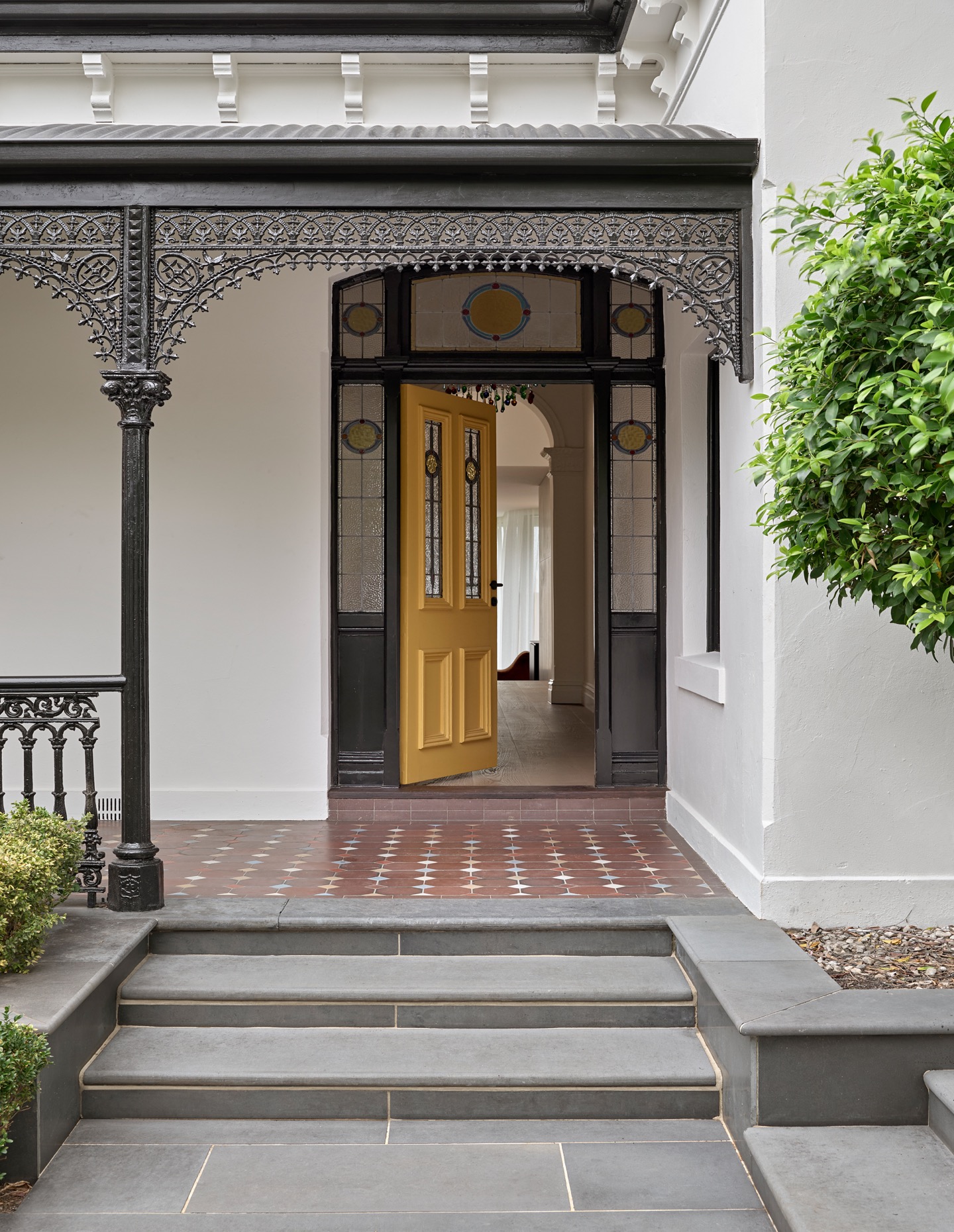
That shift is signalled early. The bright yellow front door acts as “a clear threshold,” Corke says, where “the Victorian exterior remains restrained and familiar, while the door signals a shift in tone.” It is “a subtle disruption,” but one that establishes the project’s central idea: that contrast can be quiet, and transformation can unfold gradually.
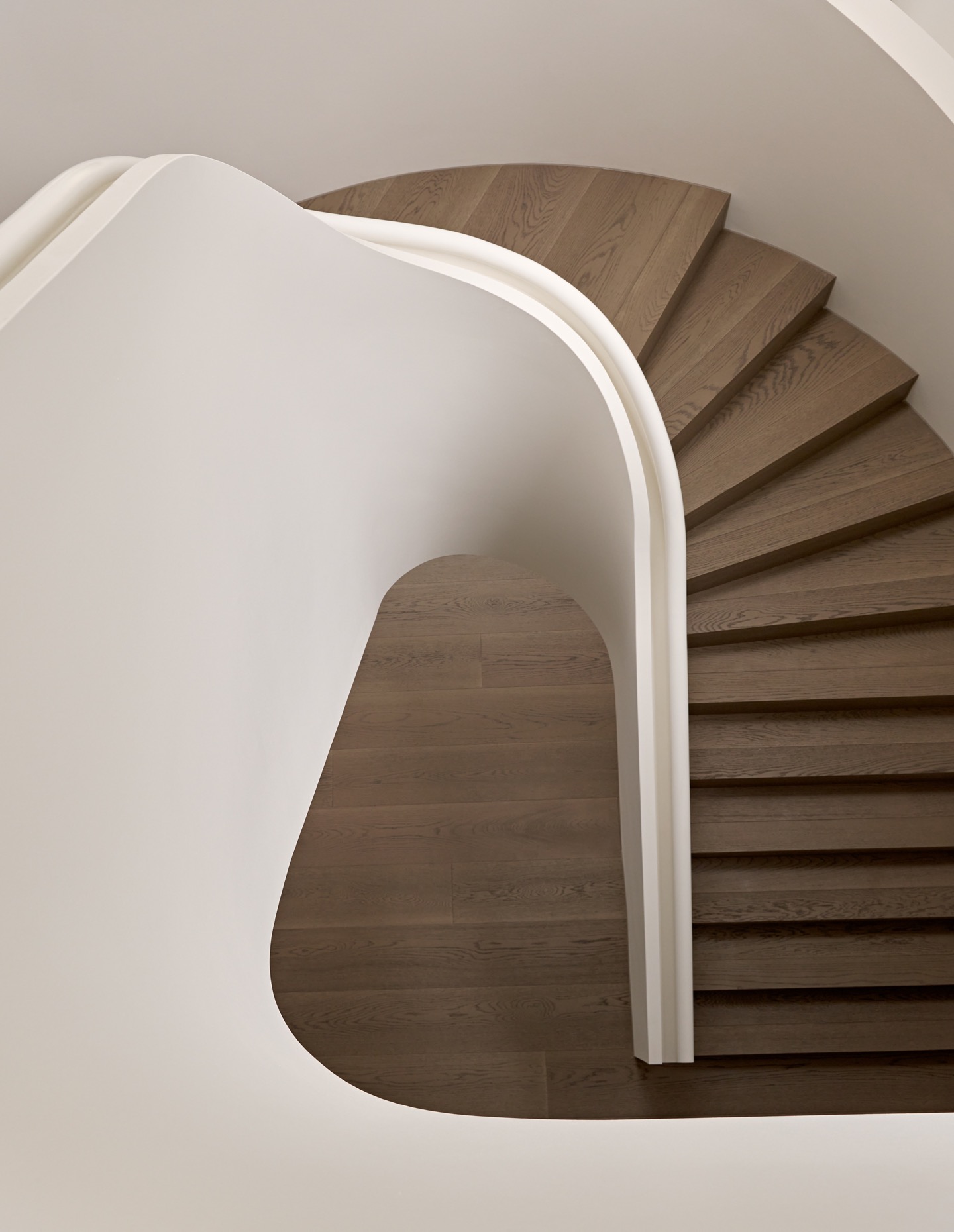
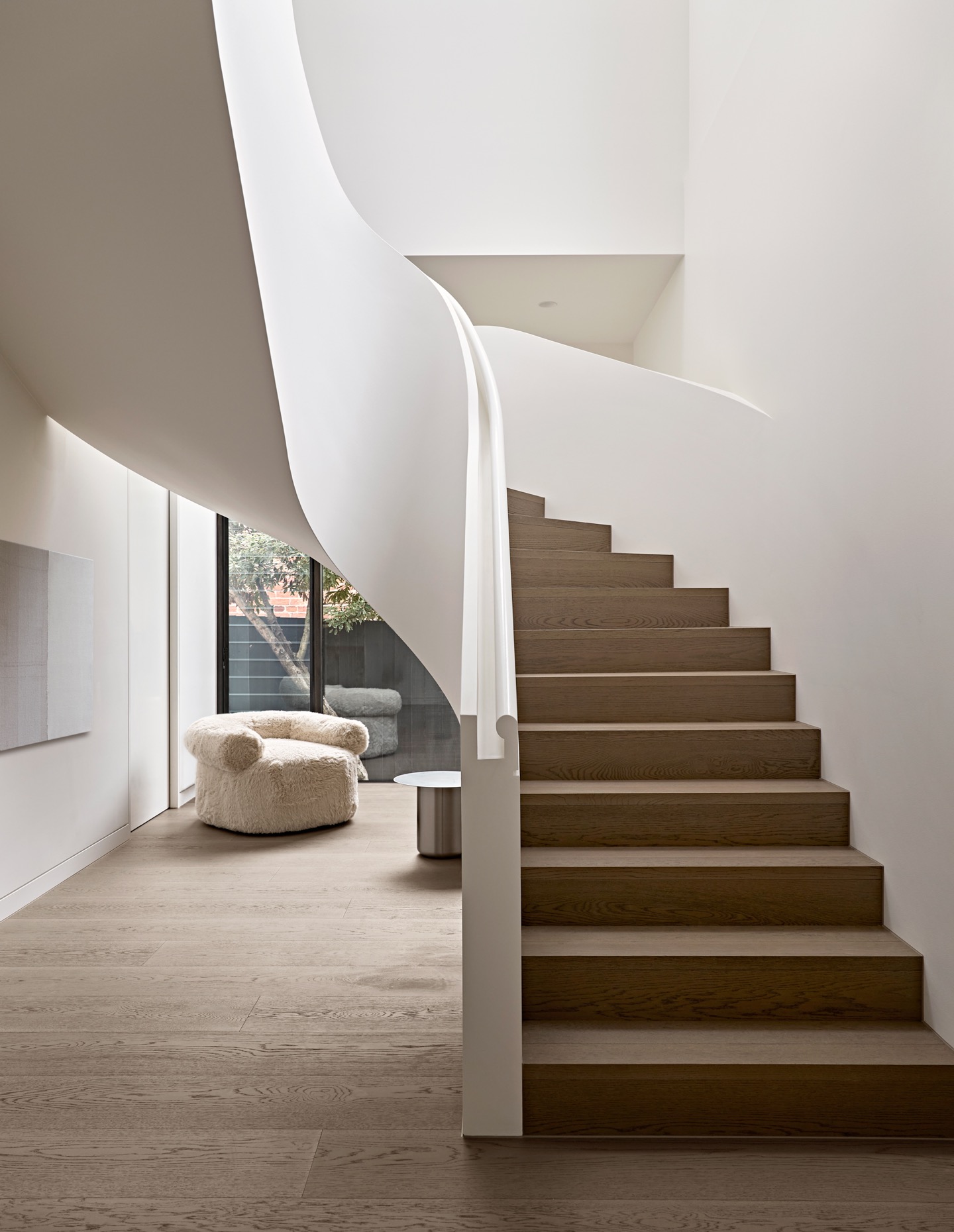
Inside, the house begins to open. A gallery-like void anchors the plan, organised around a sculptural spiral stair that resolves what Corke describes as “a tight and complex junction in the existing plan.” With “limited space to work with,” its form is “carefully controlled to anchor the space while meeting the functional demands of circulation, structure and light.” The result is both constraint and centrepiece.
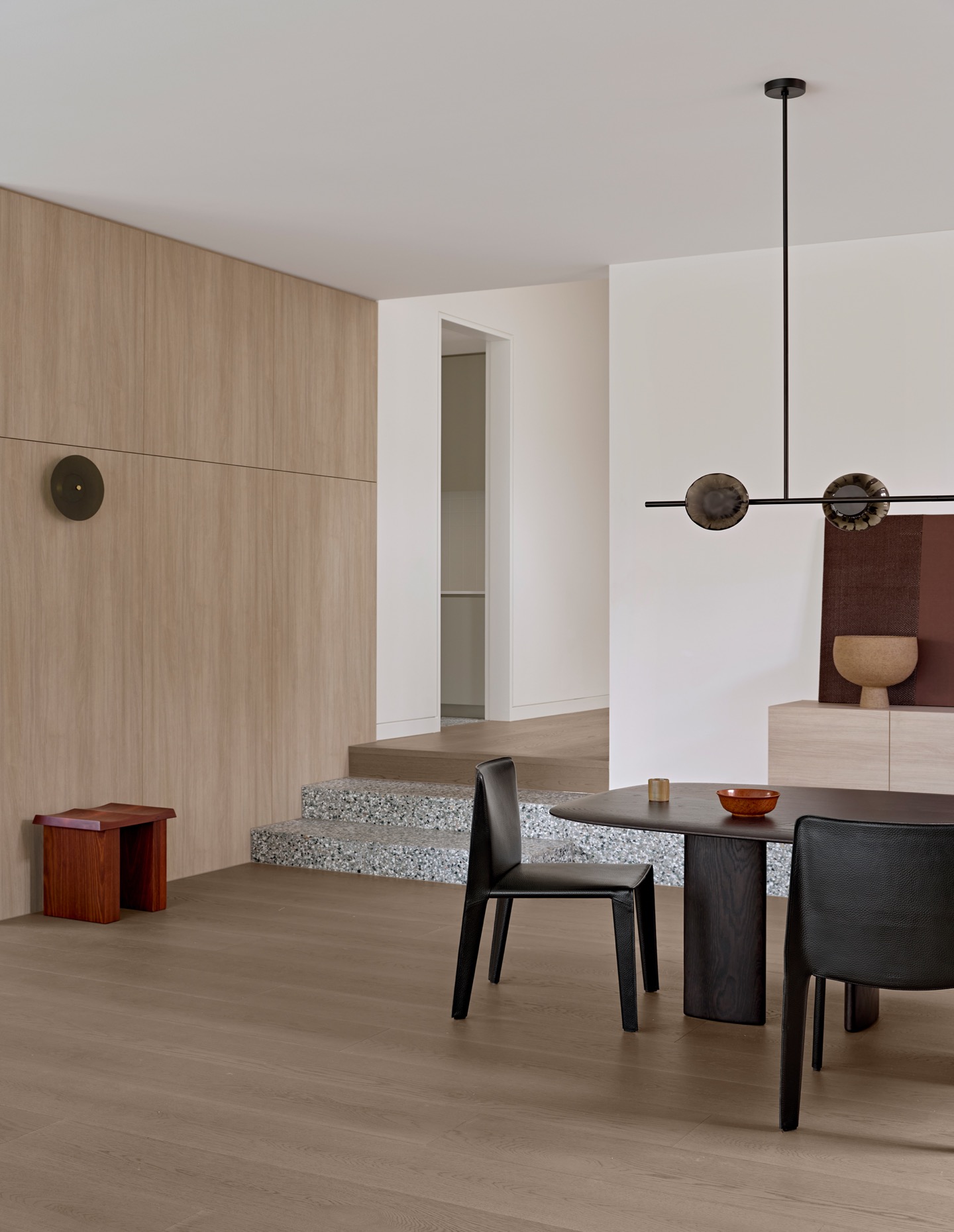
Movement through the home is deliberately choreographed. “The front remains contained, then the floor steps down and the space opens,” Corke says. “Light draws you forward, revealing views gradually rather than all at once.” This sense of procession gives Orrong a measured rhythm, where compression and release are used to heighten awareness of light, volume and landscape.
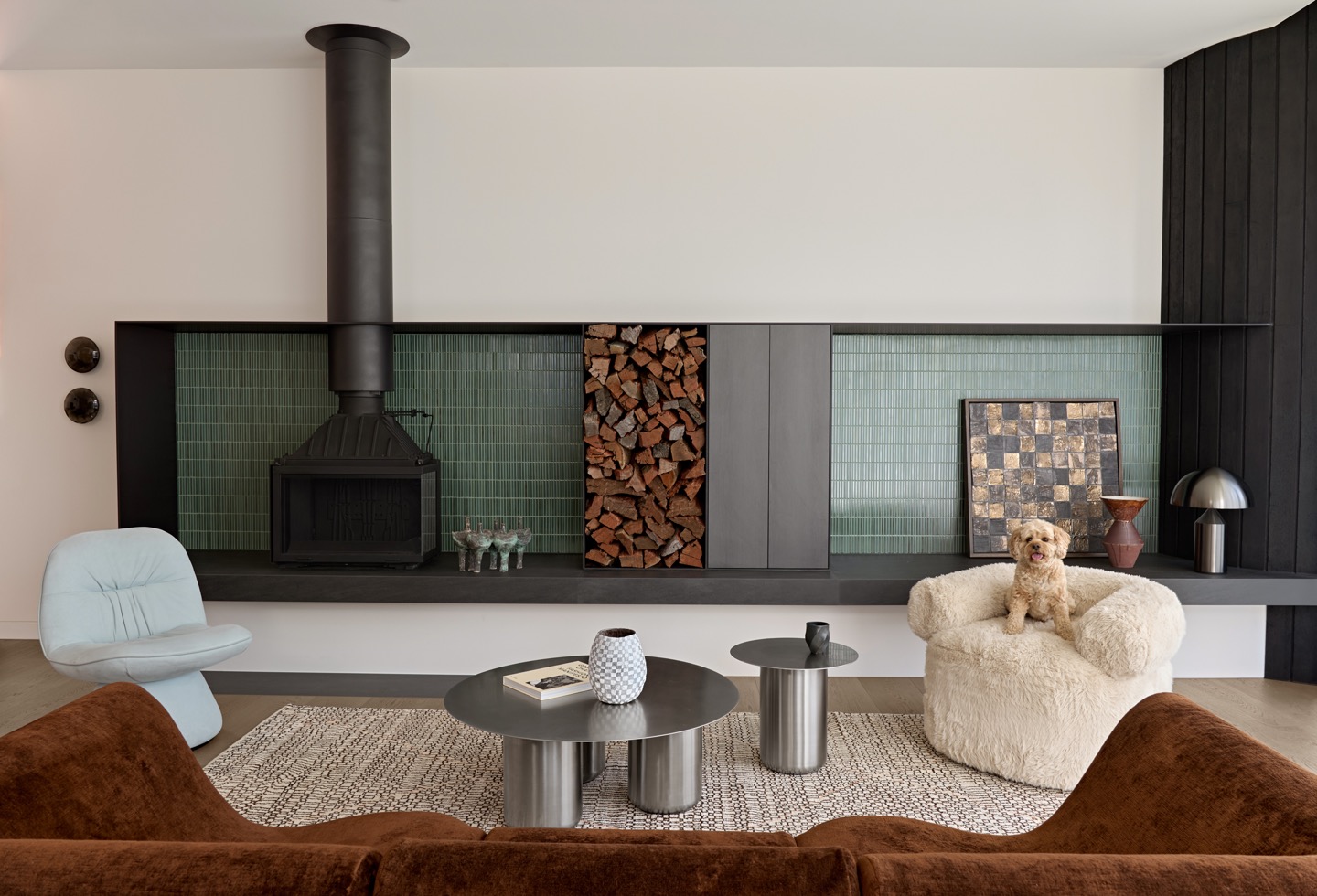
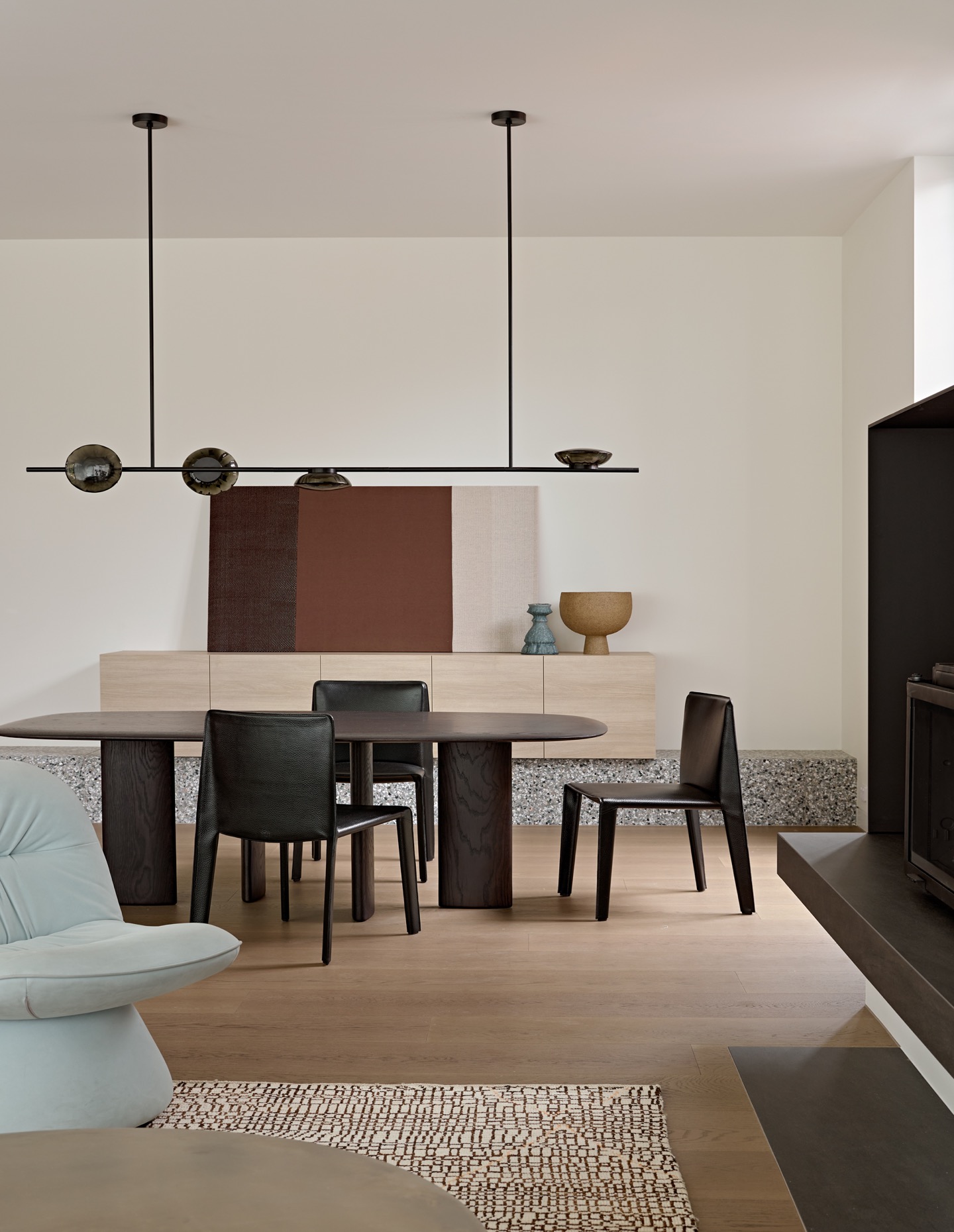
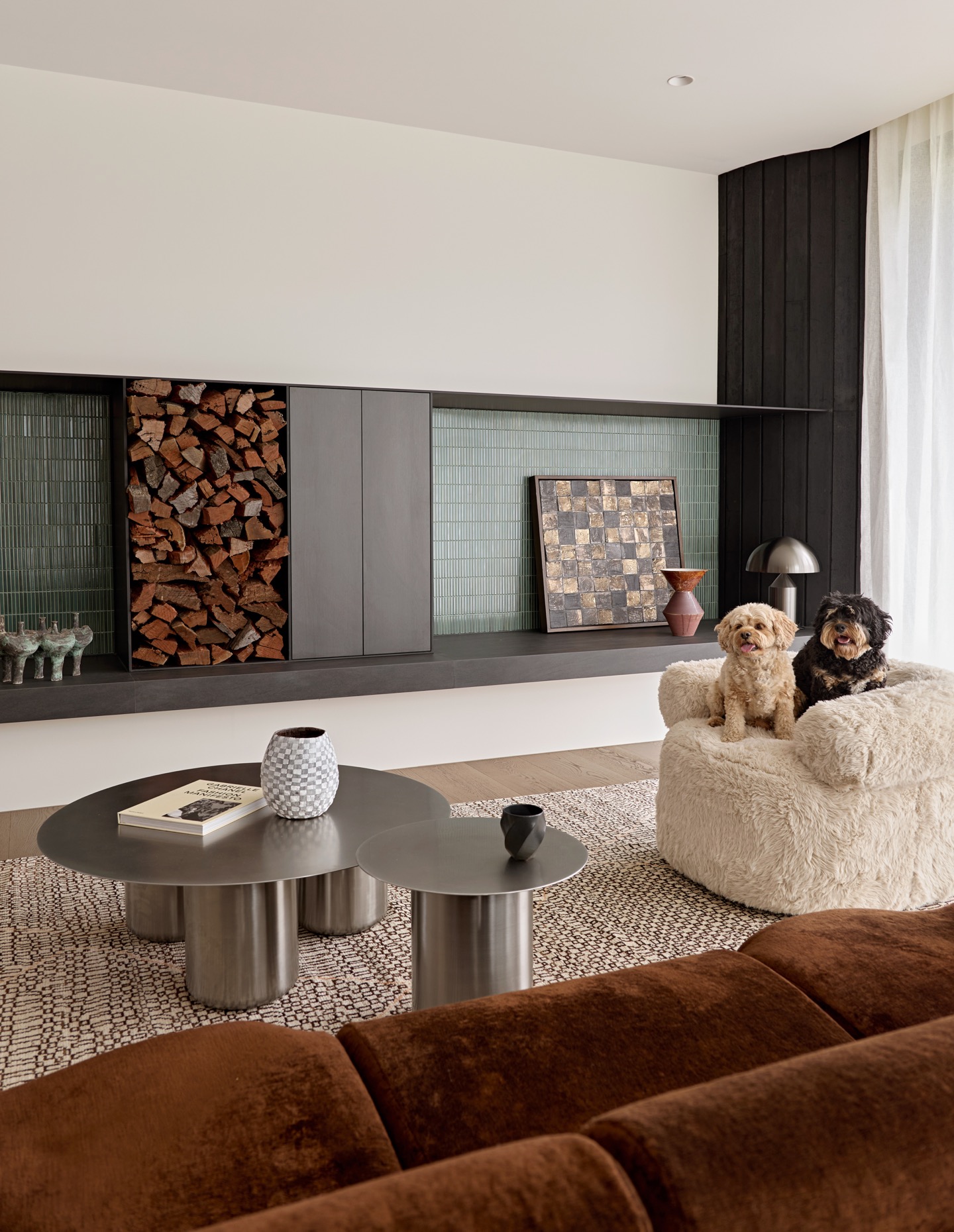
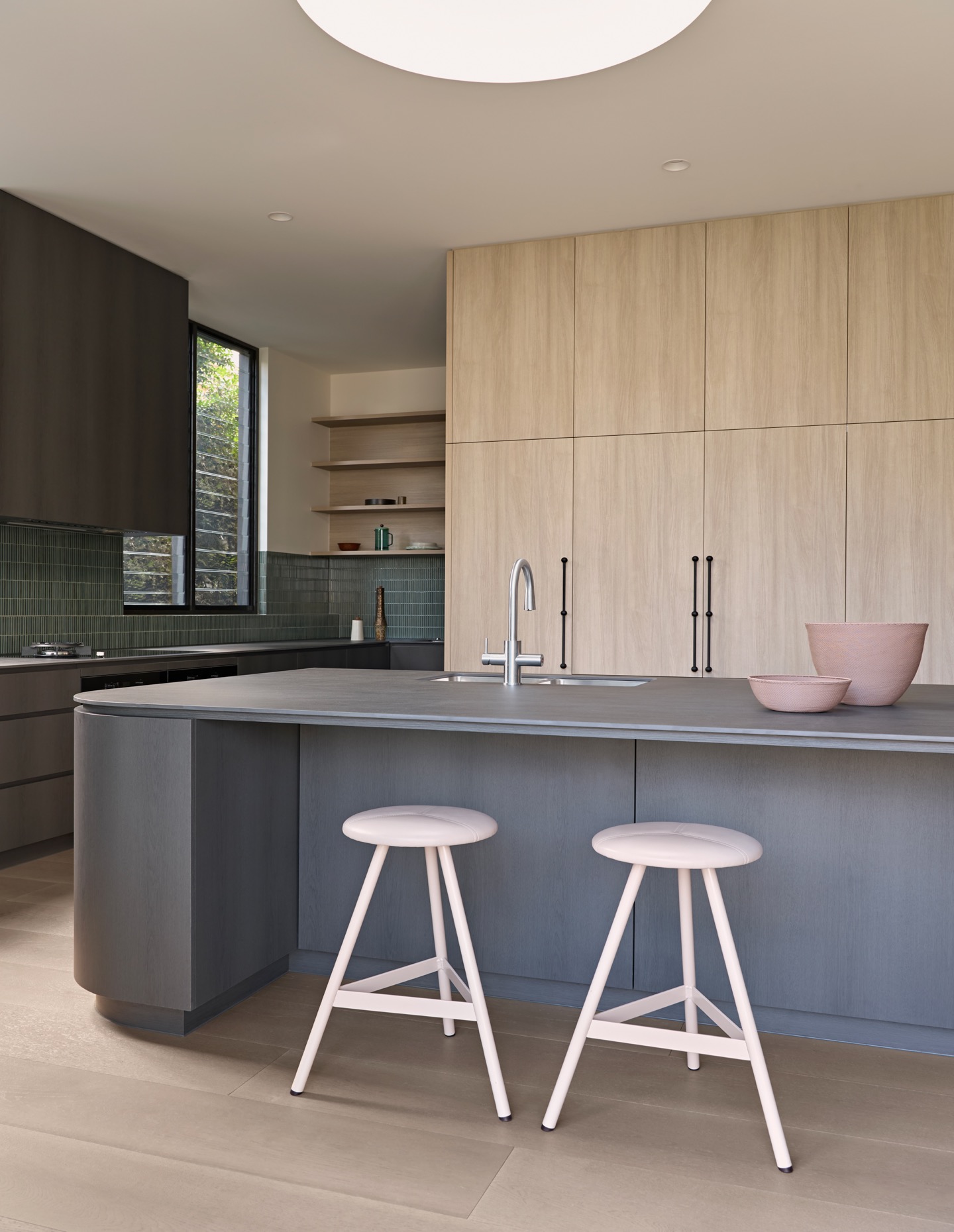
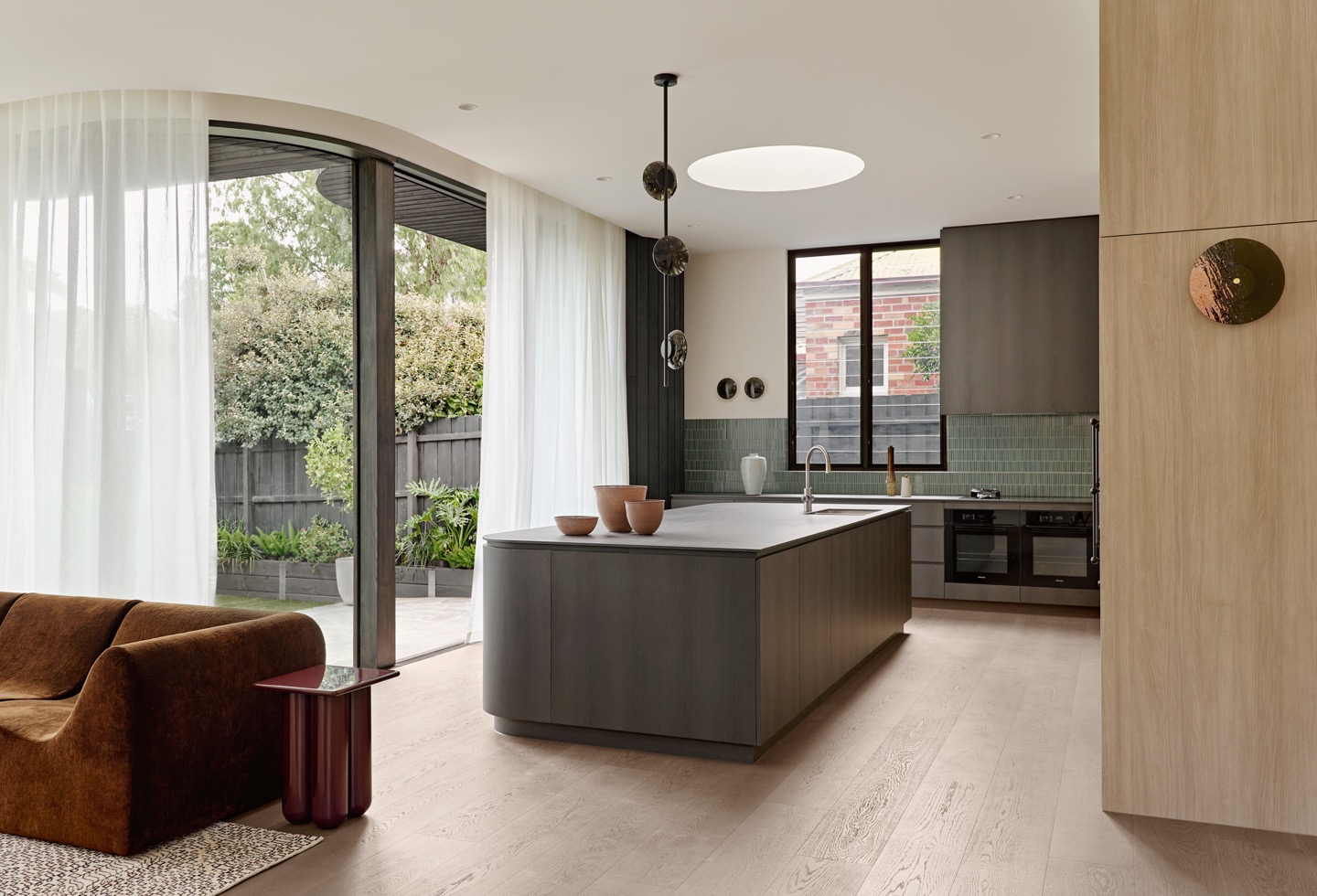
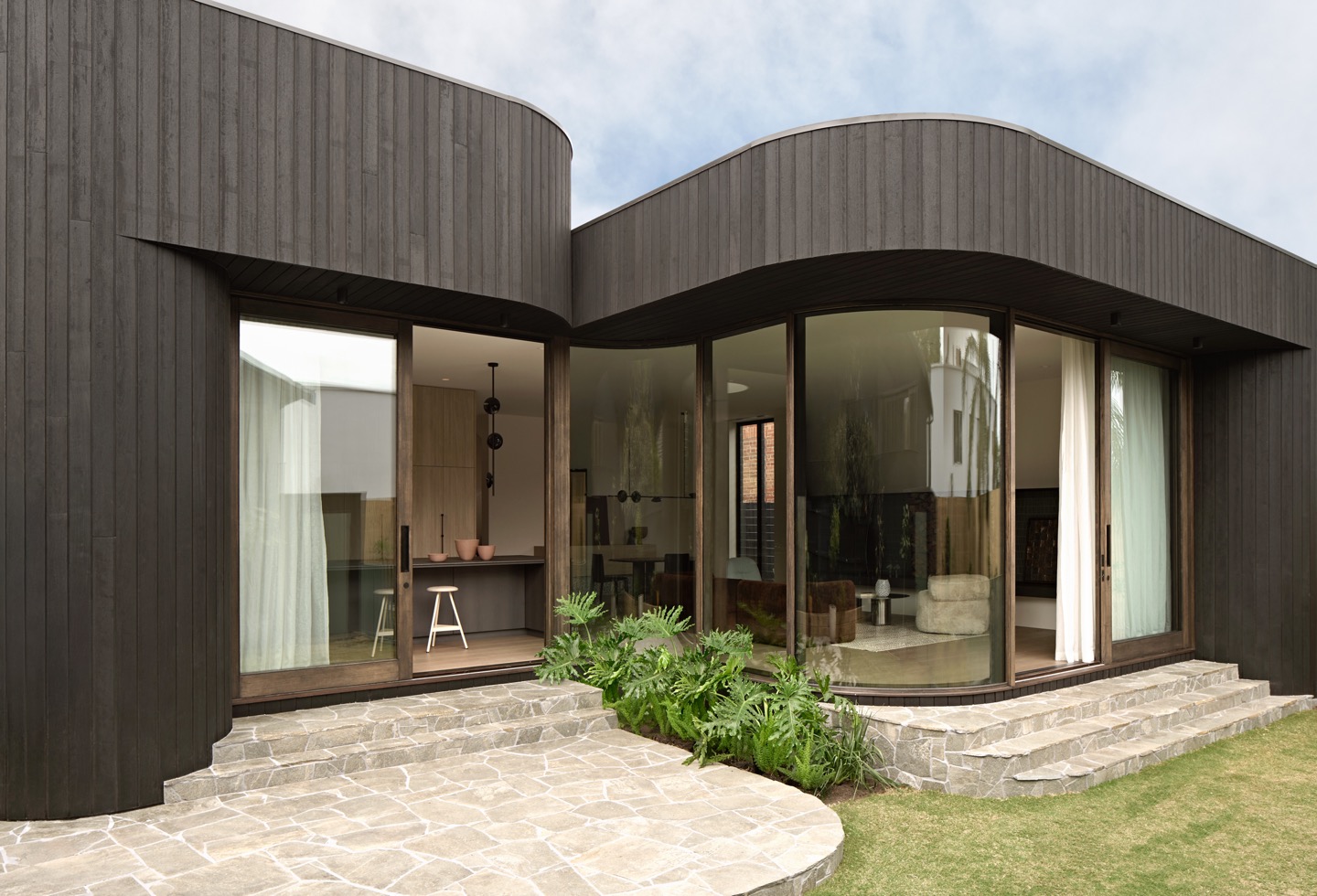
At the rear, the home settles into openness. Kitchen, dining and living areas unfold as a continuous family domain, shaped less by walls than by atmosphere. Here, Studio Cobe leans fully into what Corke describes as “a softer spatial language,” allowing spaces to feel “more continuous and connected.” Curved glazing dissolves the boundary to the garden, reinforcing a sense of permeability while maintaining a grounded, domestic scale.
Related: A dialogue between eras
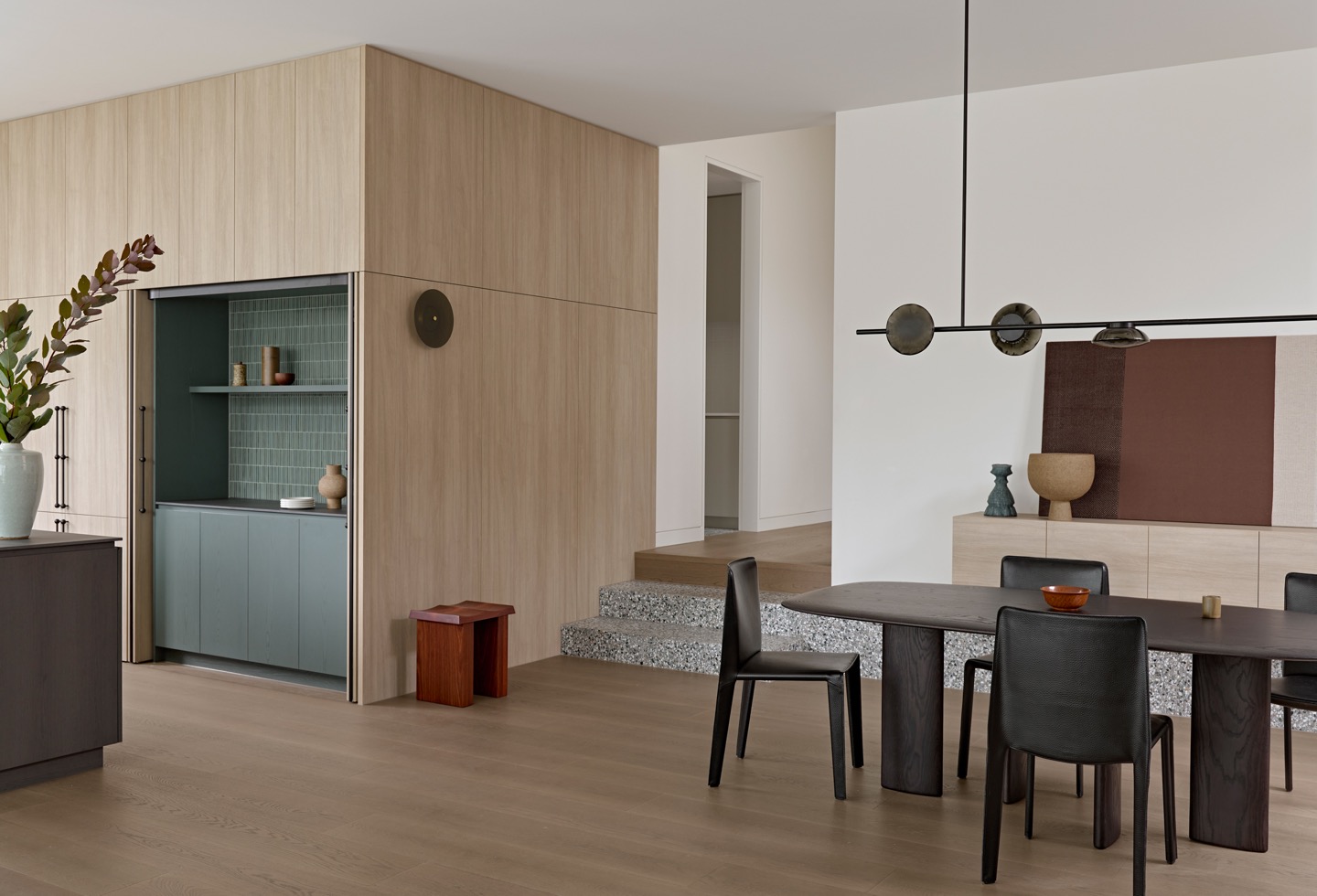
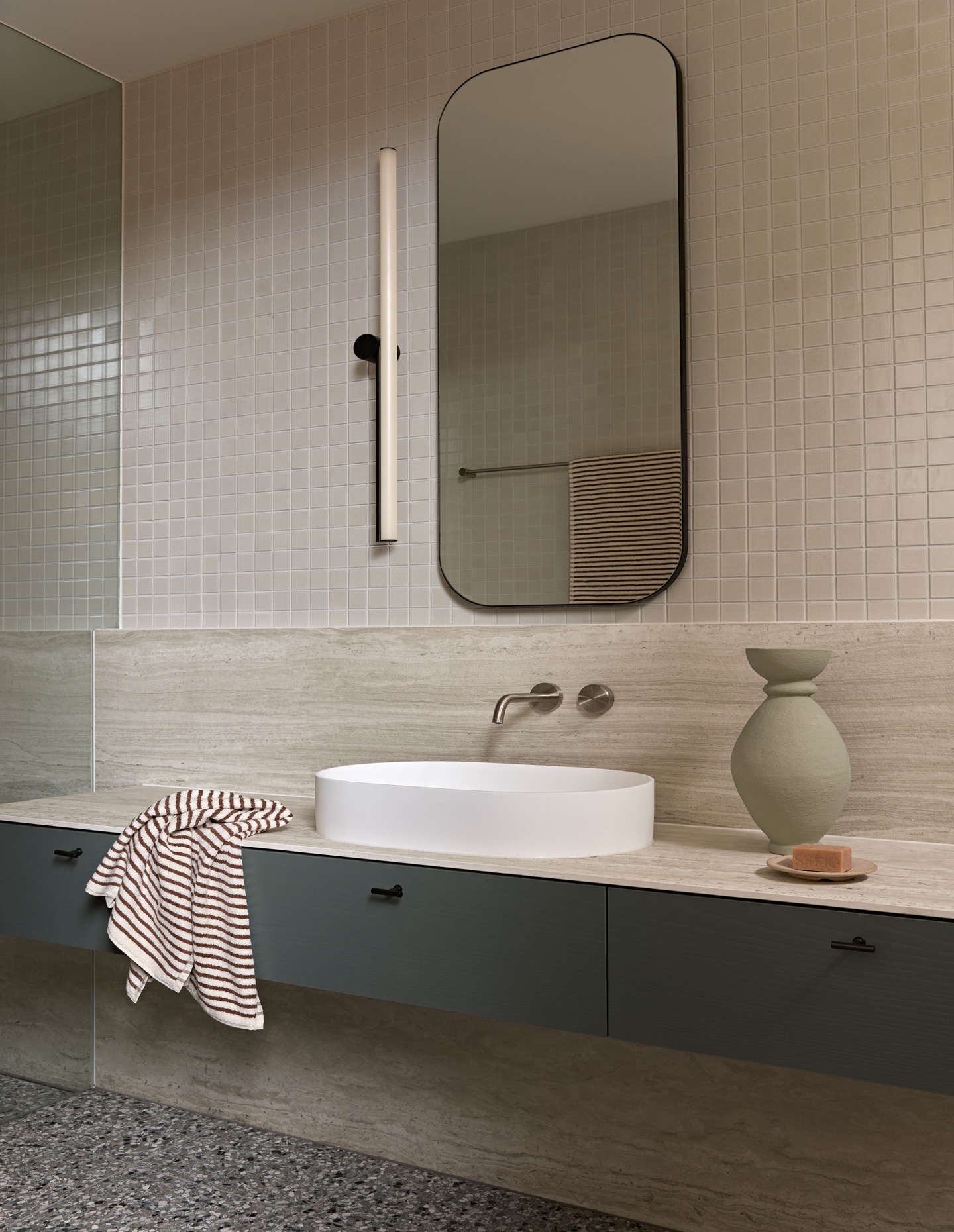
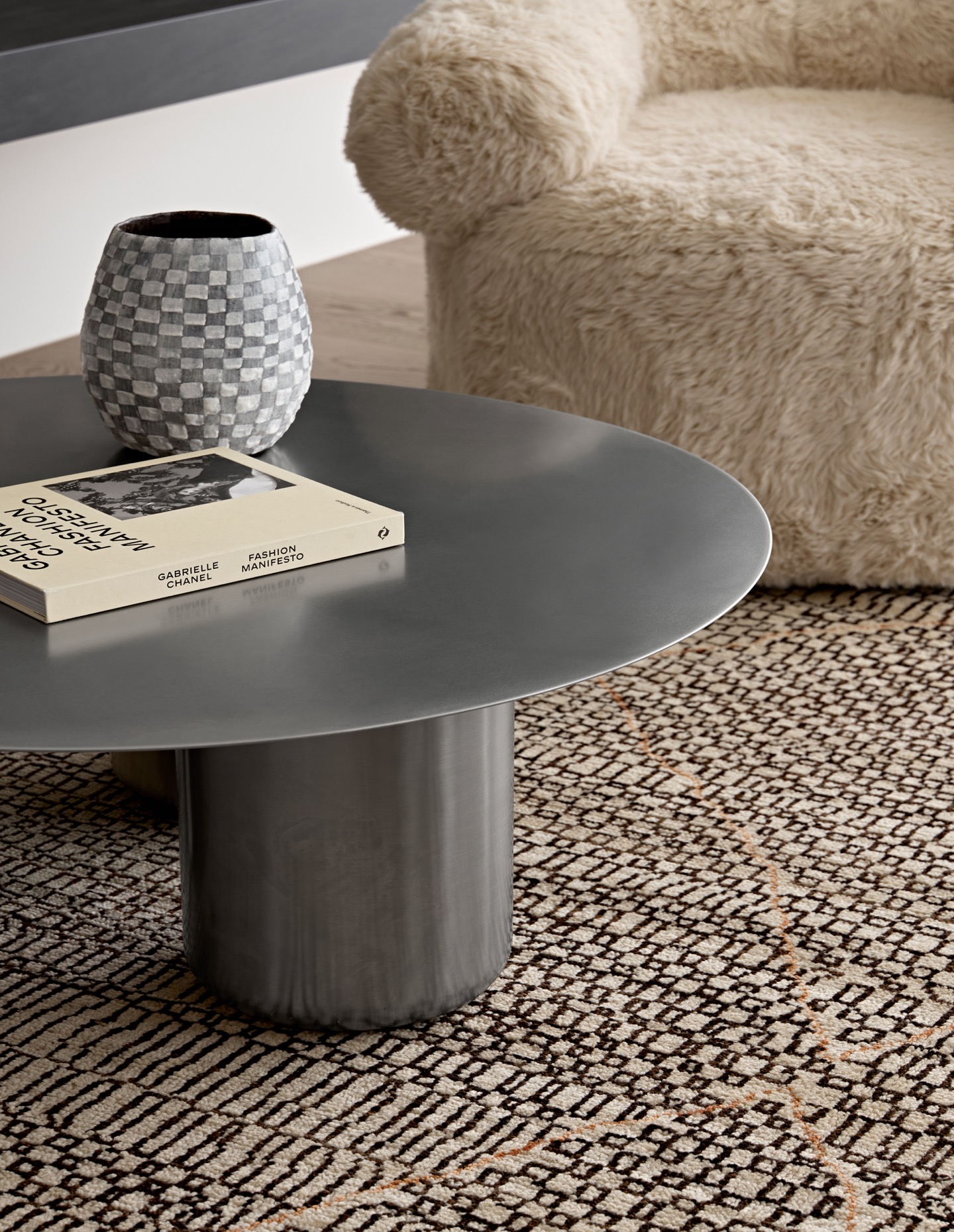
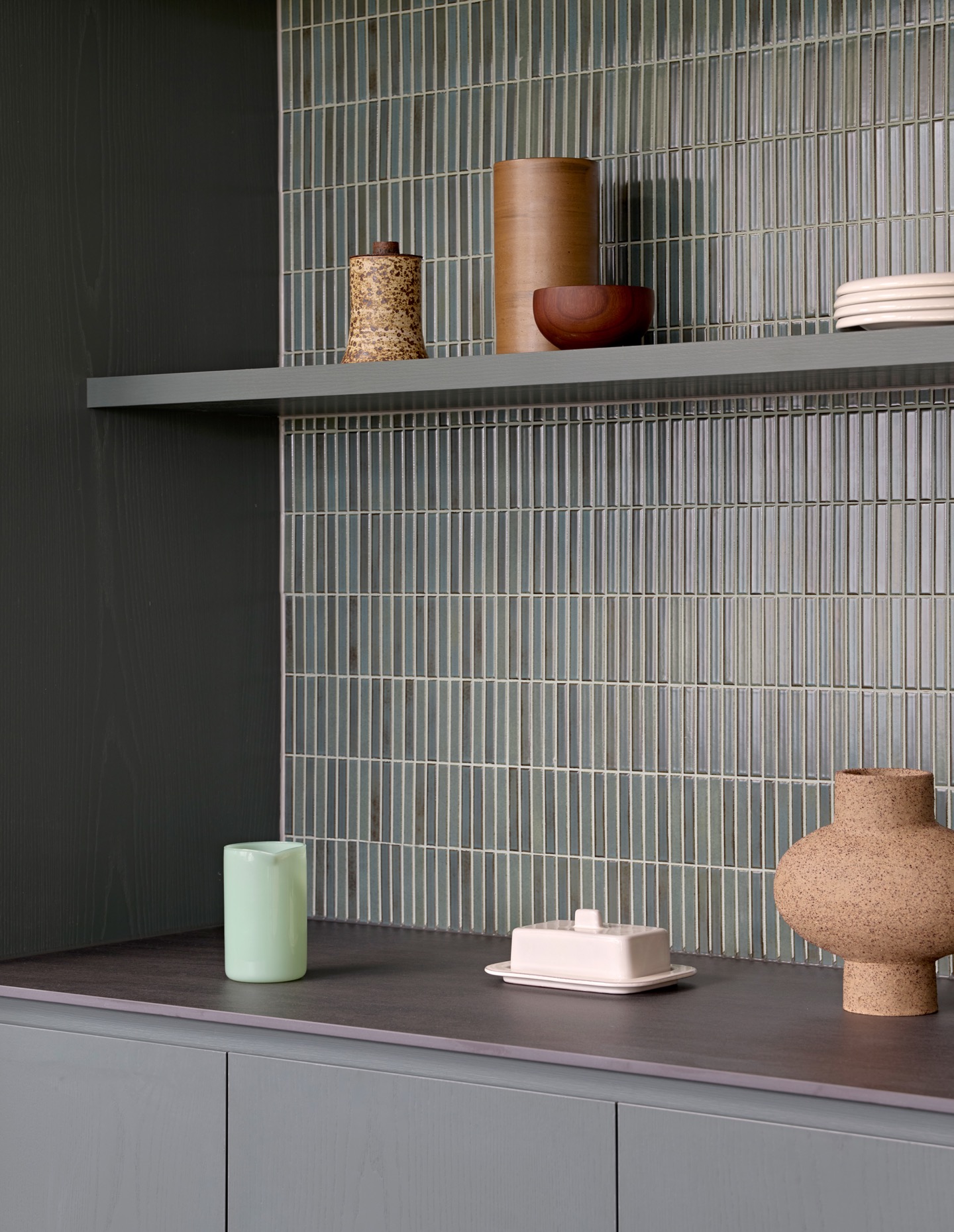
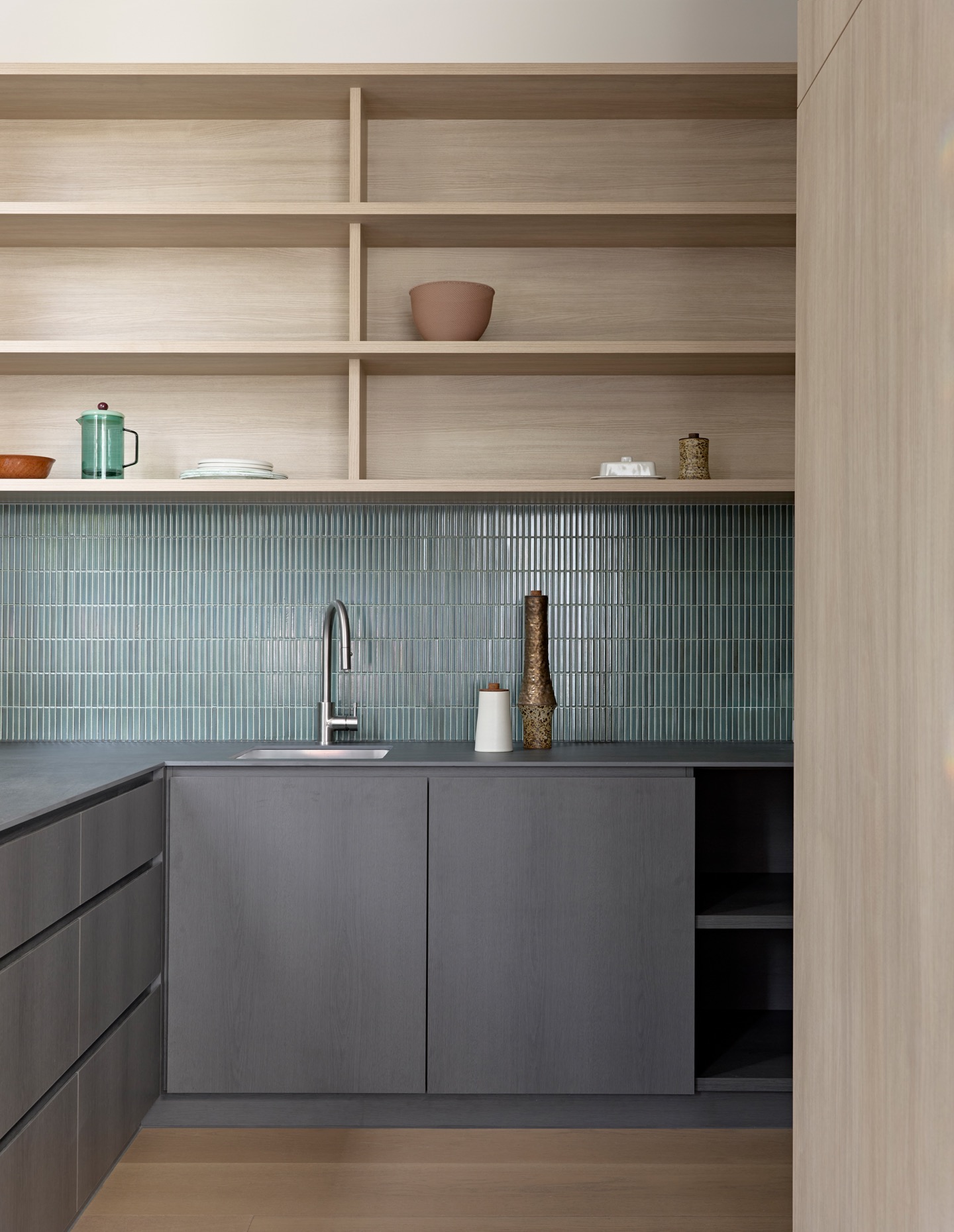
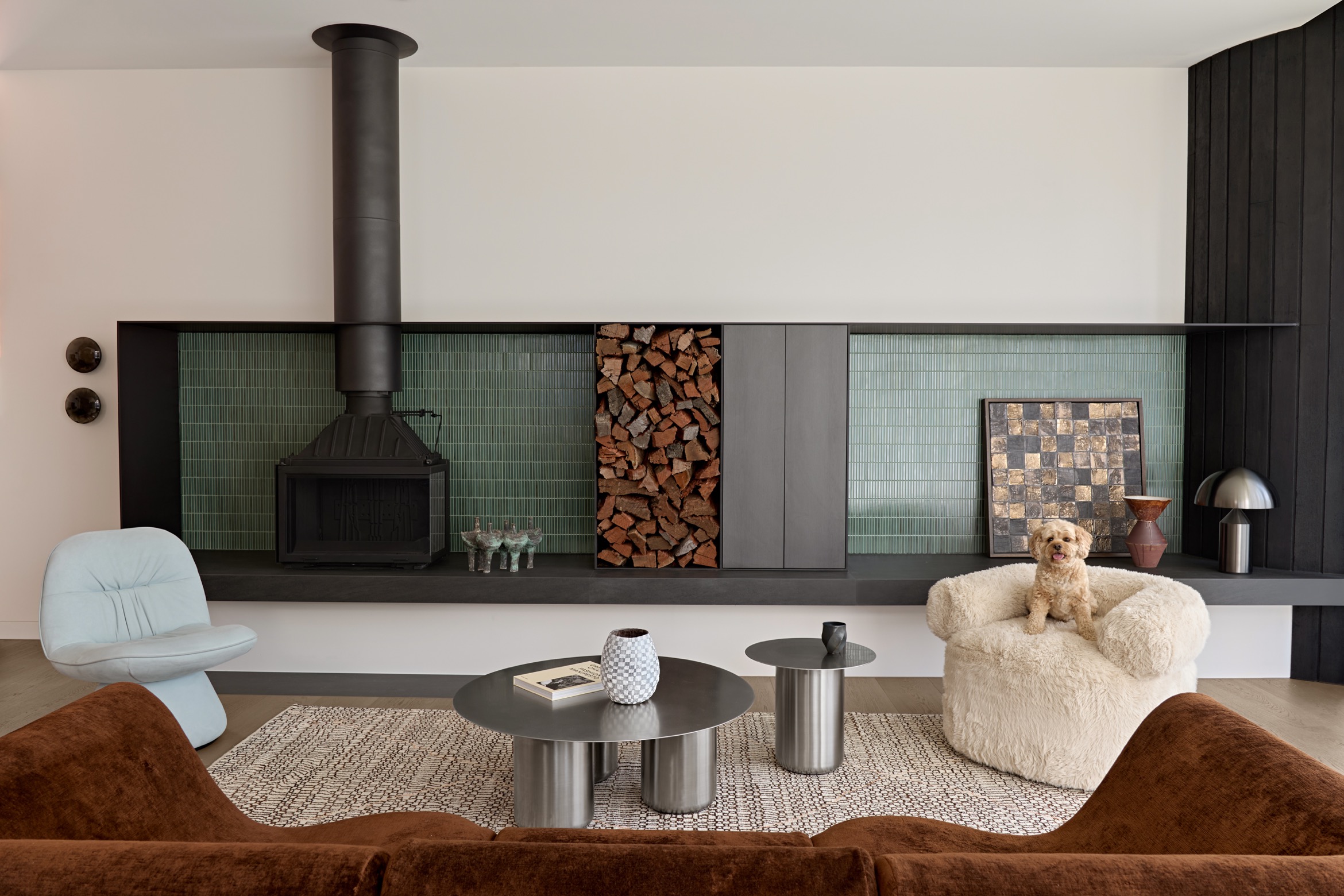
That softness is echoed in the material palette. “Material continuity was key to connecting the old and new,” Corke notes. Across the project, “textural, durable materials… carry through multiple spaces,” creating cohesion without excess. These materials, she adds, “have integrity in their own right… and require minimal maintenance, allowing them to age well over time.” Charred timber, terrazzo and natural finishes are used not as statements, but as stabilising elements — anchoring the home while allowing light and form to take precedence.
The balance between clarity and variation is carefully held. “The plan is deliberately clear and functional,” Corke says, “but layered with moments of contrast — shifts in level, curves, and more enclosed spaces.” These moments “introduce intimacy and surprise without compromising overall flexibility and ease,” ensuring the home remains responsive to family life without becoming overly prescribed.
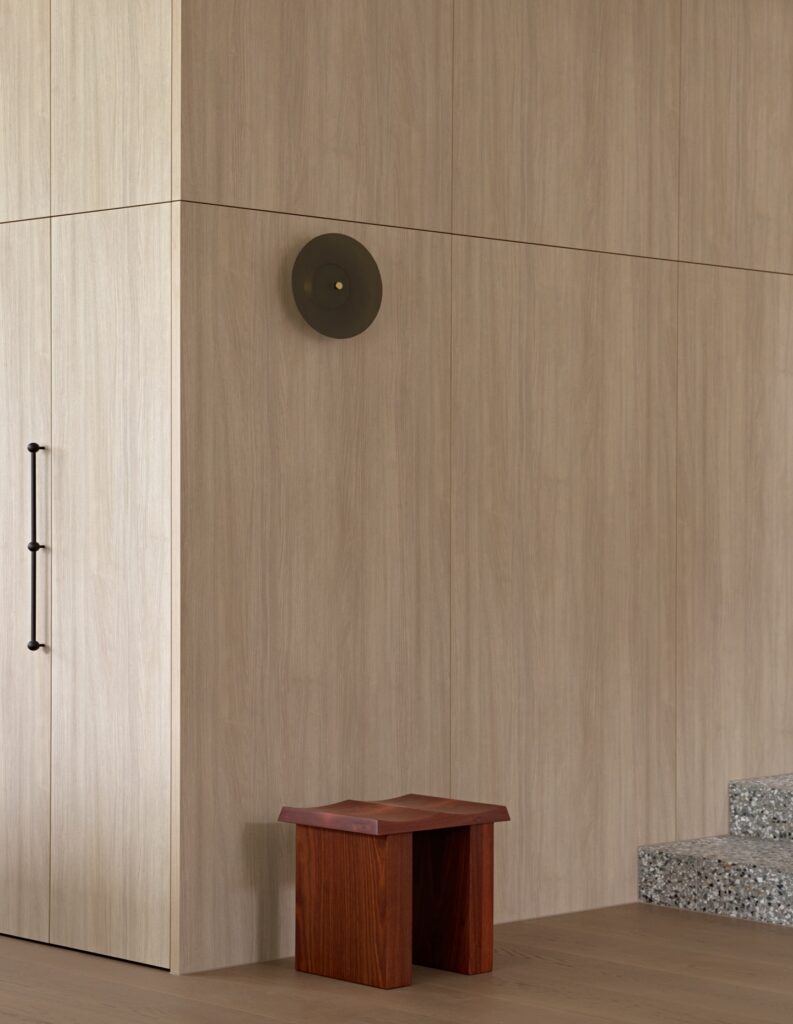
In this way, Orrong avoids the binaries that often define heritage projects. It is neither preservation nor rupture, but something more measured — a house that evolves through alignment rather than opposition. Contrast is present, but controlled; continuity is deliberate, but never monotonous.
Ultimately, Studio Cobe has created a home that feels both grounded and open-ended. Through “material continuity,” “a softer spatial language” and a careful choreography where “light draws you forward,” Orrong becomes less about individual gestures and more about the experience of living — one that is calm, connected and quietly enduring.